Find an Online Psychology Program for You
Featured Online Psychology & Counseling Programs

What Do I Need to Know About the Master’s Degree in Psychology?
What Do I Need to Look for in a Master’s Degree Program?
While every college has a unique approach to the MA, there are 4 areas you need to look at in order to prepare for a college search:
Goals
Before applying to degree program, have a sense of what you are going to do with the MA. This is important because it will affect the appropriateness of one college program over another. If you are interested in becoming a professor and doing psychology research, the college program to expedite the process will be quite different than one which will emphasize clinical studies and prepare you for working with patients. Regardless of being research or practice oriented; the master’s program you decide upon should be the shortest road to actualizing your target destination. In other words, you will need to intentionally and carefully connect your educational plan to your end goals.
Expertise
You’ve probably heard the importance of “location, location, location” when selecting a house. Interestingly, there is a corresponding corollary in the field of psychology for someone seeking a MA– “Specialize, specialize, specialize.”In an ever increasing specialty-driven world, you may find that both employers and clients are in the market for someone who has focused their area of study. In fact, some MA programs require the student to choose a specialty area; others do not. One the exciting things about the field of psychology is that new areas of expertise are constantly being added to curriculums around the world. For example, as of 2015, the world’s first Master’s Degrees in Fashion Psychology are being offered. At theLondon College of Fashion, University of the Arts, London; Cognitive Neuroscientist-Dr. Carolyn Mairhas developed masters programs awarding the “MSc Applied Psychology in Fashion.”
There are also many other specialty areas from which to choose in psychology. A few examples are:
Program Emphasis: Research or Practice?
There are 2 main career applications characterizing the field of psychology from which there are a host of subcategories.
If you are someone who loves to study, enjoys lecture-related experiences, thrives on the exchange of intellectual ideas and flourishes in an investigative environment; your goal will likely be realized in a research-based program. If instead you want to work with people because you derive joy in helping them solve their problems; want to develop assistive programs, assess and improve interactive environments and employ precepts you have studied; then a practice or clinical program will help you meet your goals.
Research Focused: Although there are a variety of careers available with a research-based master’s degree, individuals who choose a strict, researched-based program are typically Ph.D. bound students. These particular candidates need to be sure the master’s degree program they choose will be desirable for the Ph.D. program in which they desire to enroll. Actually getting the MA at the college of the target Ph.D. program is a great plus when seeking admission to doctoral studies. In that vein, many colleges offer a combined MA and Ph.D. degree which helps the student to more efficiently reach their research-based goals. Someone who knows they are Ph.D. bound (and needs to acquire a MA first) is wise to determine which Ph.D. program excels in their specialty area, and then work backwards to the MA program. Ascertain from the admissions committee or office which MA programs are most desirable for acceptance into their Ph.D. program.
Learn more andresearch as a psychology focusandwhat is PhD in psychology.

Practice:Those interested in immediately taking what they learn in a classroom into the world will be inclined to choose a clinical MA program. These programs give focus to the “how to’s” of psychological healing as well as the ““whys.” Again, if you earn a MA in Psychology, the state in which you are domiciled will determine if you are allowed to be licensed to work directly clients or practice under the license of another. If your main goal is to work with clients or groups, however, the MA in Counseling, Therapy or Social Work is the most logical route.
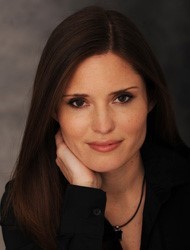
For example, Jennifer Kempner, LCSW, is a successful professional who aligned her master’s program with her ultimate career aspirations. She began in psychology and eventually switched to social work.
Read more onaccredited online BSW programs.
4. Institutional Setting: Online or Traditional?
One of the more exciting developments in the field of psychology and mental health-related professions is the ability to earn a reputable and marketable degree from an online program. Assuming the MA program is accredited and meets resident state standards, the choice between attending college at a traditional brick-and-mortar campus or online with a web-based environment is a highly personal one. Time constraints, prior commitments, finances, location–all are driving forces in resolving the question of a traditional or online MA program.
Paula Beck Crooks, MSW, attended Virginia Commonwealth University’s (VCU) part-time, Distance Education Masters of Social Work program. She shares her experience; “I felt called to go into Social Work, and when I discovered VCU’s then-new Distance Education program, I was so excited to be able to attend the 11th ranked School of Social Work in the country, even though I live two hours away. When I started school, I still had three children at home. The online format has allowed me to be present to my family while pursuing my own goals.”

Paula goes on to point out that were other appealing aspects of VCU’s program, “I was happy to learn that VCU did not require the GRE for admission. As an older student, I had been concerned about that – especially trying to get up to speed in math. There are some prerequisite courses that I was fortunate to have taken as an undergraduate. The application process itself included a detailed, Personal Statement about why I wanted to become a Social Worker and statements from three references. All of the application components can now be submitted online, which makes the process easier.”
Today Paula works in Interstate Foster Care at Virginia Beach Department of Human Services.“I completed a foundation field placement there two years ago and was recently hired on to do the same work. I entered the MSW program with no educational or employment background in social work, and this is my first job in the field. It has been a powerful experience to observe the reciprocal influence of school and work. Every day, I use the assessment and engagement skills I am learning in the MSW program. And when I sit down to do my class work, I frequently reference my experiences with my foster care clients. School makes me a better employee, and my job makes a more insightful student.”
Learn more aboutonline social work degree programs.
RELATED -
Summary
A Master’s Degree is a graduate degree which can be earned via a walk-in campus or an online program.
Related Psychology Education Guides
