If you’re here, you may be doing some research on the humanistic approach and want some more info about Carl Rogers' theory on Unconditional Positive Regard. You’re in luck because this page has everything you can find. If we missed something, feel free to leave a comment below!
What is Unconditional Positive Regard?Expanding UPR Beyond Therapy: The Workplace ScenarioUnconditional Positive Regard Examples
What is Unconditional Positive Regard?
Expanding UPR Beyond Therapy: The Workplace Scenario
Unconditional Positive Regard Examples
Unconditional Positive Regard (UPR) means that even if you disagree with someone’s actions, you still continue to have an overall positive attitude and support towards that person. Although this was first used regarding a therapist-client relationship, it can be applied to other relationships.
Who Coined the Term “Unconditional Positive Regard”?
Psychologist Carl Rogers coined the term “unconditional positive regard” in his 1957 article “The Necessary and Sufficient Conditions of Therapeutic Personality Change.” Rogers was also one of the pioneers of the Client-Centered Approach (Humanistic Approach) in the field.
Here’s how Rogers defined UPR in his article:“It means that there are no conditions of acceptance, no feeling of “I like you only if you are thus and so.” . . . It means a caring for the client, but not in a possessive way or in such a way as simply to satisfy the therapist’s own needs…It means a caring for the client as a separate person, with permission to have his own feelings, his own experiences. One client describes the therapist as “fostering my possession of my own experience . . . that [this] is my experience and that I am actually having it: thinking what I think, feeling what I feel, wanting what I want, fearing what I fear: no ‘ifs,’ ‘buts,’ or ‘not reallys.’”
You can read the full articlehere.
What Does Unconditional Positive Regard Mean in Counseling?
The term was first used for therapy. When a client told his or her therapist something that the therapist disagreed with, they still remained positive in their attitude towards the client and helped him/her understand their own feelings about their problems.
Thishumanistic approachled the field of humanism and was very effective. The key is that the client feels accepted for who they are and in a nonjudgmental environment. Allowing the client or patient to feel free to just talk about whatever is on their mind without judgment leads to the client realizing things about themselves on their own terms. The feeling of safety is what makes the approach so successful.
What Does Unconditional Positive Regard Feel Like?
When clients connect with a therapist, they may not know what to expect. People often go to therapy because they have had unhealthy relationships at home and do not know how to accept unconditional positivity. Working with a therapist who offers this positivityunconditionallymay feel new, strange, and wonderful.
Here is what some Reddit users on the TalkTherapy subreddit had to say about the feeling of receiving unconditional positive regard:
You can read more about talk therapy and unconditional positive regardhere.
While Unconditional Positive Regard is primarily associated with therapeutic contexts, its principles can be adapted to various environments. One area where UPR can be particularly relevant is the workplace. Let’s look at how these principles can influence professional dynamics, especially in retail sectors where interpersonal interactions are frequent and pivotal.
 unconditional positive regard in the workplace

UPR In The Workplace
The principles of Unconditional Positive Regard, rooted in therapeutic contexts, have far-reaching implications, particularly in the workplace. The retail sector is an insightful example, given the sheer number of Americans engaged in retail at some point.
Adopting a management style infused with the principles of UPR could significantly alter the dynamics between managers and their teams. Here are some practical manifestations of UPR in managerial practices:
A case study from Google, known as theProject Aristotle, found that among the most crucial factors determining team success was “psychological safety” - a concept closely related to UPR. In teams where members felt safe to express themselves without fear of judgment, there were higher levels of innovation, collaboration, and overall performance.
Studies have consistently shown that one of the leading causes of employee turnover isn’t dissatisfaction with the job itself but conflicts and lack of appreciation from management. In their report, theSociety for Human Resource Managementindicated that respectful treatment of employees and trust between employees and senior management were crucial retention factors. By integrating UPR practices, workplaces can foster an environment of trust and respect, which could, in turn, lead to reduced turnover rates.
Beyond internal relations, UPR impacts how businesses interact with their clients. For freelancers and customer service professionals, displaying UPR can improve client relationships. When clients feel genuinely heard, understood, and valued – without judgment – they’re more likely to trust the service provider, leading to repeat business and higher customer satisfaction.
AHarvard Business Reviewarticle highlighted the importance of ‘solution selling,’ where salespeople connect with clients, understand their unique challenges, and offer tailored solutions. Such an approach is steeped in the principles of UPR.
Freelancers and customer service professionals know that unconditional positive regard,while difficult, can be extremely beneficial when it comes to earning tips and repeating clients.
UnconditionalPositive Regard Examples
In Parenting
Many parents confuse Unconditional Positive Regard withUnconditional Love. In fact, many people can’t tell the difference between unconditional love and unconditional positive regard. Unconditional love is offering affection without any limitations. With Unconditional Positive Regard, however, you don’t necessarily have to feel that love, you just have to offer a safe space to let the person talk and know they will feel supported.
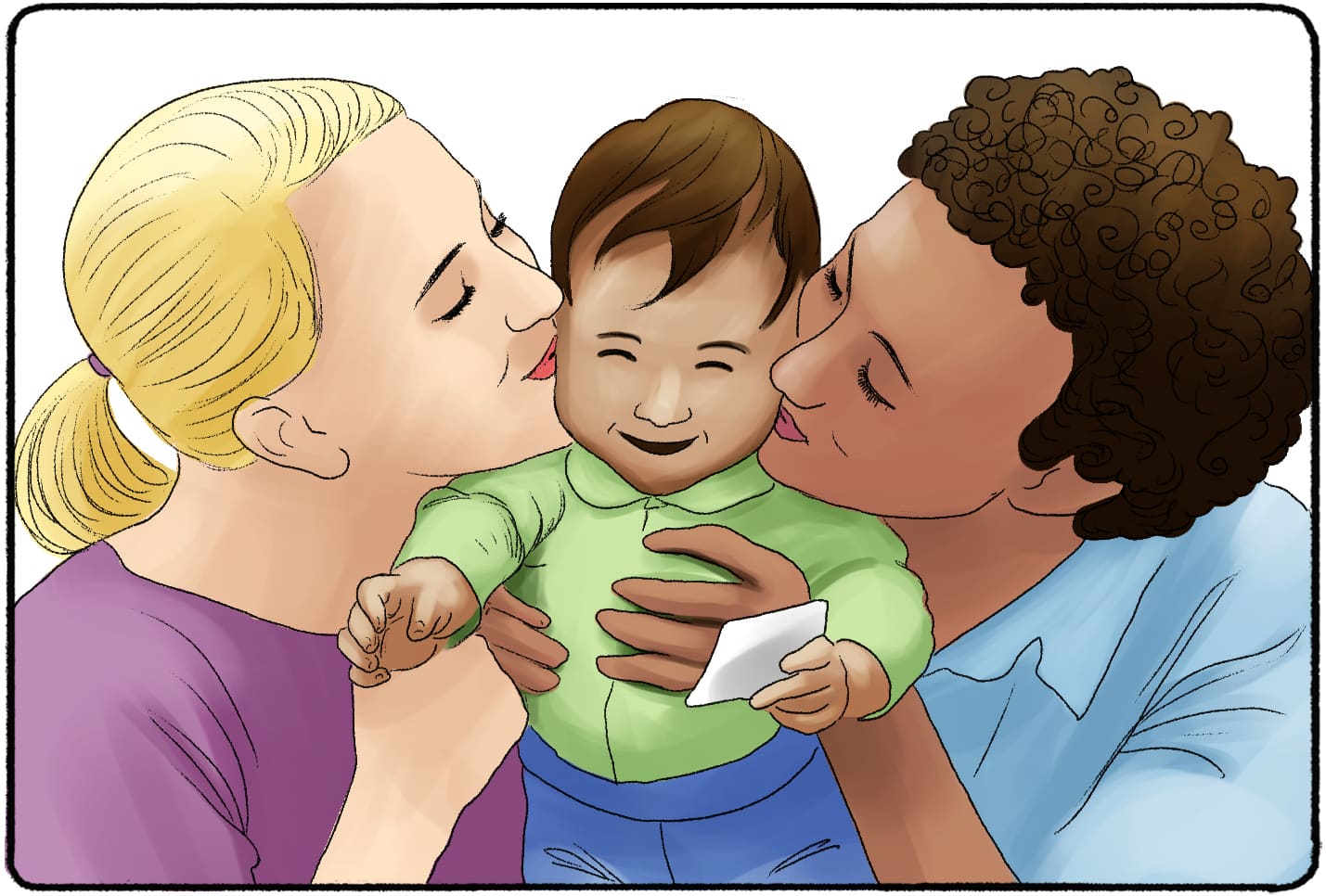
The reason that parents lean more toward unconditional love is that they feel that if they choose the latter, they aren’t going to feel that they are either not showing them enough love and are afraid their child won’t open up to them as much or because they feel they might cross into more of a “friend” type of relationship rather than a parent relationship.
Some parents feel that being a good parent means always giving unconditional love all the time, and they are right. But that love should be balanced too, giving a child that judgment-free space to express themselves makes them feel safe enough to talk to their parents without the fear that they will be harshly punished or be made to feel like they have disappointed them.
In School
When a student struggles in school, how must a teacher approach their setbacks? One teacher argues that unconditional positive regardsets the standard for lifting up all students, regardless of their achievements. This approach can create an equitable classroom for teachers of students who have faced trauma or hardships and give all students a chance to succeed.
A teacher using unconditional positive regard in the classroom may:
In Other Relationships

Unconditional positive regard is key to being in asuccessful partnership. Let’s say you go out with one of your close friends over the weekend and decide to go out for some drinks. Your significant other doesn’t like the idea of you drinking without them.
Unconditional Positive Regard in this situation would be letting your partner know that it bothers them and, even if you still decide to go, putting their best foot forward and being supportive.
This really means that there is an open line of communication between you and your partner. The biggest part is knowing when to accept a behavior because it won’t matter much long term, and when you do not accept it, it will become a problem.
Other examples of Unconditional Positive Regard in Relationships include:
In its simplest form, this practice of Unconditional Positive Regard is respecting another person’s decision to do what they will do. Because we are all people with our own thoughts and feelings towards things, and they aren’t always unanimously agreed upon.
How to Apply Unconditional Positive Regard to the People In Your Life
People have a lot going on. We are stressed, inundated with information, and expected to produce results faster than ever. To bring more UPR into your life, you must first slow down. When you communicate with others, see them as people. Be mindful and listen to what the other person is saying. What are they looking for? What do they want? How can you help each other?
Not everyone will have the same regard for you, but that’s okay. When dealing irritating people, remind yourself to let the little things go. Tallying up a big list of points against a person isnotwhat unconditional positive regard is about. UPR suggests that you look beyond a person’s actions or intentions and continue to seek positive outcomes.
Summary: What is Unconditional Positive Regard in Psychology?
At its core, Unconditional Positive Regard (UPR) is an embrace of empathy, acceptance, and non-judgment, transcending mere tolerance and entering a realm of genuine understanding. It’s about recognizing the unique perspectives, emotions, and choices of others without letting preconceived biases or minor disagreements overshadow the essence of the relationship.
Parenting, a realm where nurturing and guidance are pivotal, benefits profoundly from UPR. It’s not about conceding control but rather empowering children. Whether celebrating a toddler’s mismatched outfit choice or appreciating a teenager’s evolving worldview, UPR fosters self-esteem and a sense of agency in children.
When applied topersonal relationships, UPR lays the foundation for deeper connections. It’s about prioritizing mutual respect and open dialogue over the desire to control or dictate. By fostering conversations that might be uncomfortable yet necessary, couples can achieve abalanced and understandingpartnership.
In essence, UPR isn’t just a therapeutic concept; it’s a philosophy that, when embraced, can profoundly enrich our interpersonal relationships and shape our self-perception. Embodying UPR lightens the burdens of needless contention and judgment, creating a world where each individual feels valued, understood, and free.
Related posts:Client Centered Therapy (Benefits + Explanation)Carl Rogers Biography - Contributions To PsychologyHumanistic Perspective of PersonalitySkinner’s Box Experiment (Behaviorism Study)Insight Therapy (Definition + Examples)
Related posts:
Reference this article:Practical Psychology. (2020, March).Unconditional Positive Regard (Definition + Examples).Retrieved from https://practicalpie.com/unconditional-positive-regard/.Practical Psychology. (2020, March). Unconditional Positive Regard (Definition + Examples). Retrieved from https://practicalpie.com/unconditional-positive-regard/.Copy
Reference this article:
Practical Psychology. (2020, March).Unconditional Positive Regard (Definition + Examples).Retrieved from https://practicalpie.com/unconditional-positive-regard/.Practical Psychology. (2020, March). Unconditional Positive Regard (Definition + Examples). Retrieved from https://practicalpie.com/unconditional-positive-regard/.Copy
Copy
