Erik Erikson’s work with psychosocial development has broken down the different stages of social interaction and how they affect a child’s personality, outlook, and virtues. That crucial first stage of psychosocial development can impact your life past infancy or adolescence.
What Is Trust Vs. Mistrust?ExamplesAre Trust Issues Normal?Trust vs. Mistrust in AdulthoodAttachment Styles and TrustMore Examples of Trust vs. MistrustCan Trust vs. Mistrust Be Resolved?How to Resolve Trust Issues As an Adult
What Is Trust Vs. Mistrust?
Examples
Are Trust Issues Normal?
Trust vs. Mistrust in Adulthood
Attachment Styles and Trust
More Examples of Trust vs. Mistrust
Can Trust vs. Mistrust Be Resolved?
How to Resolve Trust Issues As an Adult
The first stage of Erik Erikson’s Psychosocial Development is Stage 1, where the child goes through a psychological crisis of “trust vs. mistrust.” They must rely on the mother for their needs; the mother’s response determines whether the child develops trust or mistrust.
This care and attentiveness must be consistent to build trust. If an infant gets some care from their mother but cannot rely on consistent care, mistrust and anxiety will still form. With consistent care, the child will also develop hope.
Trust vs. Mistrust Age
This stage starts as soon as a child is born and lasts until the child is 18 months old.
Basic Example of Trust vs. Mistrust
 crying baby
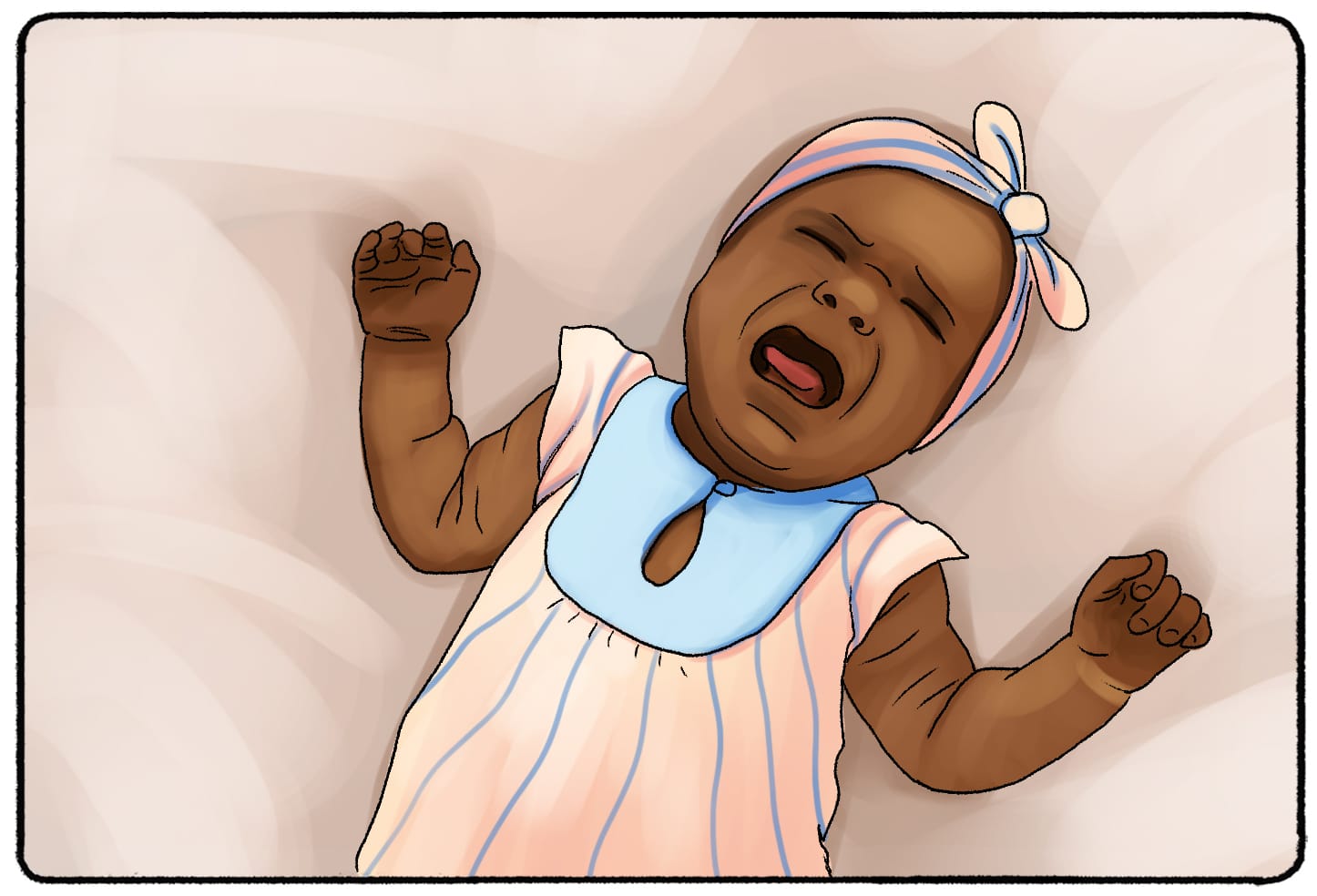
This hope and trust become a foundation for the developing child. In the second and third stages of psychosocial development, the child has more opportunities to branch out and take control of their decisions and actions. Without a trusting parent or guardian, it can be harder for the child to make these decisions and branch out further.
Here are some examples that illustrate behaviors, experiences, and outcomes related to this stage:
Trust Development:
Mistrust Development:
It’s not abnormal for a child to go through the trust vs. mistrust stage without fully establishing trust with their parents. Most of the time, it’s not the child’s “fault” anyway! A child cries and tries to communicate its needs with its limited abilities. The child may develop trust issues if the parent cannot fulfill those needs.
Trust issues go beyond romantic relationships. A person who has not established trust with their parents or whose trust has been broken may not trustanyone.Educators, scientists, fellow citizens, etc. Inrecent surveys, most Americans say they can trust…that trust for others has worsened and is causing a lot of interpersonal conflicts within the country!
Although Erikson outlined the psychosocial stages of development into neat and clean stages, they can have an effect on each other. A child does not just forget their trust issues when they turn 18 months old - their interests shift as they explore the conflict of autonomy vs. shame and doubt.
Erikson went so far as to suggest that if a child does not learn to trust in the first 18 months, all areas of their life will be impacted. Think about it. Our relationships, and the trust we put in them, impact many of our decisions. Would you travel the world if you didn’t trust the people who lived in it? Could you network effectively if you didn’t trust people to help you in the ways that you could help them? Adults can find ways to re-establish trust that they might not have learned in their infancy, but it is entirely possible that they will have to take those steps.
If you have ever been in a relationship after being cheated on, you know the impact that mistrust can have.
Psychologists who have studied trust vs. mistrust suggest that not only is this stage important, but it also has lasting implications. Research associates alack of trustwith:
Similarly, psychologists like Mary Ainsworth pointed to the relationships and trust established in infancy when discussing adult relationships. Yes, your trust issues with your partner may be traced back to your needs not being met as a child. At least, that’s what attachment theory suggests.
The foundational trust developed during the earliest stage of life can leave lasting impressions, influencing how we relate to others throughout our lifespan.
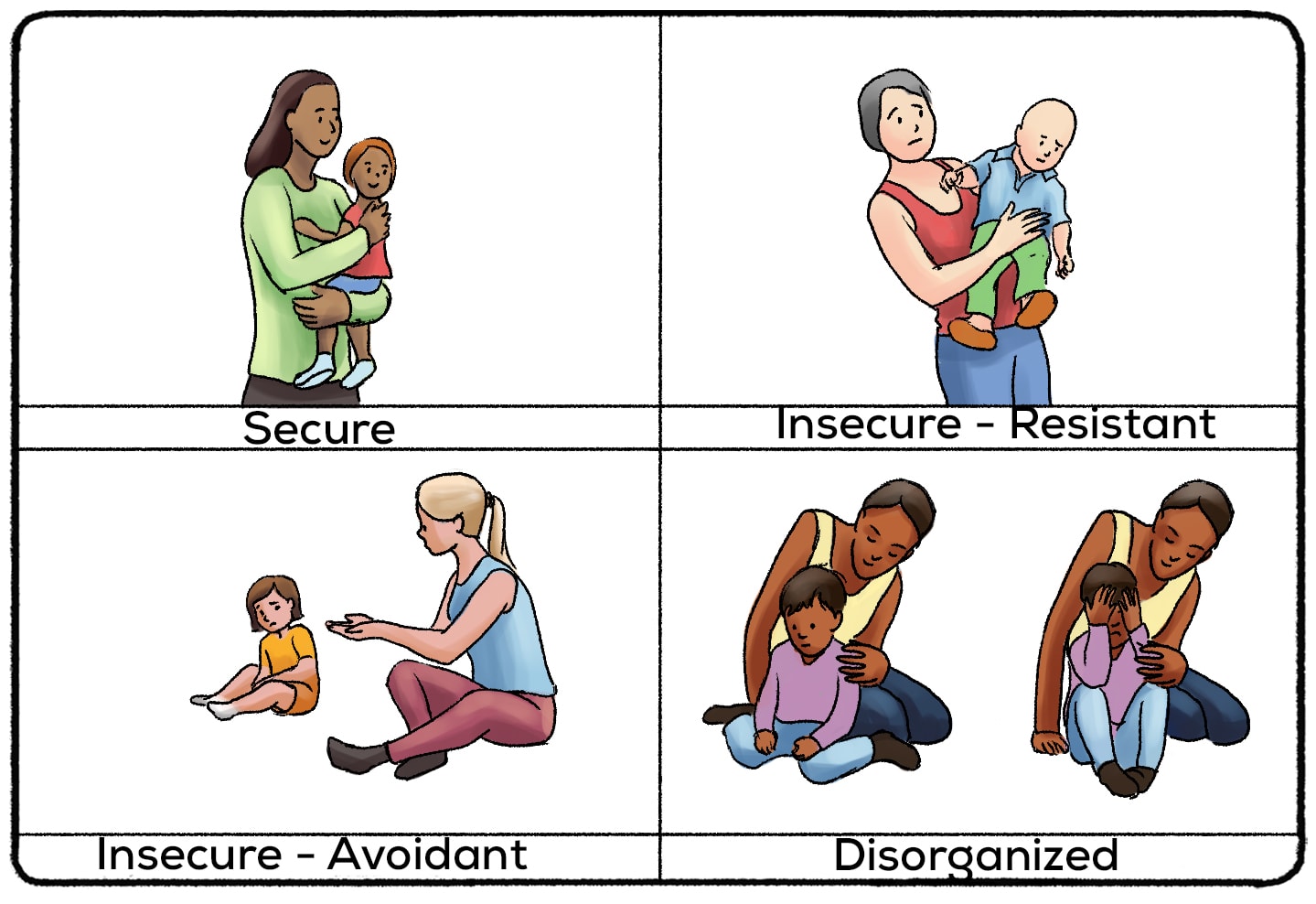
These four styles either fall under “secure” or “insecure.”
Individuals with a secure attachment style generally have a positive view of themselves and others. This style typically develops from consistent caregiving, where the child’s needs are regularly met, and they are assured of their caregiver’s reliability. As adults, these individuals tend to be comfortable with intimacy and independence, balancing both well in relationships. They’re often expressive about their feelings and are not overly anxious or avoidant of close relationships.
Insecure attachment patterns emerge when early childhood needs are inconsistently met, leading to mistrust. Three primary styles fall under this category:
Reddit user mahanahanshared their essayon how Barney fromHow I Met Your Mothermay have developed mistrust and an insecure attachment style as a young child. The pop culture reference to Barney from “How I Met Your Mother” illustrates how early developmental challenges can shape relational patterns in adulthood.
Barney’s struggles with trust and commitment in the series can be traced back to potential early attachment disruptions. Recognizing and understanding these attachment styles underscores the profound impact of early experiences on lifelong relational dynamics and the significance of fostering secure attachments in childhood.
Sometimes, mistrust is developed when a parent fails to meet their child’s needs despite their best intentions. Maybe the parent is stressed out from caring for multiple children, away from home due to a hectic job schedule, or does not feel confident in their child-rearing abilities. This is completely normal, as parents often live demanding lives! (Not every country or job supports paid maternity or paternity leave!)
But there are also examples of trust vs. mistrust that are downright cruel. Neglecting or abusing a child can certainly lead to a life of not only mistrust but also underdevelopment.
Feral Children
In the 1940s, the heart-wrenching tales of two feral children, Anna and Isabelle, emerged and left an indelible mark on the world of psychology. Born just a month apart, the details of their tragic early lives surfaced within nine months of each other, offering researchers a rare, albeit deeply distressing, insight into the consequences of extreme social deprivation.
Anna, from Pennsylvania, lived an isolated life confined to the attic of her family’s home. On the other hand, Isabelle’s confinement in Ohio was in a dark room, her only contact being her deaf-mute mother, who couldn’t communicate normally with her.
By the time they were discovered at the age of 6, the ramifications of their isolation were evident. Both exhibited severe developmental delays, particularly in linguistic capacities, profound mistrust, and numerous health complications. Their lack of foundational social interactions and emotional bonds during their formative years had stunted their growth in almost every facet of human development.
Isabelle, in contrast, experienced some recovery after her rescue, thanks to intensive therapeutic interventions. Over time, she made substantial progress in various areas of development, particularly in language acquisition, highlighting the resilience of the human spirit and the potential for recovery when given appropriate care and attention.
The tragic stories of Anna and Isabelle significantly impacted the study of developmental psychology. They underscored the critical importance of early socialization and emotional bonds in the comprehensive development of a child. While their extreme cases serve as a grim reminder that even in less severe circumstances, a lack of nurturing interactions in early childhood can lead to long-term emotional and cognitive consequences, such as anxiety, mistrust, and difficulties in social adaptation.
Ethical Considerations: It’s paramount to approach such sensitive cases with utmost care and respect. Studying instances of severe neglect, like those of Anna and Isabelle, offers invaluable insights. However, the primary focus must always remain on the well-being and dignity of the individuals involved. Their stories should be shared with empathy, ensuring their experiences are not sensationalized. Furthermore, while their experiences provide invaluable data, the priority should always be rehabilitating such individuals rather than merely studying them.
These cases remind us of our responsibilities as researchers and as a society to protect and nurture our most vulnerable members.
Genieis another example of a child who grew up in traumatic living conditions due to neglect.
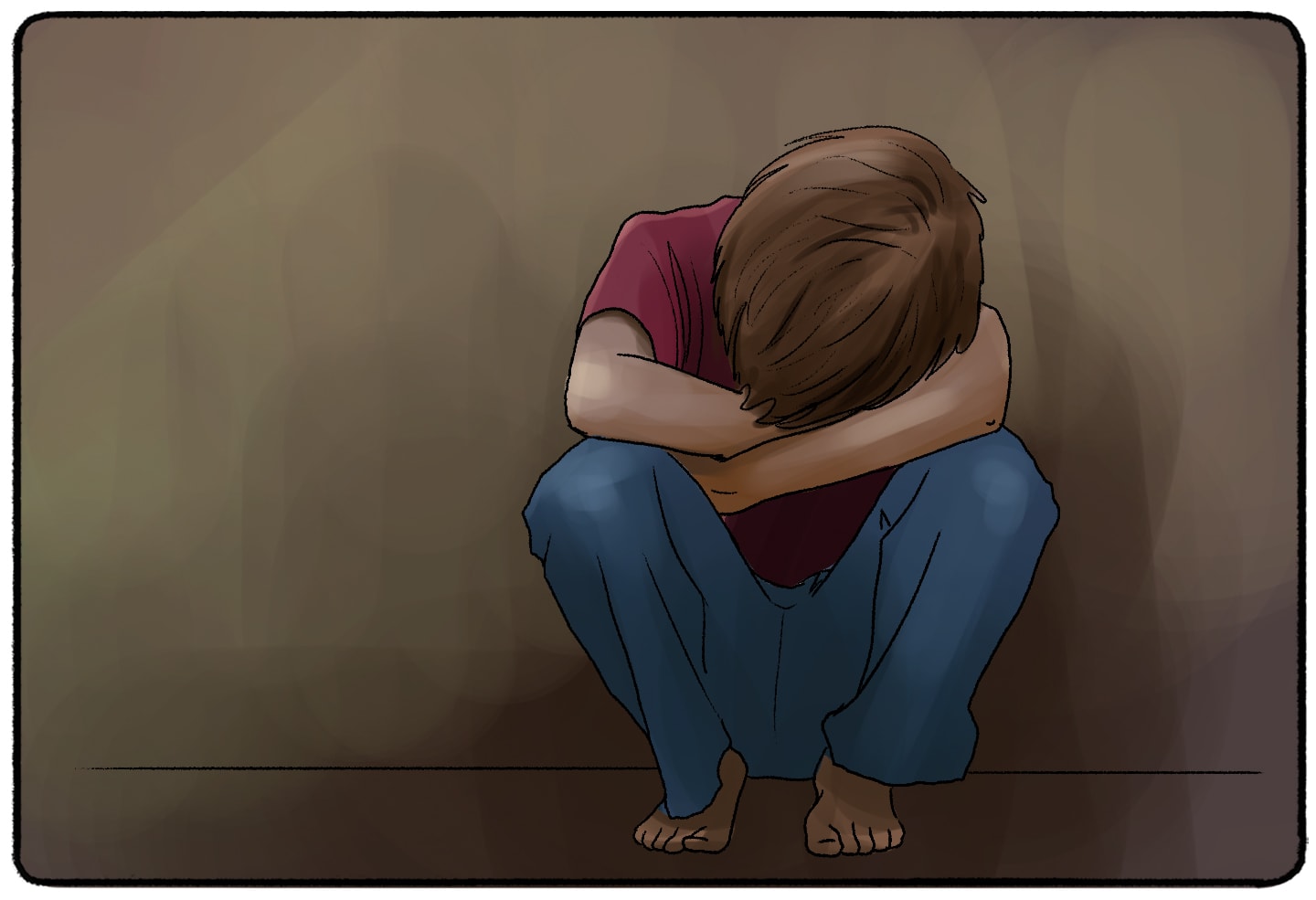
We know that Anna’s story is tragic. Fortunately, while Isabelle struggled to catch up, she did manage to catch up with her peers within three years. If a child goes through this first stage and develops mistrust, there is still hope for them to have a thriving social life and healthy relationships. Sure, there will be a delay, but with proper therapy, education, and relationships moving forward, it’s possible to “catch up” and enter into later stages inErik Erikson’s Stages of Psychosocial Developmentwith hope and trust.
Mistrust developed as an infantcanaffect a person for the rest of their lives, but it does nothave to.Reading and understanding the theories behind trust issues and insecure attachment can be a great first step to resolving these feelings. You may have to trust someone to resolve these issues, but that is all part of the process!
Practice mindfulness.
Before having conversations with your partner or taking risks, sit with yourself and be mindful. What thoughts are causing you to feel anxious or nervous? How does this lack of trust feel in your body? As you become more aware of how you talk to yourself, you may find that you can change the conversation and reassure yourself to a place of deeper trust.
Communicate with your partner and friends.
With the knowledge of your trust issues, talk to friends, family, and your partner about how these trust issues make you feel. This is a risk in itself, but it will pay off. Open and honest communication will help put everyone on the same page. You may find that your friends, family, or partner are unaware of these trust issues. They can use this information to adjust how they communicate or behave with you tobuild trust more effectively.
Reach out to a mental health professional.
You do not have to go through this process alone. A certified mental health professional can walk you through the beliefs and experiences surrounding your trust issues. Many therapists use an approach based on the ideas of Erikson, Ainsworth, and other psychologists who studied attachment theory and trust issues. Consider asking possible therapists for a 15-minute consultation in which you can establish trust and decide if this is the right professional for you.
Related posts:
Reference this article:Practical Psychology. (2020, March).Trust vs Mistrust (Psychosocial Stage 1 Examples).Retrieved from https://practicalpie.com/trust-vs-mistrust/.Practical Psychology. (2020, March). Trust vs Mistrust (Psychosocial Stage 1 Examples). Retrieved from https://practicalpie.com/trust-vs-mistrust/.Copy
Reference this article:
Practical Psychology. (2020, March).Trust vs Mistrust (Psychosocial Stage 1 Examples).Retrieved from https://practicalpie.com/trust-vs-mistrust/.Practical Psychology. (2020, March). Trust vs Mistrust (Psychosocial Stage 1 Examples). Retrieved from https://practicalpie.com/trust-vs-mistrust/.Copy
Copy
