Here’s a bit of classic advice: it’s important to make a good first impression. You might know from personal experience that a good first impression makes just as much of an impact as abadfirst impression.
Why?The Halo Effect.I’m not talking about the video game - think of the halos that sit above religious figures in paintings.
What Is the Halo Effect?Examples of the Halo EffectWho Discovered the Halo Effect?The Privileges and Pitfalls of the Halo EffectHow to Avoid the Halo Effect
What Is the Halo Effect?
Examples of the Halo Effect
Who Discovered the Halo Effect?
The Privileges and Pitfalls of the Halo Effect
How to Avoid the Halo Effect
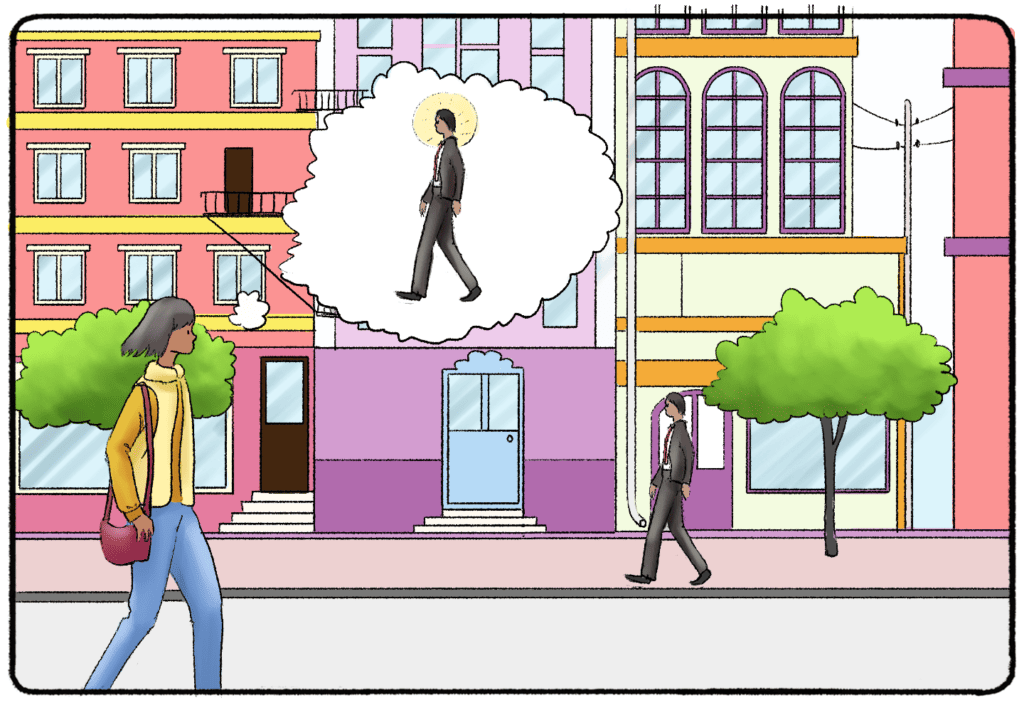
The Halo Effect is a cognitive bias that affects our judgment of a person’s character. The halo bathes the entire body of the person in a bright light, making them look almost perfect. If we discover one thing we like about a person, The Halo Effect casts a “halo” on other parts of their personality.
The Halo Effect is just one of many unconscious biases that sway our decisions.
Etiquette
You may meet someone and immediately think they have good manners or dress well. The Halo Effect tells you that they have a long list of good traits: they are smart, funny, kind, trustworthy, etc. You may not know a thing about the person’s sense of humor or trustworthiness, but that “halo” of a good first impression leads you to think that they are a generally good person.
 a person thinking someone in a suit is a good person
Attractiveness
The Halo Effect is often discussed when it comes to physical attractiveness. If we see a person that we think is physically attractive, we are likely to think that they have other attractive traits: a good sense of humor, kindness, etc.
Celebrity Status
Research on this effect has been going on for decades. The term “The Halo Effect” was first used in 1920. Edwin Thorndike was a psychologist whose work set the foundation for behaviorism and theories on conditioning. His paper, “The Constant Error in Psychological Ratings,” first described his studies on the Halo Effect.
Thorndike’sfirst experiments on the Halo Effect asked military commanders to rate officers on various characteristics, including leadership and physical appearance. He noticed that when commanders rated the officers highly on one trait, they were likelier to rate them higher on the other characteristics.
Since Thorndike’s initial experiments, researchers have conducted additional studies and found that The Halo Effect impacts everyone inmanyways. From marketing to medicine, The Halo Effect can seriously skew our judgment one way or another.
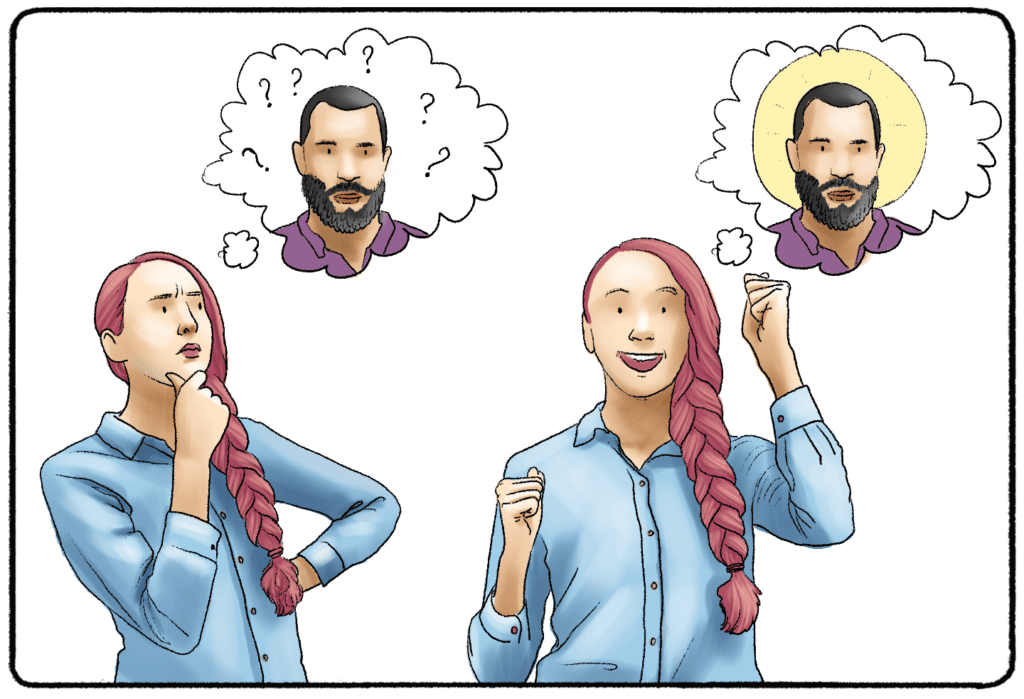
Inone set of studies, researchers said that “the ‘attractiveness halo effect’ in which desired personality traits are ascribed to attractive people over unattractive people seems to influence the use of attractiveness as a cue when attempting to perceive health or intelligence in faces accurately and is in turn, limiting people’s accuracy.”
If someone is attractive, we are more likely to think they are smart or have good health. These impressions and assumptions may prevent us from accurately seeing or measuring these other traits. Doctors, for example, may be more likely to think that someone is “healthy” based on their level of attractiveness. And with a long list of invisible illnesses, this cognitive bias could be a detriment to someone’s health.
The studies went on to say that this bias could lead to unrealistic expectations of academic performance, which can be good or bad. The students who were expected to succeed due to other traits may end up succeeding due to the expectations placed on them.
What Causes The Halo Effect?
Leadership and physical appearance are two very different traits. You don’t have to be built well to be a good leader. You don’t have to be smart to be attractive. You don’t have to be a good leader to be a trustworthy person. And yet, a single trait like physical appearance can influence how we feel about the person’s other, irrelevant traits.
Why?
We like things to be simple. Or rather, our brains like things to be simple. It’s easier to think of someone as a “good person” or a “bad person” rather than recognize all the complexities that go into each person’s personality. It’s easier to think someone has a long list of good qualities than a mixed bag of good, not-so-good, and changing qualities.
While the Halo Effect can influence our judgment about celebrities and products, it also plays a significant role in everyday interactions and expectations set for individuals.
People who benefit from the Halo Effect often find themselves on the receiving end of numerous advantages. Their perceived positive qualities, whether their attractiveness, charm or even past achievements, can lead others to overlook their flaws or mistakes. This leniency can manifest in various ways:
However, this protective ‘halo’ can also come with its challenges. Lower expectations might sound appealing initially, but they can be limiting in the long run. When individuals are constantly shielded from consequences or are not pushed to their full potential, they might not develop essential skills or resilience. They might become complacent, believing they can always rely on their innate traits or past achievements.
Furthermore, those who continually benefit from the Halo Effect might not receive genuine feedback or constructive criticism, hindering their personal and professional growth. Their peers, on the other hand, recognizing the uneven playing field, might grow resentful, leading to strained relationships.
In essence, while the Halo Effect can offer immediate and tangible advantages, it’s crucial to recognize its long-term implications and strive for a more balanced and merit-based evaluation of individuals.
As we get to know someone, our impressions of them may change. But The Halo Effect primarily deals with quick judgments and first impressions. By being aware of the Halo Effect and other ways that our brain makes decisions about people, we can make more rational judgments about people from the moment we meet them.
Knowing about The Halo Effect can help you make better decisions whether you are watching a commercial or making judgments about a person that you see on the subway. But it can also help you make a better impression on others and understand what is happening in their heads. By making a good impression on others through your winning smile,dominant body language, or smart dress, you can win people over and help them trust you.
Related posts:
Reference this article:Practical Psychology. (2019, October).The Halo Effect (Definition + Examples).Retrieved from https://practicalpie.com/the-halo-effect-definition-examples/.Practical Psychology. (2019, October). The Halo Effect (Definition + Examples). Retrieved from https://practicalpie.com/the-halo-effect-definition-examples/.Copy
Reference this article:
Practical Psychology. (2019, October).The Halo Effect (Definition + Examples).Retrieved from https://practicalpie.com/the-halo-effect-definition-examples/.Practical Psychology. (2019, October). The Halo Effect (Definition + Examples). Retrieved from https://practicalpie.com/the-halo-effect-definition-examples/.Copy
Copy
