Are you a glass-half-full or a glass-half-empty kind of person?
We ask this question because seeing a glass as “half-empty” and seeing a glass as “half-full” are two different ways to look at the same type of glass. A glass that is half-empty seems like a dud. A glass that is half-full is a treat. When we describe the glass as “half-full” or “half-empty,” we put it in a frame. Understanding “the framing effect” and how it helps us understand the world.
What Is The Framing Effect?How Does The Framing Effect Work?Examples of Framing EffectAttribute FramingGoal FramingWhy It’s Important to Understand FramingHow to Avoid The Framing EffectFraming in Marketing and Market Research
What Is The Framing Effect?
How Does The Framing Effect Work?
Examples of Framing Effect
Attribute Framing
Goal Framing
Why It’s Important to Understand Framing
How to Avoid The Framing Effect
Framing in Marketing and Market Research
The Framing Effect, or Framing Bias, is the idea that information is perceived differently when it is presented in different frames. Yelling out, “Fire!” in a crowded movie theatre will probably evoke a different reaction than yelling out, “Fire!” when you’re learning how to start a campfire at wilderness training.
 people gasping in one image, a tent in the other

Psychologists Tversky and Kahneman were some of the first researchers to study framing effects. (If you are familiar withHindsight BiasandAnchoring Effect, their names are related to these other effects as well across psychology) Tversky andKahnemancame up with three different types of frames that fell under the umbrella of their much larger prospect effect. These frames include:
It’s not easy for our brains to take in all possible perspectives, factors, and information related to a decision. Take the used-car salesman. There are so many factors that go into buying a car. Safety, price, how well the engine runs, mileage, whether or not the car has Bluetooth, etc. The list goes on and on.
The salesmancouldgive you all of those facts and let you make a decision. That’s not only exhausting, but it may also not work in his favor. It’s easier and more effective to present just a small handful of facts about the car. Pointing out the good elements of the car - or the things that will appeal most to the buyer - is more likely to influence the buyer to get the car. Using a handful of positive or negative facts might not result in a sale.

Is the framing effect a “good thing” or a “bad thing?” Well, after hearing the example of the used-car salesman, I wouldn’t be surprised if you said it was manipulative to use the framing effect for personal gain. That’s probably due to the fact that I used the example of a “used-car salesman,” someone who doesn’t have a great reputation.
There are many examples of framing that occur in our everyday life. You frame situations for your personal benefit or without thinking. The way you received in education was in a frame. When you listen to any proposal, story, or negotiation, it’s all done through a frame. There are very few examples of things that arenotset in a frame.
Would you rather choose a treatment in which 200 people will survive or one in which 400 people will die? What if they are the same treatment?
Goal framing is a type of framing that you may be seeing a lot in the next election. Raising taxes on the middle class, for example, can be framed as expanding social services or putting less in your paycheck every month. Depending on the candidate proposing this tax hike, you might hear it described in different ways.
Sales. Politics. Medicine. These are some big, important fields that we encounter every day and have big effects on our lives. If salesman, politicians, or healthcare professionals have motives that go against our motives, they could potentially frame their communication in a way that leads us astray.
So as you listen to messages from people trying to persuade you to make a decision, think about the framing effect. How narrow is the frame of the other person’s message? What could be outside that frame?
One of the best ways to make an informed decision is to frame the situation in another way. What would the opposing party say about your candidate? What would another salesman say about the car you are thinking of buying? This is why many people go get a “second opinion” before opting for treatments or surgeries.
The framing effect affects literally everything we see and hear. It’s not inherently bad, but it can be used in bad ways. It’s up to you to look beyond the frame if you want to make the most well-informed decisions for yourself.
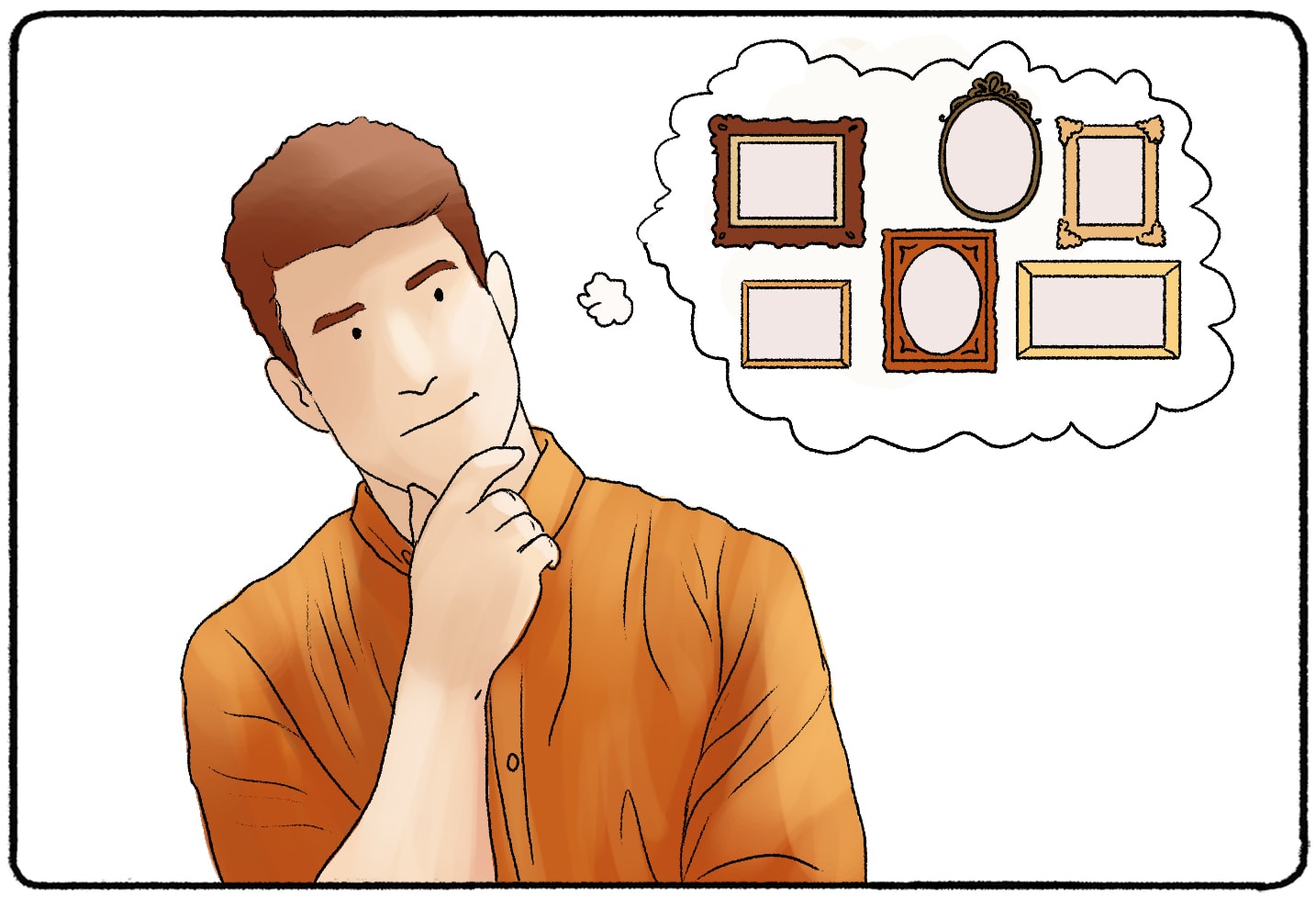
Re-frame the Situation:Consider how the information might be presented differently or try to understand the opposing viewpoint. For instance, what would the opposing party say about your candidate? Or what might another salesman highlight about the car you’re thinking of buying?
Seek Diverse Opinions:Surrounding yourself with varied perspectives can provide a more comprehensive view. Different individuals might frame information in unique ways based on their experiences and biases.
Question the Source:Understand the motivation behind where the information is coming from. Are they trying to persuade, sell something, or influence your opinion?
Practice Critical Thinking:Analyze information rather than accepting it at face value. Ask yourself: What might be left unsaid? Are there evident biases?
Educate Yourself:Enhancing your knowledge on a topic makes it harder for framed information to mislead you.
Avoid Hasty Decisions:Pressure can make individuals more susceptible to framing biases. Whenever possible, take time with decisions, especially significant ones.
Seek Neutral Information:Aim to find the most unbiased sources when conducting research to get a clear, unframed picture.
Recognize Emotional Manipulation:Framing can sometimes appeal more to emotions than logic. Being aware of when you’re being swayed emotionally can assist in making rational decisions.
The framing effect impacts virtually everything we perceive. While it’s not inherently negative, it can be exploited in detrimental ways. By being proactive and employing these strategies, you can ensure you’re looking beyond the frame, and making the most informed decisions for yourself.
The world of marketing and market research is intrinsically tied to the concept of framing. Every brand message, advertisement, or product description aims to present information in a light that resonates with the target audience, and this is where framing plays an indispensable role.
Product Positioning and Branding:How a company frames its product can determine its position in the market. Consider the soft drink industry: one brand might frame its product as a refreshing summer beverage, while another might emphasize its use as a mixer for cocktails. The frame changes the target audience and the perception of the product’s primary use.
Pricing Strategies:Even the way prices are presented has a framing element. A tag reading “$999” is framed differently than one saying “$1,000,” despite the minimal difference in value. The former can be perceived as more affordable due to the psychological impact of seeing the number start with a nine.
Career Implications:
For those considering a career in marketing or market research, understanding framing is crucial. Here’s why:
Framing is not just a psychological concept but a practical tool that marketing professionals wield daily. Recognizing its power and implications can pave the way for a successful career in marketing, market research, and related fields. For those interested in shaping perceptions and influencing decisions, a deep dive into framing can be both enlightening and professionally rewarding.
Related posts:The Psychology of Long Distance RelationshipsOperant Conditioning (Examples + Research)Beck’s Depression Inventory (BDI Test)Variable Interval Reinforcement Schedule (Examples)Abandonment Issues (Examples, Causes, and Treatment)
Related posts:
Reference this article:Practical Psychology. (2019, October).The Framing Effect (Definition + Examples).Retrieved from https://practicalpie.com/the-framing-effect-definition-examples/.Practical Psychology. (2019, October). The Framing Effect (Definition + Examples). Retrieved from https://practicalpie.com/the-framing-effect-definition-examples/.Copy
Reference this article:
Practical Psychology. (2019, October).The Framing Effect (Definition + Examples).Retrieved from https://practicalpie.com/the-framing-effect-definition-examples/.Practical Psychology. (2019, October). The Framing Effect (Definition + Examples). Retrieved from https://practicalpie.com/the-framing-effect-definition-examples/.Copy
Copy
