Find an Online Psychology Program for You
Featured Online Psychology & Counseling Programs
Fashion Psychology is the integration and utilization of the science of psychology and the industry of fashion to create manageable therapeutic tools that ultimately assist in the development of desired results in both clients' perceptions of self, their behaviors, and moods as well as targeted objectives within the business model.

When Did Fashion Psychology Emerge?
While one might assume Fashion Psychology emerged in the 20th century, its roots actually reach back to the 19th century. Henry James, born in 1841, was the first American psychologist to illuminate the notion of Fashion Psychology in both lectures and writings. James graduated from medical school in 1869 but chose not to practice medicine; he became instead, a Harvard University lecturer. In 1890 he wrote “The Principles of Psychology” a masterwork in the field.
Fashion Psychology Today
While much has transpired in the fashion world as well as in the field of psychology since the 1800’s when James and Lotze penned their writings; the field of Fashion Psychology, is still considered to be in its pioneer stages. Notably, there are currently varying approaches within the field as well as distinctions to be made regarding those offering “Fashion Psychology” services. For example, there are experts (those with a Master’s or Ph.D. in Psychology) who have Fashion Psychology-related businesses and private practices; some work as university professors and in other consulting capacities.
Two Experts
Below are the stories of two women who are changing the world of psychology from opposite ends of the world. Professor at the Fashion Institute of Technology in New York,Dawnn Karen, MA, decided early in her career to take her background as a fashion model and New York socialite and marry it to her Ivy League Master’s Degree inCounseling Psychology. She spent close to a year traveling the world researching and acquiring case studies, all the while receiving international accolades and recognition. Upon returning to the US, however, she quickly learned implementing an actual degree in Fashion Psychology at established institutions was a bit too revolutionary, even for New York. Ambitious about her research findings and unique cognitive applications, she founded the “Fashion Psychology Institute” of New York.
Another frontier Dr. Mair is blazing is that of “sustainable fashion.” While she has commented that hitherto the phrase would be considered an oxymoron, she is making strides to transform industry attitudes into ones that are environmentally conscious and mindful of sustainability issues.
Exciting Developments in London: Dr. Carolyn Mair
CareersInPsychology.orgwas fortunate enough to speak with Dr. Mair, and we asked the following questions about her work:

As a Cognitive Psychologist, how did you become interested in applying psychology principles to fashion?
Dr. Mair, will you tell us about the MA Psychology for Fashion Professionals and MSc Applied Psychology in Fashion programs? For example, what do students learn? What kinds of jobs do they pursue with the degree?
Fashion is about people! It involves perception, attention, memory, creativity and communication and social interaction. Fashion designers, producers, retailers and consumers, reason, make decisions and solve problems. Fashion is psychology! Although it has been interpreted anecdotally in psychological terms for centuries, applying psychological science to fashion is new. The common understanding of psychology applied to fashion is an interpretation of what our clothes say about us, but psychology matters far beyond this. People are involved in every aspect of fashion from design, through production, manufacture, advertising and marketing, visual merchandising, retail, consumption and disposal. Therefore taking a scientific approach enables us to understand human behavior in the context of fashion. The ultimate impact and value of applying psychology to fashion goes beyond what we wear. The fashion industry is an important global industry worth more than 26 billion pounds ( 38 billion US dollars) in the UK alone. It employs millions of people worldwide and ultimately involves us all. Although fashion is an exciting, creative and dynamic industry, it has many problems. Applying psychology to solve these enables us to predict and ultimately change behavior for the better.
Students on the MA study the same content as those on the MSc, but rather than Personality and Individual Differences, they study Design Matters which is concerned with the psychological aspects of design. In addition to the 6 units at 20 credits each, students must pass the independent research project to be awarded the MSc or MA. Because the course is very new and the 1st cohort graduated only 2 months ago, there is little data on destination. However, 2 graduates became lectures as soon as they graduated; another works for the luxury brand Lulu Guinness as a buyer and another for high end Dover Street Market. Four students applied to undertake PhD study while others are considering starting their own businesses. Given the novel application of psychology, it is very unlikely there will be jobs advertised for psychologists working in fashion. Because of this, graduates are encouraged to exploit their psychological literacy to achieve their job-seeking ambition.
It sounds as if the fashion industry, via these graduates, will gradually be infused with scientific psychological methodologies inherently capable of using the power of fashion to nurture and create realistic and healthy perceptions of what is beautiful!
I’m also concerned about the fashion industry’s poor reputation in terms of the environment and sustainability. In fact, sustainable fashion can be considered an oxymoron. However, it is possible to have a sustainable fashion industry which considers the environment and consumers who care more about what they buy and in doing so buy less. Working alongside fashion professionals, the role of psychology in addressing these issues is education. "
In order to share this new approach to psychology graduate studies and to emphasize the importance of applying psychology in the context of fashion;Dr. Mairmakes a conscious effort to be available for all who might have questions about this exciting new academic field in psychology.
Read more aboutDr. Mair in our fashion psychology interview.
Exciting Developments in New York: Dawnn Karen, MA
With an experiential background in fashion and an academic education in psychology, Dawnn Karen is a passionate believer in a cognitive approach to Fashion Psychology. She is an Ivy League graduate having earned a Master’s in Counseling Psychology from Columbia University; an international media personality; Founder of “Fashion Psychology Success” as well as the “Fashion Psychology Institute.” Notably, Ms. Karen is also the youngest university professor at the prestigiousFashion Institute of Technology(FIT) in New York.
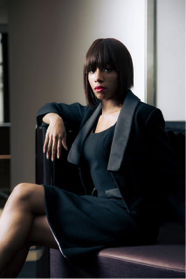
We asked Ms. Karen to discuss her beginnings in her emerging field.
“I attended Columbia University for my MA in Counseling Psychology, and also worked as a model in the fashion industry. I found when I was involved in the fashion aspect of my life be it as a model, dealing with PR or design elements, I couldn’t program my brain to turn off my analytic mind. It was then I realized I wanted to do something revolutionary in the world of fashion, but with a scholarly approach. Fashion is typically seen as being very surface, so I challenged myself to go deeper with research, topics and integrating my experiences in the industry.”
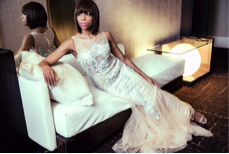
How did you do that?
I spent 9 months overseas doing research and meeting with clientele in Dubai, Kuwait, Malaysia, Thailand and Singapore. There was a lot of media exposure; I went from one interview in Australia to a plethora of media interviews in 14 different countries.
What happened next?
When I came back to the United States, I presented the field of Fashion Psychology to the Social Sciences Department at the Fashion Institute of Technology (FIT), here in New York. I taught a trial run Fashion Psychology class under another course and the students were extremely receptive. I dealt with all ages, from 20 years old to 70. At this same time, I was being contacted from individuals from around the world asking if there was any way for me to be their instructor. They were following me on social media and very excited about what I could teach them.
At that point I had nothing to offer these people in terms of providing formal education; I had encountered many obstacles and red tape in establishing a brand new degree program at a US college. In addition to this being a new field, I am young and also encountered many issues related to age-in spite of my Ivy League education and extensive research. I realized at that point it would take a long time for any American college to launch this field and so I created the Fashion Psychology Institute.
Please tell us about the Fashion Psychology Institute
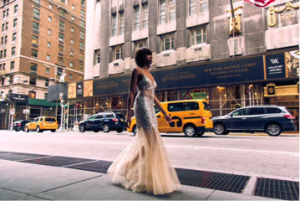
I also still have my consulting firm, “Fashion Psychology Success” where I work with all types of clients around the world from New York to Singapore; these are executives, politicians, comedians, entrepreneurs and even a country’s royalty. A lot of my work is international with both the Fashion Psychology Institute and Fashion Psychology Success.
In your opinion, what is the definition Fashion Psychology?
I define it as the study of how color, fashion and shape effects human behavior, while adjusting for cultural norms and cultural sensitivities. I add the cultural component because as I traveled the world I realized how the western world has a very ‘one track mind,’ is individualistic, and how we apply our western ideas to the rest of the world. The cultural component is necessary so we do not leave anyone out and are mindful of the norms of other cultures. For example, we must be mindful of a religion where individuals cover themselves but are fashionable underneath. We have to ask, ‘What does that mean?’
It is fascinating how far back in history the concept of fashion affecting the psyche goes.
Yes, yes! I will tell you that when I do speaking engagements at universities, workshops etc. I preface it and make clear that I didn’t create this, the information is already out there in different forms, for example; the psychology of dress, the psychology of image, the psychology of style, image consulting-this is already out there. What I did and do differently is create in the U.S. an academic approach-Fashion Psychology. You know, some things are hidden in plain sight; they are just waiting for someone to put a name on it.
This approach seems so different than one which predicts or incites someone to buy certain styles or fashion..
What you are talking about is consumer behavior, and yes, it can be applied to that. But I am a traditional therapist who applies psychology to solve problems. Take for example the “make-over ideology” which has elements of psychology at its foundation. My motto is: We are styling from the inside out. We don’t just give you a make-over and say “Voilá you are healed. We actually start from the internal and work our way out. We ask questions like, “Why do you wear that? What is your favorite color?” Some people are stuck in a certain decade and only wear things from that time period. We ask them “Why do you wear things from the 80’s? Was that when you felt at your peak? What experience are you having?”
If a person wears something horribly out of style, but they feel like a million dollars in it, which rules-what the person feels or what others think about the person?
Summary
We thank both of our experts for sharing their work and research with us. This is an exciting period it time: it seems psychology is the latest fashion, and fashion is officially psychological.
Related Articles
Related CareersComparative Psychology CareersTranspersonal Psychology CareersHow to Become a Neuropsychologist: Your Complete Guide to Degrees & Careers in NeuropsychologyChild and Developmental Psychology CareersCommunity Psychology CareersWhat Is Criminal Psychology? How to Begin Your CareerHow to Become a Clinical PsychologistBecome a BiogerontologistApplied Psychology CareersHow to Start a Forensic Psychology CareerNavy Psychology CareersIndustrial & Organizational Psychology CareersCareers in NeurologyRehabilitation Psychology CareersGeriatric Psychology CareersGet Started in an Army Psychologist CareerBecoming a Health PsychologistSpiritual Psychology CareersPsychological Anthropology CareersPolice Psychology CareersExperimental Psychology CareersCareers in NeuropathologySports Psychology Degrees & CareersCultural Psychology CareersConsumer Psychology CareersPsychometrician CareersHow to Start a Career as a School PsychologistCareers in Personnel PsychologyMedia Psychology CareersPsychiatry CareersPositive Psychology CareersBecoming an Environmental PsychologistGeropsychology CareersCareer As A Cognitive PsychologistAirforce Psychologist CareerHow to Start a Career as a Child PsychologistCareers in Cognitive NeuroscienceCounseling Psychology CareersEducational Psychology CareersEngineering Psychology CareersMilitary Psychology CareersSocial Psychology CareersBecome a GerontologistBecome a Social Gerontologist
Related Careers