Arachnophobia is the fear of spiders. Acrophobia is the fear of heights. Trypophobia is the fear of patterns of small holes. (It’s a thing!) These phobias can be simply a nuisance, or they can have a serious impact on our lives. Phobias like claustrophobia or agoraphobia may keep us inside and away from fun activities. They could also prevent us from moving forward in our careers or relationships. Or, these phobias could just be embarrassing.
So what do we do about phobias? There are a few ways to address or overcome irrational fears like the fear of spiders or crowds. In this video, I’m going to talk about systematic desensitization and why it’s one of the best ways to overcome fears. I will also provide some techniques and practices that can be used at home. While it is possible to desensitize yourself through these techniques, I would also recommend seeing a therapist or a medical professional so you can talk further about your fears.
What Is Systematic Desensitization?Examples of Systematic DesensitizationRelated posts:
What Is Systematic Desensitization?
Examples of Systematic Desensitization
Related posts:
In the 1950s, many World War II veterans were coming home and experiencing serious symptoms of PTSD. Except at the time, it wasn’t called PTSD. It was called “war neurosis,” and it was treated using truth serums. Not very effective. Joseph Wolfe was a South African psychiatrist who aimed to find better ways to help vets with PTSD overcome their fears and reduce their overall anxiety.
Throughout his career, he came up with reciprocal inhibition techniques, including systematic desensitization. His work has made him one of the most revered psychiatrists in the 20th century.
Wolfe used ideas from classical conditioning to come up with his techniques for systematic desensitization. He figured that the longer someone felt anxious when exposed to a certain stimuli, the longer the phobia would go on. He also figured that no one could feel both anxiety and calm at the same time. So if patients could slowly condition themselves to stay calm at the thought or sight of certain stimuli, they would eventually get over their phobia.

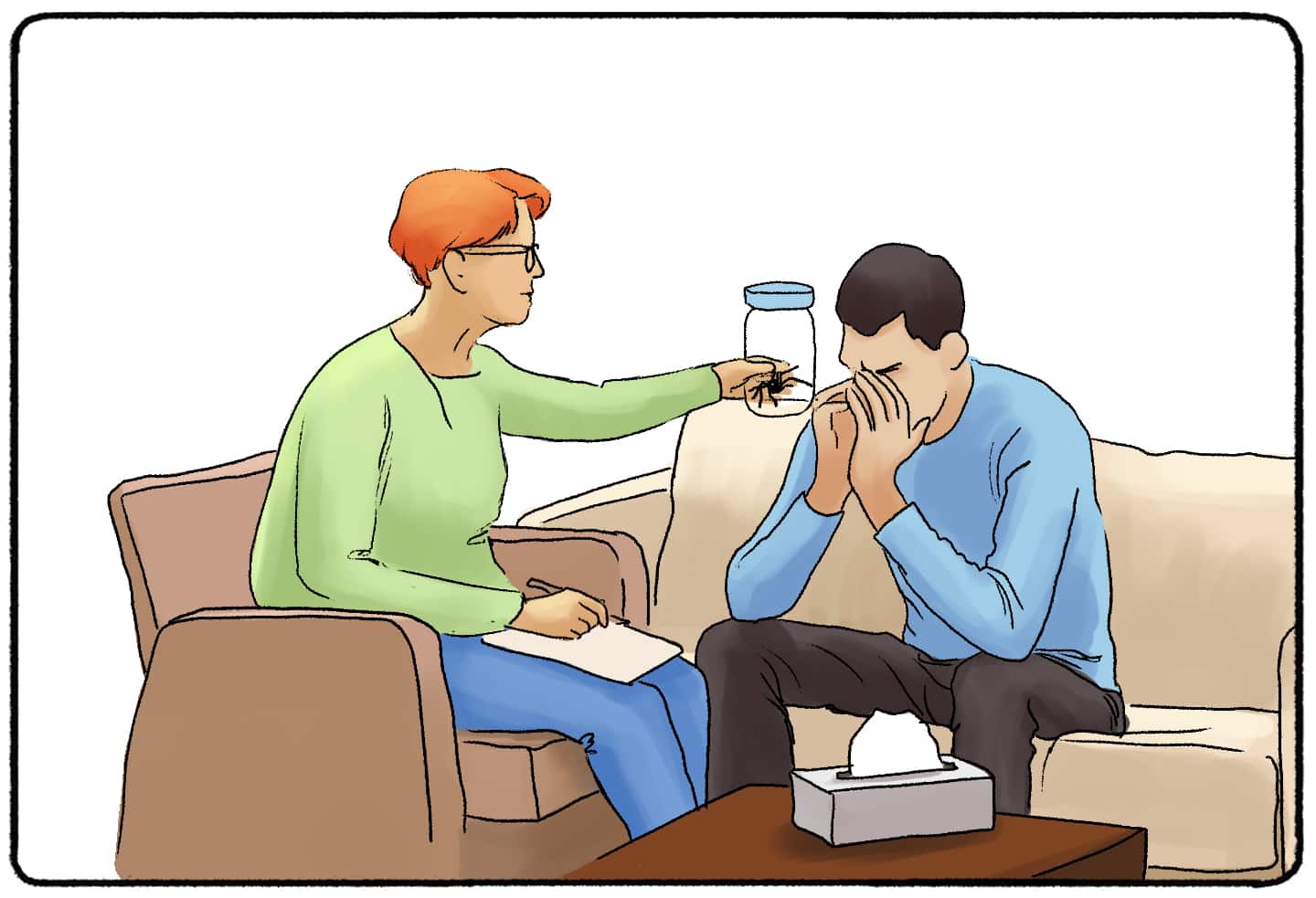
While systematic desensitization is a form of exposure therapy, it is known as a “graduated exposure therapy.” Exposure therapy can involve “flooding” patients with their phobia or exposing them to it in big doses. It doesn’t always work and can cause more trauma than healing. Many therapists have found that systematic desensitization is more effective.
Systematic desensitization can be used to “work your way up” to a life that’s phobia-free.
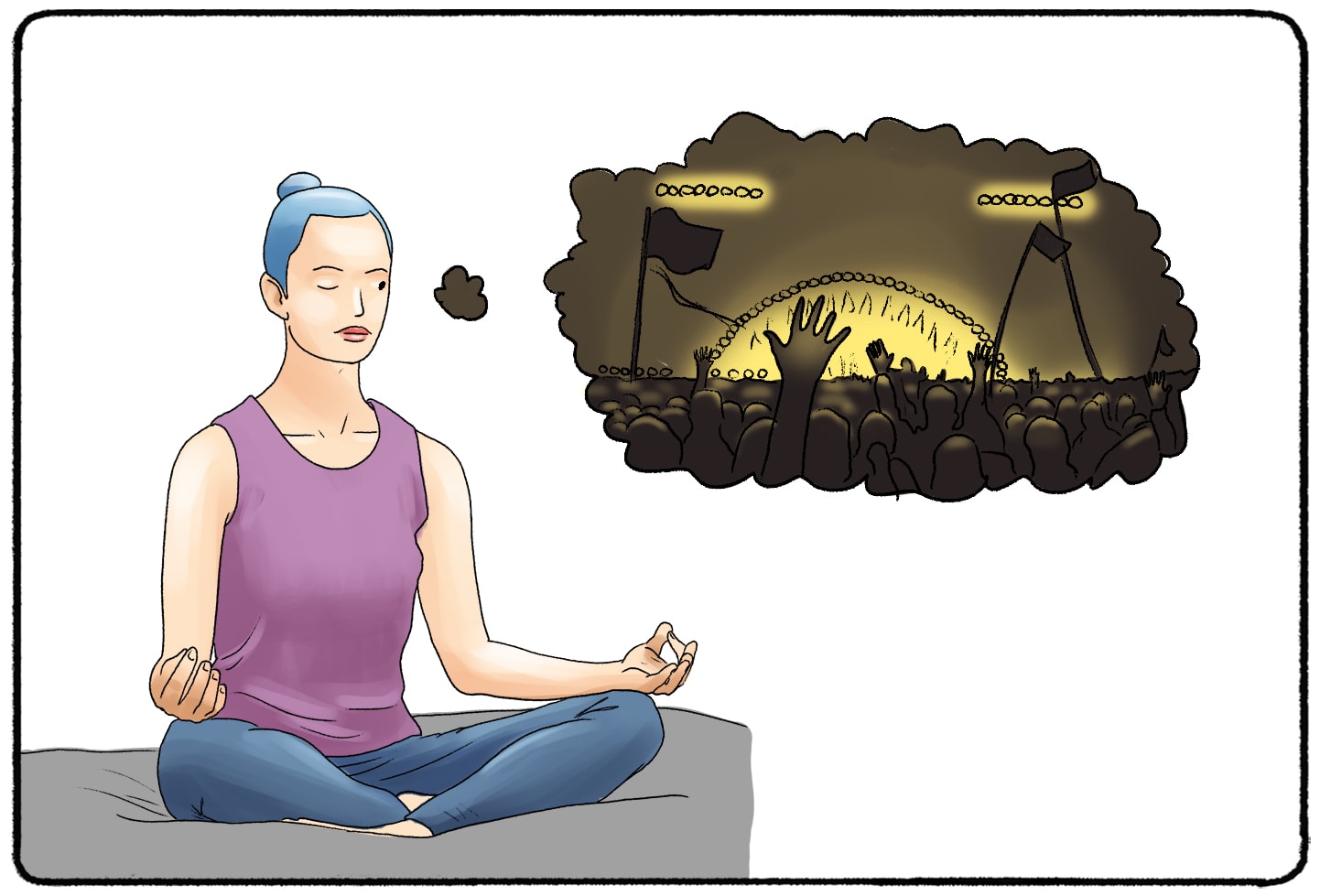
Have you ever heard someone feel trapped? They might tell themselves to think of wide, open spaces to make themselves feel better. Systematic desensitization kind of does the opposite. Let’s say you have a feel of crowds. You don’t have to put yourself in a crowd right off the bat. But think of yourself in a crowd at a music festival. The thought of this could make you anxious. Instead, systematic desensitization teaches you to incorporate relaxation techniques at the mere thought of crowds.
These relaxation techniques may include:
Deep, mindful breathing
Body scans
Calming visualization
Yoga
Listening to a guided meditation
Repeating a prayer, affirmation, or mantra
Othermindfulnesstechniques
Not all of these relaxation techniques will work for everyone. Together, the patient and the therapist (or the patient on their own) can work to find a technique that consistently brings about a state of peacefulness. That peacefulness should help to accompany the patient as they begin to gently expose themselves to their fear.
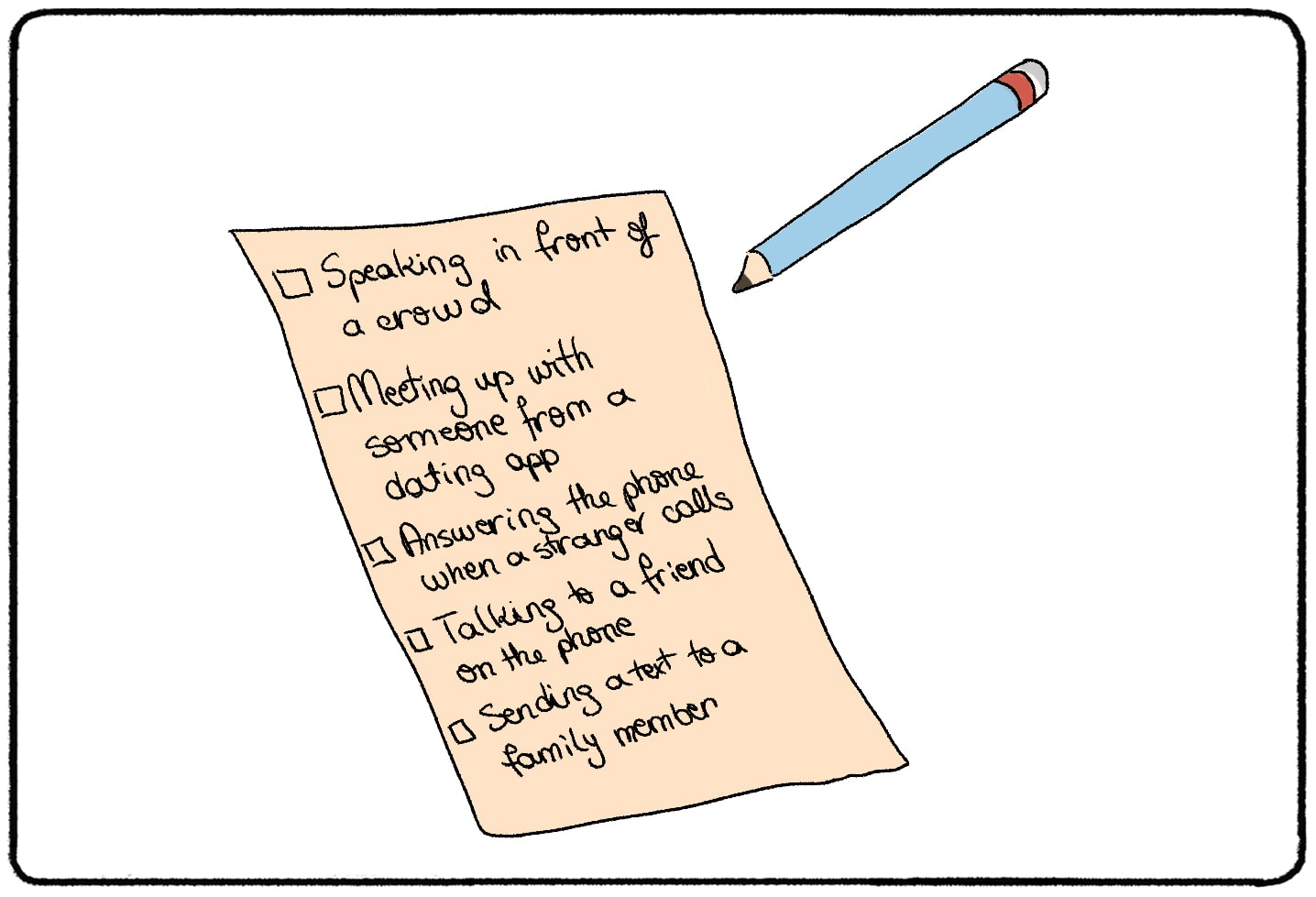
Once the patient knows how to calm themselves down at the thought of the phobia, they can continue up the “hierarchy” of their fears. At the bottom of this hierarchy may be the thought of the phobia. At the top may be the exposure to said hierarchy.
Here’s an example from Joseph Wolfe’s experience.
He had a patient that compulsively washed his hands and genitals after using the bathroom. (We’re talking hours of washing.) The compulsive behavior came from the fear of contaminating himself and others with urine. Using systematic desensitization, Wolfe was able to help the young man overcome his fear and stop the compulsive behavior.
Wolfe also started to place a bottle of urine away from the man. At first, the distance was large. Gradually, as the man conditioned himself to be less anxious at the thought or sight of the urine, Wolfe moved the bottle closer. Eventually, the man was able to remain calm even when a few drops of diluted urine were applied to his hands.
Let’s say you have social phobia, orsocial anxiety disorder. The first step in this process is finding the relaxation techniques (maybe a relaxing body scan) that works for you. Try this technique out before you even start to address your fear. Once you’ve mastered the technique, it’s time to move on.
Start at the bottom of the hierarchy. Picture yourself answering the telephone or engaged in whatever situation makes you feel a little anxious. Incorporate the relaxation technique until you feel calm while visualizing the situation. It may not happen on the first try, but keep practicing. Once you feel confident and calm visualizing this first situation, move on. Eventually, you will be able to face your social phobia head on without anxiety.
Again, this may require the help of a therapist or medical professional. If you are having trouble sticking to your program or progressing, reach out. But there is nothing wrong with starting the systematic desensitization process at home!
Related posts:Phobias and Fear (50 Common Phobias List)Flooding Therapy (Psychology Definition + Explanation)Athazagoraphobia - Fear of Being ForgottenSkinner’s Box Experiment (Behaviorism Study)Fear of Ghosts - Phasmophobia
Reference this article:Practical Psychology. (2020, January).Systematic Desensitization (Definition + Examples).Retrieved from https://practicalpie.com/systematic-desensitization-definition-examples/.Practical Psychology. (2020, January). Systematic Desensitization (Definition + Examples). Retrieved from https://practicalpie.com/systematic-desensitization-definition-examples/.Copy
Reference this article:
Practical Psychology. (2020, January).Systematic Desensitization (Definition + Examples).Retrieved from https://practicalpie.com/systematic-desensitization-definition-examples/.Practical Psychology. (2020, January). Systematic Desensitization (Definition + Examples). Retrieved from https://practicalpie.com/systematic-desensitization-definition-examples/.Copy
Copy
