How do you identify? What groups do you belong to? I’m not just talking about Facebook groups. I’m talking about the groups that you interact with every day - the groups that you feel you belong to. You may identify as a student of Temple University. Or you may identify as a member of your immediate family. Or as a Catholic.
The Social Identity Theory looks closer into how we come to belong to these groups and how it affects the way we socialize with others.
What Is Social Identity Theory?What Are The Three Stages of Social Identity Theory?Henri Tajfel QuotesExamples of Social Identity Theory
What Is Social Identity Theory?
What Are The Three Stages of Social Identity Theory?
Henri Tajfel Quotes
Examples of Social Identity Theory
In the late 1970s, Henri Tajfel and his team conducted a series of studies that would lead to the creation of the Social Identity Theory. The theory looks at why we are so loyal to groups that we belong to and why identification with one group inevitably causes conflict with others.
About Ingroups and Outgroups
For every “group” or “ingroup” that you belong to, there is another group. These are people thatdon’tidentify in the same way. The “others.” The students who go to other colleges, who come from different families, or practice different religions.

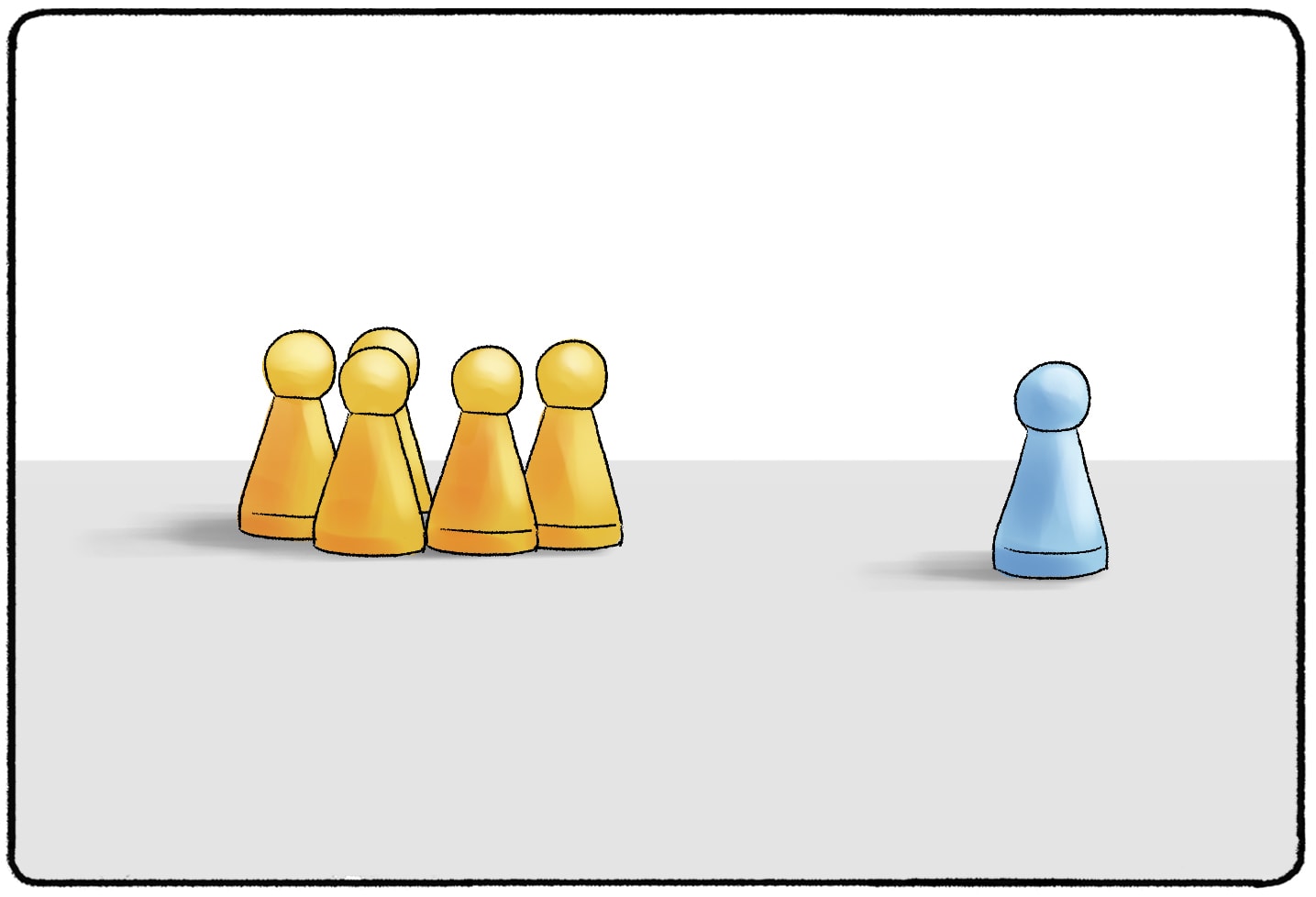
Social identity theory not only attempts to explain this “us vs. them” mentality, but also the symptoms of that mentality:prejudice, stereotyping, etc.
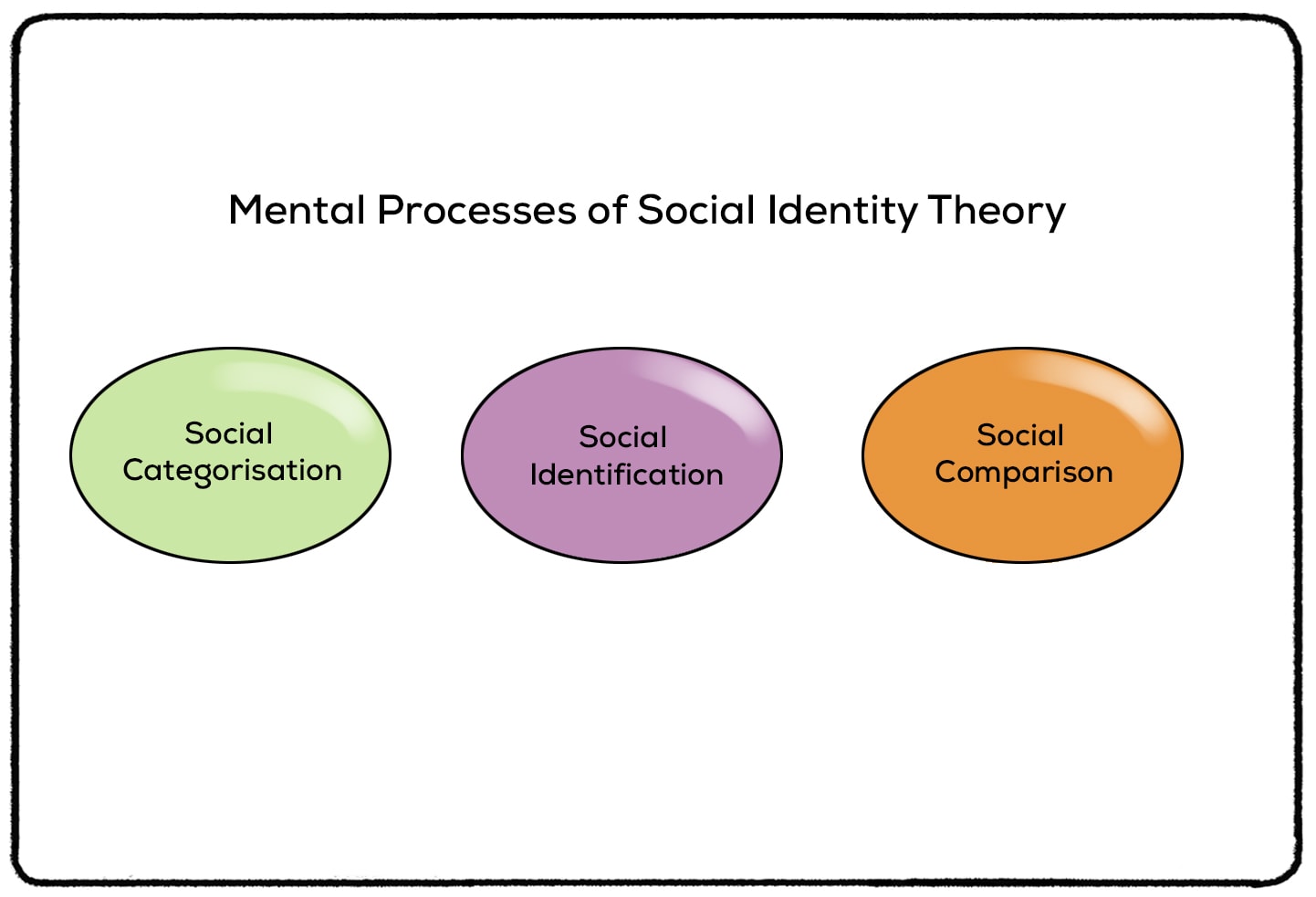
As individuals go through three stages and enter into groups, they potentially develop the us vs. them mentality that has shaped the story of human history.
Those three stages are:
Categorization
The first stage of the Social Identity Theory is categorization. You cannot belong to a group unless you know what groups exist.
Identification
Once you can categorize the world into different groups, it’s time to look at yourself. How do you identify?
Understanding your identity does more than continue to simplify how you look at the world and the different groups within it. It can also give you a sense of belonging.
Maslow’s hierarchy of needshas remained a crucial model for understanding human behavior and what motivates us to make decisions. At the bottom of this hierarchy is basic needs. Before we can explore the world at large, we need to feel safe and know where our next meal is coming from. Once these needs are satisfied, we seek love and belonging.
There are many ways to answer this question. You can identify yourself as a man, woman, or non-binary person. In addition to this, you can identify as a Catholic, Muslim, or Scientologist. You can also identify as straight, lesbian, or pansexual. Or you can choose to identify as none of these things! Just as you might identify someone as a man, a feminist, and a member of the football team, you may also take on multiple identities and feel that you belong to different groups.
The style of our hair or the car we drive makes it more obvious that we belong to a certain group. When we communicate this identity to people in that group, we are validated and feel that necessary sense of love and belonging.
Comparison
Why do we get this type of validation from making our identities more “obvious?”
It’s because the last stage of the Social Identity Theory is comparison. This is where the Us vs. Them mentality starts to come into play.
One of Henri Tajfel’s experiments regarding the Social Identity Theory asked participants to compare and assess people in different groups. The participants were given a group to identify with. (This group was meaningless outside of the experiment.) Throughout the experiment, Tajfel’s team asked participants to give points to other participants.
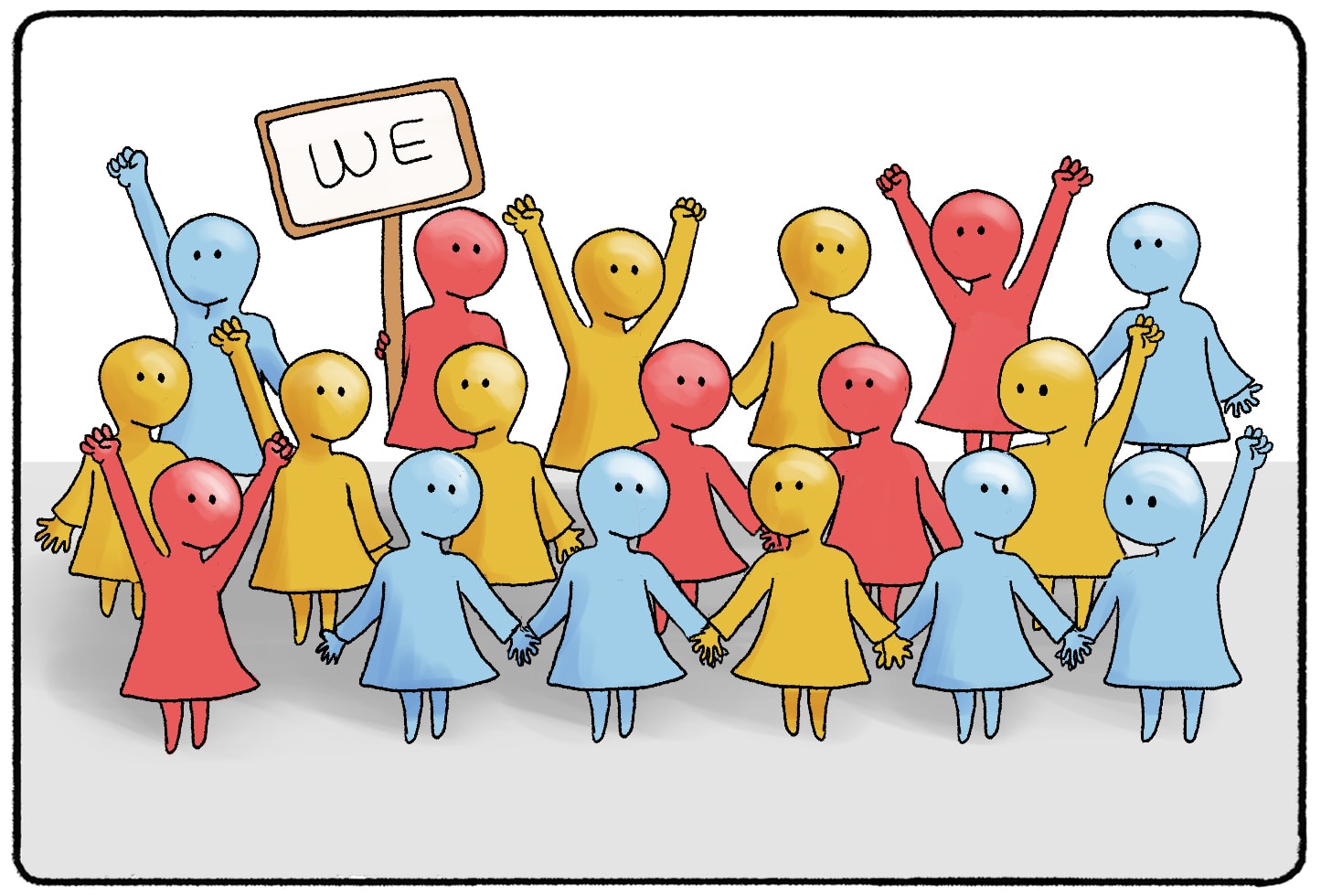
Henri Tajfel was a Polish-born social psychologist best known for his work with the social identity theory. He has written a handful of books on the subject. Below are some of his most notable quotes.
“Thus, it may well be that an accentuation of differences in size will hardly occur between two paintings, one liked and one indifferent or disliked. But when skin color, or height, or some facial traits of social ‘value’ are concerned, there will be marked sharpening of differences in the degree of these characteristics perceived as belonging to individuals who are assigned to different categories.”
“The etiology of intergroup relations cannot be properly understood without the help of an analysis of their cognitive aspects, and also that this analysis cannot be derived from statements about motivation and about instinctive behaviour.”
This could explain why people in Tajfel’s experiment were more likely to give points to people in their group.
Criticisms of Social Identity Theory
No theory is perfect. Social Identity Theory, like many theories in social psychology, may conflict with other theories or fail to explain everything. Take, for example, this question from Reddit:
“Is it fair to argue that social identity theory is limited in terms of understanding internalised oppression and identifying with out-groups?”
Users responded with additional resources and ideas within social identity theory that we have not explained on this page.
“There is a part of SIT that explains how people with stigmatized identities manage their identities and strive to achieve positive distinctiveness. There are three main strategies. The one you describe is called individual mobility and is when people de-identify with their stigmatized group and seek to join a higher status group instead. Socio-structural conditions influence people’s ability to follow the different strategies (e.g., permeability of group boundaries).”
“Look up self categorization theory and the concept of depersonalization.”
This Is Just An Introduction to Social Identity Theory
There is a lot more to learn and explore within the Social Identity Theory. As the Reddit user mentioned earlier said, not everyone who is “part of a group” wants to be identified within that group. Other factors also impact ingroups and outgroups. Threats to the group may result in the group disbanding. And within these groups, people can move “up the ranks” or be categorized into smaller groups.
So keep learning, keep listening, and keep exploring different areas of psychology that might provide further insight into the ideas of identity and belonging!
Related posts:Identity Achievement (in Psychology)Identity Crisis (Definition + Examples)Social Groups in PsychologyIdentity vs Confusion: Psychosocial Stage 5Ingroup Bias (Definition + Examples)
Related posts:
Reference this article:Practical Psychology. (2019, December).Social Identity Theory.Retrieved from https://practicalpie.com/social-identity-theory/.Practical Psychology. (2019, December). Social Identity Theory. Retrieved from https://practicalpie.com/social-identity-theory/.Copy
Reference this article:
Practical Psychology. (2019, December).Social Identity Theory.Retrieved from https://practicalpie.com/social-identity-theory/.Practical Psychology. (2019, December). Social Identity Theory. Retrieved from https://practicalpie.com/social-identity-theory/.Copy
Copy
