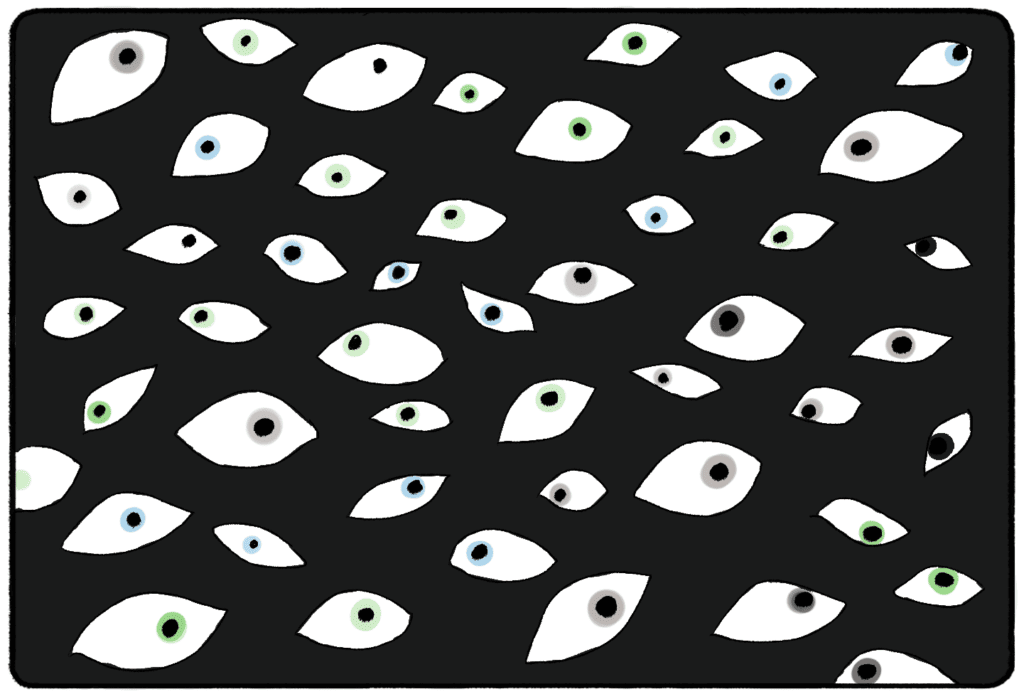
A student named Frances is about to give a presentation in front of a large audience. As she is getting ready to speak, she is aware of people looking at her and scrutinizing her every move. Although she is well prepared, Frances finds it hard to concentrate. Her mind is flooded with negative thoughts. She blushes, starts shaking, and feels the urgent need to get out of the room. She is convinced that people are observing her and judging her awkwardness while in reality, nobody notices. This type of anxiety is called scopophobia.
What Is Scopophobia?Scopophobia TriggersWhat Are the Symptoms of Scopophobia?Is Scopophobia Common?What Causes Scopophobia?How to Manage Scopophobia
What Is Scopophobia?
Scopophobia Triggers
What Are the Symptoms of Scopophobia?
Is Scopophobia Common?
What Causes Scopophobia?
How to Manage Scopophobia
 scopophobia
When Was Scopophobia Discovered?
The term scopophobia was first mentioned in 1906 in the psychiatric journal The Alienist and Neurologist, a few years after French psychiatrist Pierre Janet described the irrational fear of being watched in some of his patients.
While having some amount of social anxiety is not unusual, the fear related to scopophobia is disproportional compared to the actual risk. A mere thought of being looked at can be enough to cause a full-blown panic attack. Even though there is no danger, the body gets into the fight-or-flight mode, releasing adrenaline and making the person feel extremely stressed.
The fear of being observed is a unique kind of phobia. It is considered as being both a social phobia—because it takes place in a social setting—and specific phobia since it focuses on a particular type of interaction and manifests itself in detailed fear.
So what triggers scopophobia?
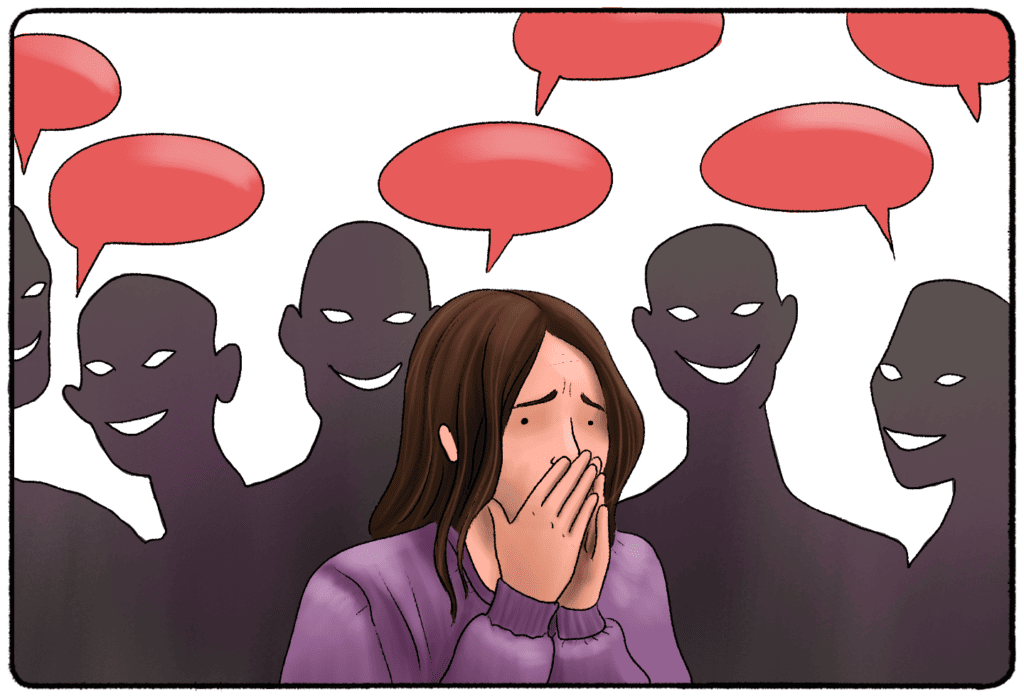
To make matters worse, people experiencing scopophobia may suffer from additional related phobias like fear of blushing (erythrophobia) or fear of public speaking (glossophobia). These phobias will, in their turn, also trigger a set of symptoms like heart palpitations and nausea.
Many people suffering from scopophobia avoid exposure to any situation where there is a probability of being watched. They often refuse to participate in social activities, afraid that meeting other people will trigger their anxieties. As a consequence of having little or no social contact, these individuals are often more prone to depression.
This is not rare. About one in eight people experience a social anxiety disorder like scopophobia. There is a wholeReddit thread discussing scopophobia. If this condition sounds familiar, know that you are not alone!
Several different conditions can cause scopophobia.
Genetics
Genetics can play a role in social anxiety, although it is not the most common cause of scopophobia. People with a family history of social anxiety disorder have an increased risk of developing it themselves.
Early negative experiences
Physical deformity
Neurological conditions
Some people with epilepsy, schizophrenia, autism spectrum disorders or Tourette’s syndrome can develop scopophobia. They are either afraid that being stared at may trigger an episode or fear that having an episode will cause unwanted attention.
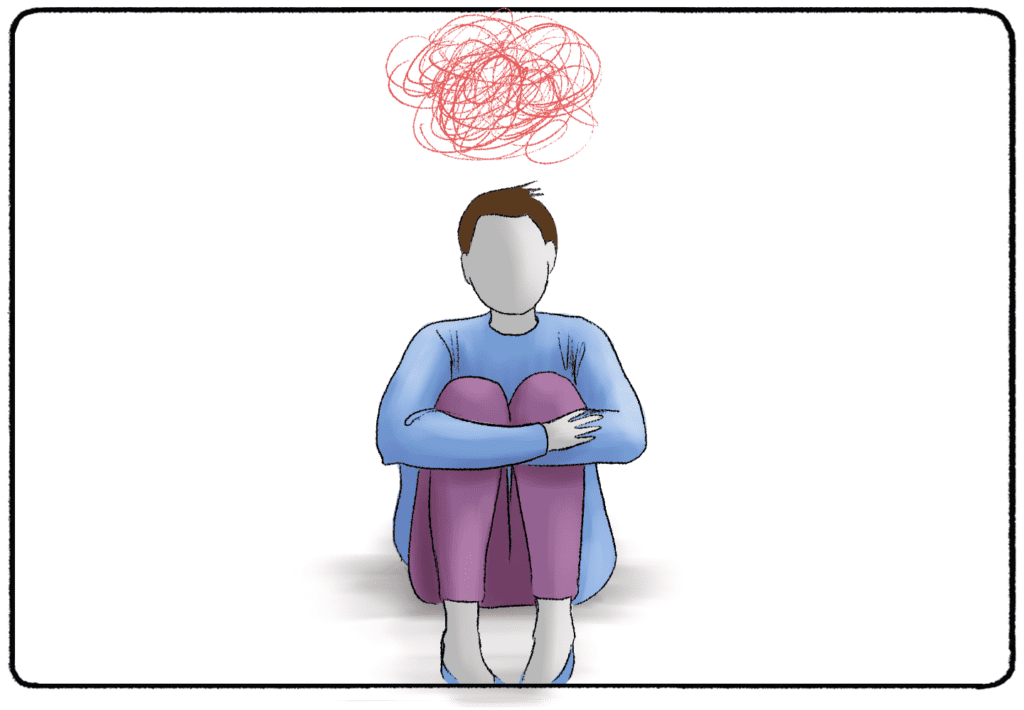
If left untreated, this fear can worsen over time. In extreme cases, it will have a severe impact on a person’s life. Psychotherapists use several different methods to help people suffering from scopophobia manage their anxieties.
Systematic desensitization
One of the most common strategies used in managing specific phobias issystematic desensitization, also called graduated exposure therapy. The therapy combines relaxation techniques with progressive exposure in order to help patients slowly conquer the phobia.
Patients are being confronted with phobia-related scenarios in their fear hierarchy, from the least threatening (a photo of someone staring) to the most dreaded one (the actual fear-provoking circumstances). Once they are comfortable with one step, they can move on until they are ready to face the most frightening situation.
Cognitive behavioral therapy (CBT)
Hypnotherapy
Hypnotherapy or suggestion therapy is an efficient way to treat many types of phobias. It relies on the ability of the mind to make changes through the use of positively phrased suggestions. The process allows patients to discover the underlying cause of their fear and suppress the automatic negative response to the stimuli.
Meditation
Meditation can help manage anxieties associated with specific phobias and scopophobia is no exception. Meditation makes it possible to control the physical symptoms of anxiety like hyperventilation, increased heart rate, dizziness, and muscle tension. This is achieved through relaxation techniques and breathing exercises, where fear is replaced with a state of calm.
Related posts:The Psychology of Long Distance RelationshipsBeck’s Depression Inventory (BDI Test)Operant Conditioning (Examples + Research)Abandonment Issues (Examples, Causes, and Treatment)Variable Interval Reinforcement Schedule (Examples)
Related posts:
Reference this article:Practical Psychology. (2020, April).Scopophobia - Fear of Being Stared At.Retrieved from https://practicalpie.com/scopophobia/.Practical Psychology. (2020, April). Scopophobia - Fear of Being Stared At. Retrieved from https://practicalpie.com/scopophobia/.Copy
Reference this article:
Practical Psychology. (2020, April).Scopophobia - Fear of Being Stared At.Retrieved from https://practicalpie.com/scopophobia/.Practical Psychology. (2020, April). Scopophobia - Fear of Being Stared At. Retrieved from https://practicalpie.com/scopophobia/.Copy
Copy
