Theories in psychology and science are always changing and evolving. There are many different schools of thought that suggest how humans see the world, communicate, or make decisions. And when a theory or concept gets popular, it may spread like wildfire, bringing false information with it.
I want to discuss a concept in psychology that has been up for debate for decades. The research surrounding this concept brought us the idea that Inuits have 100 words for snow! This video is about the Sapir Whorf Hypothesis.
What is the Sapir Whorf Hypothesis?Linguistic RelativityHistory and Controversy Surrounding The Sapir Whorf Hypothesis
What is the Sapir Whorf Hypothesis?
Linguistic Relativity
History and Controversy Surrounding The Sapir Whorf Hypothesis
The Sapir Whorf Hypothesis began aslinguistic determinism.This concept states that our language determines how we think and perceive the world. There are different levels of linguistic determinism, some that are “stronger” than others. “Weaker” forms of this idea suggest that language simplyinfluencesthe way we think.
To people who only speak one language, the concept of linguistic determinism might be hard to grasp. There are many different languages, but we’re all saying the same things, right?
Not so much. Different languages, especially those spoken on different continents or in more isolated areas, have varying structures. Some languages contain tenses for the past, present, and future, like English. When we put events in a linear timeline, it’s not hard to see our world in a more linear fashion. That’s not exactly the case in other languages or cultures.
We can also look at how languages use (or don’t use) pronouns. Some languages have gendered pronouns foreverything:the sun, the moon, a chair, a television, etc. Other languages only have gendered pronouns for people or a handful of objects. Others have different types of pronouns for animate objects, inanimate objects. “Fluid” gendered pronouns exist in some languages.
If we assign everything a gender, how might that influence the way we look at gender (or the objects assigned a specific gender?) If we put every event into a linear timeline, how might that influence the way we view history?
These are some of the questions that sparked the ideas of the Sapir Whorf Hypothesis.
There are over 6,500 spoken languages in the world today. At least one-third of these languages have fewer than 1,000 speakers. There are thousands of “extinct” languages, too.
If language determines the way that we think and see the world, what does this say about people who speak different languages?

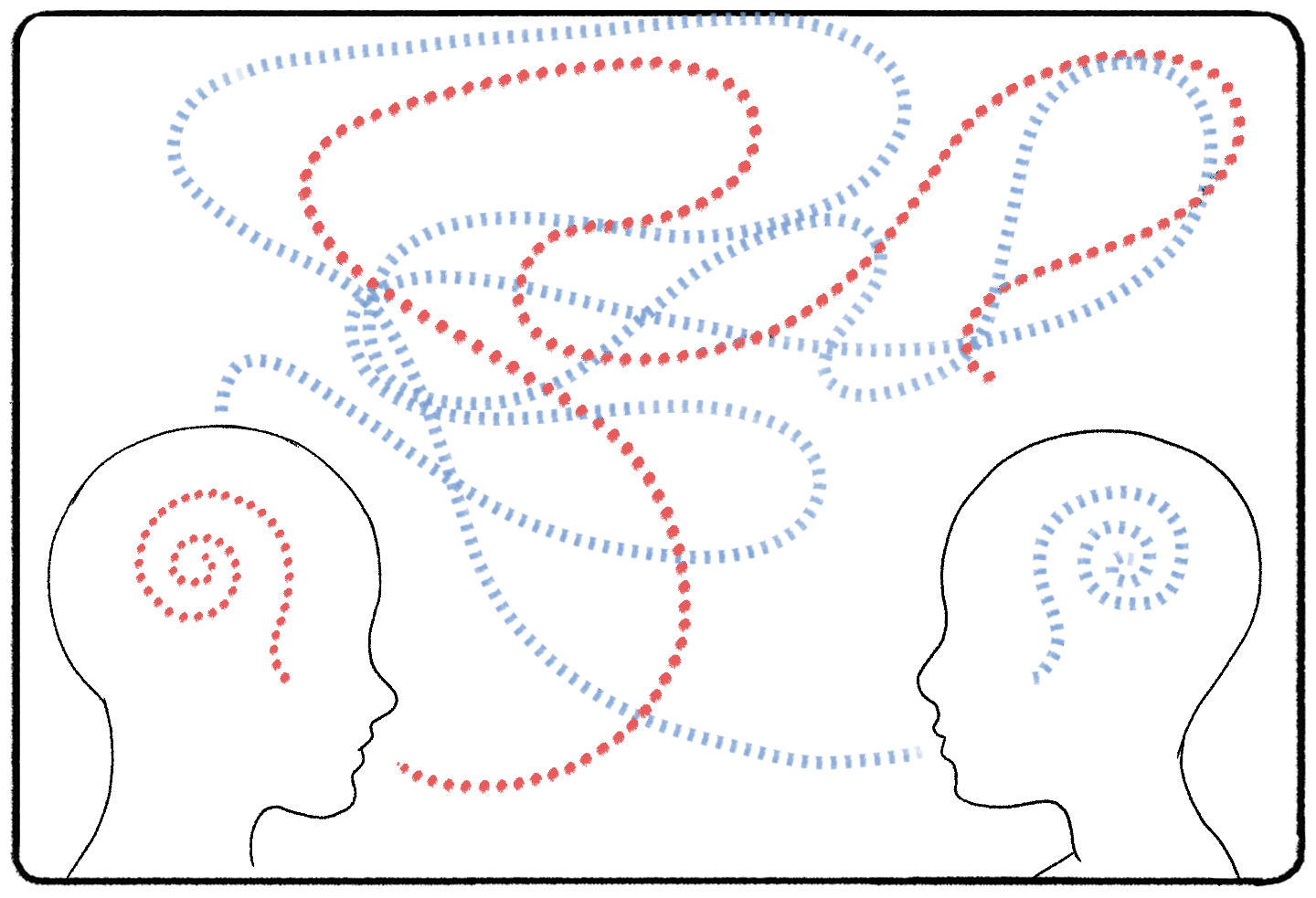
This is where the second part of the Sapir Whorf Hypothesis comes in, and why it’s also known as Linguistic Relativity. Linguistic Relativity states that because language determines how we think and perceive the world, people who speak different languages think and perceive the world differently.
Examples of Linguistic Relativity In Today’s Languages
Take the worldGezellig.Gezelligis a Dutch word that can’t exactly be translated to English. It describes a feeling of coziness, but it’s so much more than just an adjective. A visit to see close friends isGezellig.The feeling of walking into your grandparent’s house can beGezellig.Family reunions, relaxing coffee shops, or a connection with a new friend can all beGezellig.
One could argue that the existence of this word could explain how Dutch and English/American culture differs. Many language experts believe thatGezelligis the “heart of Dutch culture.” Americans simply don’t place the same emphasis on coziness and togetherness as the Dutch do.
When Americansdolong for the cozy life, they look to European cultures.Gezelligdescribes a similar feeling and atmosphere as the Danish and Norwegian wordHygge.They’re not the same - whileGezelligusually describes a more sociable gathering or person,Hyggeis more likely to describe physical comfort. Warm bowls of soup, sheepskin rugs, and extra fuzzy blankets are all crucial to theHyggelifestyle. Since Denmark and Norway can be quite cold, it makes sense thatHyggeis a favorable lifestyle. The differences in climate may also offer an explanation as to whyHyggecannot be directly translated in English.
How Linguistic Relativity May Be Used To Manipulate
Some experts believe that Sapir Whorf could be used to develop or explain how artificial intelligence can better communicate with humans. Understanding Sapir Whorf can also cause themanipulationof languages. Take Newspeak in George Orwell’s1984.Newspeak made it impossible for citizens to criticize the establishment. If you don’t have the language to criticize the establishment, how can you do it?
Films likeArrivalalso explore this idea. Of course,Arrivalis a fictional movie and exaggerates what could be possible. But this idea continues to fascinate linguists, storytellers, and moviemakers.
Why is this hypothesis called the Sapir Whorf Hypothesis?
It’s not because someone named Sapir Whorf came up with it. Edward Sapir was a Polish-American anthropologist and linguist born in the late 19th century. He studied and classified indigenous languages, including the languages of Inuit tribes in Canada. Sapir believed the language could influence the way we think, but he was not a believer of strong linguistic determinism. He also did not conduct experiments on the way that language influenced thought.

Benjamin Whorf, born 13 years after Sapir, took his ideas and ran with it. Through his work, he suggested a stronger idea of linguistic relativity. He has been quoted as saying, “Language shapes the way we think, and determines what we can think about.”
Not all linguists are on board with language’s impact on thought. Some of the hypothesis’ greatest critics are Noam Chomsky and Steven Pinker. British linguist Geoffery Pullum has also criticized the hypothesis with a paper called“The Great Eskimo Vocabulary Hoax.” You can guess what fun fact was included in that paper.
Despite claims to debunk the hypothesis, it still remains one of the more influential concepts in the world of linguistics. Two decades after Pullum published his paper, anthropologistIgor Krupnikpublished a book with his own research on Inuit languages. He found at least 100 terms for sea ice.
So does language determine how we think? Does it simply influence how we think? There is no right or wrong answer that all linguists can agree upon. There is still more work to be done - and while more languages become extinct every year, the time to do that work is now.
Related posts:Skinner’s Box Experiment (Behaviorism Study)Neuro-Linguistic Programming (NLP Definition + Examples)Facial Feedback Hypothesis (Definition + Examples)Acculturation (Definition + 20 Examples)Genie - The Feral Child
Related posts:
Reference this article:Practical Psychology. (2020, March).Sapir Whorf Hypothesis.Retrieved from https://practicalpie.com/sapir-whorf-hypothesis/.Practical Psychology. (2020, March). Sapir Whorf Hypothesis. Retrieved from https://practicalpie.com/sapir-whorf-hypothesis/.Copy
Reference this article:
Practical Psychology. (2020, March).Sapir Whorf Hypothesis.Retrieved from https://practicalpie.com/sapir-whorf-hypothesis/.Practical Psychology. (2020, March). Sapir Whorf Hypothesis. Retrieved from https://practicalpie.com/sapir-whorf-hypothesis/.Copy
Copy
