Want to see examples of Proactive Interference to help you learn what the definition is? This page will be your best friend.
Let’s say you spent a few years in high school learning a second language - we’ll go with French. Years later, you take up Spanish. As you try to come up with Spanish words in conversation or on a test, you find yourself saying the same words, but in French!
What is Proactive Interference?Examples of Proactive InterferenceStudies on Proactive InterferenceHow to Reduce Proactive Interference
What is Proactive Interference?
Examples of Proactive Interference
Studies on Proactive Interference
How to Reduce Proactive Interference
Proactive interference, also known as proactive inhibition, occurs when old memories interfere with your ability to encode and retrieve new information. Psychologists theorize it’s difficult to create a new memory that contradicts or is too similar to older memories, like the Spanish or French translation of the same word.
There are two types of interference: proactive andretroactive interference. If you have experienced an interference like in the situation I mentioned earlier, you experiencedproactive interference.This is a type of interference whereold memoriesinterfere with your ability to makenew memories.Proactive interference is also commonly known asproactive inhibition.
Older adults are more likely than young adults to experience proactive interference. It makes sense - they’ve got a lot more memories stored away that can interfere with new memories. Maybe when the phrase “you can’t teach an old dog new tricks” was created, the old dog was just unable to learn the tricks due to proactive interference!
 proactive interference
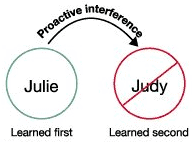
A lot of examples of proactive interference appear to be things that we have done out of habit. In fact, changing one habit to another is a form often creates proactive interference.
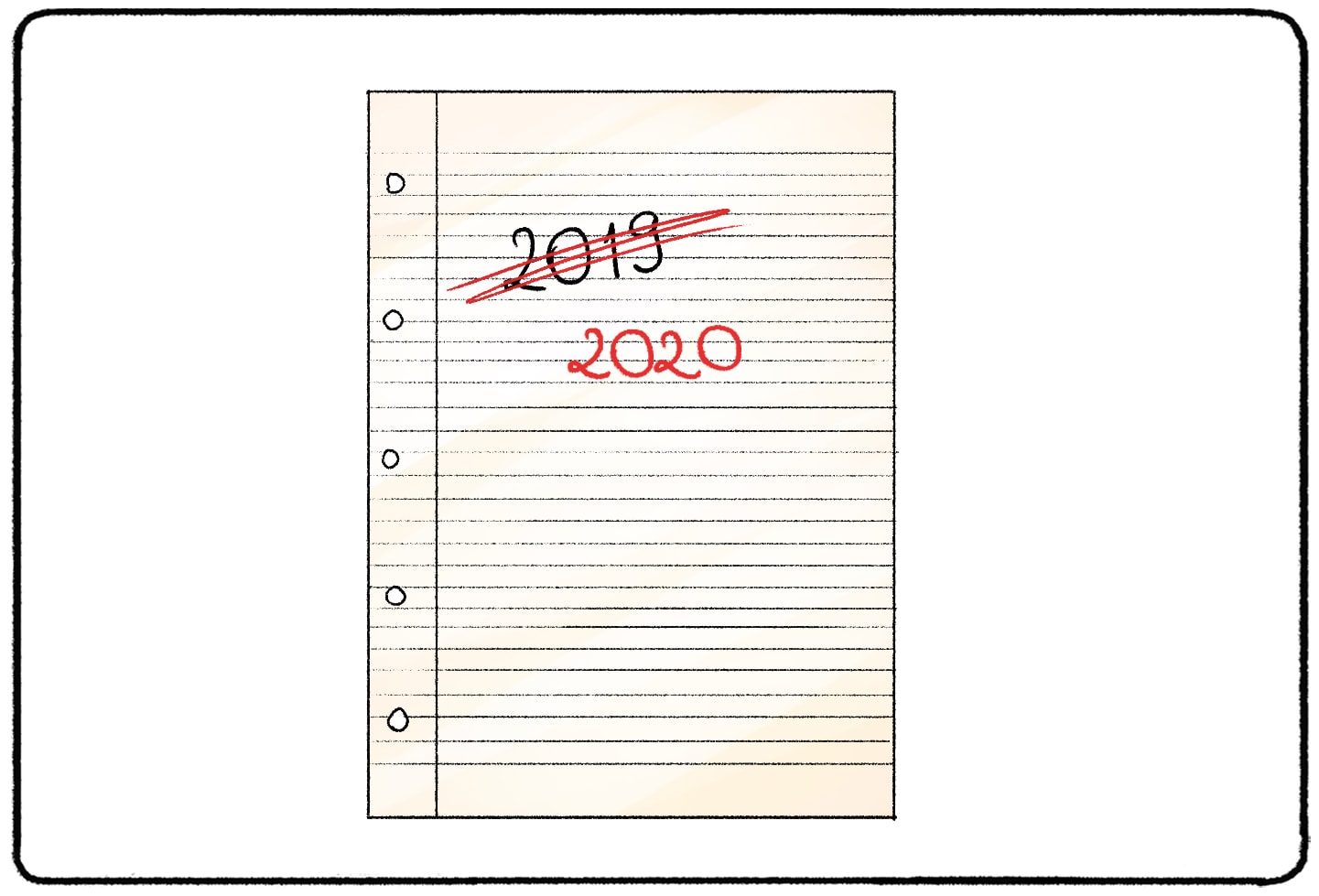
For example, after January 1st, everyone slips up and writes the old year down once or twice. It may take weeks for people to write the correct year because the memory of writing the old year down is interfering.
This may also happen when someone changes their name or pronouns. The memory of the person’s former name or pronouns may come to mind in conversation and you slip up.
Multiple lists of information may also result in proactive interference. In most studies involving this theory, participants use lists as a way to assess whether proactive interference is present.
Writing down the date in January can be a struggle. You feel like you’ve just gotten used to writing the right year and then it’s time to write the new year. This is a classic example of proactive interference. Old memories orhabitsof writing 2019 get in the way of writing 2020. If you get a new phone number or a new address, the same thing might occur.
Learning multiple languages can be hard. The oldest information - the language you are fluent in - may frequently interfere with the new information that you are trying to learn. But if you are learning a third or fourth language, that second language may also try and interfere.
Let’s say you are learning Spanish, but you’re already fluent in English and have spent many years learning Italian. If you accidentally let an English or Italian word slip while trying to speak Spanish, you can blame proactive interference for the flub.
If you have learned about proactive interference, it’s likely that you have also learned about retroactive interference. Let’s say you learned about retroactive interference first - it occurs when new memories get in the way of recalling older memories. That information is stuck in your head when you try to learn what proactive interference is. That’s proactive interference at work - the older information about retroactive interference is holding you back from trying to create new memories!
Hanley and Scheirer were the first scientists to look at proactive interference back in 1975.
While multiple studies have looked at the existence of proactive interference, there is still work to be done about how it happens in the brain.Some studiessuggest that Proactive Interference could happen to any memory, whether it has been stored away for a long time or is freshly learned. Other studies suggest that Proactive Interference only occurs in working memory.
Proactive Interference And Alzheimer’s Patients
Memory interference, proactive and retroactive is linked to degenerative diseases like Alzheimer’s.Researchis currently being conducted on whether susceptibility to proactive interference is an indication of Alzheimer’s or similar conditions.
Another question that frequently comes up concerns how topreventproactive interference. How can you reduce the chance that you will use a French word instead of a newly-learned Spanish word?
Other Types of Interference and False Memories
Proactive interference is just one type of interference. The other type of interference appears to be the opposite. And in addition to these two phenomena, there are many types offalse memories and memory errors!
Related posts:Retroactive Interference (Definition + Examples)Long Term MemoryRetroactive Jealousy (Examples Included)5 Theories of Forgetting (Memory)Memory (Types + Models + Overview)
Related posts:
Reference this article:Practical Psychology. (2019, August).Proactive Interference (Definition + Examples).Retrieved from https://practicalpie.com/proactive-interference/.Practical Psychology. (2019, August). Proactive Interference (Definition + Examples). Retrieved from https://practicalpie.com/proactive-interference/.Copy
Reference this article:
Practical Psychology. (2019, August).Proactive Interference (Definition + Examples).Retrieved from https://practicalpie.com/proactive-interference/.Practical Psychology. (2019, August). Proactive Interference (Definition + Examples). Retrieved from https://practicalpie.com/proactive-interference/.Copy
Copy
