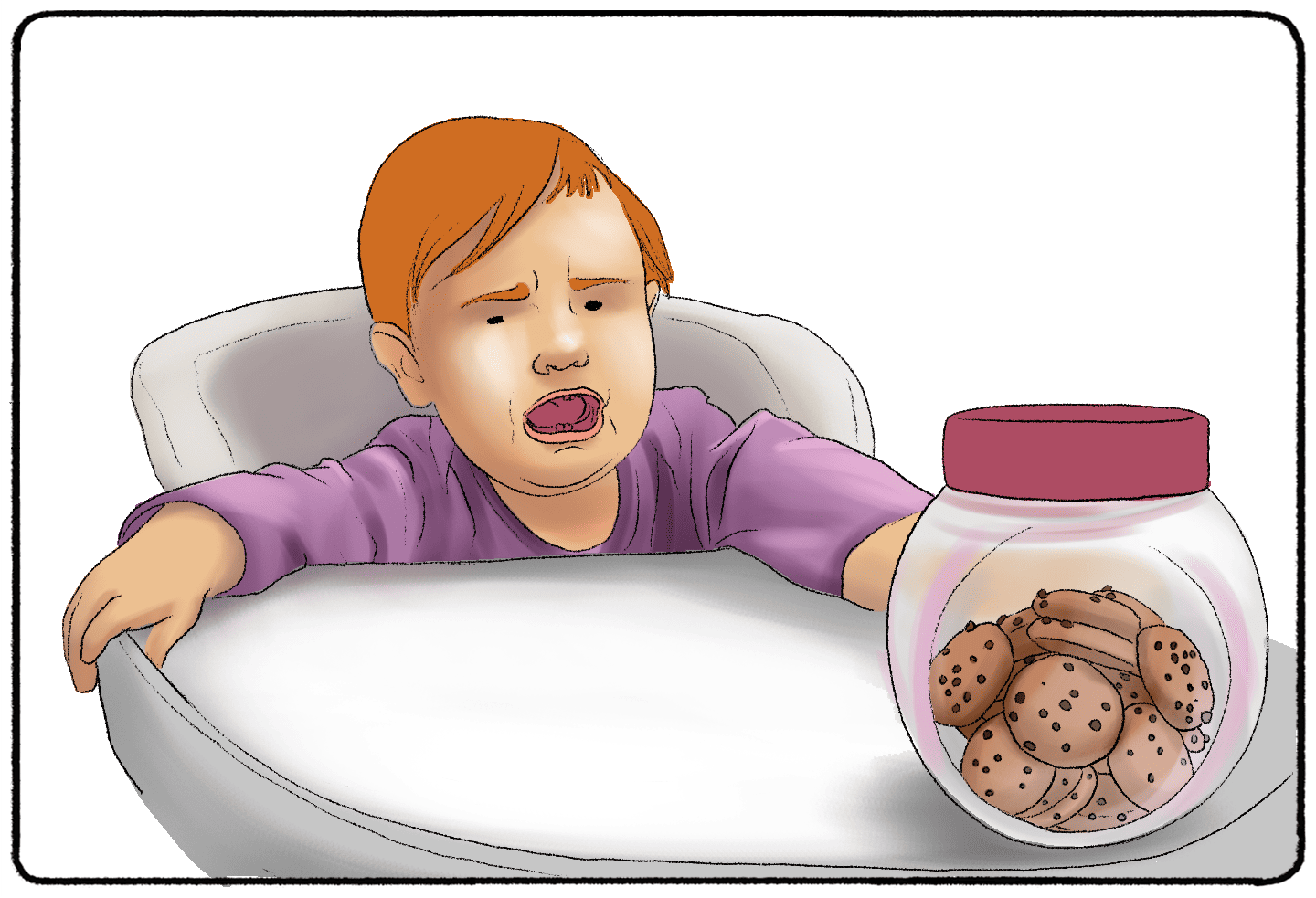
What if he is very hungry? Would it still be wrong to have a cookie? Could disobeying the rule be acceptable in this case? The answer may be found in theories like Jean Piaget’s Theory of Moral Development.
What Are Piaget’s Stages of Moral Development?What is Moral Development?Piaget’s Moral Development StagesHow Children Understand the RulesCriticisms of Piaget’s Theory of Moral DevelopmentApplying the Stages of Moral Development: A Guide for Educators and ParentsKohlberg’s Stages of Moral Development
What Are Piaget’s Stages of Moral Development?
What is Moral Development?
Piaget’s Moral Development Stages
How Children Understand the Rules
Criticisms of Piaget’s Theory of Moral Development
Applying the Stages of Moral Development: A Guide for Educators and Parents
Kohlberg’s Stages of Moral Development
Jean Piaget identified stages of moral development in which a child adheres to rules and makes decisions. Piaget was mainly interested in children’s understanding of moral issues: rules, moral responsibility, and justice. The stages at which children understand rules correlate with cognitive development.
 moral development

Morality is a code of conduct that guides our actions and thoughts based on our background, culture, philosophy, or religious beliefs. Moral development is a gradual change in the understanding of morality.
Children’s ability to distinguish right and wrong is a part of their moral development process. As their understanding and behavior toward others evolve over time, they apply their knowledge to make the right decisions even when it’s inconvenient for them to do so.
Piaget’s Theory of Cognitive Development
Swiss psychologist Jean Piaget (1896-1980) was among the first to identify how children think inherently differs from how adults do. Unlike many of his predecessors, Piaget didn’t consider children less intelligent versions of adults. They simply have a different way of thinking.
Piaget was the first psychologist to undertake a systematic study of cognitive development. His stage theory of cognitive development explains that children’s mental abilities develop in four stages: sensorimotor, pre-operational, concrete operational, and formal operational. Children can reach their full intellectual potential only after having mastered each one.
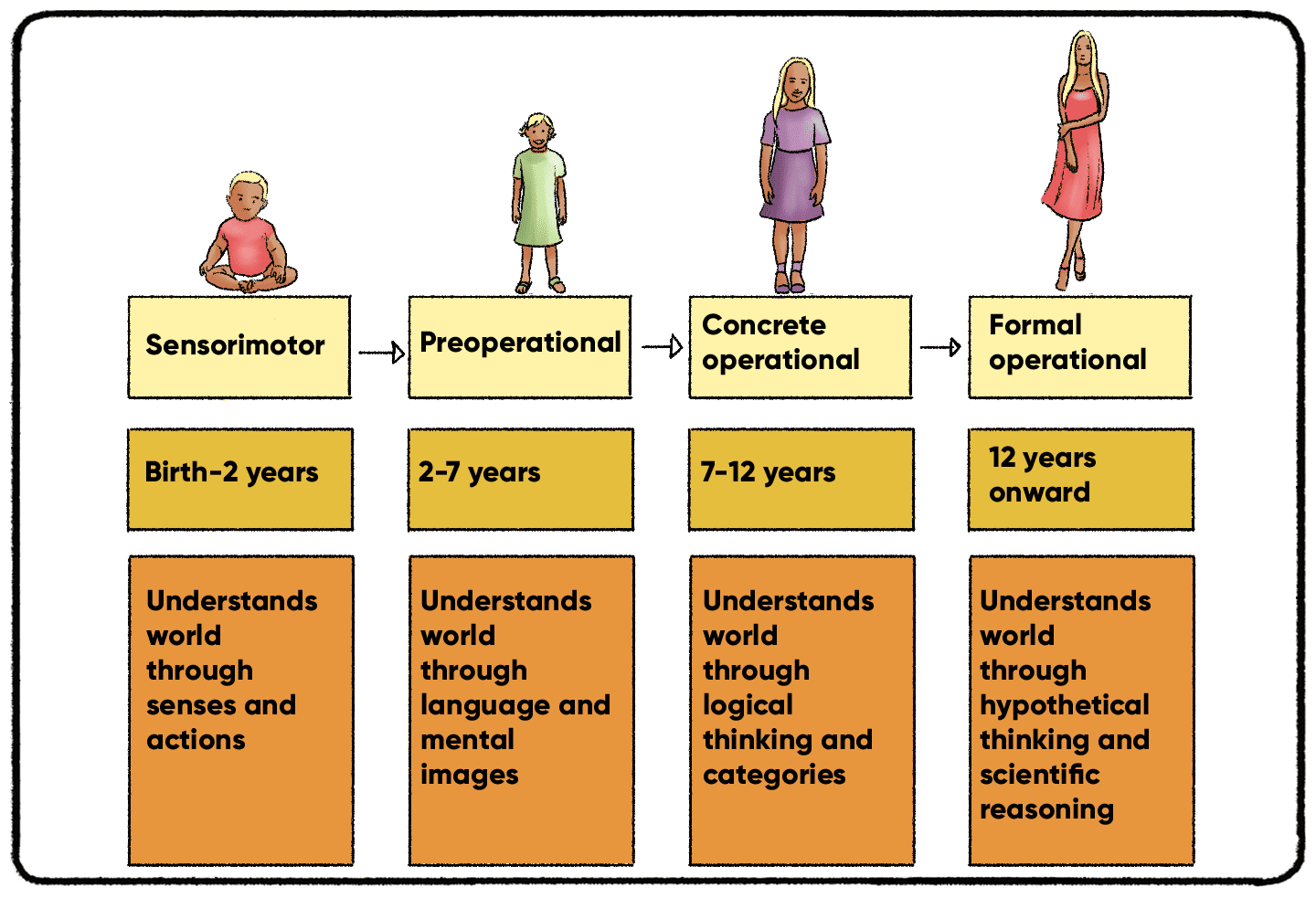
For Piaget, children’s moral development is closely related to their cognitive development. In other words, children can only make advanced moral judgments once they become cognitively mature and see things from more than one perspective.
Piaget formulated the cognitive theory of moral development in The Moral Judgment of the Child in 1932. His theory of children’s moral development applies his ideas on cognitive development.
According to Piaget, the basis of children’s reasoning and judgment about rules and punishment changes as they get older. Just as there are universal stages in children’s cognitive development, there are stages in their moral development.
Piaget devised experiments to study children’s perceptions of right and wrong. Part of his research included telling a story about something another child did, like breaking a jar of cookies. Then, he would ask children whether they thought that action was right or wrong. He wanted to know the logic behind their moral reasoning.
He found that while young children were focused on authority, with age, they became increasingly autonomous and able to evaluate actions from a set of independent principles of morality.
Piaget’s Theory of Moral Development described two stages of moral development: heteronomous morality and autonomous morality.
Heteronomous morality
The stage of heteronomous morality, also known as moral realism or other-directed morality, is typical of children between the ages of 5 and 10.
In middle childhood, children typically believe in the sanctity of rules. An authority figure, such as a parent or teacher, makes rules. These rules must be followed and cannot be changed, they are absolute and unbreakable.
At this stage, children’s firm belief that they must follow the rules is based upon their understanding of the consequences. Not following the rules will lead to negative outcomes. Most younger children will obey the rules simply to avoid punishment. Even when completely alone, a child who breaks a rule—takes the forbidden cookie from the cookie jar, for example—will expect to be punished. An authority figure’s physical presence is unimportant because morality is imposed from the outside.
But as they develop and mature, children move to a higher level of morality.
Autonomous morality
The stage of autonomous morality, also known as moral relativism or morality of cooperation, is typical of children from the age of 10 and continues through adolescence.
Children are now beginning to overcome the egocentrism of middle childhood. Their appreciation of morality changes due to their newly acquired ability to view situations from other people’s perspectives. They are, therefore, also capable of considering rules from someone else’s point of view. Moral rules are not perceived as being absolute anymore. Instead, older children realize that rules are socially agreed-upon guidelines. They are designed to benefit all the group members and are adjustable.
Older children can assess whether a rule is fair or not. Although they still know that it is important to follow the rules, they see them as complex and flexible. They are willing to negotiate and suggest rule modifications. For instance, while playing a board game, older children may want to implement their own rules or change the ones they find unfair.
Piaget believed that the most effective moral learning comes from this group decision-making situation.
As they age, children understand that the motives behind actions are as important as the consequences. Their choice to follow the rules is no longer based on the fear of negative outcomes but on a more complex moral reasoning. During this stage, children recognize that there is no absolute right or wrong and that morality depends on intentions rather than consequences.
These stages correlate with Piaget’s Stages of Cognitive Development.
Motor Rules
While the child is under the age of four, they are in thesensorimotor stage. At this point, they are not grabbing the rules from the game unless they want to explore the feel of the paper. Children in this stage act based on exploring their motor schemes and how they relate to the game objects. Think about a toddler picking up a marble, putting it in their mouth, throwing it across the room - they’re not doing it because it’s in the rules. They just want to explore.
Egocentric
Incipient Cooperation
Genuine Cooperation
Piaget’s theory of cognitive development was created after he completed similar studies on boys and girls. He believed there were no differences in their cognitive development: conservation, animism, and object permanence were all part of the process no matter what sex the child was born. Piaget’s theory of moral development was created slightly differently.
What does this mean for Piaget’s assessment of morality in girls vs. boys? Well, researchers to this day are unsure. However, researcherscritique his choice of having girls and boys play different games and argue that the playing field should be level before conclusions are made.
Furthermore, it’s essential to note the potential cultural biases in Piaget’s conclusions. Different societies may have varying perspectives on morality, which could influence how children within those societies understand and interpret rules and moral decisions.
Understanding the intricacies of moral development stages offers a valuable lens through which educators and parents can view and guide a child’s ethical growth. Practical application of this knowledge can aid in fostering a deep-seated sense of morality beyond mere rule-following.
By adopting these strategies, educators and parents can create environments where moral and ethical growth is organic and deeply rooted in understanding and empathy rather than imposed authority. Over time, this helps develop intrinsically motivated individuals to make moral choices, not just because of external rules but because they believe it’s the right thing to do.
Many psychologists identified stages of development: Freud created stages of psychosexual development, Erikson identified stages of psychosocial development, and Piagetalsoidentified stages of cognitive development. However,more than one notable psychologist identified stages of moral development. Alongside Piaget, Lawrence Kohlberg identified stages of moral development. The two theories differ slightly but face similar criticisms.
Kohlberg vs. Piaget’s Theory of Moral Development
Both Piaget and Kohlberg focused on how individuals develop their moral reasoning. While they have fundamental similarities, their approach and the intricacies of their stages differ in various ways.
Piaget’s approach to moral development was based on the premise of children’s interactions with their environment, their understanding of rules, and their evolving perspectives of justice. He was particularly interested in how a child’s view of their place in the world shaped their morality and decisions. On the other hand, Kohlberg was more focused on moral reasoning itself. He aimed to uncover how and why children and adults deemed certain actions right or wrong.
For a practical context, let’s take the scenario of a child faced with the choice to steal a toy from another child. Using Piaget’s theory, a younger child in the heteronomous stage might decide against stealing purely because of the fear of punishment or because “it’s a rule.” On the other hand, Kohlberg’s theory might interpret the child’s decision based on the reason behind it. If the child avoids stealing due to a universal principle of fairness and rights, they might be operating at one of Kohlberg’s higher stages of moral development.
Kohlberg’s model goes further than Piaget’s, extending into adulthood. While Piaget identified two main stages of moral development, Kohlberg detailed six stages, further categorized into three levels. Moreover, Kohlberg’s stages are more explicit in describing the progression of moral reasoning from a self-centered perspective to a principled, universalistic one.
Kohlberg incorporated concepts from Piaget’s stages but also integrated ideas from Freud and other developmental psychologists, making his model a synthesis of various psychological viewpoints.
Consider an adolescent deciding whether or not to cheat on a test. Using Piaget’s theory, the decision might be based on an autonomous understanding that rules can be flexible, but cheating disrupts fairness. In Kohlberg’s theory, if the adolescent decides not to cheat based on a personal principle that honesty is universally right, they would be operating at a higher level of moral reasoning.
Both theories have faced criticism over the years, especially regarding gender representation. While Piaget’s research involved both boys and girls, his choice of games for each gender raised questions about the comparability of the moral challenges presented. On the other hand, Kohlberg faced criticism for only studying boys, which many argue gives an incomplete picture of moral development. This gender bias has led to concerns about the universality and applicability of their conclusions.
Related posts:Lawrence Kohlberg (Psychologist Biography)Kohlberg’s Stages of Moral Development (6 Stages + Examples)Erikson’s Stages of Psychosocial DevelopmentFreud’s Psychosexual Stages of Development (Definition and Examples)Formal Operational Stage - Piaget’s 4th Stage (Examples)
Related posts:
Reference this article:Practical Psychology. (2020, March).Piaget’s Theory of Moral Development (4 Stages + Examples).Retrieved from https://practicalpie.com/piagets-theory-of-moral-development/.Practical Psychology. (2020, March). Piaget’s Theory of Moral Development (4 Stages + Examples). Retrieved from https://practicalpie.com/piagets-theory-of-moral-development/.Copy
Reference this article:
Practical Psychology. (2020, March).Piaget’s Theory of Moral Development (4 Stages + Examples).Retrieved from https://practicalpie.com/piagets-theory-of-moral-development/.Practical Psychology. (2020, March). Piaget’s Theory of Moral Development (4 Stages + Examples). Retrieved from https://practicalpie.com/piagets-theory-of-moral-development/.Copy
Copy
