The words “personality” and “trait” go hand in hand. When you take online quizzes about your personality, you probably get traits as your answer. These quizzes illustrate our unique traits compared to others, yet occasionally, we discover commonalities in our responses with friends and neighbors.
But how does the trait perspective of psychology work? How have psychologists organized different traits? Let’s find out.
What Is The Trait Theory of Personality?What Are Traits?Gordon AllportCattellFactorLowHighEysenckBig Five
What Is The Trait Theory of Personality?
What Are Traits?
Gordon Allport
Cattell
Factor
Low
High
Eysenck
Big Five
Traits describe stable, consistent, and meaningful differences among individuals. Using language, traits describe people’s objective behaviors. They are displayed on a dimension or spectrum. Personalities are made up of these traits assigned to individuals to show how they differ from others.
Before we dive deeper into personality, let’s talk about traits.
Meaningful Differences
But if someone is in a room with people who havedifferenteating habits, their personality may greatly influence how they approach the situation. Are they conscious of how people are eating around them? Do they care to fit in?
Already, you can see how genetics, culture, and personality all form a complicated spider web that can be hard to trace.
Stable and Consistent
Second, traits are stable and consistent. People display signs of personality traits across different situations throughout their lives. Again, culture, rules, and the context of a situation will greatly impact how someone behaves. But if someone ishonest, this trait will heavily influence what it takes for the person to lie (or justify these actions later.) Social psychology really likes to look at instances when people break their normal personality traits.
For example, if you were to take apersonality test, you should answer the questions in the same manner for many years.
Dimensions of Spectrums
Third, traits areusuallydisplayed as dimensions or spectrums with extremes at both ends. Introvert vs. extrovert is one of the most common sets of personality traits that we know and talk about. But I’m sure that you know noteveryoneidentifies or displays the behaviors of an extreme introvert or an extreme extrovert. Some people are “ambiverts” and fall between these two extremes.
Language
Fourth, traits rely on language. We can’t call it a trait if we don’t have a word describing how a person “is” or how they act.
Lexical Hypothesis is a theory that says if there’s a behavior so prominent throughout time, we create a word for that word. If we don’t have a word that describes a trait, then it must not be very prevalent or useful to personality psychology.
Objective Behavior
Last but certainly not least, traits are objective behavior. This is especially important to remember when describing yourself or another person’s personality traits. An introvert is not necessarily “good,” full stop. Introversion may benefit a person in certain situations, but you can’t write any trait off as “good” or “bad.” Culture, again, plays a part here. Competitive behavior may be advantageous in growing your startup, but it may be a disadvantage in developing meaningful relationships.
You may be raised in a culture that teaches you to be agreeable or amicable; someone worldwide may be raised to be independent and put themselves first. Both traits may seem more positive or negative depending on your goals, values, or beliefs.
Also, traits must be a behavior. For example, we can say that someone is 6 feet tall. That isn’t a personality trait; it’s a physical trait. It’s not a behavior!
There are four people to know in the world of trait psychology. These psychologists have spent their lives organizing traits into a central group of terms or spectrums that can be applied to everyone. (Basically, they interpret what our answers are and what the responses mean.)
Let’s get to know them.

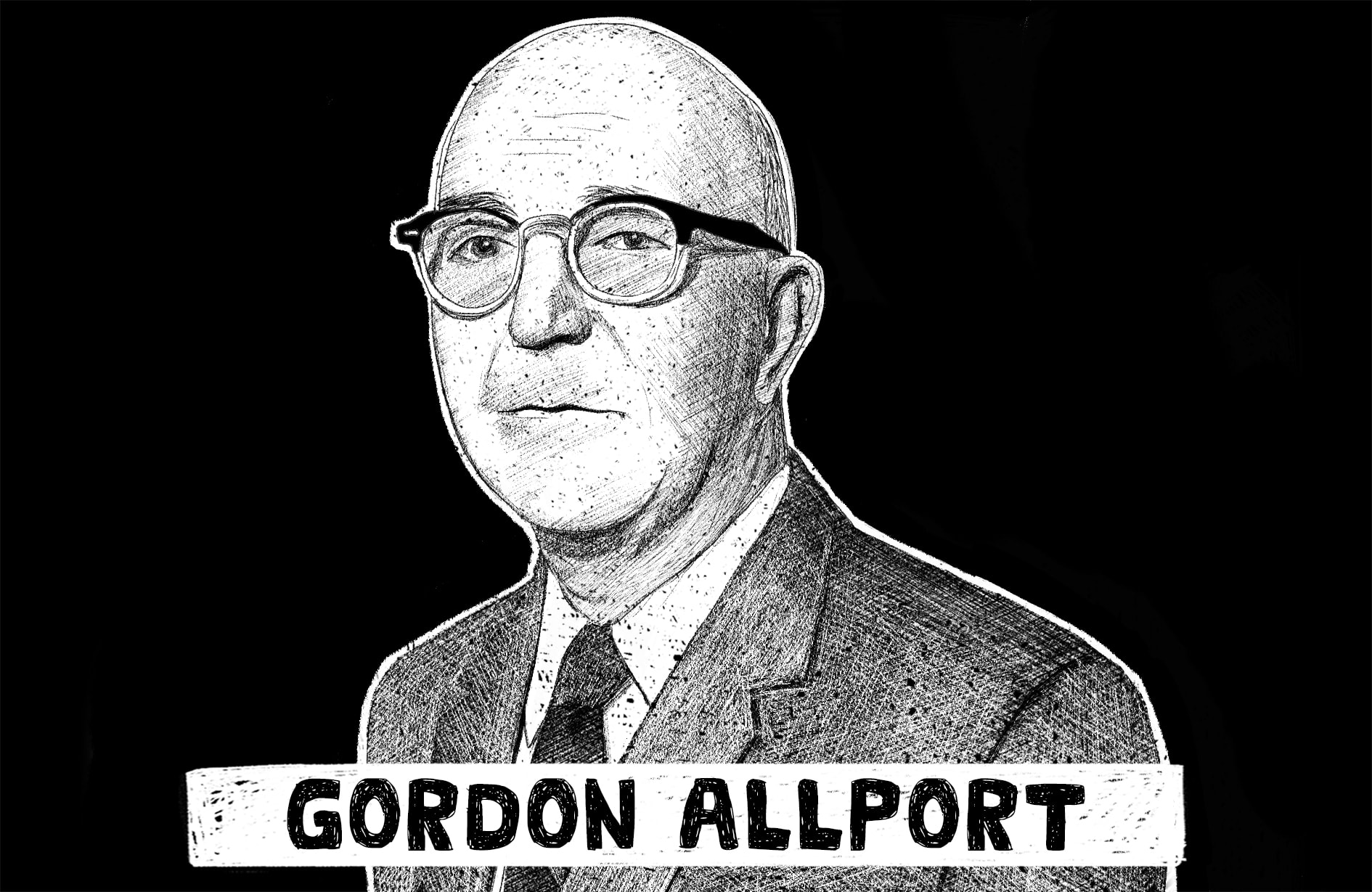
Gordon Allport is a great trait theorist to start with. In the early part of the 20th century, he searched the dictionary and found over 4,500 words that could be considered personality traits. (Nowadays, we have about 18,000 trait-descriptive adjectives.) From those 4,500 words, he came up with three different types of traits.
Cardinal Traits
Central Traits
The second category iscentral traits.These traits are found to a certain degree in every person. Honesty, agreeableness, or jealousy may all be considered central traits that may or may not come from our genetic makeup.
Secondary Traits
Last issecondarytraits. These traits may apply to different situations depending on the context of said situation. In general, you may be a respectful person. But if you dislike a certain authority figure or person, people may see a rude side to you. Another word for these are “attitudes” or “preferences”.
Looking at 4,500 words, you’re bound to find some repeats and synonyms. In the 60s, Cattell took the 4,500 trait words from Allport and narrowed them down to 171 traits. He wasn’t done yet. He used factor analysis to look for trends in these 171 words and narrowed them down to the mostinfluentialtraits.
He came down to 16 using a process called Factor Analysis. Factor analysis can be used to look at enormous amounts of data to look for trends and to see which elements are the most influential or important.
Remember what we said about how traits can be on a spectrum? So were Cattell’s 16 personality traits. Each of these 16 words had a direct opposite. Most people fit somewhere in the middle of these two extremes. Here’s a table of those 16, along with their dimensions:
FactorLowHighWarmthColdComfortingIntellectInstinctiveAnalyticalEmotional StabilityMoodyCalmAggressivenessDocileControllingLivelinessSomberWildDutifulnessRebelliousTraditionalSocial AssertivenessShyBoldSensitivityToughSoftParanoiaTrustingSuspiciousAbstractnessPracticalImaginativeIntroversionOpenPrivateAnxietyConfidentFearfulOpenmindednessSet-In-WaysCuriousIndependenceOutgoingLonerPerfectionismMessyOrganizedTensionRelaxedStressed
Warmth
Cold
Comforting
Intellect
Instinctive
Analytical
Emotional Stability
Moody
Calm
Aggressiveness
Docile
Controlling
Liveliness
Somber
Wild
Dutifulness
Rebellious
Traditional
Social Assertiveness
Shy
Bold
Sensitivity
Tough
Soft
Paranoia
Trusting
Suspicious
Abstractness
Practical
Imaginative
Introversion
Open
Private
Anxiety
Confident
Fearful
Openmindedness
Set-In-Ways
Curious
Independence
Outgoing
Loner
Perfectionism
Messy
Organized
Tension
Relaxed
Stressed
As you can see, some of these personality traits are very similar. For example, “Private” under Introversion is similar to “Loner” under Independence.
Eysenck had a specific job when he developed his theory. Around the same time Cattell was developing his theories on personality, Eysenck worked at a psychiatric hospital in London. His job was to make an initial assessment of the patients. Eysenck noticed certain trends; he found that soldiers, for example, seemed to answer questions in a similar way. Maybe, these answers revealed specific traits that led a person to become a soldier.
Eysenck called these traitsfirst-personality traits.
What Eysenck is most known for, however, is the PEN Model. He condensed the most important personality traits into justthreetraits: psychoticism, extraversion, and neuroticism.
These seem like negative traits, but let’s look at what they mean:
Psychoticism:When an individual engages in risky and irresponsible behavior. People with high psychoticism usually have a more aggressive temperament.
Extraversion: When an individual engages in a lot of social activities. Also, an extravert is considered “under-aroused,” and their cortical arousal can be measured with skin conductance. Skin conductance measures the skin’s electrical conductivity, which increases with sweat gland activity. In extroverts, who are considered “under-aroused,” this method helps assess their level of arousal during social activities.
Neuroticism: When an individual’s mood and emotions fluctuate more than normal. Eysenck said these people experienced more flight-or-fight reactions than most people.
Again, these are all on spectrums. Eysenck theorized that we all displayed some level of these traits, but we just expressed them differently. Part of his theory comes from the belief that our personality traits come from our genetics.
These are the Big Five, the OCEAN Theory, or the Five Factor Model. Similar to the PEN Model, OCEAN is an acronym for five different traits that all humans display some degree of.
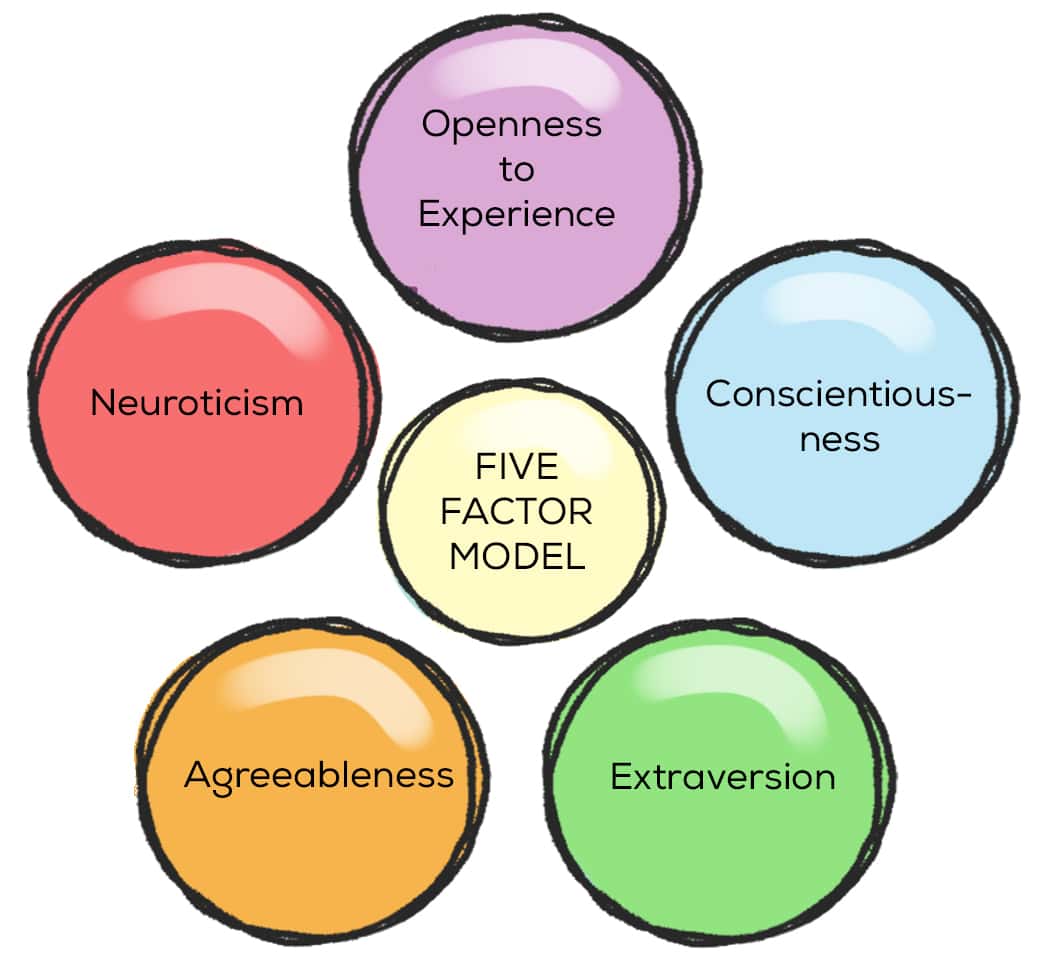
Take some time to think about your personality traits. You certainly have a lot of ways to assess the traits that you hold. Family and friends probably already have a few choice words to describe your personality.
The more you reflect on your personality and remember that these traits are objective, the more you can understand yourself. This self-awareness will help you find and approach opportunities that best fit your personality traits. If you know you are an introvert, you can use this knowledge to create a schedule or pursue opportunities that allow introverts to shine.
Related posts:17+ Cardinal Traits (Definition + Examples)What is Personality Psychology?Big 5 Factor Model of Personality (Free Test + OCEAN)Biological Theory of Personality40+ Famous Psychologists (Images + Biographies)
Related posts:
Reference this article:Practical Psychology. (2019, January).Personality Trait Theory.Retrieved from https://practicalpie.com/personality-trait-theory/.Practical Psychology. (2019, January). Personality Trait Theory. Retrieved from https://practicalpie.com/personality-trait-theory/.Copy
Reference this article:
Practical Psychology. (2019, January).Personality Trait Theory.Retrieved from https://practicalpie.com/personality-trait-theory/.Practical Psychology. (2019, January). Personality Trait Theory. Retrieved from https://practicalpie.com/personality-trait-theory/.Copy
Copy
