Did you know that your personality can greatly affect your physical health? Did you know that your physical health can also affect yourpersonality? Today I will tell you about some amazing links between your personality and physical health.
How Does Personality Relate to Physical Health?What Does the Big Five Have to Do With Personality?Does your physical health affect your personality?References:
How Does Personality Relate to Physical Health?
What Does the Big Five Have to Do With Personality?
Does your physical health affect your personality?
References:
Personality and physical health both influence each other. You may be more or less likely to indulge in healthy or unhealthy habits based on your natural personality. Using the traits in the “Big 5,” you can predict your likelihood of achieving great physical health.
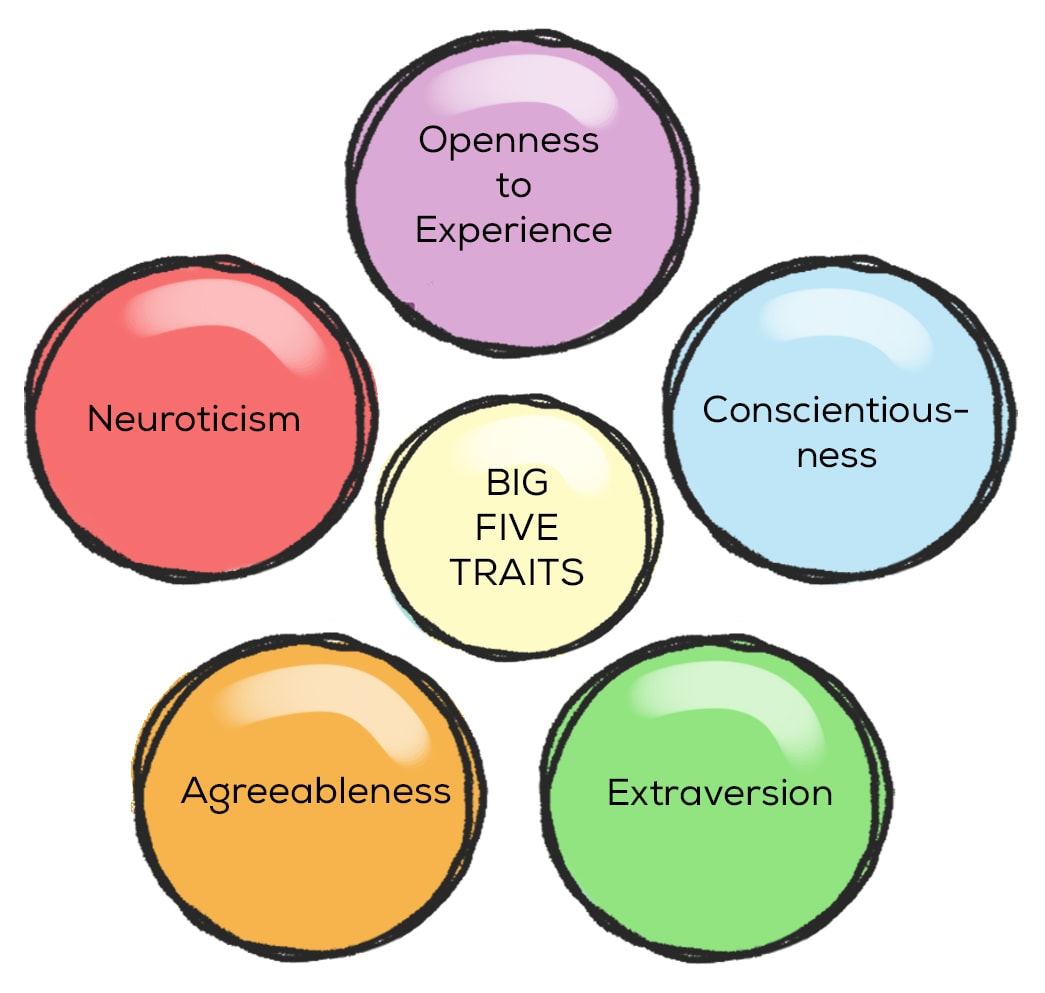
A common model for personality is to split it into the‘Big 5’ traits: conscientiousness, extraversion, openness to experience, agreeableness, and neuroticism (and if you’d like to see which of these traits you have, I’ll give you a link to my personality quiz at the end of this video). Let’s review each and discuss how it’s linked to your physical health.
 big five traits
Individuals with a high level of conscientiousness are dutiful, organized, and high in self-control. A high level of conscientiousness has a great impact on your health.
Having a high level of self-control helps you avoid things that you know are bad for you, such as unhealthy foods or drugs. A high level of conscientiousness is linked to eating healthier foods, being less likely to smoke or use drugs, and living longer. Conscientiousness is a fantastic long-term predictor of health and of living a long life.
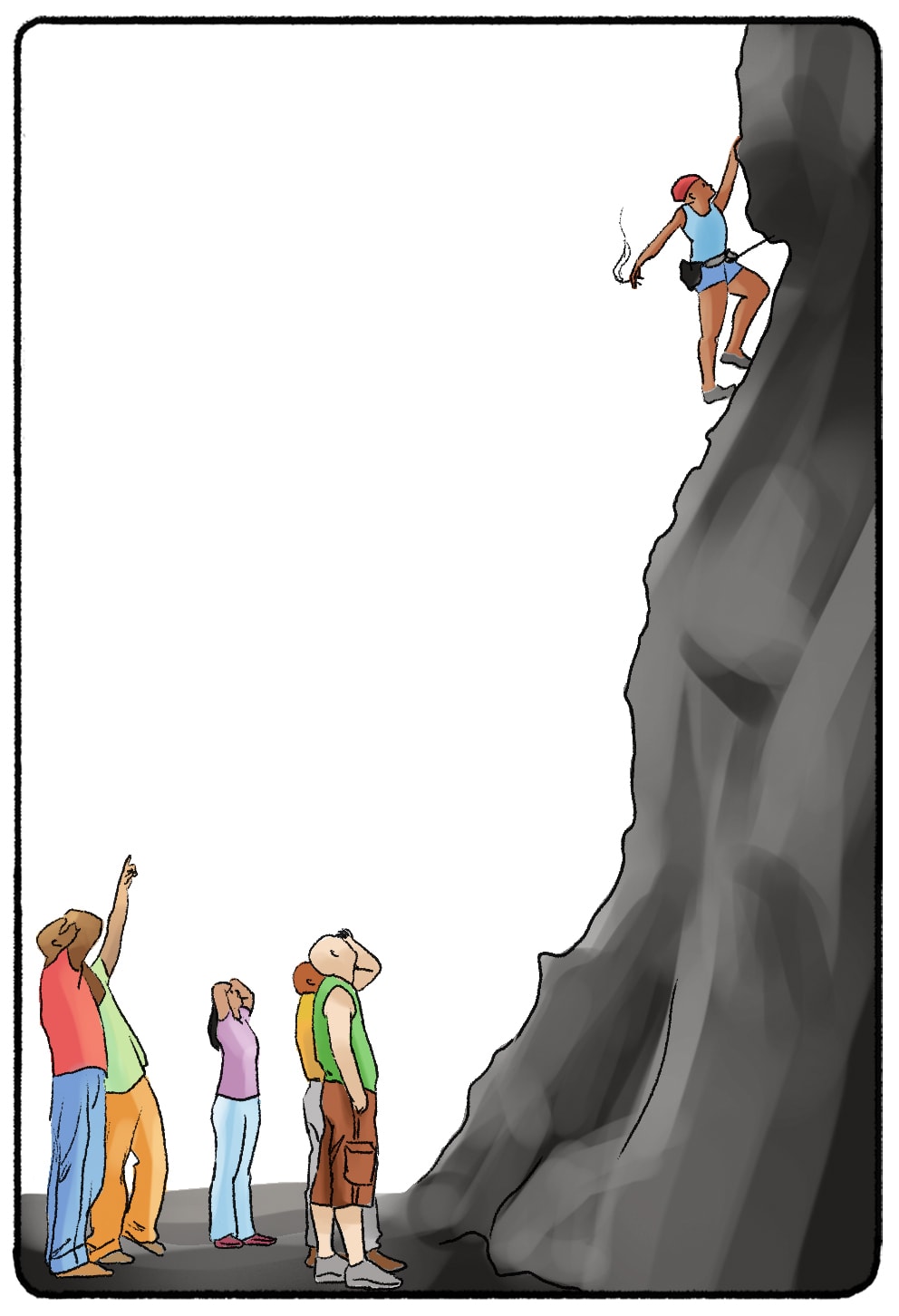
People with high levels of extraversion often exhibit immense energy, enthusiasm, and assertiveness. Sometimes, this extraversion reaches a level where individuals are described as having a ‘Type T’ personality, also known as the ‘thrill-seeking personality’. These thrill-seekers are more prone to engaging in risky behaviors such as smoking, drug use, and binge drinking, all of which are associated with a lower life expectancy.
The Type T personality’s penchant for thrill-seeking can lead to a higher likelihood of sudden deaths in accidents. For example, they might be more inclined to drive at high speeds for the adrenaline rush, significantly increasing the risk of fatal car accidents."
This addition provides a clearer picture of how the thrill-seeking behaviors associated with a Type T personality can directly lead to sudden accidental deaths, making the information more tangible and relatable for your readers.
Individuals with a high level of openness to experience are curious and creative. These people are interested in new ideas and often seek activities that can bring meaning to their lives.
A high level of openness to experience has mixed results regarding your health, although some studies have found that a high level of creativity is linked to living longer.
Mixed results have been found in how a person’s level of agreeableness affects their physical health, although there have been findings that agreeableness is linked to a longer life for women.
Agreeableness also usually leads to having a great support system of other people behind you, and having access to this network can improve your mental health, make you happier, and give you people to fall back on when you’re sick or in trouble.
A low level of agreeableness can lead to pushing others away, creating a poor social situation for you. Poor social situations have been found to be just as risky for heart troubles as high blood pressure or high cholesterol.
People with a high level of neuroticism can even be said to have a “Type D” personality, or the “distressed personality”, which is a branch off of the “Type A” personality, or the “assertive personality”.
Although there are no alarming links between the Type A personality and heart problems, the link between heart problems and the Type D personality is not so easy to dismiss. A personality study conducted on almost 300 people in a cardiac rehabilitation program found that 27% of patients with a Type D personality died in the next 10 years, compared to 6% of all other personalities. Another study involving 875 patients undergoing coronary heart surgery found that Type D’s were 4x more likely to have a heart attack or die within the following 9 months than any of the others.
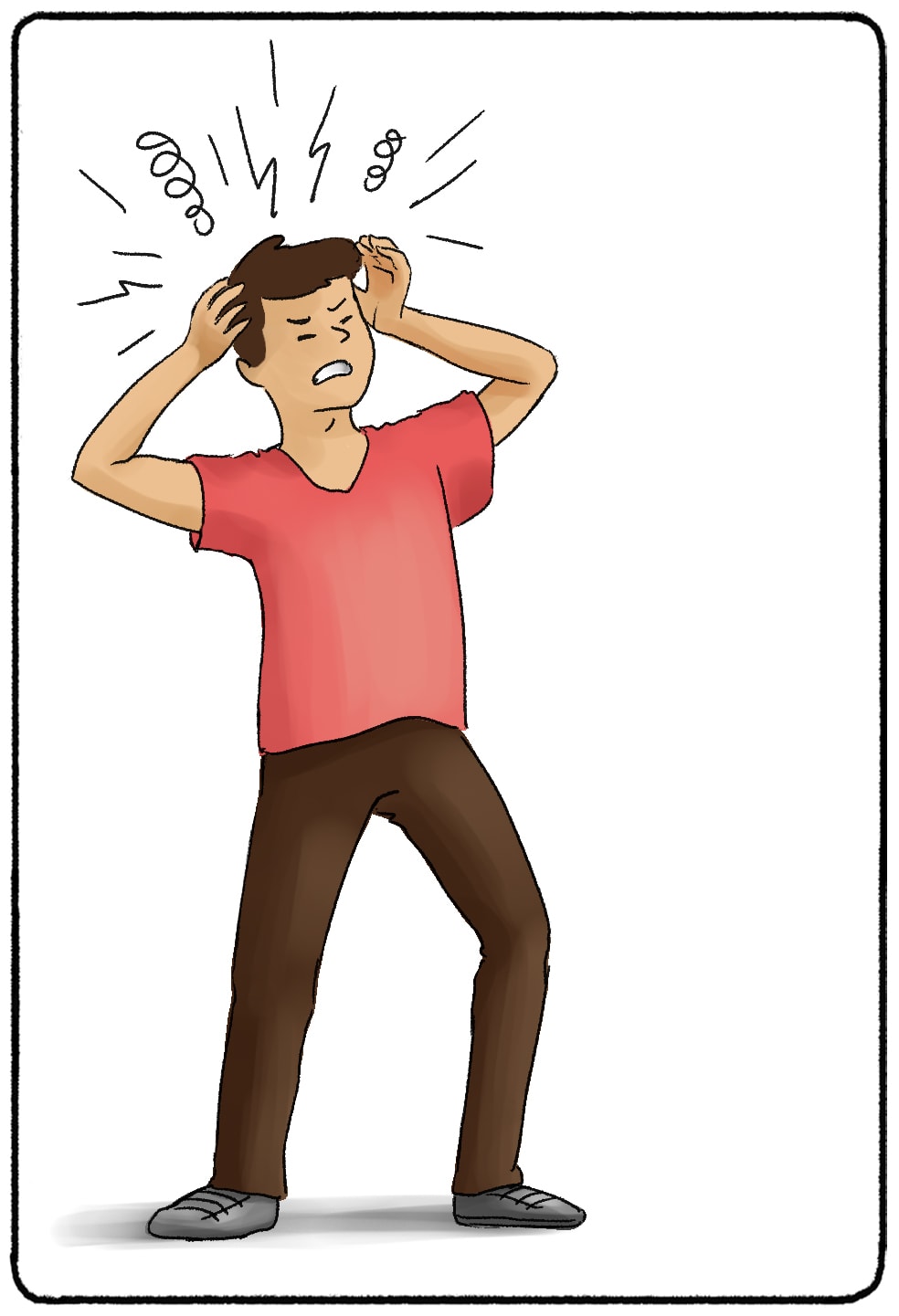
So why does this happen? People with a “Type D” personality often have chronic anger and hostility, which is very damaging to their cardiovascular health. Also, people who fall into a sour mood after a heart attack tend to fare worse than those who don’t. Chronic mental strain, such as family burdens, work trouble, or financial issues, can also strain the heart.
A high level of neuroticism is also linked to headaches, stomach problems, and being prone to rumination (which is the practice of letting stressful thoughts run through your mind over and over). Neurotics often have problems that worsen their mental health, which can lead to physical health problems, too.
So we’ve established that your personality traits affect both your physical health and how you take care of your body, but does this work the other way around?
A lot of research has been conducted in this area. In particular, one psychologist and physician, William H. Sheldon, tried to predict people’s personalities based on their body type. To measure body type, Sheldon measured people based on three sections of their body: their endoderm, which is their innermost layer that includes their stomach, intestines, heart, lungs, and other internal organs, their mesoderm, which is their middle layer of muscles and bones, and their ectoderm, which is their outer layer including skin, hair, and their nervous system.
Sheldon gave people three numbers on a 1-7 scale measuring the size of these three components, with the number 4 being average in size, 1 being extremely below average, and 7 being extremely above average. For example, if your numbers were “6-1-4”, you would be high in endomorphy, low in mesomorphy, and average in ectomorphy. Sheldon gave his subjects a measurement based on these numbers and then measured their personality traits to see if there were any correlations.
However, when it came to someone who was not on an end of the body type spectrum (which would include most people), Sheldon determined that he could not predict their personality based on their body type alone.
Although Sheldon wouldn’t be able to predict your personality if your body type isn’t on the end of the spectrum, your body type still does affect your personality. For example, some studies have found that your body type affects how other people will act towards you, which will affect howyoubehave.
Regarding your body type and personality, both can have a massive effect on the other. If you’d like to learn more about yourself, how you think, and why you act the way you do, I suggest you take a look at mypersonality quiz. If you take my quick and free quiz, you will receive apersonalizedlist ofyourpersonality traits, which you can use to understand how the information you’ve just learned affectsyouspecifically!
“LOL Your body and Your Personality.” 18 Apr. 1984,http://virgil.azwestern.edu/~dag/lol/Somatotypes.html. Accessed 24 Feb. 2019.
“Openness to Experience and Health: A Review of the Literature ….“http://www.academia.edu/4621907/Openness_to_Experience_and_Health_A_Review_of_the_Literature. Accessed 17 Feb. 2019.
“Questions & Answers: What is Type D personality? - Harvard Health.” 9 Mar. 2014,https://www.health.harvard.edu/newsletter_article/Questions_andamp_Answers_What_is_Type_D_personality. Accessed 17 Feb. 2019.
“Type T Personality and the Jungian Classification System | Richard E ….“https://www.academia.edu/5228147/Type_T_Personality_and_the_Jungian_Classification_System. Accessed 17 Feb. 2019.
Related posts:Neuroticism (Meaning + Examples)Agreeableness (Meaning + Examples)Conscientiousness (Meaning + Examples)Big 5 Factor Model of Personality (Free Test + OCEAN)Openness to Experience (Meaning + Examples)
Related posts:
Reference this article:Practical Psychology. (2019, March).Personality and Physical Health.Retrieved from https://practicalpie.com/personality-and-physical-health/.Practical Psychology. (2019, March). Personality and Physical Health. Retrieved from https://practicalpie.com/personality-and-physical-health/.Copy
Reference this article:
Practical Psychology. (2019, March).Personality and Physical Health.Retrieved from https://practicalpie.com/personality-and-physical-health/.Practical Psychology. (2019, March). Personality and Physical Health. Retrieved from https://practicalpie.com/personality-and-physical-health/.Copy
Copy
