How Are Personality and Culture Related?Culture and Personality Theory in PsychologyCultural Differences and PersonalityYour Personality and CultureReferences:
How Are Personality and Culture Related?
Culture and Personality Theory in Psychology
Cultural Differences and Personality
Your Personality and Culture
References:
Not all cultures hold the same values. Some tend to encourage behaviors that are loud, boisterous, and competitive. Others encourage quiet, respectful, and more humble behaviors. Depending on the culture where you live, you probably picked up on these values, and they have influenced the development of certain traits.
(In psychology, this rivals thebiological theory of personality. Culture’s influence on personality leans on the nurture side of the debate, while biological theory leans on the nature side.)
 diverse group of people

I will explain two spectrums that researchers have created to define cultures. The culture’s place on these spectrums highly influences the personality traits and behaviors of those in that culture.
Individual vs. Collectivist Cultures
Individualism focuses on the individual, as the name implies. People living in an individualist environment prioritize self-improvement and satisfying their needs before those of the rest of their community.
Why? Individualist cultures believe and teach that if everyone takes care of themselves, the entire group should thrive and become self-sufficient.
Individualist cultures put a lot of stress on independence and self-reliance. Those who live in this type of culture tend to be very self-sufficient and driven workers but are weaker when it comes to collaboration and teamwork, they usually struggle to hand off responsibility.
These people usually distance themselves psychologically and emotionally from one another since working with others is more of an option than a requirement for success. In media, we often see individualist characteristics associated with men, people in urban settings, and Western culture.
What about collectivist cultures?
People living in a collectivist environment are taught to focus on the group’s needs before theirs. They associate their identity with their role and function in a larger group. These “groups” include families, teams at work, or the nation.

Collectivist societies teach people that everyone will benefit when looking out for one another. Harmony and interdependence between group members are highly valued among people in this type of environment. Unlike their individualist counterparts, members of collectivist cultures tend to be extremely close to each other psychologically and emotionally. Thiscancreate an “us vs. them” mindset that separates or looks down upon people outside of their group. Collectivist characteristics are generally associated with women, people in rural settings, and Eastern culture.
Approach vs. Avoidance
Let’s look at another spectrum. Did you grow up in an approach or avoidance culture?
This idea was coined in 1935 to help psychologists identify what makes some conflicts easy and hard to resolve. Where you lie on this spectrum can highly influence how you make decisions.
So what is “approach vs. avoidance?”
Humans typically want to “approach” and move toward positive, pleasurable things. They want to “avoid” and move away from negative, painful things. It is very similar to Freud’s pleasure-pain principle.
This idea of “approach vs. avoidance” was measured when an experiment was conducted on rats in 1948. The rats were exposed to different positive or negative stimuli. Researchers measured the strength of their pull toward the stimuli. The most interesting results from the experiment revealed that the closer the rats were to the item they were approaching or avoiding, the stronger their pull in either direction was.
This can be applied to how humans make their decisions and categorize conflict.
But what does this have to do with the culture where you grow up? This culture helps to teach you from a young age what to approach and what to avoid. Culture doesn’t teach you to avoid physical pain and approach food…those things are instinctual to all humans. What we learn to approach and avoid through culture appeals to higher needs.
The Big Five and Avoidance
One example of this isuncertainty avoidance. The uncertainty avoidance of a culture is a measure of how that culture responds to novelty and uncertainty. How does a culture deal with ambiguity? Are changes welcome? Or does the culture approach stable, traditional rules, customs, and other situations?
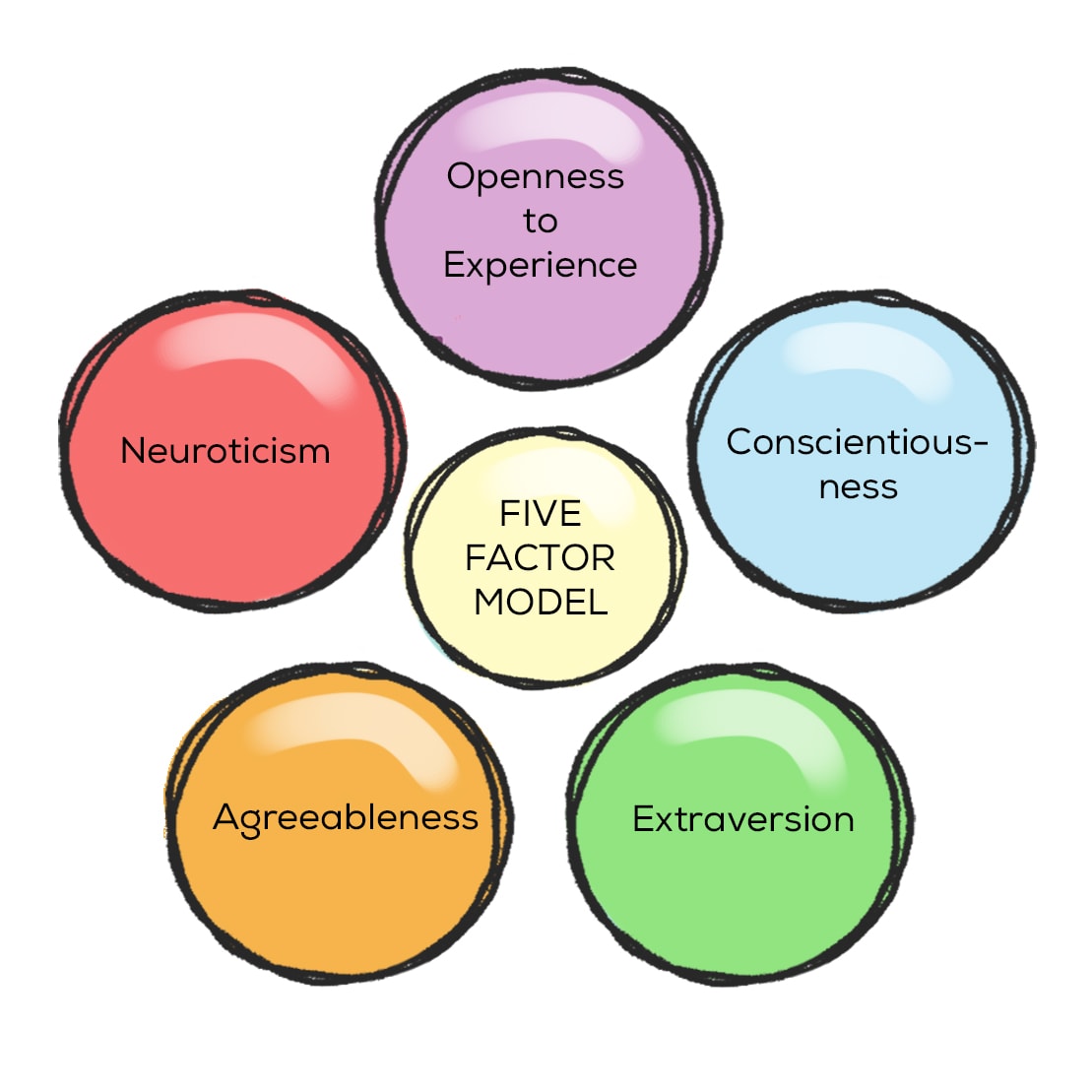
Countries generally score high inneuroticismand tend to be high in uncertainty avoidance. These countries usually have more formal rule systems that try to minimize cultural or situational ambiguity, and citizens are uninterested in changing them. These cultures tend to be more conservative, emotional, and xenophobic.
Families in these cultures tend to have more traditional gender roles, schools have more structured learning, and children are taught to trust that their teachers have all of the answers. Children are also taught that the outside world is a hostile place. Religions with high uncertainty avoidance include Catholicism, Islam, Judaism, and Shintoism.
Conversely, countries with lowneuroticismand low uncertainty avoidance tend to have fewer laws and regulations, and citizens are much more interested in politics. These cultures are often more open to change and more tolerant of diversity, and people within these cultures tend to suppress their emotions.
Families in these cultures have looser gender roles, and their schools have more open-ended learning. Teachers can say, “I don’t know,” and students are encouraged to question authority. Children are taught that the outside world is benevolent and that they should not persecute others based on their beliefs. Religions with low uncertainty avoidance include Protestantism, Buddhism, Taoism, and Hinduism.
What were you taught to avoid? What were you taught to approach? How does the culture where you grew up influence what you consider to be comfortable or uncomfortable?
If you’d like to get to know yourself on a heightened level, I highly recommend taking mypersonality quiz. Take the quiz for free today and you’ll receive a fascinating list of information about both yourself and your personality.
“1.3.4 - Individualist or Collectivist.“https://www2.pacific.edu/sis/culture/pub/1.2.4-_Activity_-_Individual.htm. Accessed 16 Feb. 2019.
“Approach and Avoidance Social Motives and Goals.“http://coachingtowardhappiness.com/pdf/ApproachAndAvoidanceSocialMotives.pdf. Accessed 16 Feb. 2019.
“Hofstede Uncertainty Avoidance Traits.“https://www.andrews.edu/~tidwell/bsad560/HofstedeUncertainityAvoidance.html. Accessed 16 Feb. 2019.
“Personality Traits and Workplace Culture - A Peer-Reviewed ….“https://gbr.pepperdine.edu/2010/08/personality-traits-and-workplace-culture/. Accessed 16 Feb. 2019.
“Psych 200 Unit 10 Module 1.“http://online.sfsu.edu/psych200/unit10/101.htm. Accessed 23 Feb. 2019.
“The Role of Culture in Social Development Over the Life Span: An ….” 1 Apr. 2014, . Accessed 16 Feb. 2019.
https://scholarworks.gvsu.edu/cgi/viewcontent.cgi?article=1057&context=orpc
Related posts:Approach-Approach vs Avoidance-Avoidance ConflictWhat are Collectivistic Cultures? (7 Examples + Definition)Hofstede’s Cultural Dimensions TheoryAcculturation (Definition + 20 Examples)Personality and Politics
Related posts:
Reference this article:Practical Psychology. (2019, March).Personality and Culture.Retrieved from https://practicalpie.com/personality-and-culture/.Practical Psychology. (2019, March). Personality and Culture. Retrieved from https://practicalpie.com/personality-and-culture/.Copy
Reference this article:
Practical Psychology. (2019, March).Personality and Culture.Retrieved from https://practicalpie.com/personality-and-culture/.Practical Psychology. (2019, March). Personality and Culture. Retrieved from https://practicalpie.com/personality-and-culture/.Copy
Copy
