What Is the PERMA Model?Who is Martin Seligman?What PERMA Stands ForExamples of Pursuing the PERMA Model of HappinessHow to Pursue These Elements (PERMA Happiness Tests)Looking at Well-Being in New Ways
What Is the PERMA Model?
Who is Martin Seligman?
What PERMA Stands For
Examples of Pursuing the PERMA Model of Happiness
How to Pursue These Elements (PERMA Happiness Tests)
Looking at Well-Being in New Ways

Martin Seligman is an author, educator, and founder of positive psychology. He founded the field of positive psychology as a response to behaviorism and psychoanalysis. These fields of study focused on the negative, and “fixing” a damaged person. Before a patient could get better, psychologists tried to identify their faults, flaws, and setbacks.
Positive psychology takes a different approach. Instead of uncovering the negative, positive psychology puts the positive first. Positive psychologists look for formulas and strategies for achieving ultimate happiness and fulfillment in life.
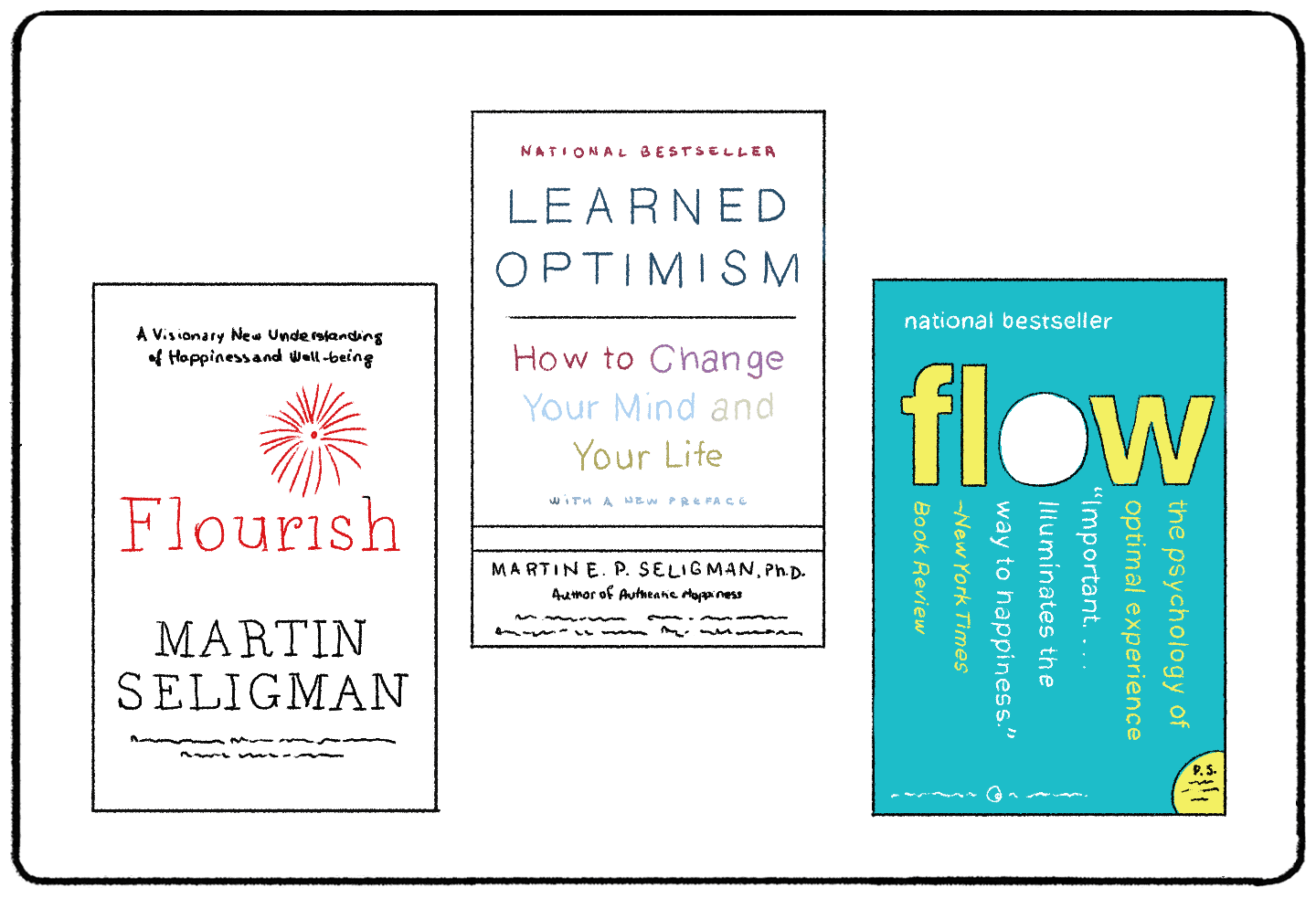
In 2011,Martin SeligmanpublishedFlourish: A Visionary New Understanding of Happiness and Well-being. In this book, Seligman introduces the PERMA Model and shares his findings on happiness vs. well-being. He says, “I used to think that the topic of positive psychology was happiness, that the gold standard for measuring happiness was life satisfaction, and that the goal of positive psychology was to increase life satisfaction. I now think that the topic of positive psychology is well-being, that the gold standard for measuring well-being is flourishing, and that the goal of positive psychology is to increase flourishing.”
In order to elevate your well-being, Seligman says that you must look at the PERMA Model. Increasing each element within the PERMA Model can increase your overall well-being and allow you to “flourish.”
But what are the five elements of PERMA?
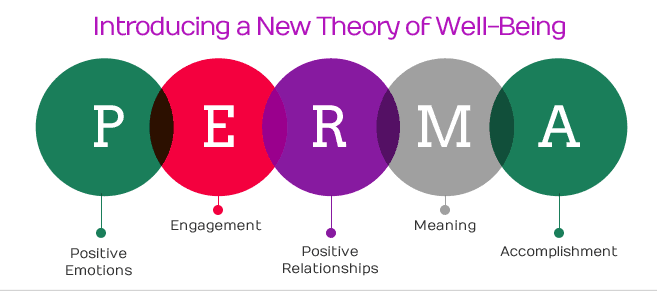
PERMA is an acronym that stands for:
All of these elements are measured differently, but they’re all equally important. They support each other. Increasing your positive feelings can increase your ability to engage, which can support your ability to have meaning in your life, which increases positive feelings, and so on and so forth. One element of PERMA should not be pursued just to achieve happiness or meet superficial goals. Pursuing any of the five elements should be done for their own sake. Let’s get into what they are.
Positive Feelings
Before Seligman wroteFlourish, he publishedLearned Optimism. Optimistic people are able to conjure up positive feelings faster than pessimistic people. They bounce back from setbacks and understand that a single failure or small obstacle does not have to drag them down. They believe that they are in control of their life and that control makes them feel good!
Positive feelings could not be more important to chase during global pandemics or chaotic times. If you want to become a more optimistic person, I recommend readingLearned Optimismand assessing the way that you explain failures or successes. These explanatory styles can help you eliminatelearned helplessness, change the way that you look at the future, and stay optimistic.
Do not focus on positive feelings alone. Engagement, relationships, meaning, and accomplishments can all be pursued while feeling low.
Engagement
Relationships
Another key figure in the Positive Psychology movement is Abraham Maslow. Maslow is most well-known for hisHierarchy of Needs, in which he lays out what humans need to eventually reach self-actualization and self-fulfillment. Above physiological needs are psychological needs, including “belongingness.” Humans want to feel as though they belong. They want to feel like they can reach out to friends, family, colleagues, etc. for support. People want to feel seen, heard, and loved.
Pursuing healthy relationships that offer a sense of belonging is key to well-being. The alternative is isolation and loneliness. In recent years, experts have identified loneliness as an epidemic, affecting not only mental well-being, but physical well-being as well. Forming meaningful relationships is good for your health, and must be pursued even in these crazy times.
Meaning
Does your life have meaning?
This is a big question, but one that must be pursued to elevate your well-being. Humans gather meaning from various activities or groups. Religion gives people meaning. Spirituality gives people meaning. Working toward a greater goal gives people meaning. Where do you find meaning?
This exploration can take an entire lifetime but is extremely fulfilling in the process. Remember, these elements should all be pursued independently. You may not find meaning in the activities that put you in a state of flow. Optimism does not equal meaning. Exploring meaning is its own separate journey.
Accomplishments
Last but not least is accomplishments. Accomplishments may not give you a greater sense of meaning but still elevate your overall well-being. Working to accomplish goals at work, at home, or in your relationships can be its own separate journey. What do you want to accomplish?
Accomplishments aren’t just about winning a gold medal or earning the top spot at your company. Any of the following may be considered a great accomplishment:
With all elements of the PERMA Model, you determine if you can “check these items off your list.” Positive feelings, engagement, relationships, meaning, and accomplishments look different for everyone. These elements may also change as you age.
PERMA-V
In recent years, another letter has been added to this model: V. V stands for “vitality”: physical vitality, that is. Eating right, sleeping well, and being physically healthy contributes to mental and emotional health. Although this model is used, the PERMA model is also sufficient when discussing mental health.
What does it look like to be happy, according to this model? Let’s follow the day in the life who has checked all the boxes on the PERMA model. We’ll call them Greg.
Greg wakes up early and goes to the gym. He goes every morning to meet with some friends to climb and lift. They have stuck to this tradition for years! After a good hour of working out, Greg feels great and ready for work. He doesn’t enjoy his job so much, but it pays the bills and gives him the freedom to pursue other passions. When he is faced with a challenge at work, he tries to take it head-on and learn something new.
At the end of the day, Greg might not have made a million dollars or come home to a spouse and kids, but he is happy with his life. He sees the fun and joy he creates for other people. His family loves him. Greg may experience moments of sadness or frustration or challenges, but he has a great mindset and always finds ways to learn something new. This is how Greg stays happy and optimistic.
What do you need to pursue the elements within the PERMA model? Seligman has an answer for you. In Flourish, Seligman identifies 24 character strengths. Everyone has a handful of these strengths. By using them, people can work toward positive feelings, engagement, relationships, meaning, and accomplishments. Identifying and using your character strengths is the first step in achieving a higher well-being.
You cantake tests onlineto figure out which character strengths will be most helpful as you pursue well-being and a more fulfilling life.
Seligman’s concept of “flourishing” takes a lot of pressure off of people who may not be feeling so happy in these chaotic times. Instead of laser-focusing on happiness, the PERMA model encourages us to focus on different elements of well-being. The more engaged you feel, the more you have meaning, and the more you accomplish, the more fulfilled you will feel. All of these different elements support each other. If you are looking for happiness, look to these other elements first. You’ll find that positive feelings, engagement, and the other elements all elevate together as you pursue them separately.
Related posts:Martin Seligman Biography - Contributions To PsychologyThe Psychology of Long Distance RelationshipsOperant Conditioning (Examples + Research)Beck’s Depression Inventory (BDI Test)Variable Interval Reinforcement Schedule (Examples)
Related posts:
Reference this article:Practical Psychology. (2020, October).PERMA Model of Happiness (Examples + Images).Retrieved from https://practicalpie.com/perma-model-of-happiness/.Practical Psychology. (2020, October). PERMA Model of Happiness (Examples + Images). Retrieved from https://practicalpie.com/perma-model-of-happiness/.Copy
Reference this article:
Practical Psychology. (2020, October).PERMA Model of Happiness (Examples + Images).Retrieved from https://practicalpie.com/perma-model-of-happiness/.Practical Psychology. (2020, October). PERMA Model of Happiness (Examples + Images). Retrieved from https://practicalpie.com/perma-model-of-happiness/.Copy
Copy
