Given the extensive impact of his scientific work, Paul Ekman has been ranked as one of the most influential psychologists of the 20th century.

Who Is Paul Ekman?Paul Ekman’s Early LifeEducational Background and CareerBasic Emotions and Universal Facial ExpressionsMicroexpressions and Deception DetectionFacial Action Coding SystemFacial Expressions and the Autonomic Nervous SystemApplicationsPaul Ekman’s Books, Awards, and AccomplishmentsPersonal Life
Who Is Paul Ekman?
Paul Ekman’s Early Life
Educational Background and Career
Basic Emotions and Universal Facial Expressions
Microexpressions and Deception Detection
Facial Action Coding System
Facial Expressions and the Autonomic Nervous System
Applications
Paul Ekman’s Books, Awards, and Accomplishments
Personal Life
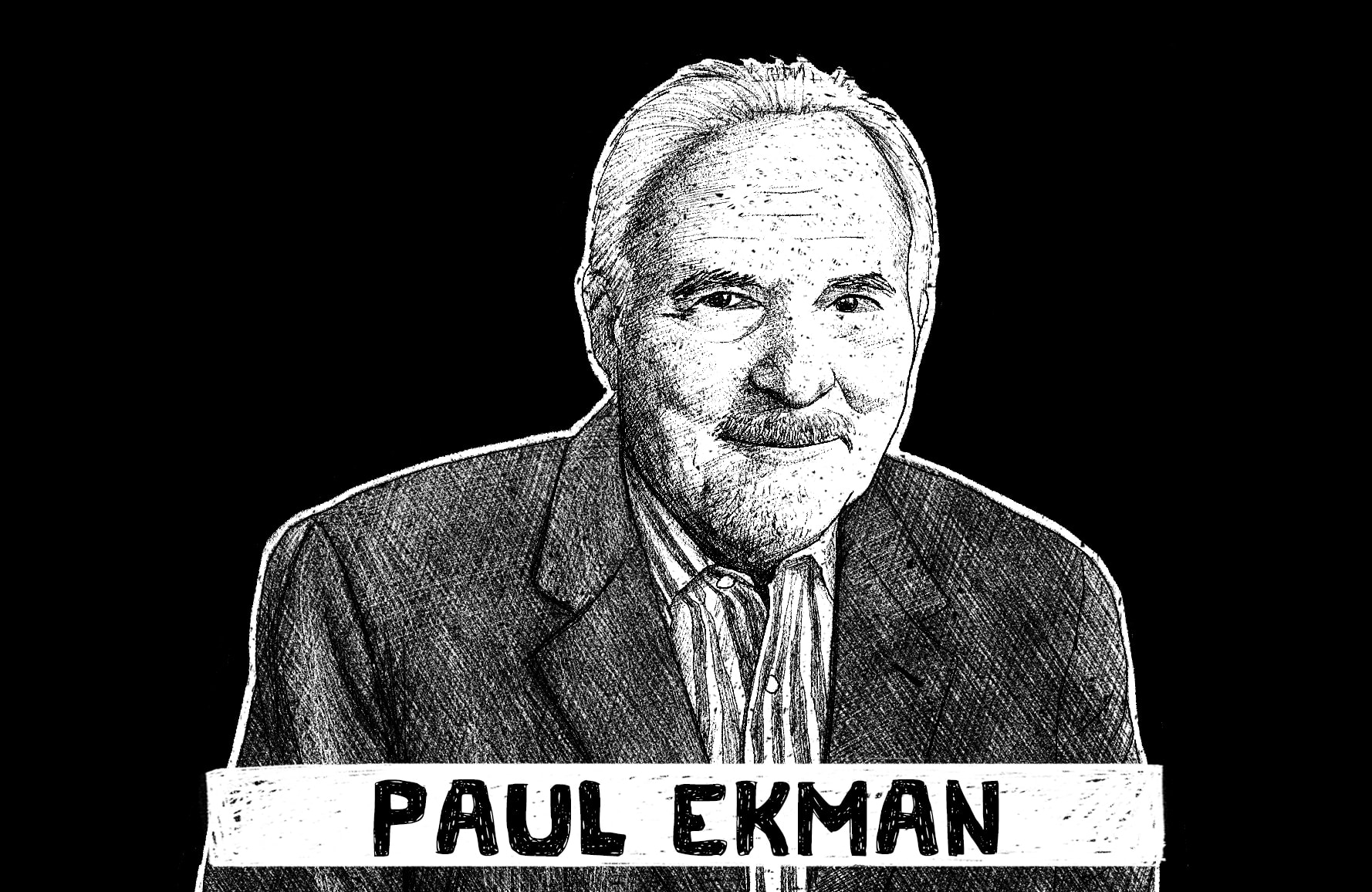
Paul Ekman is an American psychologist, professor, and author who is renowned for his pioneering work on human emotions and their link to facial expressions. He is a co-discoverer of microexpressions and a leading expert in the science of deception.
Paul Ekman was born to Jewish parents in Washington, D.C. on February 15, 1934 . He had an older sister named Joyce. Ekman spent the first eight years of his life in Newark, New Jersey, but after his father entered the army, the family moved to several different army bases in Washington, Oregon, and finally, Southern California. In the first year of his father’s enlistment, Ekman changed schools three times.
As a boy, Ekman was no stranger to religious discrimination. While attending Junior High, fellow students distanced themselves from him after learning that he was Jewish. For two and a half years, between the ages of nine and twelve, none of the other students spoke to him. In Ekman’s own words, he “had no opportunity for friendship” during that time and had to learn to be self-sufficient. In later years, Ekman traced his somewhat rebellious, oppositional nature to this defining childhood experience.
Ekman’s father enjoyed his work and according to Ekman, was the only pediatrician at the time who would serve colored patients. He had high hopes that his son would become a doctor and join him in his pediatric practice. He found Ekman’s decision to pursue psychology offensive and throughout his life, gave no indication that he approved of his son’s choice.
Ekman’s rebellious nature was quite evident during his adolescent years. He did not graduate from high school but was expelled for talking back to his teachers. Upon learning that the University of Chicago would accept students who had completed just two years of high school once they passed an admissions test, he applied and was accepted in 1949. He was only 15 years old at the time.
After three years of undergraduate study at Chicago, Ekman transferred to New York University (NYU) and graduated with a B.A. in 1953. During his studies, he developed a keen interest in Sigmund Freud and decided that he would become a practicingpsychoanalyst. At the time, he reasoned that this would be the best way of helping others and making a positive contribution in the world.
Adelphi University
Ekman then went on to pursue graduate studies at Adelphi University. While observing group therapy sessions as part of his studies, he recognized that people were communicating not just with their words but also through their body movements and facial expressions. He decided that these nonverbal forms of communication also needed to be studied scientifically in order to enhance the process of psychotherapy. He thus became interested in developing objective methods of measuring nonverbal behavior. Very few psychologists at the time viewed this as a worthy topic for scientific inquiry but Ekman, true to his oppositional nature, thought otherwise.
National Institute of Mental Health
Ekman was awarded a pre-doctoral research fellowship from the National Institute of Mental Health (NIMH) in 1955 to pursue research for his masters thesis. He also worked part time as a clinical psychologist at a hospital for the mentally ill to help pay for his tuition. He earned his Ph.D in clinical psychology in 1958 after completing a one-year clinical internship at the Langley Porter Neuropsychiatric Institute of the University of California-San Francisco (UCSF).
Time in the U.S. Military
Immediately after completing his doctoral degree, Ekman was drafted into the US Army and served for two years as a first lieutenant-chief psychologist at Fort Dix, New Jersey. While there, he conducted various studies that led to changes in how the army handled disciplinary issues that involve people who go AWOL. Recognizing the impact that research could have on real world problems, Ekman determined that he would focus more on research than on clinical work after leaving the army.
USSF
After being discharged in 1960, Ekman spent a few months as a staff researcher at the Palo Alto Veterans Administration Hospital before returning to the Langley Porter Institute at UCSF. Although the Institute did not provide a salary, it served as a base from which he could try to obtain grants and fellowships for his research. At first, he received a three-year post-doctoral fellowship from the NIMH to continue his research on nonverbal behavior. The NIMH, along with other organizations such as the Advanced Research Projects Agency (ARPA) of the Department of Defence, and the National Science Foundation, would continue to be Ekman’s main source of financial support until 1972, when he was appointed as a professor of psychology at UCSF.
Ekman remained at UCSF until his retirement in 2004. He is currently professor emeritus of psychology in the Department of Psychiatry at UCSF’s Medical School. After retiring from his academic position, Ekman founded the Paul Ekman Group (PEG), a company that provides empirically-based resources to improve people’s understanding offacial expressions.
Based on his research, Ekman proposed that there are six basic emotions: anger, happiness, sadness, fear, disgust, and surprise. He also argued that each of these emotions is associated with distinct facial expressions and that these expressions are universal. In other words, they are innate and biological, as Charles Darwin had previously suggested.
Stories in Papua New Guinea
Evidence in support of Ekman’s propositions came from a series of cross-cultural studies he conducted in the late 1960’s. Ekman and his colleagues studied people from a geographically remote, pre-literate culture known asthe Forein Papua New Guinea. Members of this group had experienced very little contact with outside cultures and the participants in Ekman’s study were among the most isolated within that society. They had never seen a movie, been exposed to the media, or lived or worked with Caucasians before. They had never even seen a reflection of their own faces in a mirror!
It was important to Ekman that his study be conducted in an isolated tribe such as this so as to ensure no contamination from the outside world. In this way, if common expressions were found, no one could argue that the tribespeople had learned or adopted these expressions through exposure to other cultures.
Results of Studies in Papau New Guinea
On a return trip to New Guinea, Ekman chose another set of participants and asked them to express the emotions associated with various scenarios. Their expressions were videotaped and later shown to college students in the US. If facial expressions were culture-specific, as prominent anthropologists at the time had suggested, the students would have difficulty figuring out what each expression meant. However, the students displayed a high level of accuracy in identifying the expressed emotions.
People constantly manage their facial expressions in social interactions. At times, this is done deliberately in an attempt to mislead or deceive others. In other cases, it is done unwittingly simply because we have internalized what Ekman calls the “display rules” that exist in our culture. Display rules refer to the social norms that dictate how individuals control the expression of their basic emotions. For example, children in many cultures are taught not to give their parents an angry look so they develop the habit of concealing such expressions.
Ekman believes it is possible to spot concealed basic emotions but that most people need to be trained in order to do so. He suggests that two things occur when people try to hide their true feelings: 1) the expression is reduced in time, lasting a mere fraction of a second, and 2) the expression becomes very tiny or subtle. Thesemicroexpressions, as Ekman termed them, are easily overlooked in day-to-day interactions, but are one of the most telling sources of information when trying to detect instances of lying or deception.
Although individuals may work hard to hide their true emotions, these have a tendency to leak through microexpressions. Even so, Ekman is quick to point out that a single microexpression cannot provide definitive proof of deception. When combined with additional cues from speech, voice, andbody language, however, the rate of accuracy in detecting deception increases greatly.
Building on years of research, Ekman and his colleagues developed the Facial Action Coding System (FACS)—a comprehensive tool for measuring facial movement. The FACS was first published in 1978 and revised in 2002. It allows trained individuals to categorize facial movements based on the specific muscles involved in an expression.
Ekman and Friesen’s next move was to study combinations of action units to determine the resulting facial expressions.They studied combinations of two to six action units, resulting in over 10,000 distinct facial configurations. Some of these expressions do not carry much meaning and can be likened to the type silly faces children sometimes make. However, Ekman estimates that about 3000 are meaningful.The FACS is an extensive catalogue of these expressions and their links to human emotions.
In some cases, the same emotion may be expressed using several different combinations of facial muscles. For example, according to Ekman, there are eighteen different combinations of facial muscles which produce expressions which people label as disgust. The FACS distinguishes among all these related expressions. Each distinct facial expression is associated with a particular number.
The FACS consists of both photos and text, including rules for interpreting the facial expressions. Training is offered through the Paul Ekman Group, which provides self-instructional materials that individuals may use to learn, practice and test their knowledge of the system.
This observation was interesting enough that Ekman, Friesen, and another colleague decided to investigate it scientifically. The study they designed involved monitoring two physiological indicators of anger, sadness, and fear, namely heart rate and body temperature, among two groups of participants. One group was asked to recall and relive a very stressful experience, while the other group was asked to produce certain facial movements associated with the three emotions. The researchers found that both groups of participants displayed the same kind of physiological responses. Based on this, they concluded that the link between emotions and facial movements works both ways—not only do emotions trigger facial expressions, but facial expressions can also elicit emotions.
There isa lot to learnfrom Paul Ekman’s work with emotions, both understanding them and recognizing them in others!
The FACS has become the gold standard for coding facial movements and has been used to train a wide array of professionals. These include psychologists, psychiatrists, neurologists, linguists, anthropologists, sociologists, and zoologists. The FACS is also widely used in research.
Ekman’s work has also garnered the attention of Hollywood producers, serving as the inspiration behind the popular US television seriesLie to Me. Ekman has also consulted with cartoon animators at major film studios such as Pixar and DreamWorks, providing advice on how to give life-like expressions to characters.
Criticisms
Given the sheer number of facial expressions included in the FACS, a sizable investment of time is required in order to learn and use it effectively. Ekman estimates that it can take anywhere from 50 to 100 hours to master the system, which may seem daunting and tedious to many individuals.
Many of Ekman’s critics have raised questions about the reliability of the SPOT program, citing high-profile cases of passengers who were wrongly deemed as a security threat. Their main argument is that Ekman has not subjected his behavior-based lie-detection techniques to controlled scientific tests in order to determine their effectiveness.
Other scholars have criticized aspects of the methodology employed in Ekman’s studies. For example, they argue that the process of selecting photographs of basic emotions is too subjective, being based primarily on Ekman’s own intuition. Others have criticized his use of the fixed-choice format of responding, where participants select from a list of labels the one that best describes the facial expression shown. They argue that the rate of accuracy in recognizing basic emotions would be lower if participants were given the opportunity to provide free responses.
Ekman has been the recipient of multiple awards and honorary degrees, including the Research Scientist Award from the NIMH which he received on six separate occasions. Among his other accomplishments are the Distinguished Scientific Contribution Award from the American Psychological Association (1991) and the William James Fellow Award from the American Psychological Society (1998).
Ekman has published over 100 articles and has authored, co-authored, or co-edited numerous books. These include:
Ekman has been married four times. His fourth and last marriage was to Mary Ann Mason, a former professor and dean of graduate studies at the University of California-Berkeley. They had a daughter named Eve and Ekman adopted Mason’s son from a previous marriage. Eve followed in her father’s footsteps and became a social scientist with an interest in emotional awareness. Ekman’s wife died of pancreatic cancer in 2020.
American Psychological Association. (2002). Eminent psychologists of the 20th century.Monitor on Psychology, 33(7), 29. Retrieved from https://www.apa.org/monitor/julaug02/eminent
Barrett, R. J., & Katsikitis, M. (2003). Foreign faces: A voyage to the land of Eepica.(pp. 1-28). In M. Katsikitis (Ed.),The human face: Measurement and meaning. Norwell, MA: Kluwer Academic Publishers.
Ekman, P. (1987). A life’s pursuit. In T. A. Sebeok & J. Umiker-Sebeok (Eds.),The semiotic web 1986(pp. 3-45). Berlin: Mouton de Gruyter.
Ekman, P. (2016).Nonverbal messages: Cracking the code. Retrieved from https://www.paulekman.com/blog/nonverbal-messages/
Gladwell, M. (2002).The naked face. Retrieved from
https://web.archive.org/web/20141221033708/http://gladwell.com/the-naked-face/
Guthrie, J. (2002).The lie detective: S.F psychologist has made a science of reading facial expressions. Retrieved from https://web.archive.org/web/20140105081933/http://www.sfgate.com/news/article/The-lie-detective-S-F-psychologist-has-made-a-2768998.php#page-2
Kreisler, H. (2004).Face to face: The science of reading faces.Retrieved from
http://globetrotter.berkeley.edu/people4/Ekman/ekman-con1.html
Psychologist Pul Ekman: Getting to know the man behind the success. (2018). Retrieved from https://www.paulekman.com/blog/psychologist-paul-ekman-getting-know-man-behind-success/
Short, D. (n.d.).The power of two. Retrieved from
https://www.erickson-foundation.org/ekman-power-of-two/
Related posts:Facial Feedback Hypothesis (Definition + Examples)40+ Famous Psychologists (Images + Biographies)Facial Expressions of Emotions (Microexpressions)Skinner’s Box Experiment (Behaviorism Study)Body Language Basics - How to Read Someone
Related posts:
Reference this article:Practical Psychology. (2021, March).Paul Ekman Biography - Contributions To Psychology.Retrieved from https://practicalpie.com/paul-ekman/.Practical Psychology. (2021, March). Paul Ekman Biography - Contributions To Psychology. Retrieved from https://practicalpie.com/paul-ekman/.Copy
Reference this article:
Practical Psychology. (2021, March).Paul Ekman Biography - Contributions To Psychology.Retrieved from https://practicalpie.com/paul-ekman/.Practical Psychology. (2021, March). Paul Ekman Biography - Contributions To Psychology. Retrieved from https://practicalpie.com/paul-ekman/.Copy
Copy
