There are a lot of different ways that adults decide to parent their children. Some parents want to be their children’s friends, while other parents want their kids to listen to every word they say, no questions asked. As psychologists have studied parents, they have identified differentparenting styles.
What Are Parenting Styles?
How Many Parenting Styles Are There?
Permissive Parenting
Uninvolved Parenting
Which Parenting Style is Best?
How to Assess Your Parenting Style
Adjusting Your Parenting Style
The way that people parent exists on a spectrum. There is no right or wrong way to parent - all of them can be successful in their own ways. Of course, different parenting styles like permissive or authoritative parenting, have different benefits and drawbacks.
Psychologists have identified four main parenting styles:
These parenting styles may lead the child to develop differentattachment styles, which will affect their ability to form relationships later in life.
With permissive parenting the relationship dynamic between the parent and the child is the most like a friendship compared to all of the other parenting styles.
These are the types of parents that are very lenient and let their children express themselves the most. The limits in this relationship can be pushed further than any of the other parenting styles.
 permissive parenting style
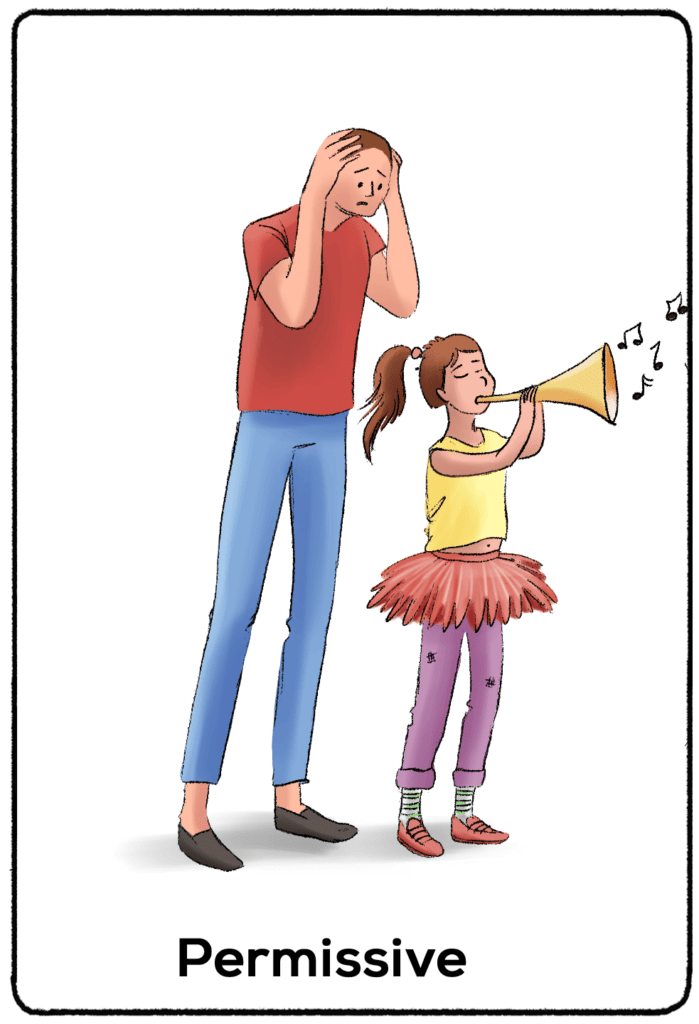
The other main characteristics of permissive parenting are:
Although many kids seem to think of this type of parenting as ideal, there are some negative behaviors associated with the children of this parenting style.
Some of the behavioral issues that the children often experience when parents use this style center mostly around the feeling of entitlement that the children of this parenting style develop. This shows when it comes time for sports in high school, the feeling like they should be picked first for a play or for team sports.
In high school years, this parenting style also affects academics. Think of the movie “Clueless”; In the movie the main character, Cher, shares a scene with her dad where she explains that she doesn’t have her report card yet because she is negotiating her grades. She says that her teachers are trying to “lowball” her and that her dad taught her never to take a first offer. He doesn’t seem concerned about the behavior and even says he is proud.
This movie is a perfect example of permissive parenting. Cher thinks that she can talk her teachers into better grades because for her whole life she has talked her parents into getting her whatever she wants. The word “no” doesn’t seem to exist for her throughout the movie.
This tends to continue on into the adult lives of these children. In their careers if they get passed up for a promotion even though they weren’t as qualified, they still may feel like they “deserved” it, even with no proof.
This parenting is the least involved. Often the children of these parenting styles feel a degree of neglect from their parents, some may even feel like their parents don’t love them at all. For these parents, there will always be something that is a competing priority between them and their children.
Some of the other characteristics of this parenting style are:
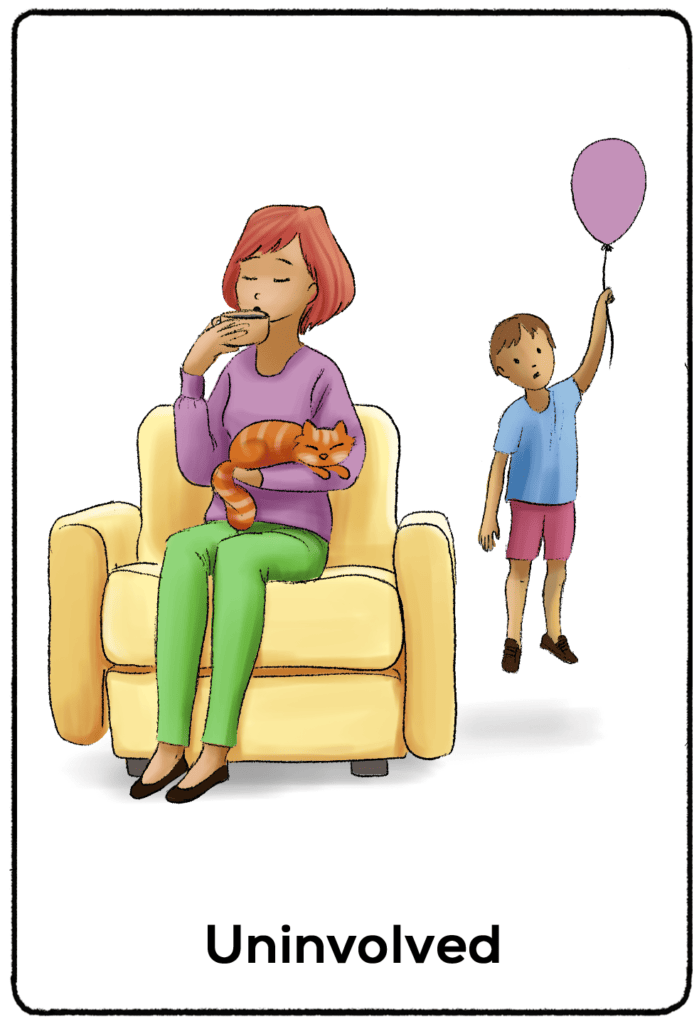
This style of parenting leads to relationship issues as well. This may make the children untrusting or distant in their future relationships, or unreliable like their parents were to them.
The constant chase of approval from their parents will lead them to feel resentment and is very strenuous on the relationship between parent and child.
This is arguably the best parenting style that raises successful and confident children. Self-esteem in these children is the best out of all of the other parenting styles. This style of parenting is a balance between letting the child figure out who they are and express themselves and discipline.
Unlike uninvolved parenting, these parents are overwhelmingly more supportive and show up for important events. And although they don’t always give their approval, because they want their kids to meet their standards, they always offer their support.
Although some kids feel like their parents are too much of a “hard-ass” at the time, when they get older they quickly realize that their parents had their best intentions in mind.
Though this is a very cold style of parenting, you will find that most of the parents who have used this style were also subjected to this same style of parenting from their own parents, and that they feel that they did what was best for their child. In their mind, their type of parenting style is effective in raising successful children.
While they may not be wrong in that assumption, most kids almost always grow up feeling like their parents did not love them, or rather did not care for their feelings.
The child is miserable but the parent, in an attempt to raise a child who is successful and has integrity, has imposed something on her child that she didn’t want, and therefore made the small child feel like her parent doesn’t care about her. It also made her hate the piano.
On the other hand, there have been well-rounded people who have come out of all the styles of parenting because of their resilience. Who is to say that you can’t be successful no matter how you grew up?
How Divorce Affects Parenting Style
Often children of divorce receive the permissive parenting from one or both of their parents shortly after the parents' divorce. This is usually because one or both parents are trying to be the “cool” parent in the divorce and let a lot of things slide in fear of the child wanting to spend more time with the other parent.
There have also been studies that prove that children of divorce and this parenting style are sexually active at a younger age than other parenting styles.
Talk To Your Siblings and Friends
Now that you’re a parent, you may already see your parents in a different light. But you may have still accepted all your parents’ behaviors as “normal.” That’s all you’ve known, after all! Talk to siblings and friends to get an outside perspective on your parents. Were they lenient? Stricter than other parents? Were other parents more involved, but you just didn’t know it?
As you gain the perspective of other people who knew your parents (or people with other parents,) you may see your parents in a new light. This may help you adjust your expectations as you parent your children.)
Take a Parenting Style Quiz
Online assessments can also help you gain perspective on your parenting style. Take thisfree quiz onlineto understand your parenting style better. Even just reading the questions out loud will help you reflect on how you approach your children.
Reach Out to a Therapist
A therapist can also help you put your childhood and current parenting struggles into perspective. Some therapists specialize in parenting styles and working with parents. Before you sit down for a session with a therapist, consider doing a consultation call with them and talking about your concerns. They may refer you to a therapist who is better suited to parenting styles or you’ll know you’re with the right therapist!
Parenting is not easy. Give yourself grace as you navigate hard conversations, punishments, rewards, and other elements of parenting. If you are looking to be a more authoritative parent, you can take the following actions to start.
Set goals.Be clear with your partner and your children about the goals and expectations you have for them. Where do you see them in five years? Ten years? What actions will they have to take today to be the successful person you know they can be? These open conversations may begin earlier than you anticipated, but they will set your child up for success.
Show up!Talk is cheap if you do not back it up with action. If you say that your child’s academic success is important to you, show it. Help them with their homework. Attend their graduations and sit as far up to the front as you can. Be there for your child. They will notice.
Related posts:Parenting Style Quiz (Free Test + Instant Results)The Psychology of Long Distance RelationshipsNuclear Family (Definition + History)Beck’s Depression Inventory (BDI Test)Abandonment Issues (Examples, Causes, and Treatment)
Related posts:
Reference this article:
Copy
