When you step back, you might remind yourself that not all fans of that team or people that went to that school are bad people. But your gut reaction might be to roll your eyes at them. Why is this? Why do we feel so much anger toward a group that is outside of our own?
Social psychologists, anthropologists, and even economists have an idea. We all possess a cognitive bias known as ingroup-outgroup bias. If you haven’t seen my video on ingroup bias yet, I recommend you watch it. It provides more examples and studies that show our natural preference toward people who belong to our “ingroups.”
What Is Outgroup Bias?How Outgroup Bias WorksExamples of Outgroup BiasThe Power of Biases In Cults and Religious Groups
What Is Outgroup Bias?
How Outgroup Bias Works
Examples of Outgroup Bias
The Power of Biases In Cults and Religious Groups
The Outgroup Bias is the psychological tendency to have a dislike for other people that are outside of one’s own identity group. For example, if you are a fan of a football team, you are likely to dislike a fan of a rival football team, even if you admire the person.
Outgroup bias works alongside ingroup bias, which is the tendency to favor people who belong to your “ingroup.” If you are a UT fan, for example, your ingroup is UT fans and examples of outgroups include OU or Penn State fans.
We form groups based on a variety of factors. To most people in society, men are seen as one group and women as another. White people are one group, black people are another group, etc. University of Texas fans are one group and OU fans are another group. Simply categorizing people based on these factors is not inherently dangerous - often, it is helpful to see how our differences influence the way we are perceived in the world and how we move about it. But when we regard one group as the superior group, things get tricky.
Many social psychologists believe that our separation of groups and the formation of a social identity leads to a preference for one group over another. A person is more likely to look favorably upon the people who belong to the groups to which they belong. A UT fan is more likely to look favorably upon other UT fans.
 rivals rooting for different sports teams
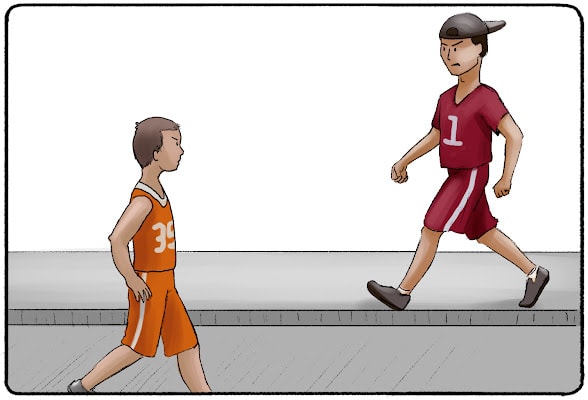
Outgroup bias shows the other side of this coin. A UT fan is more likely to look down upon OU fans or fans of rival sports teams. This idea also suggests that in addition to preferring people in our ingroups, we are more likely to withhold resources or act against the needs of the outgroup.
Why? Social psychologists believe that it goes back to more primitive days. When people were competing for limited resources, they were competing fortheir lives.They were competing for basic needs like food, water, and shelter.
If your ingroup had control of the food, water, and shelter, you would be more willing to get the resources you needed to stay alive. Clearly, you would supportyourgroup. But if the outgroup came in and took resources from you, you might not get fed or have a place to live. So you’re going to drive away the outgroup at all costs.
This mindset is still at the core of ingroup-outgroup bias. Just think about xenophobia. A common argument against immigration is that people don’t want immigrants to take jobs from citizens. So they paint immigrants in a bad light and even vote for policies to secure borders further.
It doesn’t take long to find examples of outgroup bias in everyday life. But this idea also plays out in classic psychology experiments.
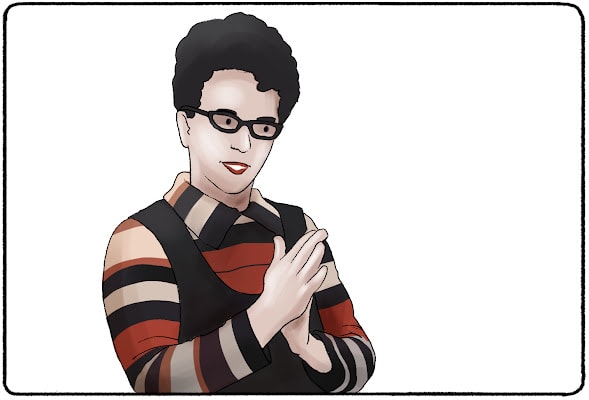
While the exercise was meant to teach her students about the effects of racism, it quickly became known nationwide. A documentary on the exercise showed just how fast the children would turn on the “outgroup,” or the inferior group of the day.
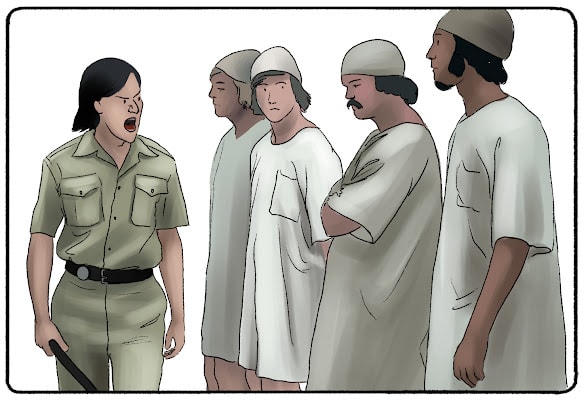
A similar experiment a few years later became known as one of the most notorious psychological studies in the country.The Stanford Prison experimenttook 24 college-age boys and assigned them to either the role ofprisonerorguard.The guards were given power to treat the prisoners in any way that they’d like (they couldn’t hit the prisoners) and the prisoners were instructed to obey. Again, the participants, who had not known each other prior to the study and had not done jail time, quickly turned on each other. Within a few days, the prisoners even banded together and staged a revolt against the guards. The experiment was canceled after just six days due to the violence and potential psychological trauma it would have on the participants.
One of the ideas intertwined with ingroup-outgroup bias is outgroup homogeneity bias. Studies found that we do more than just view outgroups less favorably than our ingroup. Those studies have also revealed that we are more likely to view the members of an outgroup as interchangeable, all with the same unfavorable traits. The outgroup homogeneity bias suggests that it is easier for us to remember individuals in an ingroup rather than in an outgroup, partially because they all “blend together.”
If you’ve ever heard someone use stereotypes about one gender, race, or ethnic group, this probably sounds familiar. Stereotypes paint all people as one outgroup having a certain set of unfavorable qualities. When these stereotypes are used, they are done so without distinguishing any one person in the outgroup from another. Everyone in the outgroup is treated the same.
Playing to this bias can prevent people from expanding their horizons or stepping outside of the box they live in. When this “box” is a cult, religion, or similar ingroup, outgroup bias can keep people under the control of the group’s leader. By leaning into the outgroup biases that we naturally have, followers stayinthe group.When this group is a cult, the results can be extremely dangerous. Failing to leave a cult may result in abuse, mental distress, or even death.
Piling all of these teachers about non-believers or non-group members strengthens outgroup bias. Over time, people in the outgroup are seen as people who need help, or salvation, or are simply “less than” the people in the group. Leaving the group to join the “others” seems like a step backward or a step down.
Our Biases Can Override Logic and Other Processes
Strengthening these feelings is key to cults and groups with wildly bizarre beliefs. When people can trust people in the outgroup, they will be more likely to question the strange teachings of the ingroup. Keeping followers separate from people outside the cult is so crucial to keeping their weird beliefs alive.
There are many cults that cut followers off from the outside world entirely. People in theHeaven’s Gate cultwere told to cut themselves off from everyone they knew before joining Heaven’s Gate. Without people from the outside questioning the beliefs of Heaven’s Gate, it was easy for the followers to believe that they would one day board a UFO and live a life as an immortal extraterrestrial.
The Branch Davidianshad a compound where followers could live out the end of the world, making the group the center of their entire lives. When David Koresch married over 20 women at a time or proclaimed to be the Messiah that could predict the end of the world, followers took his teachings at face value. After all, few followers had access to an outgroup that could question these beliefs.
Spiritual leaderTeal Swanhas been accused of following similar patterns, engaging her followers in practices that lead them to cut off family members and recover false memories of abuse from said family members. When Swan’s followers only interact with other people who follow Teal, her bizarre teachers about her connection to aliens and psychic powers are less likely to come into question.
Learning More About Ingroups and Religion
The divide that religious groups and cults create between their ingroup and outgroups makes leaving the group extremely hard. Many people stay in the group because they don’t want to deal with the judgment of their friends, family, and community of followers!
ThisReddit postrelates outgroup bias to leaving the Mormon Church or Christian religions. They discuss the pressure people endure from ingroups as they attempt to leave, as well as the outgroup bias that is “hardwired” into us from the moment we join the ingroup. When we are not aware of outgroup biases and let these biases color everything that we see, hear, and think, fighting them can feel excruciating. This is completely normal. If you are leaving an ingroup and feeling conflicted about the process, be sure to reach out to a mental health professional or support group that can help you see your biases in a new light.
Be Aware of Outgroup Bias
Clearly, outgroup bias can have serious consequences. We may judge people before we even know them, withhold help from people just because of the color of their skin, or choose to elect a politician that promises to keep the outgroup starved of resources and the ingroup in power.
In order to ensure a more fair world, we have to be aware of outgroup bias. This is something that all humans are guilty of, just like any other cognitive bias. Recognizing that this bias influences your perspective is the first step in seeing things more objectively. By being mindful of our thoughts and actions, and understanding that our biases may be leading us astray, we can make more impartial decisions and judgments.
Related posts:Ingroup Bias (Definition + Examples)Beck’s Depression Inventory (BDI Test)The Psychology of Long Distance RelationshipsOperant Conditioning (Examples + Research)Experimenter Bias (Definition + Examples)
Related posts:
Reference this article:Practical Psychology. (2020, January).Outgroup Bias (Definition + Examples).Retrieved from https://practicalpie.com/outgroup-bias-definition-examples/.Practical Psychology. (2020, January). Outgroup Bias (Definition + Examples). Retrieved from https://practicalpie.com/outgroup-bias-definition-examples/.Copy
Reference this article:
Practical Psychology. (2020, January).Outgroup Bias (Definition + Examples).Retrieved from https://practicalpie.com/outgroup-bias-definition-examples/.Practical Psychology. (2020, January). Outgroup Bias (Definition + Examples). Retrieved from https://practicalpie.com/outgroup-bias-definition-examples/.Copy
Copy
