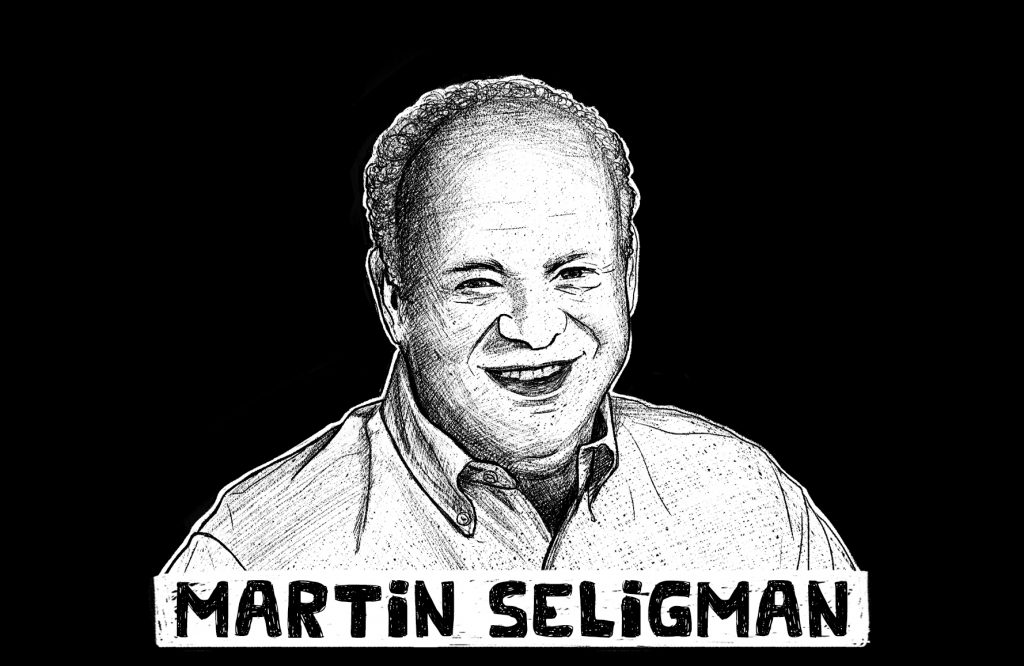
Martin E. P. Seligman is an American psychologist, author, researcher, and educator. He is widely considered to be the father of positive psychology. He is also well known for his theories of learned helplessness and well-being. Seligman is one of the most respected and cited psychologists alive today.

Martin Seligman’s ChildhoodEarly Educational BackgroundMartin Seligman’s Higher Educational BackgroundWhat Is Learned Helplessness?What is Positive Psychology?Martin Seligman’s Books, Accomplishments and AwardsPersonal LifeIs Martin Seligman Alive Today?
Martin Seligman’s Childhood
Early Educational Background
Martin Seligman’s Higher Educational Background
What Is Learned Helplessness?
What is Positive Psychology?
Martin Seligman’s Books, Accomplishments and Awards
Personal Life
Is Martin Seligman Alive Today?
Martin Elias Peter Seligman was born on August 12, 1942 in Albany, New York. His parents were Adrian Seligman and Irene Brown. Adrian was a handsome, determined man and a brilliant lawyer who eventually decided to work as a civil servant.
Seligman also had an older sister named Beth who was very fond of him. When he was born, Beth wanted to help name him and chose the name “Peter.” Seligman was also named after his grandfather (Martin) and his mother’s grandfather (Elias). He was raised in a middle-class Jewish family.
As a child, Seligman was very smart and a fast learner. He identified strongly with his Jewish roots. As his family had limited funds, Seligman attended public school. It did not take Adrian Seligman long to realize that if Martin was to get into a good college, he needed to leave School 16. Adrian wanted Martin to attend the Albany Academy for Boys (AAB)—a private military school. Martin did very well on the admissionsIQ testand was the first boy to finish. His sister Beth made the sacrifice to attend the free New York State Teachers’ College in Albany so the family could afford to send Martin to AAB in September of 1955.
Although Seligman performed very well academically at AAB, he did not have much success socially. He often felt rejected and alone because his modest background was very different from that of his wealthy schoolmates. To make matters worse, his father Adrian had a stroke in 1955. While at the hospital, his father had another stroke that paralyzed the left side of his body.
With Adrian Seligman unable to function as he did before, the Seligman family fell on hard financial times. Martin’s parents decided to send him back to public school so the family could save money. Martin did not want to return to public school, but he accepted the decision because he saw the desperate financial situation his family was in. He also decided to get a magazine job because at 13 years old, he considered himself the man of the house now.
When AAB opened for school in 1956, the headmaster, Harry E. P. Meislahn, offered Martin Seligman a full scholarship. Of course, Martin still had to work at his magazine job to help care for the family expenses, but he was very happy to attend AAB again. In honor of his headmaster, Seligman later included his middle initials as a part of his title. To this day, he prefers to be called “ Dr. Martin E. P. Seligman” rather than “Dr. Martin Seligman.”
In the summer between his junior and senior years, Seligman participated in his first laboratory study in psychology. He was also the captain of the Princeton bridge team. At Princeton, Seligman felt as if his intelligence was more important than his financial background. He earned his bachelor’s degree in philosophy and graduated Summa Cum Laude in 1964.
After earning his bachelor’s degree, Seligman was faced with a trilemma. He was offered a scholarship to study analytic philosophy with Geoffrey Warnock at Oxford University, he was offered a scholarship to study animal experimental psychology at the University of Pennsylvania (UPENN), and he had the option of becoming a professional bridge player. He turned to his friend and mentor, Robert Nozick for advice. In the end, Seligman decided to study psychology because he really wanted to help people.
While earning his PhD at the University of Pennsylvania, Seligman worked with Steve Maier on the theory oflearned helplessness. Seligman received his PhD in psychology in 1967. He then accepted a position as an assistant professor of psychology at Cornell University. However, the heated political environment at Cornell motivated him to return to UPENN.
Seligman continued as an associate professor and later as a professor of psychology at UPENN. He resumed his research on learned helplessness and depression. Seligman’s research led to major breakthroughs in the treatment and prevention of depression. In 1980, Seligman became the Director of the Clinical Training Program of the Psychology Department of the University of Pennsylvania.
Seligman kept his position at UPENN for 14 years. In 1998, he was elected as the President of the American Psychological Association with a record number of votes. Seligman chose “positive psychology” as the theme for his term in office. He wanted to explore new ideas about optimism, establish a more positive focus for the field of psychology, and help create a happier world.
Based on the findings of his studies, Seligman concluded that learned helplessness is not merely a result of trauma, but results from exposure touncontrollabletrauma. If the organism is able to exert some level of control over the traumatic incident, the likelihood of learned helplessness is greatly diminished.
Organisms that are exposed to uncontrollable trauma often display the following three features of learned helplessness:
Dogs are not the only species susceptible to learned helplessness. Seligman and others have demonstrated similar effects in cats, rats, mice, fish and humans. Seligman even proposed that depression in humans is a parallel of the learned helplessness he observed in lab animals. He noted many similarities between the two conditions, including passivity, helplessness and hopelessness. He concluded that people become depressed when they believe they are helpless to control stressful situations in their life.
Since lack of control is the primary cause of learned helplessness, teaching the organism that controlispossible can help to overcome the problem. In another of Seligman’s studies, passive dogs that were forcibly dragged from the shock zone to a safe area of the box eventually overcame their learned helplessness.
Seligman noted that most of the earlier approaches in the field of psychology focused on negative aspects of the human personality, such as maladaptive behavior, negative emotions, and personality weaknesses. Seligman’s aim was to advance an alternative school of thought focusing on what is good about people. Positive psychology therefore deals with topics such as happiness, resilience, optimism, self-esteem, and optimal human functioning.
So what contributes to happiness? Seligman and his colleagues have identified a number of factors:
In 2002, Seligman proposed the ‘Authentic Happiness’ theory, which states that happiness has three domains or components:
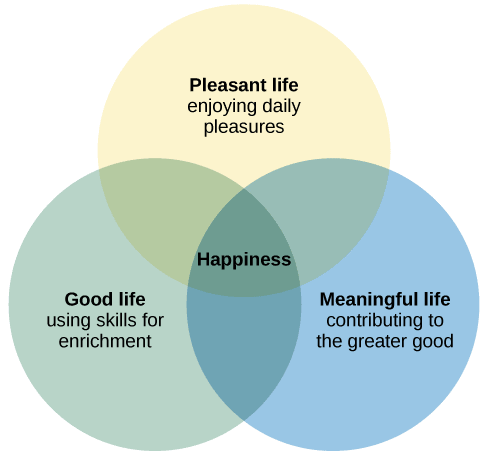
Three of the components in the PERMA model - positive emotion, engagement, and meaning - were derived from Seliman’s original Authentic Happiness theory. By adding relationships as another component, Seligman acknowledged that significant others, social interaction and a feeling of belonging are all essential to an individual’s well-being. The fifth component - accomplishment - indicates that well-being also involves a drive to achieve one’s goals and to master various skills and tasks.
Applications of Seligman’s Theories
Education- Positive psychology principles can help teachers to focus more on encouraging and celebrating the strengths and talents of their students, and less on penalizing them for their mistakes and weaknesses. In some places, the positive psychology movement has also led to a consideration of how schools can be made into happy places that foster optimal development.
Life coaching- The knowledge of human strengths derived from positive psychology can be used to inform coaching interventions. By applying such knowledge, life coaches can help to maximize their client’s potential and guide them towards achieving their personal goals.
Healthcare- Positive psychology interventions are now being developed for use in the healthcare industry. One aim of such interventions is to increase positive emotions and traits such as optimism, since preliminary research suggests that these can enhance physical well-being.
Criticisms of Seligman’s Theories
Several critics have argued against Seligman’s learned helplessness model of depression. For example, some have noted that depressed individuals often engage in self-blame - they tend to blame themselves for failures and negative circumstances in their life. According to critics, this contradicts Seligman’s claim that depressed people believe they are helpless. Instead, it suggests that theydobelieve they have control but that things still turn out negatively despite their best efforts.
Positive psychologists often claim that their field is based on solid empirical evidence. In fact, this is one of the main features they claim distinguishes them from humanistic psychologists. However, positive psychologists who work in applied fields have actually been criticized for being too quick to implement interventions that do not have solid empirical backing. In many cases, these interventions are based on preliminary findings that have not been thoroughly examined.
Other common criticisms of positive psychology are that:
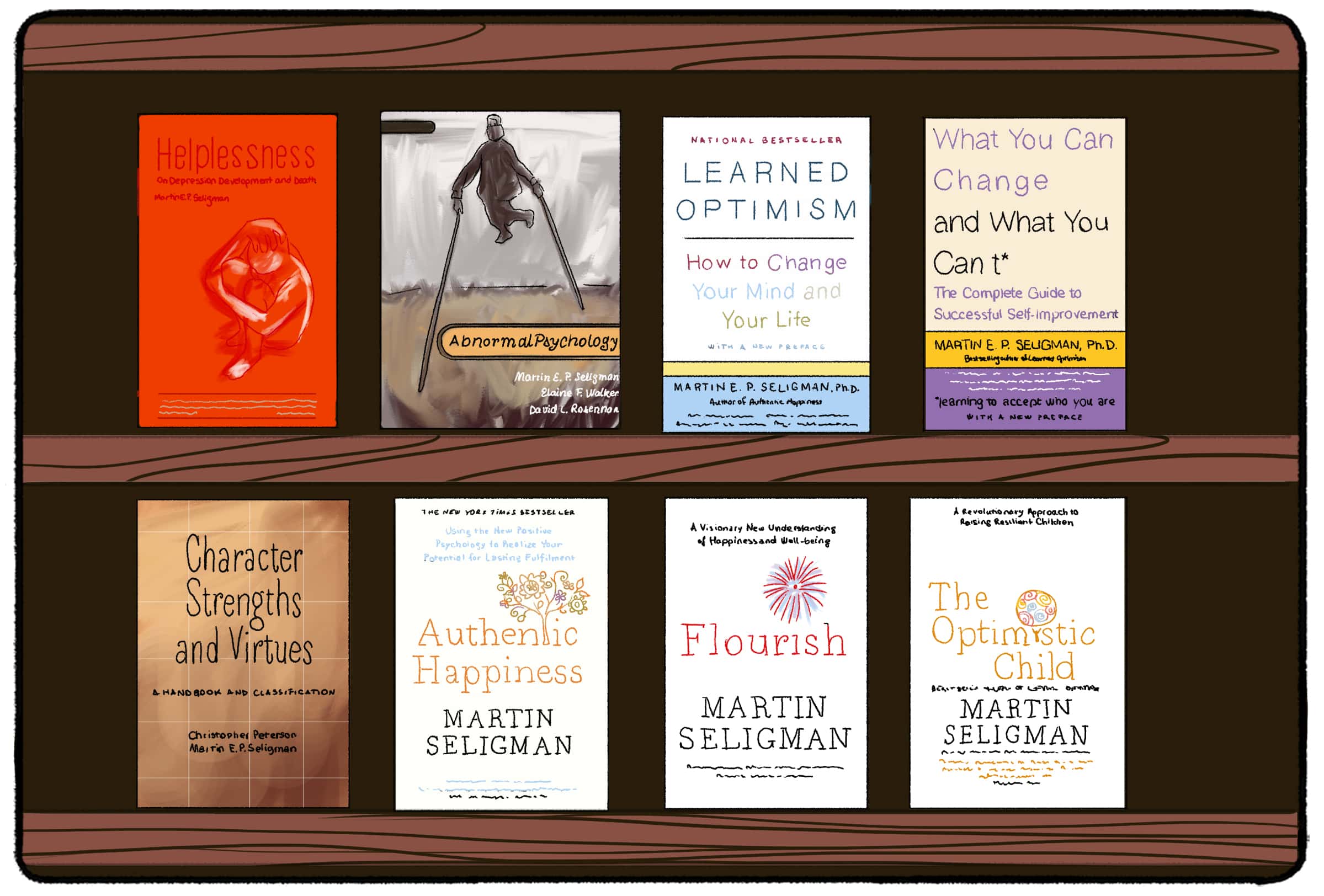
Martin Seligman has authored 20 books and more than 250 scholarly papers. Some of his books have been translated into 20 different languages and are bestsellers in several countries.
A few of Seligman’s most popular books include:
(Flourishis arguably his most popular. You can read a review on thisReddit post!)
A few of his most significant articles include:
Martin Seligman has also received a number of awards throughout his long and distinguished career. Some of his awards and accomplishments are listed below:
While at Princeton, Seligman met and fell in love with Kerry Mueller, a student at Bryn Mawr College. He used his car privileges as the captain of the bridge team to visit her on weekends. Mueller was the first woman to return Seligman’s affections. The couple got married in 1964, one day before Seligman graduated from Princeton.
Martin Seligman and Kerry Mueller had two children together. However the couple divorced in 1978. Seligman admits that he became a bit of a womanizer in the years that followed. He eventually fell in love with Mandy McCarthy, a student in the UPENN psychology graduate program.
Mandy McCarthy had left London specifically to study with Seligman. She was impressed with his unique approach to treating depression. Mandy and Martin began dating, despite the fact that Martin is 17 years older. After getting married, they raised seven children, five of whom were home-schooled. The couple also has four grandchildren.
Today, Martin Seligman is the Director of the Penn Positive Psychology Center and Zellerbach Family Professor of Psychology at the UPenn. He is also Director of the Penn Master of Applied Positive Psychology program (MAPP). In his spare time, Seligman enjoys good food, wine, gardening, and spending time with family.
Burling, S. (2010, May 30). The power of a positive thinker.The Philadelphia Inquirer.Retrieved from https://www.inquirer.com/philly/health/20100530_The_power_of_a_positive_thinker.html
Klein, S. B. (2012).Learning: Principles and applications(6th ed.). Thousand Oaks, CA: SAGE Publications.
Petri, H. L., & Govern, J. M. (2013).Motivation: Theory, research and application(6th ed.). Belmont, CA: Wadsworth.
Schultz, D. P., & Schultz, S. E. (2013).Theories of personality(10th ed.). Belmont, CA: Wadsworth.
Shah, N. (2008).Martin seligman. Retrieved from https://pabook.libraries.psu.edu/literary-cultural-heritage-map-pa/bios/Seligman__Martin
Seligman, M. E. P. (1972).Learned helplessness. Retrieved fromhttps://ppc.sas.upenn.edu/sites/default/files/learnedhelplessness.pdf
Related posts:Beck’s Depression Inventory (BDI Test)Operant Conditioning (Examples + Research)The Psychology of Long Distance RelationshipsPERMA Model of Happiness (Examples + Images)Variable Interval Reinforcement Schedule (Examples)
Related posts:
Reference this article:Practical Psychology. (2020, March).Martin Seligman Biography - Contributions To Psychology.Retrieved from https://practicalpie.com/martin-seligman/.Practical Psychology. (2020, March). Martin Seligman Biography - Contributions To Psychology. Retrieved from https://practicalpie.com/martin-seligman/.Copy
Reference this article:
Practical Psychology. (2020, March).Martin Seligman Biography - Contributions To Psychology.Retrieved from https://practicalpie.com/martin-seligman/.Practical Psychology. (2020, March). Martin Seligman Biography - Contributions To Psychology. Retrieved from https://practicalpie.com/martin-seligman/.Copy
Copy
