Latent learning challenges the idea that all behavior is learned through reinforcement - it’s an essential addition to the study of psychology.
What is Latent Learning?How Does Latent Learning Take Place?Difference Between Insight and Latent LearningWho Introduced The Idea of Latent Learning?How Teachers Bring Latent Learning Into the Classroom
What is Latent Learning?
How Does Latent Learning Take Place?
Difference Between Insight and Latent Learning
Who Introduced The Idea of Latent Learning?
How Teachers Bring Latent Learning Into the Classroom
Latent learning is the process of subconsciously retaining information without motivation or reinforcement. You aren’t consciously thinking about the consequences of what you are learning while learning it. Because there is no cheese at the end of the maze doesn’t mean we aren’t learning our way around.
When we read about psychology, learning, and behavior studies, we read a lot about rewards and punishments. Most of these rewards involve food. For years, psychologists believed that learning was only done through reinforcements.
But that’s not exactly how the world works. Our learning is not always reinforced. We may observe or engage in a skill without any tests to take later or punishments to fear. The fact that you have learned these things isn’t apparent until later when you are asked to apply the information to get a reward.
During latent learning, information is absorbed subconsciously. For example, you may watch Survivor as you wind down from a long day. You have no intention of using survival skills. The show is just fascinating, and you like watching it with friends. If you were to try and learn from it, you’d likely watch with a notebook in hand. Instead, you turn it on, eat popcorn, and enjoy the show.
After watching a few seasons ofSurvivor,you may be surprised that you have survival skills. Maybe, a few years after watching the show, you go on a hike and accidentally get lost. You have to set up camp for the night and light a fire. As you search for materials to start the fire, information from years of watchingSurvivorreturns to you. Even though you have never taken a survival course or thought too much about learning how to build a fire, your latent learning pays off, and you can successfully light and keep the fire going.
Not all latent learning is immediately apparent or serendipitous. You might not realize the value of specific skills or knowledge for many years. However, that doesn’t mean your efforts spent learning new information or acquiring skills are in vain!
Is Latent Learning Operant Conditioning or Classical Conditioning?
Neither! Conditioning requires rewards and punishments for the behavior to stick. There is no latent conditioning, only latent learning that involves no reinforcements.
Many forms of learning lead to solving problems or performing behaviors. Often, latent learning is confused with another form of learning - insight learning. But these two processes are slightly different.
Insight learning occurs when you’ve faced a problem, take a pause, and then suddenly put together memories and information that will help you solve the problem. Many people refer to this as an “a-ha” moment. Maybe you are facing a conflict at work and don’t know the best solution to make all your team members happy. You’ve read plenty of books and have tons of experience with conflicts like this, but the correct answer isn’t coming. So you walk around the block, make a cup of coffee, and let your mind think about other things.
Almost five decades after Pavlov used dogs to support his theories onclassical conditioning, Edward Tolman used rats to support his theories on latent learning. Tolman did not discover latent learning, but his experiment brought the idea into mainstream psychology.
Tolman’s Rats
Tolman devised an experiment to dive into the intricacies of learning behaviors using rats navigating mazes.In this study, Tolman aimed to investigate how rewards—or the lack thereof—influence the learning process. He split the rats into three groups, each subjected to different reward conditions as they traversed a maze over 17 days. The intention was to observe how consistent, absent, or delayed rewards affected the rats' ability to learn and remember the maze’s layout. Through this setup, Tolman hoped to explore the underlying mechanisms of learning and challenge prevailing behaviorist theories of the time.
 rat in a maze
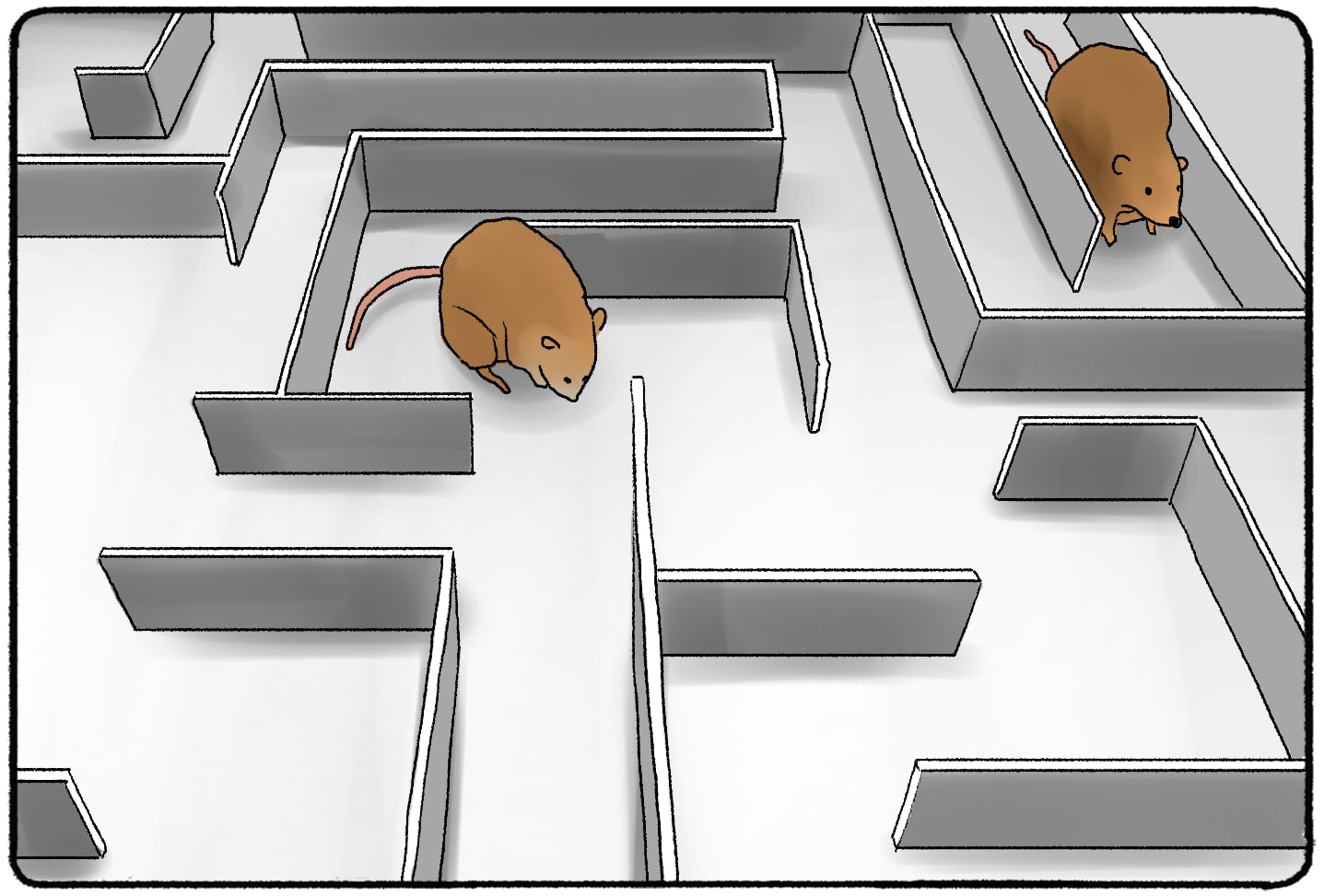
Methodology:
Results:
As expected, the consistently rewarded rats in the first group became quite adept at navigating the maze due to the immediate reinforcement they received. In contrast, the second group, without any rewards to motivate them, showed no particular urgency or pattern in their exploration.
The intriguing results emerged from the third group. After being introduced to the reward system on the 11th day, these rats rapidly demonstrated a strong understanding of the maze’s layout. By the end of the 17-day period, they consistently outperformed even the first group, taking fewer wrong turns and reaching the end more efficiently.
Implications:
Tolman’s experiment provided significant insights into ‘latent learning.’ Even without immediate rewards, the rats in the third group had been learning and forming a cognitive map of the maze. The sudden introduction of food merely acted as a catalyst to reveal their latent knowledge. This study challenged the conventional behaviorist notion that learning is solely a product of reinforcement and posited that organisms can learn and form cognitive maps of their environment without direct rewards.
So what was happening? In the first 10 days, even though they were not asked to display their knowledge, the rats in the third group had been making “cognitive maps” of the maze. The rats didn’t even display their learning independently - until they were asked. Once motivated to display their knowledge, they pulled from what they had learned in the first 10 days.
This is latent learning in action.
Examples of Latent Learning In Everyday Life
Latent learning can be done in many ways. You observe your parents repeatedly as they tend to their garden. You’re never given this task, but join a community garden years later. You pick up your gloves and start weeding and tending to the garden as your parents did.

This is an example of bothobservational learningand latent learning. You observed someone else’s actions and retained the information even though you were never asked to display your knowledge of working in a garden.
But latent learning isn’t just observational.
Think about your commute to work. You pass a lot of exits, stores, and street names on your drive to and from work every day. If you need to one day go to one of those stores that you saw on your commute, you could probably know how to get there without using a map, right?
That’s also latent learning in action.
What if you have to take a detour on your commute? Maybe you pull from your knowledge of the town and find another way to get to work. You’re also applying latent learning here. Additional studies on rats show that when the fastest route to food is cut off in a maze, they can easily find an alternative route that still takes them to the food. Even if they have a “preferred” route, they learn the whole map through latent learning and know how to problem-solve when faced with obstacles.
Latent Learning in Infants
How early does latent learning start? Studies suggest it begins earlier than you might think. Babies as young as three months may retain memories before they have the ability to imitate them. At three months, researchers presented one group of 3-month-old participants with two puppets and performed a target behavior. The other group of 3-month-old participants was only exposed to one of the puppets.
One puppet was exposed to both groups multiple times for the next three months. Then, when the infants reached six months, researchers reintroduced the second puppet.
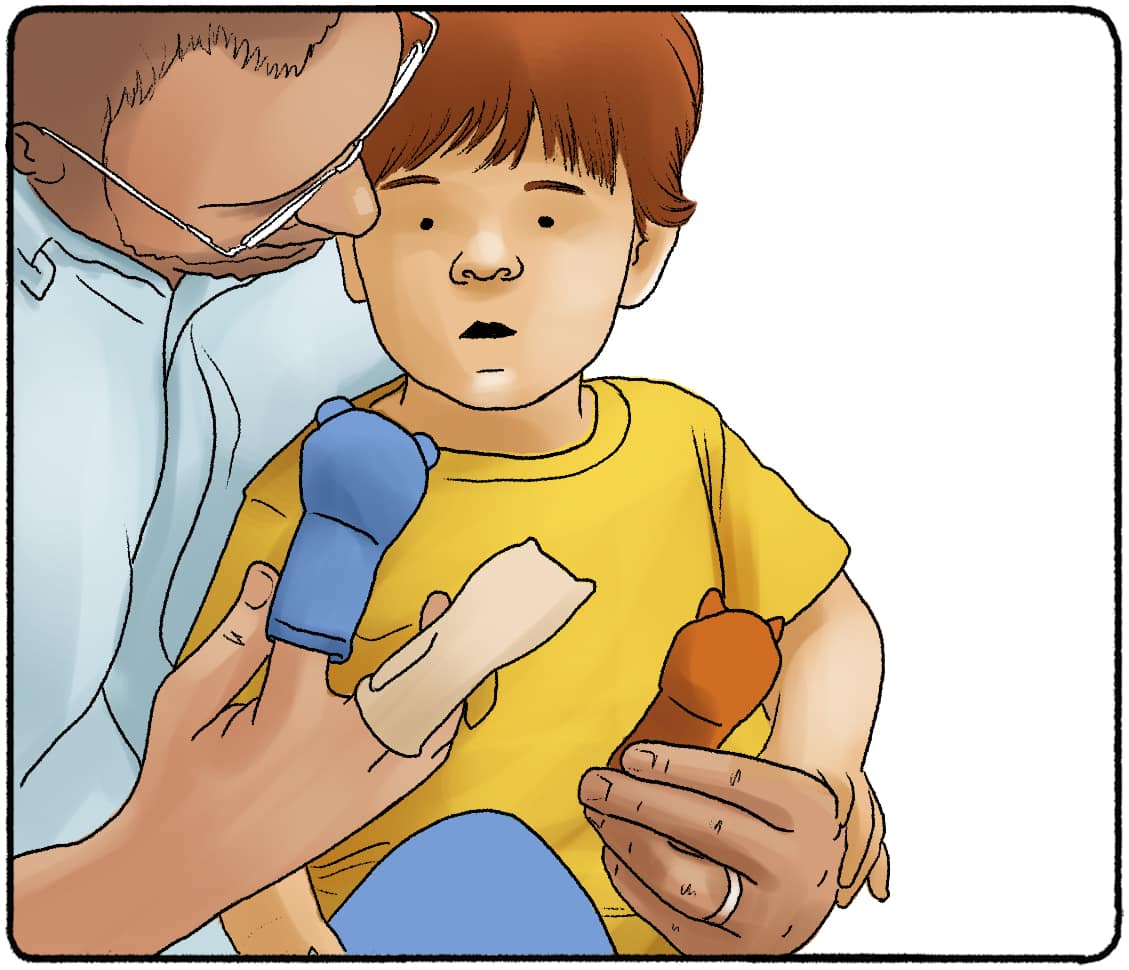
The infants exposed to the second puppet months earlier were more likely to imitate the target behavior of the second puppet. They remembered the connection between the first and second puppets, even though they could not imitate any behavior at that stage of development.
Great teachers understand that latent learning could be the best strategy for struggling students. If a teacher allows their student to play with material in their own ways, they might learn more than what is being presented to them. On thescience subreddit, two teachers share their experiences with latent learning.
“As a teacher, this has always been one of most important concepts I try to employ in the classroom.
Exposure.
For kids, everything can’t remain so simple and one-sided forever. Plus the world is connected now more than any time in history. We don’t have to throw everything in their face, but we need to at least give them a chance to see what all is out there. And it’s amazing sometimes, even though it can be rough seeing more of the world and its harsher realities.
It’s easy for me as a language teacher since I can easily employ linguistic culturology any chance I want. But there’s a lot of beauty to be shared from all around the word in terms of math, science, history, and really just anything. One country, or one subject, or one class, or one culture doesn’t hold all the secrets.”
Get Learning!
Now go out and discover what you have learned through latent learning!
Related posts:Latent Inhibition (Definition + Examples)The Psychology of Long Distance RelationshipsBeck’s Depression Inventory (BDI Test)Operant Conditioning (Examples + Research)Skinner’s Box Experiment (Behaviorism Study)
Related posts:
Reference this article:Practical Psychology. (2019, October).Latent Learning (Definition + Examples).Retrieved from https://practicalpie.com/latent-learning-definition-examples/.Practical Psychology. (2019, October). Latent Learning (Definition + Examples). Retrieved from https://practicalpie.com/latent-learning-definition-examples/.Copy
Reference this article:
Practical Psychology. (2019, October).Latent Learning (Definition + Examples).Retrieved from https://practicalpie.com/latent-learning-definition-examples/.Practical Psychology. (2019, October). Latent Learning (Definition + Examples). Retrieved from https://practicalpie.com/latent-learning-definition-examples/.Copy
Copy
