Personality tests are a lot of fun. As humans, we love learning more about the inner workings of our minds and how we behave differently from others. It’s exciting to get your Myers-Briggs result and see how you relate to the description of your personality type. The famous Myers-Briggs test comes from Jungian psychology and the dichotomies that exist within our personalities. But it’s not the only one. Another psychologist studiedCarl Jung’s work, uncovered 16 types of people in the world, and created the Keirsey Temperament Sorter.
Are you curious about the Kiersey Temperament Sorter, its use, and what it reveals about your personality? Keep reading!
Who Created the Keirsey Temperament Sorter?Who Uses the Kiersey Temperament Sorter?Temperament TypesTaking the TestDifferences Between Myers-Briggs and Keirsey Temperament SorterOther Personality Assessments and TestsOther Personality Tests and Assessments
Who Created the Keirsey Temperament Sorter?
Who Uses the Kiersey Temperament Sorter?
Temperament Types
Taking the Test
Differences Between Myers-Briggs and Keirsey Temperament Sorter
Other Personality Assessments and Tests
Other Personality Tests and Assessments
David Kiersey created a test to determine a person’s “temperament” instead of “personality.” The Keirsey Temperament Sorter first appeared in the 1978 bookPlease Understand Me. While it is not as popular as the Myers-Briggs Type Indicator assessment, it may be used alongside it in coaching or personal development.
Individuals may come across the Kiersey Temperament Sorter when they look for personality assessments, but team leaders are more likely to distribute the test to their teams. Corporations will distribute the test to their employees to build cohesive teams. When you know how your coworkers view the world and communicate, you can have more effective conversations and create stronger bonds. AT&T, Bank of America, and the U.S. Air Force are just someorganizations that use the Kiersey Temperament Sorter.
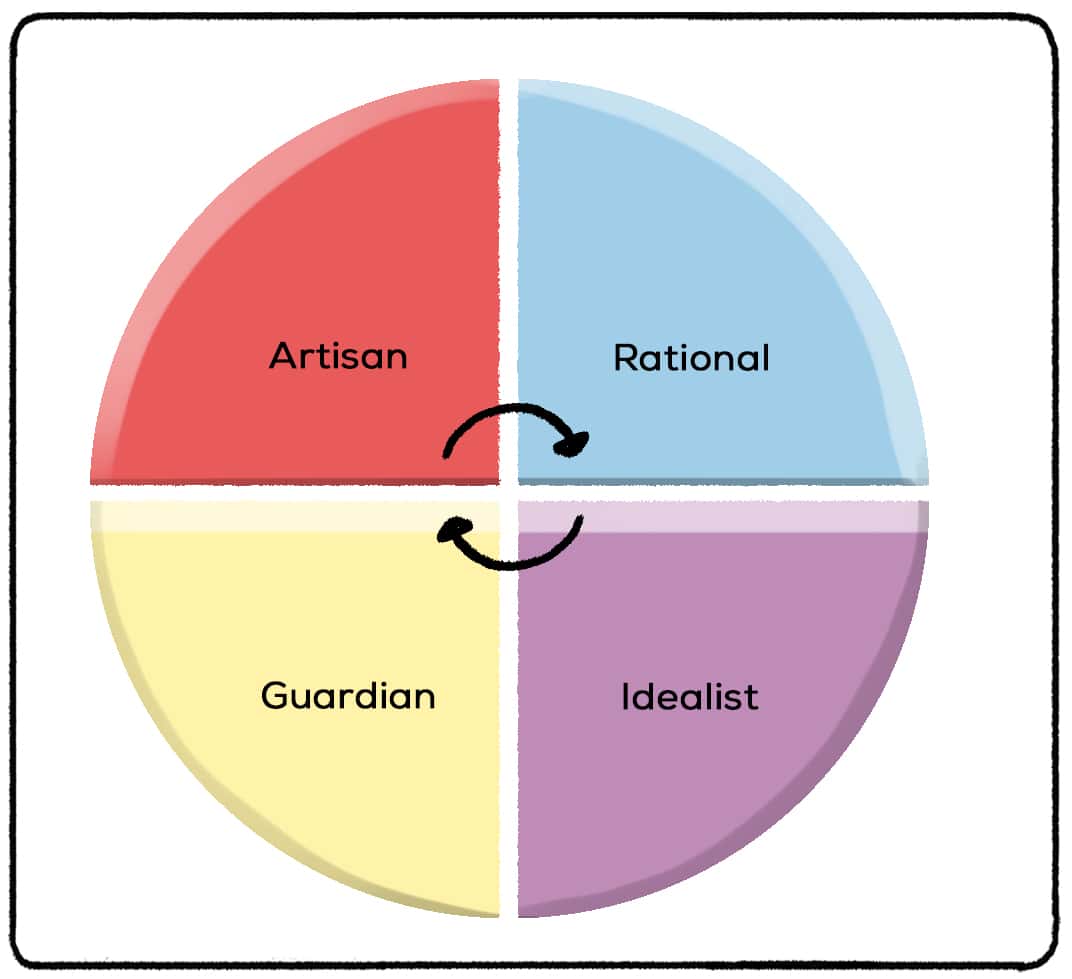
The Keirsey Temperament Sorter uses a questionnaire to label people with one of four temperaments, based on their communication (concrete or abstract) and action (cooperative and utilitarian.) These four temperaments are:
Let’s talk about what these four temperaments say about a person.

Guardian
Concrete communication and cooperative action label someone as a Guardian. 45% of the people in the world hold this title. It’s a good thing, too - guardians excel in handling logistics, organization, and management. They approach decisions rationally and with care. People under the Guardian temperament will likely follow the rules, respect order, and base their decisions on facts and concrete information. While this doesn’t sound fun, Guardians can be loyal, dependable friends, partners, and community members.
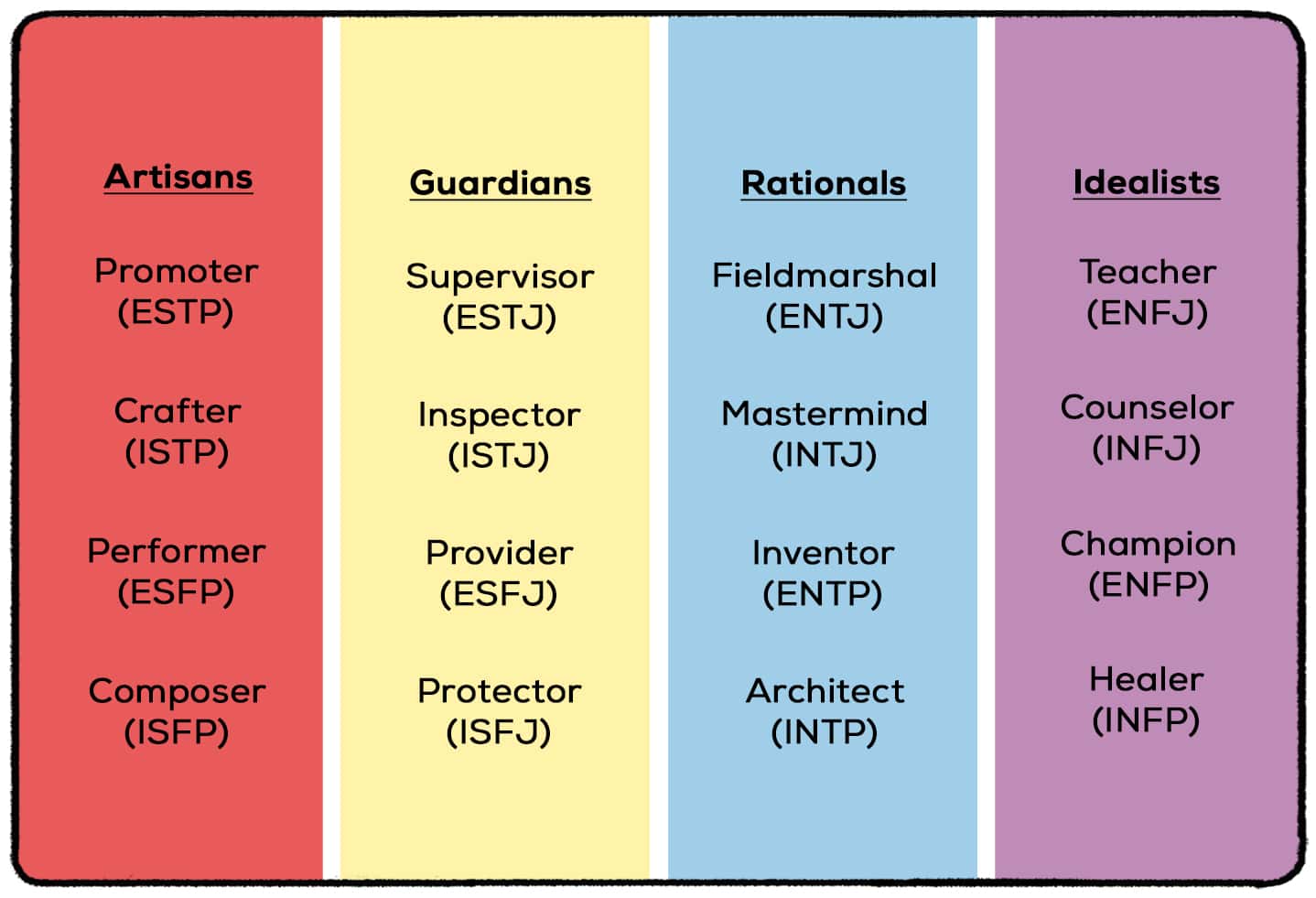
There are four “subsets” of Guardians: Supervisors, Inspectors, Providers, and Protectors. I’ll talk more about what makes these four subsets later.
Artisan
Concrete communication and utilitarian action label someone as an Artisan. 30% of the people in the world are artisans. As the name would suggest, artisans are the world’s creatives but enjoy their craft in the “real world.” They will likely enjoy building things with their hands or participating in the performing arts. Artisans take pride in making life fun and enjoy expressing themselves at every opportunity. The phrase “seize the day” was made for Artisans.
There are four “subsets” of Artisans: Promoters, Crafters, Performers, and Composers.
Idealist
Abstract communication and cooperative action make up an Idealist Temperament. 15% of the people in the world are Idealists. They enjoy working with people and, most importantly, helping them reach their full potential. Personal development and self-discovery are especially important for Idealists. Cooperation and kindness are extremely valuable to Idealists in problem-solving and building relationships with others.
There are four “subsets” of Idealists: Teachers, Counselors, Champions, and Healers.
Rational
The least common Temperament is the Rational Temperament, which comprises abstract communication and utilitarian action. Only 10% of the people in the world are rational.They are focused on finding solutions to problems, no matter how difficult the problems are.Rationals are logical, driven, and very reasonable. Intelligence is extremely valuable to rationales, and they dream of a level of intelligence that can make the world more functional and enjoyable.
There are four subsets of rationales: Field marshals, Masterminds, Inventors, and Architects.
The test that determines your Temperament Style consists of 70 questions. Each question offers a prompt and two options for answering that prompt. Here’s an example:
Are you more likely to trust your:
a. Experience
b. Hunch
It’s easy to go online nowadays, take the test, and get your answer. This will put you into the four categories that were mentioned above.
By calculating the results yourself, you can better understand each element of your TemperamentandSubset: ENTJ, ISTJ, etc. For example, a “Supervisor” is an ESTJ. A fieldmarshal is an ENTJ.
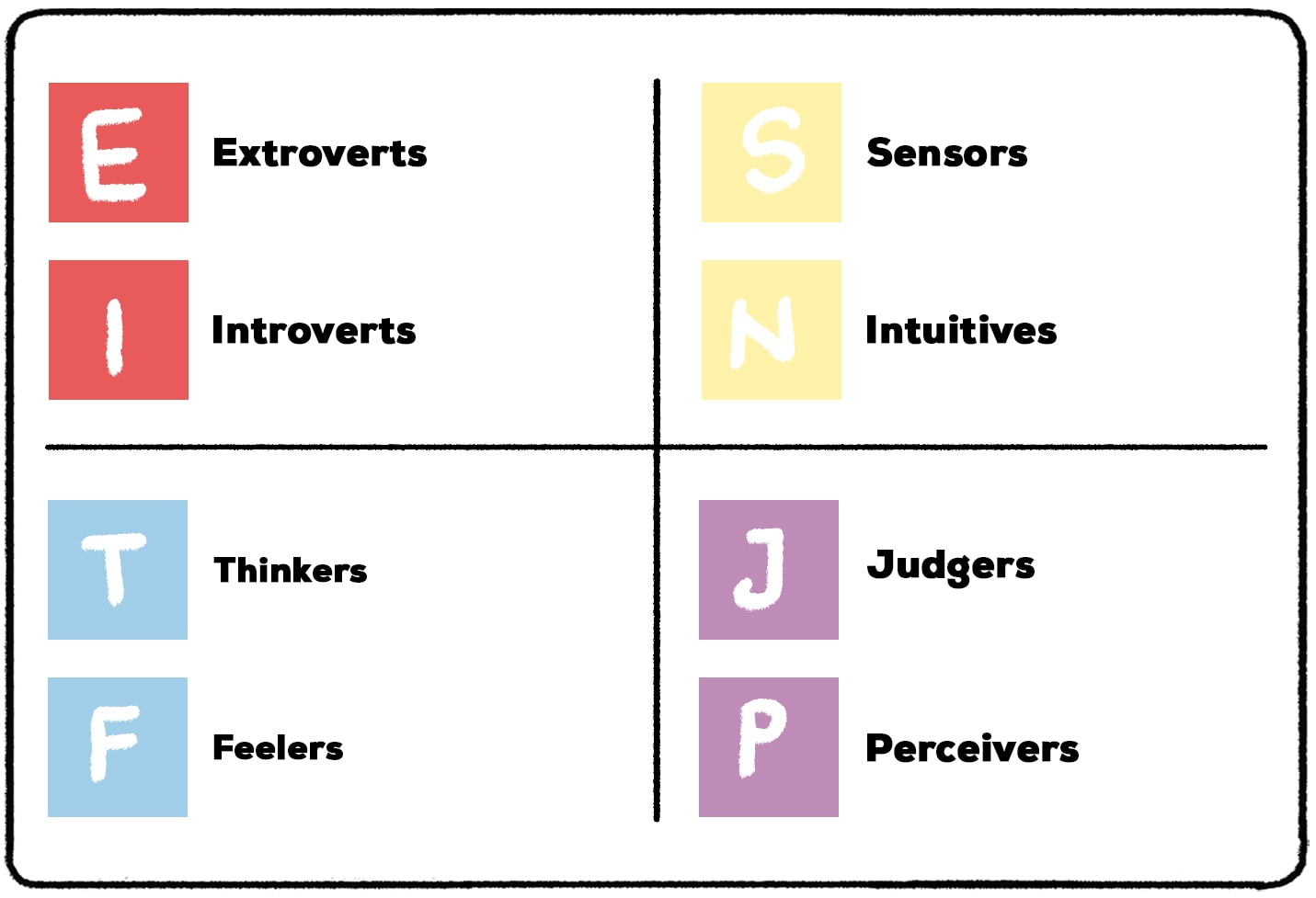
But hey, don’t these “types” look just like theMyers-Briggs types? They do! While Myers-Briggs personality types and the Keirsey Temperament Sorter have many things in common, some key differences can alter what score you get and what it says about you. You may even notice that if you take the Myers-Briggs and Keirsey tests, you may receive different answers and have different “roles.” (An ENTJ in the Kiersey world is a “field marshal,” while an ENTJ in the Myers-Briggs world is a “commander.”)
About Myers-Briggs Test
Myers-Briggs test strongly emphasizes how a personthinks. It looks at different mental processes and how someone interacts with the world. Jung’s extraversion/introversion dichotomy (the E/I in your personality type) is the most significant result. Once extraverted vs introverted thinking is uncovered, the rest of the pieces will fall into place. We are more likely to know whether we are an extrovert or an introvert rather than a “judger” or “perceiver.”
About Kiersey Tests
Kiersey tests are more likely to look at a person’s observablebehaviors. How a personactson their thinking and observing is more important in forming their temperament. The sensing/intuition dichotomy (N/S) is the primary result. This result categorizes people into introspective (“Martians”) or observant (“Earthlings.”) Once this is determined, all of the other pieces fall into place.
Do The MBTI and Kiersey Results Line Up?
If you take the Kiersey Temperament Sorter, you may be interested in taking the MBTI. Will you get the same results? It’s definitely possible! This is due to the subtle but not entirely significant difference between the MBTI and the Kiersey Temperament sorter.
Take thisReddit postabout the two tests. A user asked,“Today I’d like to ask you about Keirsey Temperament Sorter. Do you know about it? What is your experience with it? Has it proven to be more or less helpful than MBTI in your daily life? More useful in typing? Is your Keirsey type the same as your MBTI type?”
Later, the user commented on the difference between the two tests:
Users largely agreed with the user’s analysis.
Is onebetterthan the other? The answer might depend on yourpersonality typeor temperament! While Myers-Briggs is certainly more well-known than the Keirsey tests, the Temperament Sorter is still used to help world leaders and Fortune 500 companies learn more about behavior and how to run a more effective workplace.
So take both tests. See for yourself what answers you end up with and how they may differ depending on the type of test that you take. Seeing your answers is fun, but the results are not set in stone and do not have to dictate how you make decisions or feel about yourself.
The Reddit user lists the following options: “POLL: What’s Your Favorite MBTI / Jungian Variant / System To Work Within Personally?”
The possibilities are endless and continue to evolve today.
Not all personality tests stem from Carl Jung’s work. If you are interested in personality tests outside of MBTI or Kiersey Temperament Sorter, consider the following tests and assessments.
Type A vs. Type B Personality Test
Are you “Type A” or “Type B?” After learning the difference between these two types, you may have a sense of the answer. ThisType A or Type B personality testwill confirm what you might already know about yourself!
House-Tree-Person Test
What do your drawings of a house, a tree, and a person say about your personality? Apparently, a lot! This test is unavailable on our website, but you canlearn moreabout how it was developed. Therapists trained in giving this test can illuminate insights about your cognitive, emotional, and social functioning. That’s not bad for one test made up of a few drawings!
Other Projective Tests
Three-in-One Personality Test
Answer 100 questions to learn so much about your personality! Our 3-in-1 personality test will reveal personality traits in the Big Five Personality theory and the Dark Triad. Learn all about these theories as youtake your test.
Related posts:Myers Briggs Test (5 Mins) [MBTI Quiz Information]Carl Jung BiographyFree 3-in-1 Personality Test (5 Mins Quiz)ISTJ: Logistician (Description + Functions + Examples)Psychoanalytic Theory of Personality
Related posts:
Reference this article:Practical Psychology. (2020, February).Keirsey Temperament Sorter.Retrieved from https://practicalpie.com/keirsey-temperament-sorter/.Practical Psychology. (2020, February). Keirsey Temperament Sorter. Retrieved from https://practicalpie.com/keirsey-temperament-sorter/.Copy
Reference this article:
Practical Psychology. (2020, February).Keirsey Temperament Sorter.Retrieved from https://practicalpie.com/keirsey-temperament-sorter/.Practical Psychology. (2020, February). Keirsey Temperament Sorter. Retrieved from https://practicalpie.com/keirsey-temperament-sorter/.Copy
Copy
