What happens when you get scared?
Maybe you scream. Maybe you jump. Maybe your heart starts to beat fast, and your palms get sweaty. You might not be able to think straight. You may not be thinking at all.
Here’s another question. Which of these reactions happens first?
Evaluating your bodily functions or thoughts when experiencing extreme emotions is difficult. If you’re scared that you will get hurt, you’re probably not thinking, “Hmm…is my heart beating faster than normal?”
The James-Lange Theory of EmotionCritiques of the James-Lange TheoryOther Theories of EmotionImpact of the James-Lange Theory
The James-Lange Theory of Emotion
Critiques of the James-Lange Theory
Other Theories of Emotion
Impact of the James-Lange Theory

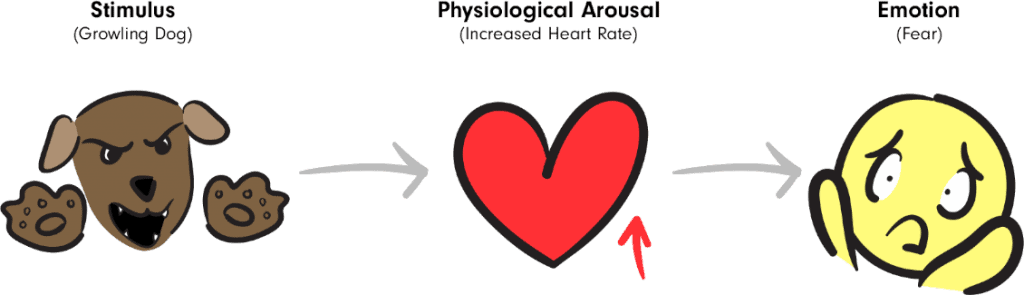
The James-Lange Theory is named after two independent psychologists who had similar ideas about emotions. Those psychologists were the American William James and the Danish Carl Lange. Both proposed their theories in the 1880s, just three years apart.
Both psychologists believe that our emotions result from physical responses to stimuli. Here’s how they thought emotions went down:
You see a classmate walking toward you. Your heart starts racing, and you start to sweat. Recognizing these reactions, you think, “Wow, I’m nervous. I must be in love.”
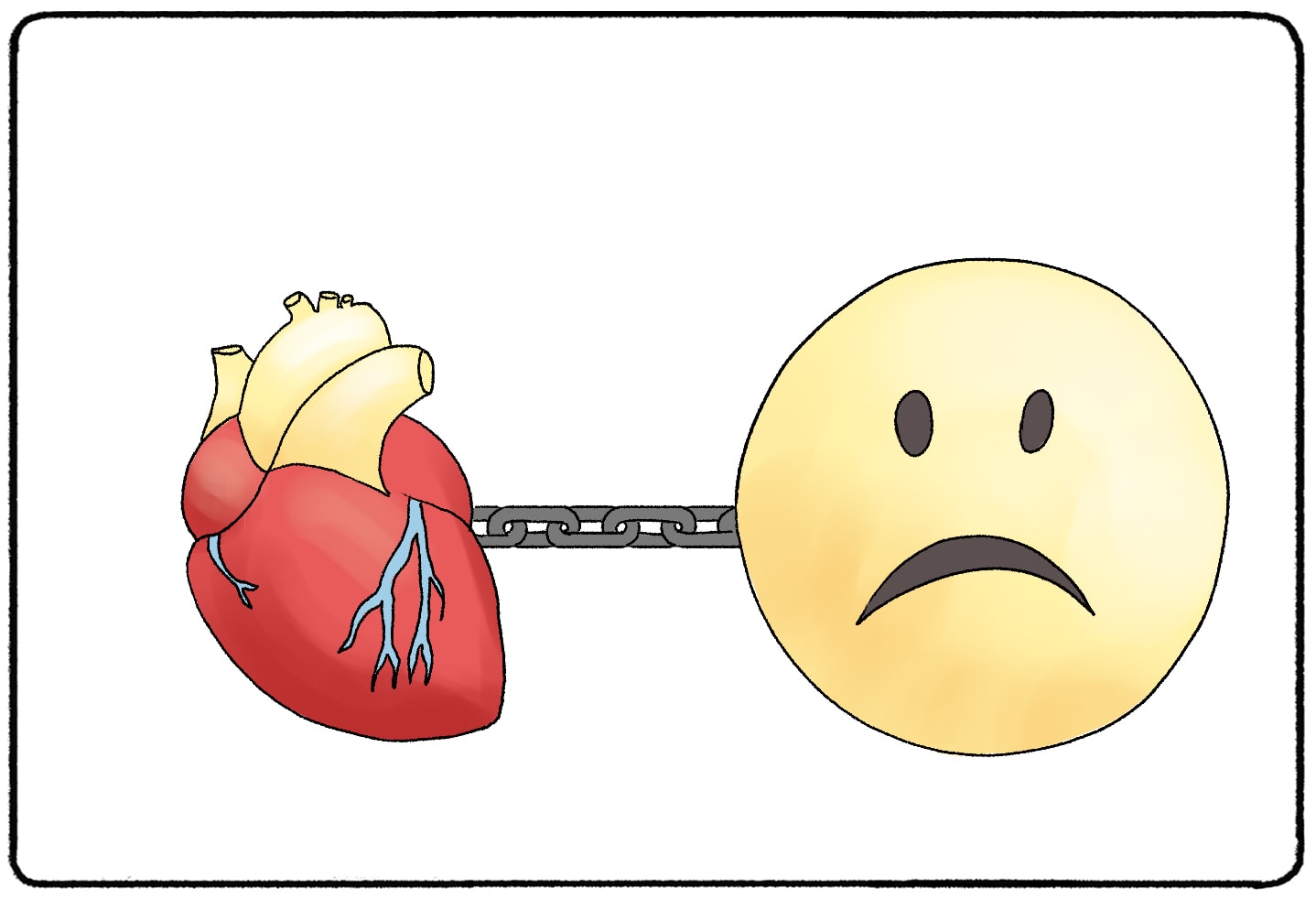
James and Lange believed that the physical responses (sweating, shallow breathing, tight chest, etc.) must be present to feel an emotion truly.
Due to the similarities in James’ and Lange’s work, this theory was named the James-Lange Theory. It was the prevailing theory on emotions throughout the late 18th century.
This theory might appear somewhat backward to you, but you’re not alone in that opinion.
One Response, Multiple Emotions
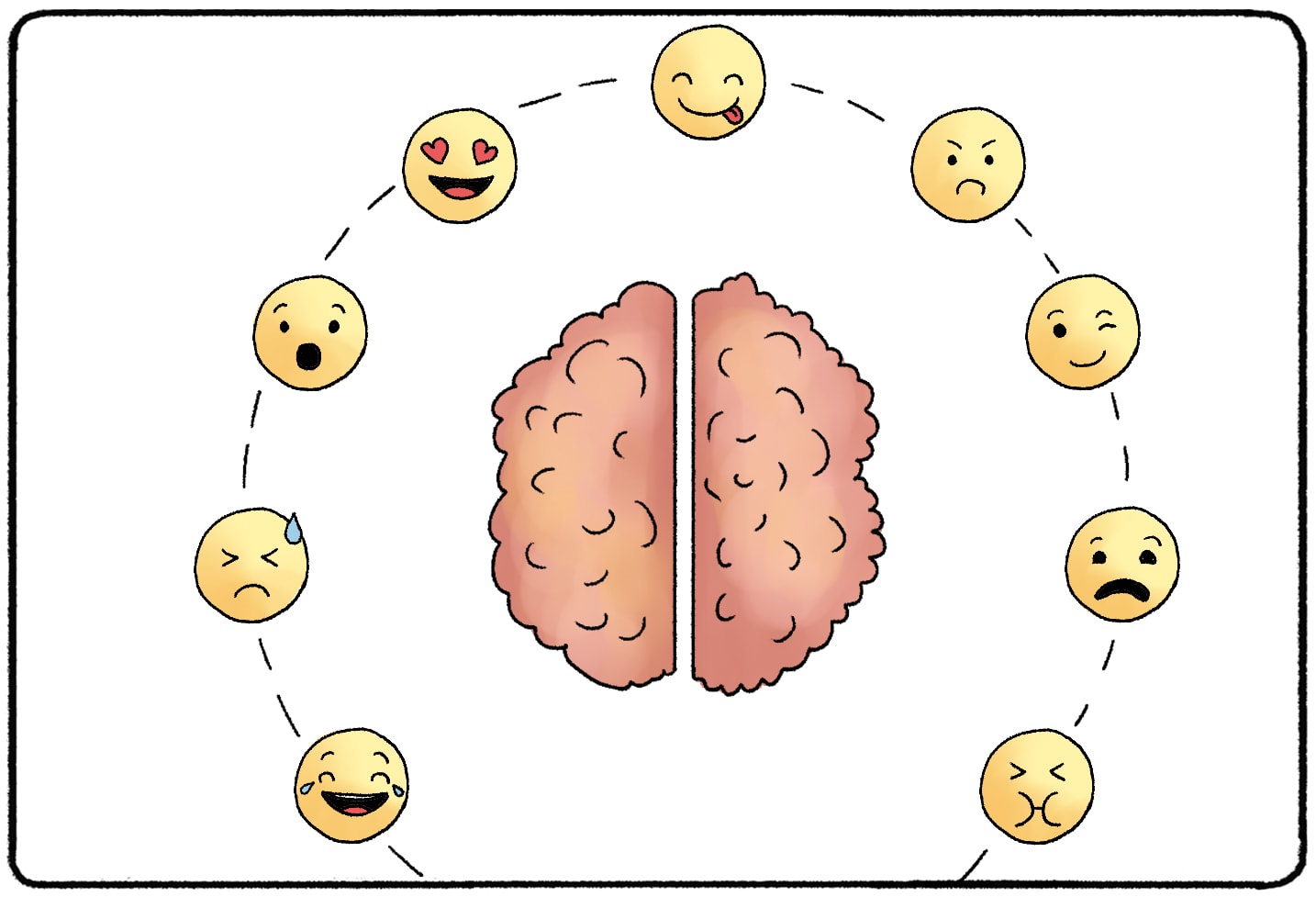
There are many critiquesof this theory. One common critique is that one physical response does not go along with one emotion. Let’s go back to the example I shared earlier.
But what if I used this example instead?
You see a classmate walking toward you. Your heart starts racing, and you start to sweat. Recognizing these reactions, you think, “Wow, I’m terrified!”
You see a classmate walking toward you. Your heart starts racing, and you start to sweat. As you recognize these reactions, you think, “Wow, I’m angry at this guy!”
All of these stories could arguably make sense. You might experience sweaty palms when you are anxious. You may not. Your heart may race if you’re terrified, angry, nervous, or giddy. Your heart may also race after you’ve run a mile or completed a cardio workout.
This idea is one critique of the James-Lange Theory. If our physical responses alone cause certain emotions, why does the same response cause multiple emotions? Where does context fit into the equation?
Lack of Sufficient Evidence
Another critique of the James-Lange Theory concerns how both psychologists developed their theories. James and Lange relied heavily on their observations of patients without much data to back up their theories.
The data that they used wasn’t very solid, either. Psychologists would see correlations between certain physical responses and emotions, but correlation does not equal causation. As psychologists began introducing alternative theories of emotion, the James-Lange Theory didn’t have enough evidence to hold its position.
It took 40 years for another theory of emotion to push the James-Lange Theory out of the spotlight. Walter Cannon and Philip Bard proposed the Cannon-Bard Theory in the 1920s. This theory states that we feel emotions and experience physical responses simultaneously. You aren’t feeling nervous because your palms are sweating. You are feeling nervous, and your palms are sweating.
Cannon and Bard mapped this out in our brains. When we encounter external stimuli, our brains send sensory information to the thalamus. The thalamus then communicates with the autonomic nervous system (ANS,) cerebral cortex, or amygdala. These parts of the brain control our physical reactions, conscious thoughts, and emotions (respectively.)
The Cannon-Bard Theory took the throne as the prevailing theory of emotion for a few decades, but other theories have also stepped up to the plate. Some of them even pull from the James-Lange Theory.
The Schachter-Singer and Cognitive Appraisal theories have been introduced since the James-Lange and Cannon-Bard theories. Which one is right? It’s not easy to say.
This Facial-Feedback Theory of Emotion does not explain everything about emotion. There isn’t one theory that does. But that is the nature of psychology. In 10 or 20 years, we may have more information that leads to a new theory of emotion. But for now, all we can do is try not to let our emotions get the best of us!
Related posts:Cannon Bard Theory (Definition + Examples)Two Factor Theory of EmotionWhat Part of the Brain Processes Emotion? (Pics + Chart)The Emotion Wheel (9 Wheels + PDF + How To Use)Consciousness
Related posts:
Reference this article:Practical Psychology. (2020, April).James-Lange Theory of Emotion (Definition + Examples).Retrieved from https://practicalpie.com/james-lange-theory-of-emotion/.Practical Psychology. (2020, April). James-Lange Theory of Emotion (Definition + Examples). Retrieved from https://practicalpie.com/james-lange-theory-of-emotion/.Copy
Reference this article:
Practical Psychology. (2020, April).James-Lange Theory of Emotion (Definition + Examples).Retrieved from https://practicalpie.com/james-lange-theory-of-emotion/.Practical Psychology. (2020, April). James-Lange Theory of Emotion (Definition + Examples). Retrieved from https://practicalpie.com/james-lange-theory-of-emotion/.Copy
Copy
