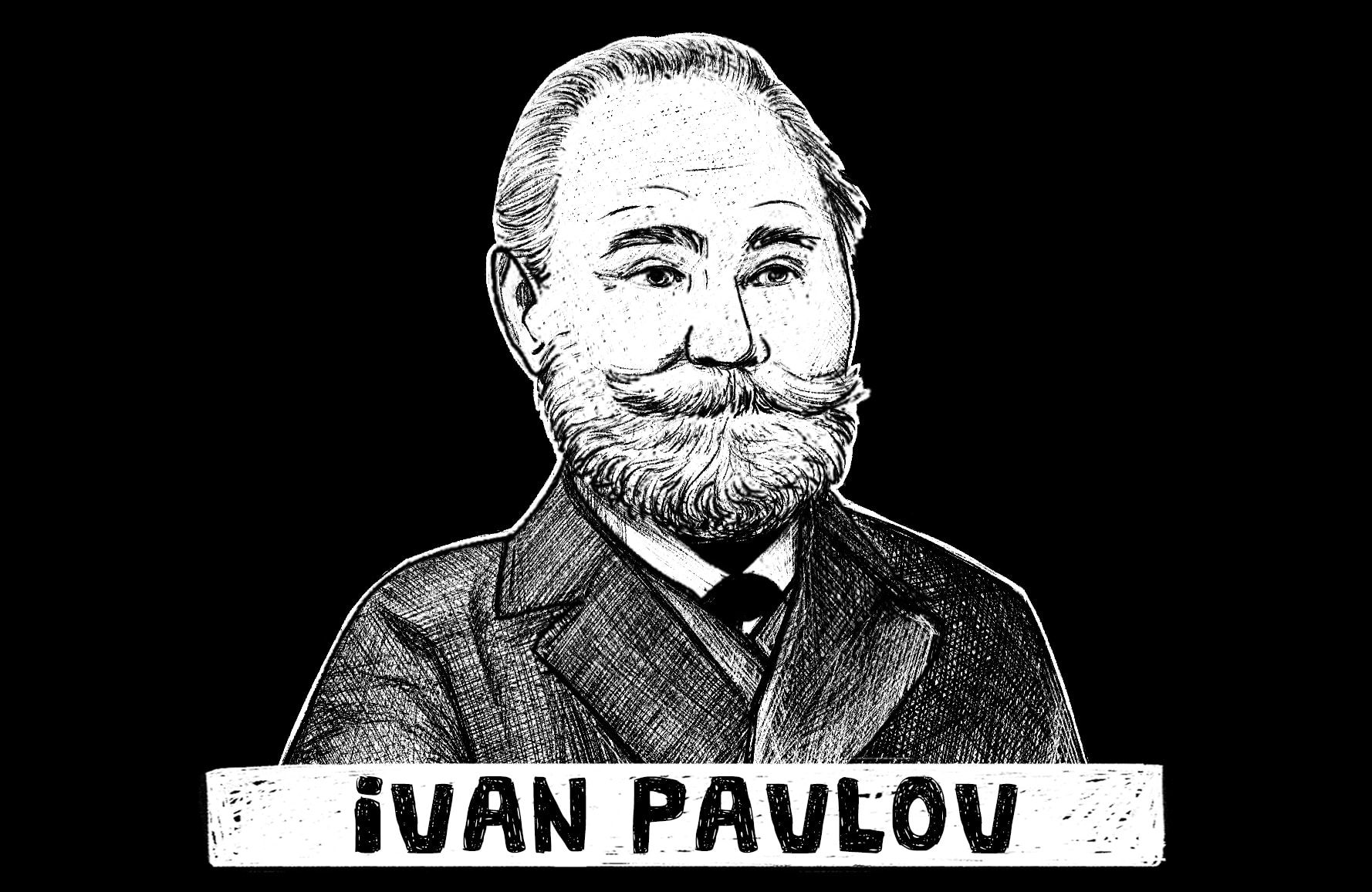
When most people think of Ivan Pavlov two thoughts readily come to mind. The first is Pavlov was an amazing psychologist. The second is he worked with dogs. But although Pavlov did some incredible work with dogs and made major contributions to the field of psychology, the truth is he was not a psychologist at all. So, who exactly was he?

Who Is Ivan Pavlov?His Early YearsPavlov’s Dog ExperimentDiscovering Pavlovian ConditioningBehaviorism TheoryPavlov’s Impact on Psychology and EducationIvan Pavlov’s Accomplishments and AwardsPersonal Life and Death
Who Is Ivan Pavlov?
His Early Years
Pavlov’s Dog Experiment
Discovering Pavlovian Conditioning
Behaviorism Theory
Pavlov’s Impact on Psychology and Education
Ivan Pavlov’s Accomplishments and Awards
Personal Life and Death
Ivan Petrovich Pavlov was a Russian physiologist who is best known for discovering the concept of classical conditioning. He was born on September 14, 1849, in Ryazan, Russia. Pavlov won the Nobel Prize for Physiology or Medicine in 1904. He died in Leningrad on February 27, 1936.
Ivan Pavlov was the eldest child of Varvara Ivanovna Uspenskaya and Peter Dmitrievich Pavlov. He had ten siblings. Pavlov’s mother was a homemaker and his father was a Russian Orthodox priest at the village church. His grandfather also worked at the church as a sexton.
As the years passed, Pavlov’s body slowly began to heal. He was eleven years old when he started classes at the Ryazan church school.
What did Ivan Pavlov Study?
In 1870, Pavlov was accepted at the University of St. Petersburg. He enrolled in the physics and mathematics department because he wanted to study natural science. Pavlov spent much of his time studying chemistry and physiology. His first-year chemistry professor was Dmitri Mendeleev, the man who invented the periodic table of elements.
During his first research course in natural science, Pavlov and another student named Afanasyev published a research paper on the physiology of pancreatic nerves. They received much praise and were awarded a gold medal for their work. Overall, Pavlov’s grades at the University of St. Petersburg were excellent. He completed his degree in natural science in 1875.
Pavlov spent two years as an assistant at the physiological department of the Veterinary Institute. During that time he worked on his medical dissertation on the circulatory system. In 1878, Pavlov was offered the position of director of the Physiological Laboratory at Sergey Botkin’s clinic. Botkin was a famous clinician and therapist at the time and was later regarded as one of the pillars of modern medical science in Russia.
Pavlov graduated from the Academy in 1879. At his graduation, he was awarded another gold medal for his outstanding research. He also won a fellowship at the Academy. This fellowship and his role at the Botkin Clinic allowed him to continue his research until he completed his dissertation onThe Centrifugal Nerves of the Heartin 1883.
In 1884, Pavlov went abroad to continue his studies. First, he worked under the supervision of Carl Ludwig—a well known cardiovascular physiologist—in Leipzig, Germany. He then went to Breslau, Poland to assist renowned physiologist Rudolf Heidenhain in his study of digestion in dogs. After his studies were complete, Pavlov returned to Russia in 1886.
Pavlov accepted the role of professor of Pharmacology at the Military Medical Academy (formerly called the Imperial Academy of Medical Surgery) in 1890. Less than one year later, he was also invited to serve as the head of the Physiology Department at the Institute of Experimental Medicine. Pavlov was appointed to the Chair of Physiology at the Military Medical Academy in 1895—a role he occupied for 30 years. However, most of his research on the physiology of digestion was conducted at the Institute of Experimental Medicine, where he worked for 45 years.
The bulk of Pavlov’s research was conducted from 1891 to the early 1900s. In 1902 he was researching how dogs salivated in response to being fed. To measure the amount of saliva produced, he surgically implanted a small tube into the cheek of each dog. His prediction was that salivation would begin only after the food was placed in front of the dogs.
However, Pavlov soon noticed something quite interesting. At first, the dogs salivated only if they were presented with food. But later in the experiment, the dogs began salivating when they heard Pavlov’s assistant coming with their food. Were the dogs producing more saliva because they could smell the food as it was brought closer? Apparently not, because the dogs still salivated even when Pavlov’s assistant came empty-handed.
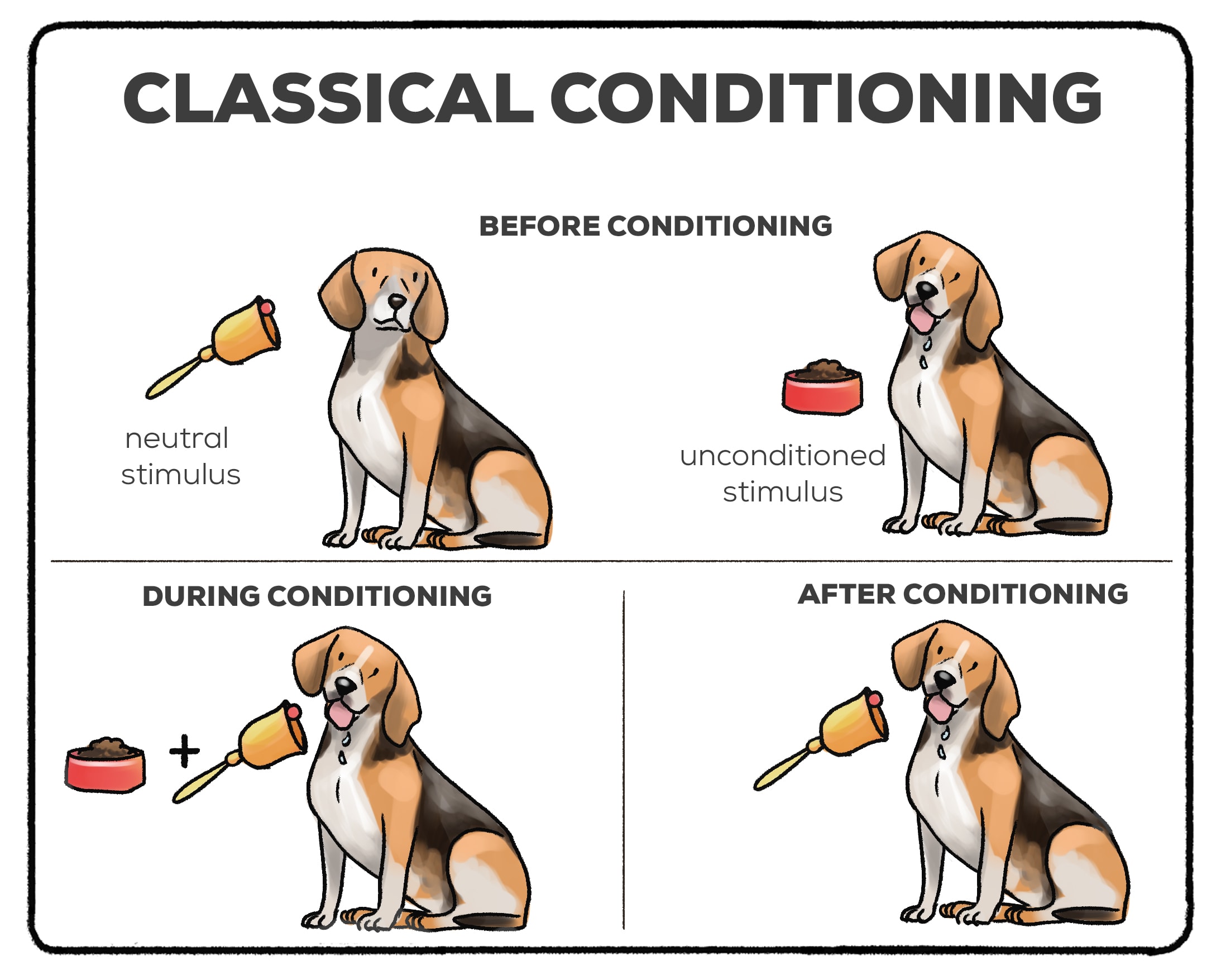
Pavlovian conditioning assumes there are some behaviors that humans and animals do not need to learn. Instead, the response or reflex occurs naturally whenever it is triggered. In Pavlov’s case, the dogs salivated (unconditioned reflex) when they were presented with food (unconditioned stimulus). In this case, the stimulus and reflex are described as “unconditioned” because the reaction is hard-wired into the dogs and required no learning.
However, Pavlov knew that the dogs did learn new things as the experiment went on. He came to this conclusion because initially, the dogs only salivated when they were given food. At the start of the experiment they did not salivate when they heard the footsteps of his assistant. The fact that the dogs later started to salivate when they heard the footsteps shows they had learned to associate Pavlov’s assistant with the food they desired.
Pavlov’s lab assistant can be thought of as a “neutral stimulus” at the beginning of the experiment. This is because his presence caused no response from the dogs. As the experiment went on, the dogs linked the lab assistant (neutral stimulus) with food (unconditioned stimulus). After the association was formed, the dogs began salivating whenever they heard the assistant’s footsteps.
If the dogs could learn to associate his assistant with food, Pavlov believed they could learn to associate other things with food. To test if his belief was correct, he decided to use a metronome as his neutral stimulus. A metronome is a device that produces a click or tone at regular intervals.
Under normal circumstances, dogs do not salivate when they hear a tone. But if the tone was successfully linked with food, Pavlov believed the dogs would salivate each time they heard it.
How Did Pavlov’s Dog Experiments Work?
So Pavlov started to play the tone before he fed his dogs. He repeated the process for days. After some time had passed, he played the tone without presenting any food to the dogs. As he expected, his dogs showed an increase in salivation whenever they heard the tone.
There are many reports that Pavlov used a bell for the experiments he conducted with his dogs. And he may have used one on occasion. However, Pavlov wanted to control the intensity, quality, and duration of the stimuli. So he relied heavily on a metronome, harmonium, buzzer, and even electric shocks for most of his experiments.
There was one more thing Pavlov discovered during his experiment. He realized that the tone (initially a neutral stimulus) and the food (unconditioned stimulus) needed to be presented close together in time for the link to be made. He referred to this requirement as the law of temporal contiguity. If there is too much time between the playing of the tone and the presentation of the food, the dogs would not learn to salivate when they heard the tone.
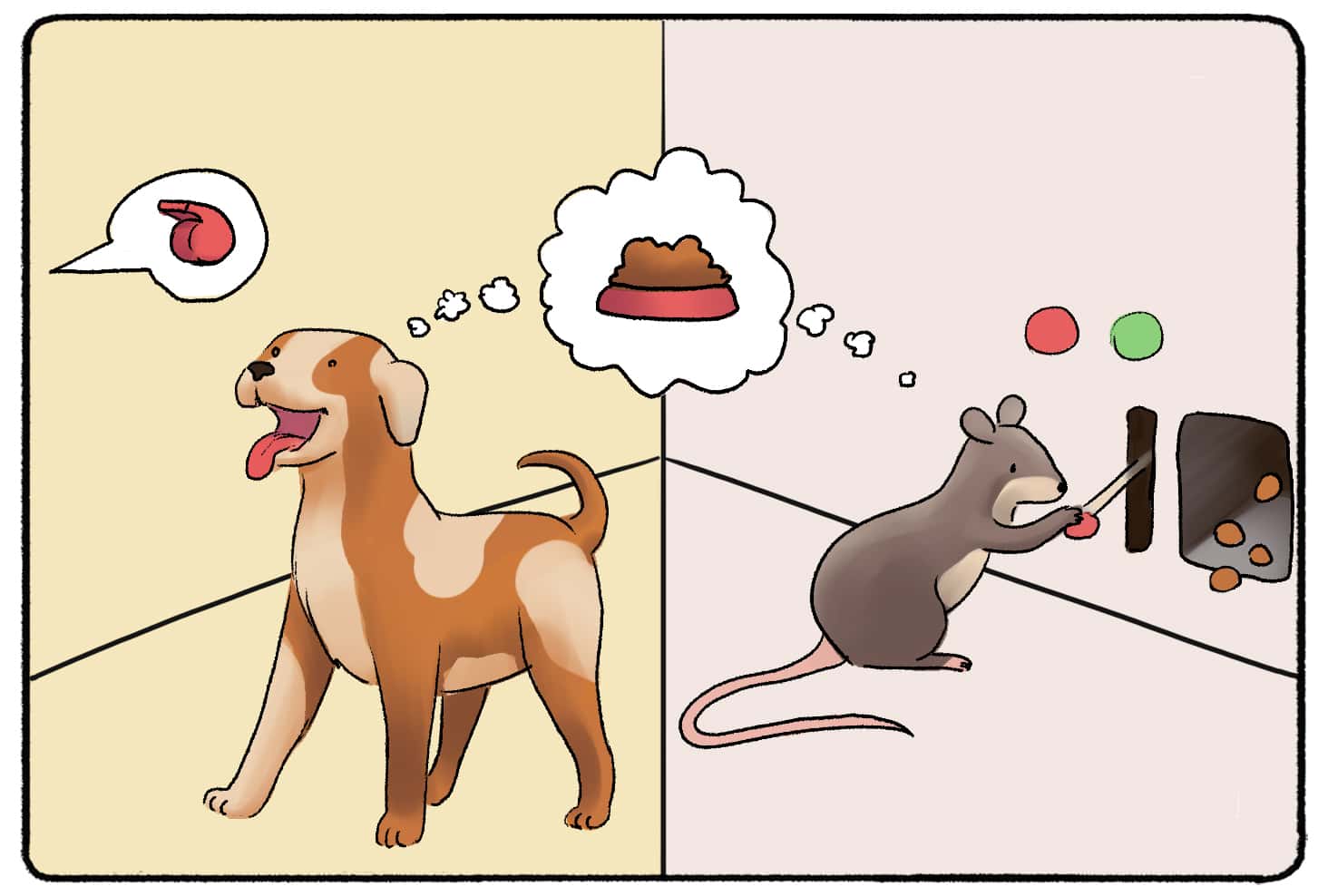
Although many people think Pavlov did not care about studying things that could not be measured, he never made those claims himself. In fact, he viewed the human mind as a great mystery. If scientists want to understand the human mind, the process has to begin somewhere. Pavlov believed the best approach was to begin with observation and hard data.
Classical conditioning has had a big impact on modern-day learning strategies. Although Pavlov worked with animals, he always believed the principles of classical conditioning can be applied to humans. A number of Pavlov’s basic ideas have been implemented in classrooms and other learning environments. Just as Pavlov used different stimuli to increase or decrease specific behaviors in his dogs, many teachers change their tools, instructions, or environment to influence the behavior of their students and increase learning.
These strategies are particularly effective for teaching people with behavior problems or learning disabilities. They have been implemented in many schools, homes, and health centers around the world.
Books
Nobel Prize
Pavlov was nominated for the Nobel Prize from 1901 to 1904. However, he did not win the prize for the first three years because his nominations were tied to a variety of findings rather than a specific discovery. When he was first nominated in 1901, he was already well known among physiologists, especially those who studied digestion. However, Pavlov’s research on conditioned reflexes was not published until 1902 and it may have taken a while for this work to penetrate the field of psychology.
In 1904, Pavlov was finally awarded the Nobel Prize for Physiology or Medicine. He received the award for his outstanding research on digestion in animals. This research involved removing a dog’s esophagus and creating a fistula or tunnel in a dog’s throat so that if the dog ate, the food would not enter its stomach. Pavlov would then collect and test the different secretions along the dog’s digestive system.
After Pavlov won the Nobel Prize, he drew the attention of many other scientists from around the world. American psychologists, in particular, became more aware of his work and were more willing to test his findings on conditional reflex.
Throughout his life, Pavlov was never easy to get along with. In his childhood days, he often felt uncomfortable around his parents. He was also known to be a volatile and difficult student. When he opened his lab as an adult, his staff knew to avoid him if he was having one of his many bad days.
Ivan Pavlov Children and Wife
Ivan Pavlov met Seraphima Vasilievna Karchevskaya (also known as Sara) in 1878 or 1879. At the time, Sara was a student at the Pedagogical Institute. It did not take long for the young couple to fall in love. They were married on May 1, 1881.
Ivan and Sara Pavlov spent their first nine years as husband and wife in poverty. Due to their financial troubles, they were often forced to live in different homes so they could benefit from the hospitality of other people. Pavlov even grew potatoes and other crops outside his lab to help make ends meet. Once their finances became stable, Ivan and Sara were able to live together in the same house.
Pavlov was eventually able to earn money from health products he made in his lab. He sold the gastric juice he collected from his dogs as an effective treatment for indigestion. Of course, winning the Nobel Prize in 1904 brought monetary rewards. However, the ever-changing political scene in Russia made life difficult for him, his family, and his fellow scientists.
Cause of Death
Related posts:The Little Albert ExperimentClassical Conditioning (Memory Guide + Examples)Philip Zimbardo (Biography + Experiments)Albert Bandura (Biography + Experiments)Stimulus Response Theory (Thorndike’s Research + Examples)
Related posts:
Reference this article:Practical Psychology. (2019, October).Ivan Pavlov (Biography + Experiments).Retrieved from https://practicalpie.com/ivan-pavlov-biography-experiments/.Practical Psychology. (2019, October). Ivan Pavlov (Biography + Experiments). Retrieved from https://practicalpie.com/ivan-pavlov-biography-experiments/.Copy
Reference this article:
Practical Psychology. (2019, October).Ivan Pavlov (Biography + Experiments).Retrieved from https://practicalpie.com/ivan-pavlov-biography-experiments/.Practical Psychology. (2019, October). Ivan Pavlov (Biography + Experiments). Retrieved from https://practicalpie.com/ivan-pavlov-biography-experiments/.Copy
Copy
