You’ve probably heard the term “intersectionality” buzzing around social media, academic discussions, or workplace training sessions. But what does it really mean, and why does it matter?
Intersectionality is the framework for understanding how different aspects of a person’s identity, such as race, gender, class, and sexuality, intersect and interact to create unique experiences of privilege and discrimination.
Why should you care? Well, intersectionality isn’t just a buzzword; it’s a lens through which you can better understand complex social issues. It helps us recognize that people are not just one thing, but a combination of various identities that influence how they navigate the world.
History of the ConceptKey ContributorsDefining Intersectionality9 Examples of IntersectionalityCriticisms of IntersectionalityApplications of IntersectionalityIntersectionality and Critical Race TheoryIntersectionality and Gender StudiesIntersectionality and FeminismsFuture of IntersectionalityIntersectionality in an International ContextFrequently Asked Questions (FAQs)Conclusion
History of the Concept
Key Contributors
Defining Intersectionality
9 Examples of Intersectionality
Criticisms of Intersectionality
Applications of Intersectionality
Intersectionality and Critical Race Theory
Intersectionality and Gender Studies
Intersectionality and Feminisms
Future of Intersectionality
Intersectionality in an International Context
Frequently Asked Questions (FAQs)
Conclusion
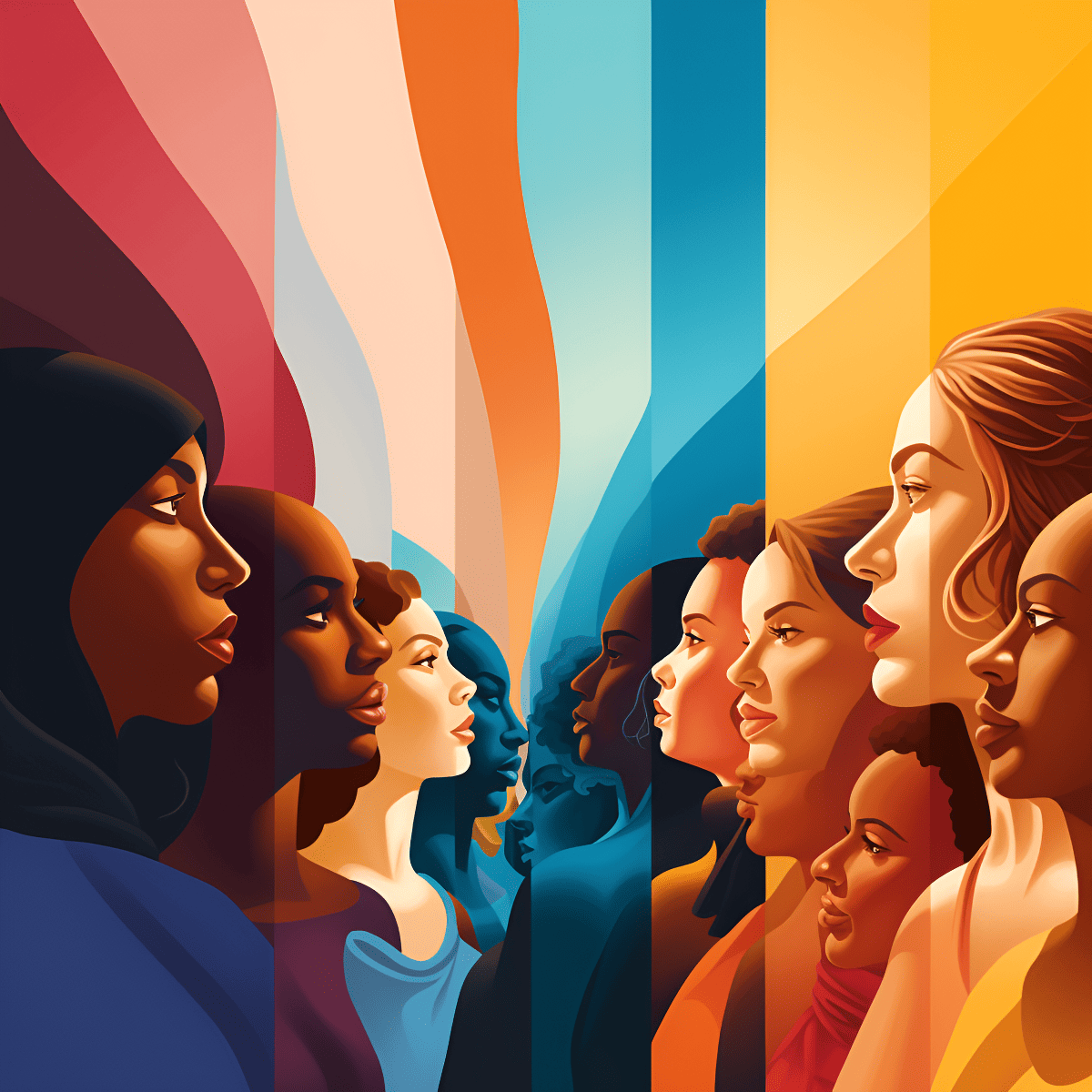
 intersectionality of multiple women
Before Crenshaw’s revolutionary idea, discussions around discrimination were generally one-dimensional, mostly focusing on either race or gender, but not both together.
Imagine a crossroads. Cars coming from different directions meet at this point. Similarly, intersectionality suggests that various forms of inequality meet at certain intersections, creating a unique experience for each individual.
Crenshaw initially used it to explore how race and gender overlap, but the term has grown to include other aspects like sexuality, class, and disability.
The adoption of the intersectionality framework made people reconsider how they approach social justice andinjustice. Suddenly, it wasn’t enough to look at one aspect of a person’s identity. The discourse changed, making it crucial to understand the multi-layered experiences that contribute to discrimination or privilege.
This shift has been a cornerstone in academic discussions, public policies, and activism, affecting how we tackle issues from workplace inequality to social prejudices.
So far, you’ve learned that law professor Kimberlé Crenshaw coined the term “intersectionality.” But it’s important to note she isn’t the only scholar who has made significant contributions to this field. There are other thinkers and activists who have taken the framework and applied it in various ways, enriching our understanding.
One such name isbell hooks, an American author and activist. She used intersectionality to discuss the interconnectedness of race, capitalism, and gender. By doing so, she showed how these factors collectively affect marginalized individuals, particularly women of color.
Patricia Hill Collinsis another trailblazer; her focus on “Black Feminist Thought” amplified how intersectionality operates within a community, not just for individuals.
Judith Butleris best known for her work on gender performativity, the idea that gender isn’t something we are but something we do. In simple terms, we “perform” our gender roles through actions and behaviors, rather than these roles being innate.
Alright, you’ve gotten a glimpse of where intersectionality comes from and who has been instrumental in shaping it. But let’s hit the brakes for a moment and really unpack what this term means. It’s one thing to say it’s about how different aspects of identity intersect, but what does that actually entail?
Intersectionality is a way to understand how parts of who you are, like your race, gender, or how much money your family has, come together to shape your unique life experiences, including the privilege and discrimination you may face.
Privilegerefers to certain advantages or benefits that some people get based on aspects of their identity, like being part of a majority race middle class or gender. For example, a man might not have to worry about walking alone at night in the same way a woman might.
Discriminationis the unfair treatment of someone based on aspects of their identity, such as race, gender, or religion. It’s the opposite of privilege; it puts people at a disadvantage.
Think of intersectionality like a 3D puzzle. A single puzzle piece might represent one aspect of your identity—let’s say, your gender. Another piece represents your ethnicity. When you start connecting these pieces, they form a structure that’s more complex and multifaceted than any individual piece.
Social constructsare also a factor in intersectionality. These are the"rules" that a society createsthat tell us what to do, how to behave, and what to think. People who don’t fit neatly into a single expectation of a society can face marginalization.
Marginalizationrefers to the process of pushing certain people or groups away from the center to the edges of a group, society, or community. This often happens to people who are different or considered “less important.” When you’re part of marginalised groups, you have less power, fewer opportunities, and you might feel like your voice doesn’t matter.
Another important concept to keep in mind is racial and cultural hierarchies. Racial and cultural hierarchies are systems that place certain races or cultures above others, often leading to discrimination and unequal opportunities.
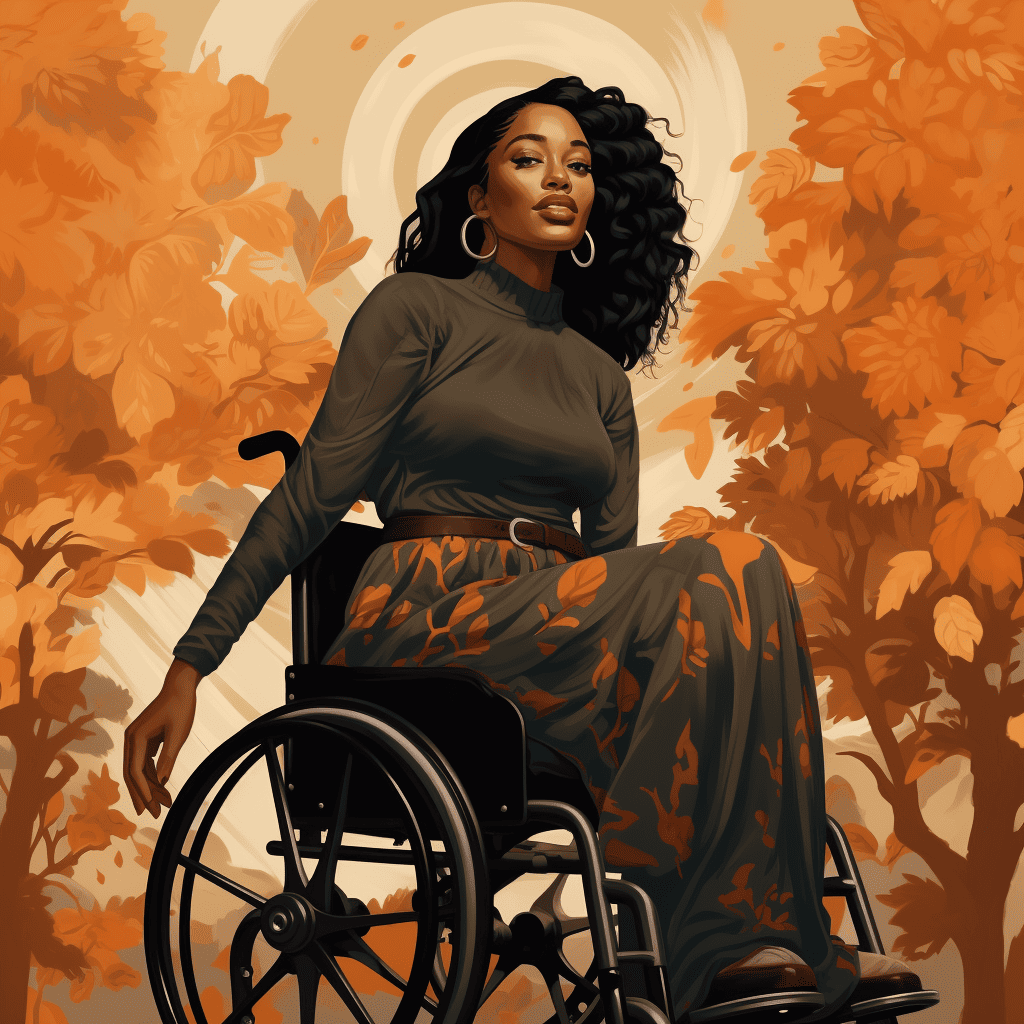
White women that are also disabled don’t have a singular identity, but rather, intersectionality recognizes that each individual person has overlapping identities that come in multiple forms.
These hierarchies can be officially sanctioned, like laws that favor one group over another, or they can be informal, woven into the fabric of social interactions and attitudes.
1) Workplace
2) Healthcare
3) Education
Think about a low-income, first-generation college student. This person has to navigate both economic challenges and the unfamiliar territory of higher education, creating a unique set of pressures and opportunities.
4) Housing
An immigrant family may face language barriers on top of racial discrimination when trying to rent or buy a home, making their experience distinct from those who share only one of these identity aspects.
5) Criminal Justice
An LGBTQ+ person of color could experience bias not just based on race, but also sexual orientation, leading to a unique experience within the criminal justice system.
6) Employment Opportunities
A Muslim woman wearing a hijab might face discrimination based on both her religion and her gender when applying for jobs, affecting her employment opportunities in a way that is distinct from men or non-Muslim women.
In activism, a young climate change advocate who is also part of the LGBTQ+ community might find that their voice is marginalized in both environmental and LGBTQ+ spaces due to their age and sexual orientation.
8) Media Representation
Consider a person with a disability who is also Asian. They might find that media representation is lacking for both disabled people and Asians, making their experience doubly marginalized.
9) Public Transportation
Someone who is elderly and low-income might find public transportation doubly challenging. They could face issues related to both age, such as difficulty standing for long periods, and economic hardship, like the cost of tickets.
As with any influential idea, intersectionality isn’t without its critics. Let’s delve into some of the criticisms and controversies that surround this concept. Knowing the arguments on both sides will make you a more informed participant in discussions about intersectionality.
Overcomplication
Some people argue that intersectionality makes the conversation too complicated. They say that when you start considering multiple aspects of identity, the discussion becomes so nuanced that it’s hard to find clear solutions to problems.
But supporters counter that life is complex, and a simple approach won’t capture everyone’s experience.
Exclusivity
Another criticism is that intersectionality can be exclusive. It might seem like only those who have multiple marginalized identities can “qualify” for discussion.
However, proponents argue that intersectionality is about understanding all experiences, including those who have privilege, to get a fuller picture of social issues.
Political Divisiveness
The term has also been criticized for being too tied to specific political agendas or movements, which some believe can alienate people who might otherwise be allies.
Those in favor of the concept point out that intersectionality is a tool for understanding, not a political platform.
Dilution of Individual Causes
Yet, advocates say that intersectionality enriches these discussions, rather than taking away from them.
Identity Politics
The term “identity politics” refers to the focus on the barriers specific to certain social groups, often based on aspects like race, gender, or sexual orientation.
It’s often attributed to the political left or confined to college campuses, but it doesn’t exist independently from the rest of society.
Some critics argue that intersectionality feeds into identity politics too much, which can create division rather than unity. In this view, focusing on specific group experiences might isolate those groups further, and make it harder to work on common goals.
Academic Accessibility
Finally, some say that the language and theories surrounding intersectionality can be too academic or elitist, making it hard for everyday people to engage with the concept.

By now, you’ve got a solid grasp of what intersectionality is, where it comes from, and the debates that surround it. But what does it mean for you and for society at large? Let’s discuss some practical applications.
Policy Making
Government policies can greatly benefit from an intersectional approach. When policies consider the unique experiences of people with intersecting identities, they are more likely to be effective and equitable.
For instance, a healthcare policy that considers both income levels and racial disparities can address gaps more accurately.
Workplace Inclusion
Employers are starting to use intersectionality to create more inclusive work environments.
It’s not just about setting quotas for hiring women or minorities. It’s about understanding that a Black woman faces different challenges than a white woman or a Black man, and addressing those unique needs.
Social Services
Agencies providing social services can use intersectionality to identify gaps in the system.
By understanding the specific needs of different groups—say, single mothers who are also Native American veterans—they can offer more targeted and effective support.
Research and Academia
In academic circles, intersectionality is more than a hot topic for papers and discussions.
Researchers are applying it to studies on anything from healthcare disparities to media representation, providing a deeper understanding of complex issues.
Activism and Advocacy
Grassroots movements are increasingly using an intersectional approach. This helps them create more inclusive platforms and reach a broader audience.
Think of theWomen’s MarchorBlack Lives Matter, which have worked to include issues of various marginalized communities in their agendas.
Education
Exploring these applications, it becomes clear that intersectionality isn’t just an abstract theory; it’s a practical tool that can help improve systems and lives. The aim is to make society more equitable and just, and to do that, we need to understand the full range of human experience. That’s the real-world power of intersectionality.
You might have heard the termCritical Race Theory, orCRT, buzzing around in academic circles or public debates. While it’s a distinct concept, it often goes hand-in-hand with intersectionality.
Critical Race Theory examines how laws and social systems are embedded with racial bias. It doesn’t just look at individual acts of racism but dives deep into how the system itself might be rigged to favor one race over another.
This theory has practical implications, such as informing legal debates and policy changes aimed at reducing racial disparities. When you combine this with intersectionality, you get a powerful toolkit for analyzing and dismantling various forms of systemic discrimination.
When you hearGender Studies, you might think of it as a field that solely examines issues like sexism or women’s rights. While that’s part of it, Gender Studies digs much deeper.
This academic field looks at how society constructs concepts of masculinity and femininity. But it’s not just about men and women. Gender Studies also explores non-binary, transgender, and other gender identities, widening the lens through which we understand human experience.
Gender Studies and intersectionality are often intertwined. Gender is one of the many social categories that intersect in the theory of intersectionality.
When you think of feminism, you might imagine a singular, unified movement fighting for women’s rights. But in reality, feminism comes in various forms, each bringing its own perspective to the quest for equality.
First-Wave Feminism
Second-Wave Feminism
Rising in the 1960s and lasting through the 1980s, the second-wave expanded the conversation to include workplace discrimination, reproductive rights, and other social issues. However, it was criticized for not adequately addressing the experiences of women of color, leading to more inclusive forms of feminism.
Third-Wave Feminism
Black feminism really took hold of its own category in third-wave feminism, taking on not just gender inequality but also racial inequality. Black feminists were concerned with overlapping and interdependent systems of intersectional discrimination.
Ecofeminism, Womanism, and More
Beyond these waves, there are specialized branches like ecofeminism, which links the exploitation of women and nature, and womanism, which centers the experiences and activism of Black women. These offshoots underline the diversity within the feminist movement.
You’ve journeyed through the roots, the debates, and the real-world applications of intersectionality. Now, let’s look at what the future might hold for this multifaceted concept.
Expanding the Framework
As society evolves, so too will the framework of intersectionality. New categories of identity and experience could be added.
Think about how discussions around mental health or immigration status are becoming more prominent. These could very well become key elements in the intersectional feminism framework.
Technology’s Role
Technology offers a double-edged sword. On one hand, social media can amplify marginalized voices and allow for more nuanced discussions about intersectionality.
On the other, algorithms can reinforce biases, creating echo chambers that limit our perspectives.
International Context
Intersectionality started in the U.S., but it’s gaining traction globally. Each culture will bring its own identities and issues to the table.
It’s like cooking a dish with local spices; the basic recipe of intersectionality remains, but each place adds its own flavor.
Legal Applications
The legal system is beginning to take notice of intersectionality, particularly in discrimination cases.
As this trend continues, laws and regulations might be amended to reflect an intersectional understanding of identity and disadvantage.
Youth Involvement
Young people are growing up with a better understanding of intersectionality than previous generations. Schools are starting to incorporate it into curricula, and youth-led movements often operate with an intersectional approach.
A Tool for Businesses
Beyond workplace inclusion, businesses are starting to see the value of an intersectional approach in marketing and product development. Understanding the varied needs of a diverse consumer base can lead to more innovative and inclusive products.
The Balance of Criticism and Support
As with any evolving theory, the balance between criticism and support will shape its future. Ongoing debates will either strengthen the framework or lead to significant modifications.
In the years to come, intersectionality is likely to permeate even more areas of society. Just like a tree growing taller and branching out, the concept will evolve, adapt, and hopefully, help create a more inclusive and equitable world.

So far, we’ve mostly discussed intersectionality within the framework of American society. However, this concept is finding its footing in other parts of the world, and the experience can look very different depending on where you are.
Cultural Nuances
In different countries, the social categories that are considered significant can differ widely. The Global South will have vastly different perpetuating systems and social inequality that will define intersectionality differently.
For instance, the caste system in India or tribal affiliations in parts of Africa carry a weight similar to racial identities in the U.S. When the intersectional lens is applied in these settings, it has to account for these locally relevant factors and their deep-rooted histories.
Legal Systems
Laws regarding discrimination and equality vary across nations.
In some European countries, for example, hate speech is more tightly regulated than in the U.S. How intersectionality interacts with these legal frameworks can greatly influence its application and effectiveness.
Religious Influences
Religion can be a dominating factor in some societies, intersecting with other identities in unique ways.
For instance, being a Muslim woman in a predominantly Christian country presents a different set of challenges than being a Muslim woman in a predominantly Muslim country.
Historical Context
Intersectional activism is also adapting to local needs. In Latin America, indigenous rights movements are increasingly using an intersectional framework to address issues like land rights, ethnicity, and gender in a unified manner.
Each of these factors contributes to how intersectionality manifests in different international settings. So, while the core principles remain the same, the practical application of intersectionality can be as diverse as the cultures and societies it seeks to understand.
1) What is Intersectionality?
Intersectionality is a way to understand how parts of your identity, like your race, gender, and class, mix together. This mix can make your life easier or harder in different ways.
2) Who coined the term “Intersectionality”?
3) How does intersectionality differ from Critical Race Theory?
While both ideas look at discrimination and inequality, they focus on different things. Critical Race Theory mainly looks at how laws and systems have racial bias. Intersectionality looks at how different parts of your identity mix together.
4) Is intersectionality only about race and gender?
No, it can include other parts of your identity like sexual orientation, disability, religion, and more. The idea is to see how all these parts interact.
5) Can intersectionality be applied internationally?
Yes, but it might look different depending on the country or culture. In some places, other social categories like caste or tribe are important, and they would be included in an intersectional analysis.
6) What is Gender Studies and how does it relate to intersectionality?
Gender Studies is an academic field that looks at how society thinks about gender. It can be a big help in understanding intersectionality because gender is often one of the parts of your identity that mixes with others.
7) Are there criticisms of intersectionality?
Yes, some people argue that it focuses too much on differences and divisions between people. Others think it’s too complicated to use in practical ways.
8) Can intersectionality be used in activism?
Absolutely! Many social justice movements use an intersectional approach to fight against different types of inequality at the same time.
9) What are some examples of intersectionality?
10) How can I learn more about intersectionality?
There are many resources available, from academic papers to books and articles. Organizations that fight for social justice are also good places to learn about how intersectionality is used in real-world activism.
We’ve traveled a long way together, from the origins of intersectionality to its current applications and potential future. You might wonder, why should this matter to you, especially if you don’t feel you belong to a marginalized group? Here’s why.
Firstly, intersectionality isn’t just about the marginalized or the oppressed. It’s a lens for viewing the complexity of all human experience. You might be surprised to find aspects of your own life better explained through the intersectional theory of this framework.
An intersectional approach promotes empathy and understanding across different social groups. It’s like a social glue, helping us realize that while our struggles may differ, they often intersect and interconnect in unexpected ways.
Lastly, the ultimate goal of understanding intersectionality is to work toward a more equitable society for everyone. By recognizing the multi-faceted and interconnected nature of discrimination and privilege, we’re better equipped to dismantle them.
Whether you’re a policy maker, a student, an employee, or simply someone who wants to understand society a bit better, intersectionality has something to offer. It helps us see beyond our very own experiences and lives and consider the intricate tapestry of human experience, woven together with threads of race, gender, class, and more.
Related posts:47+ Social Injustice Examples (History + Solutions)Social Stratification (Definition + Historical Examples)47+ Social Problem Examples (Issues In Society)Identity vs Confusion: Psychosocial Stage 5Identity Achievement (in Psychology)
Related posts:
Reference this article:Practical Psychology. (2023, October).Intersectionality in Psychology (9 Examples + Definition).Retrieved from https://practicalpie.com/intersectionality/.Practical Psychology. (2023, October). Intersectionality in Psychology (9 Examples + Definition). Retrieved from https://practicalpie.com/intersectionality/.Copy
Reference this article:
Practical Psychology. (2023, October).Intersectionality in Psychology (9 Examples + Definition).Retrieved from https://practicalpie.com/intersectionality/.Practical Psychology. (2023, October). Intersectionality in Psychology (9 Examples + Definition). Retrieved from https://practicalpie.com/intersectionality/.Copy
Copy
