Do humans also have animal instincts? Many say yes - but how this fits into psychology is rather controversial.
In this article, I’m going to describe the Instinct Theory of Motivation and how it fits into the current study of psychology and behavior.
What Is the Instinct Theory of Motivation?Example of Instinct Theory in AnimalsCritiques of Instinct Theory of MotivationInstincts Today
What Is the Instinct Theory of Motivation?
Example of Instinct Theory in Animals
Critiques of Instinct Theory of Motivation
Instincts Today
The Instinct Theory of Motivation was one of the first theories in psychology to describe why humans are driven to certain behaviors. The term “instinct” dates back to the 1870s. The instincts described include behaviors for eating, forming relationships, procreating, and more.
Who Created Instinct Theory?
 Wilhelm Wundt

And he’s not the only psychologist to have a list of instincts that drive behavior. William McDougall comprised a list of 18 human instincts, including the maternal instinct, laughing, and food-seeking instincts. He believed that all instincts consisted of perception, behavior, and emotion. In order for an instinct to be an instinct, it must be unlearned, uniform in expression, and universal in species.
You might be thinking to yourself that these traits have some flaws. We’ll get to those in a bit.
But I would be remiss to talk about the Instinct Theory of Motivation without mentioning Sigmund Freud. Freud also believed that every human had biological instincts, but his list did not include 4,000 different types. In his work, he wrote that two main forces drove all human behavior: the sex instinct (or life instinct) and death instinct.
In Beyond the Pleasure Principle, Freud wrote that our unconscious mind contained two forces influencing our behavior. Using names from Greek gods, he called these forces Eros and Thanatos. Eros, the Greek god of love, shares his name with the life instinct. This instinct leads us not only toward survival, but also toward cooperation and procreation. Thanatos, Greek god of death, shares his name with the death instinct. This describes a human’s instinct to relieve trauma, to self-destruct, or commit other risky acts.
Freud’s work also described how although we contain these instincts, other parts of our personality (superego and ego) prevent us from constantly procreating or relieving trauma.
Sea turtles are amazing creatures, for more than one reason. But did you know that a female sea turtle lays eggs at the same exact location every two to three years? And this beach is the same beach where they first hatched?
It’s true! Even after turtles swim through thousands of miles of open water, they still find the same beach, every two to three years. They can’t read and there are no street signs underwater. So how do they do it?
Experts believe they have ananimal instinctthat leads them back to the same beach every year. Within every sea turtle is the inclination to hatch, swim toward the ocean, and swim back every few years to lay eggs.
When looking at the youngest humans, we see similar instincts that may be likened to animals. Small human babies know how to latch onto their mother from the moment they are born - for the most part, they just “know what to do.”
Nowadays, Freud’s ideas aren’t exactly accepted - much like the Instinct Theory of Motivation. Critiques of this theory have poked enough holes to let in other theories of motivation.
Why doesn’t Instinct Theory stick? You probably know. Sure, you may feel that you are hungry or you find yourself laughing out loud. But there’s a bit more behind your behaviors than what’s in your biology or your genes. If instincts are behind all behavior, and all instincts are unlearned (like William McDougall believed,) then what’s with all of the motivation to do stuff that society has taught you? Where does your social status, culture, and other non-biological factors play into motivation?
And it’s not easy to gather information that supports all of these different factors. Psychologists today use data and research studies to test out theories and form their own. That wasn’t exactly how Wundt, McDougall, or Freud played back in their days. It’s easier to write about the instincts humans have in their unconscious than to verify it through data and controlled studies. Scientists today can tell you about animal instinct, but only because animals are much simpler than humans.
Today, instinct is defined as an “inherent inclination towards a complex behavior.” It no longer explains everything about complex human behaviors. Instinct simply pushes us toward those behaviors.
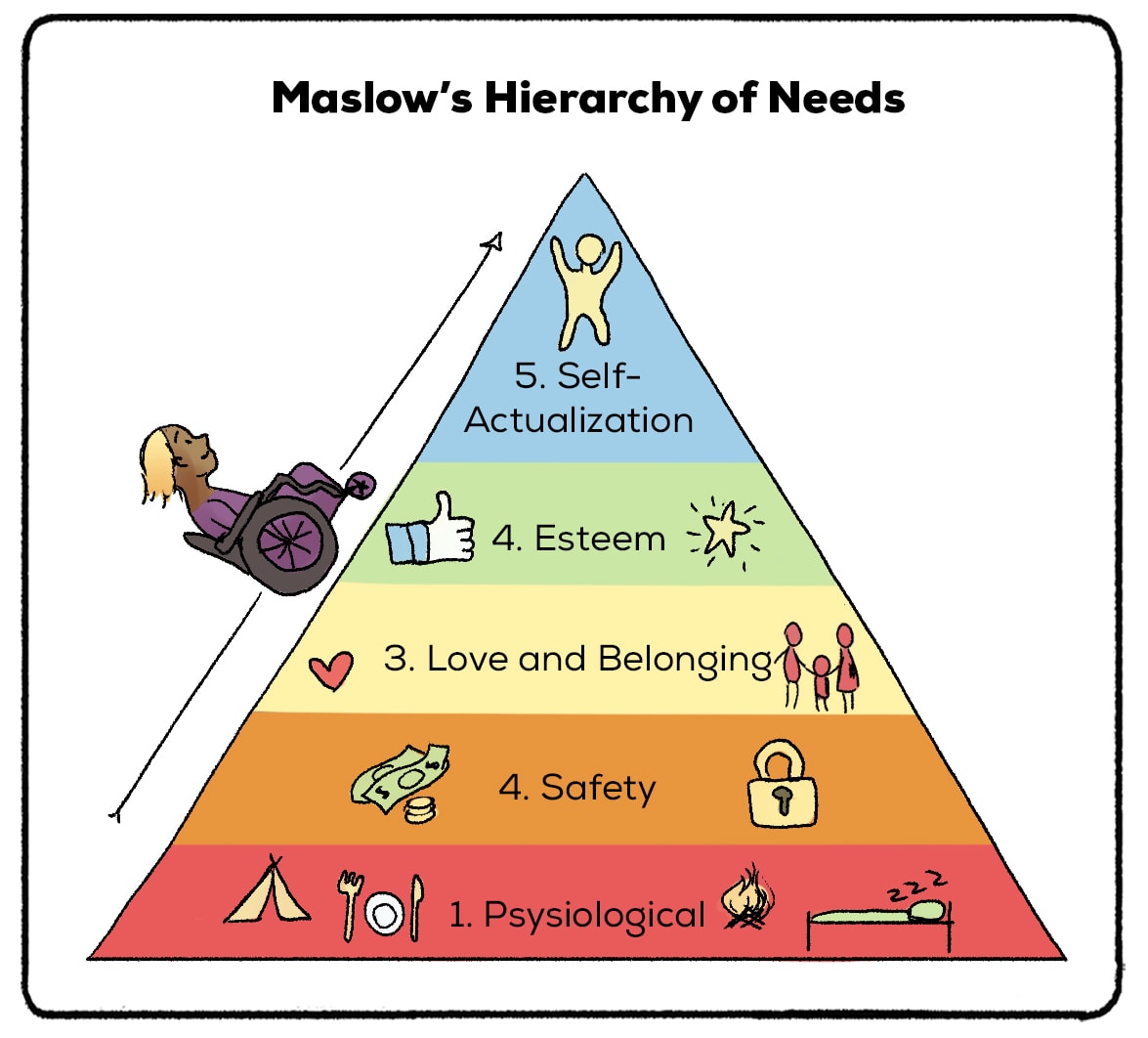
But we haven’t just stopped thinking about what drives behavior. Multiple theories of motivation have replaced Instinct Theory over the decades, including:
Related posts:Hero Instinct (Definition + Examples)Skinner’s Box Experiment (Behaviorism Study)Behavioral Psychology3 Theories of Aggression (Psychology Explained)Self Determination Theory (Definition + Examples)
Related posts:
Reference this article:Practical Psychology. (2020, June).Instinct Theory (in Psychology).Retrieved from https://practicalpie.com/instinct-theory/.Practical Psychology. (2020, June). Instinct Theory (in Psychology). Retrieved from https://practicalpie.com/instinct-theory/.Copy
Reference this article:
Practical Psychology. (2020, June).Instinct Theory (in Psychology).Retrieved from https://practicalpie.com/instinct-theory/.Practical Psychology. (2020, June). Instinct Theory (in Psychology). Retrieved from https://practicalpie.com/instinct-theory/.Copy
Copy
