Have you ever heard someone tell a new mom that 3 or 4 was a “fun age?” If you have kids, cousins, or siblings at that age, you know it’s true. Kids are becoming more independent and fun between the ages of 3-5. Erik Erikson called this time in a person’s life the “Play Age.”
If you have been enjoying my content onThe Eight Stages of Psychosocial Development, you already know who Erikson is. If you haven’t, I recommend that you start with the link I just shared.
This article is about the third stage of Psychosocial Development, which occurs between the ages of 3 and 5.
What Is The Third Stage of Psychosocial Development?Initiative vs Guilt Examples: What Happens?One or The Other May Not Be the AnswerWhat Makes Initiative vs Guilt Different Than Autonomy vs Shame?Ages 3-5 In Other Stages of DevelopmentIndustry vs. InferiorityFostering Healthy Initiative in Early Childhood
What Is The Third Stage of Psychosocial Development?
Initiative vs Guilt Examples: What Happens?
One or The Other May Not Be the Answer
What Makes Initiative vs Guilt Different Than Autonomy vs Shame?
Ages 3-5 In Other Stages of Development
Industry vs. Inferiority
Fostering Healthy Initiative in Early Childhood
The third stage of psychosocial development is Initiative vs Guilt. It occurs between the ages of 3 and 5 after the child wrestles with the Autonomy vs. Shame and Doubt crisis. Ideally, the child has developed a sense of autonomy and the ability to make decisions for themselves.
During this stage, the child also feels that the world is trustworthy (that comes from thefirst stage of development.) Unfortunately, some children move forward withshame and doubtregarding their bodies and decisions.
This stage takes decision-making to the next level. Children in the third stage of social development undergo a new crisis: Initiative vs. Guilt. If they successfully complete this stage, they develop the virtue of purpose. Interactions with parents, family members, and even other children may develop the outcome of this psychological crisis.
 young children developing initiative
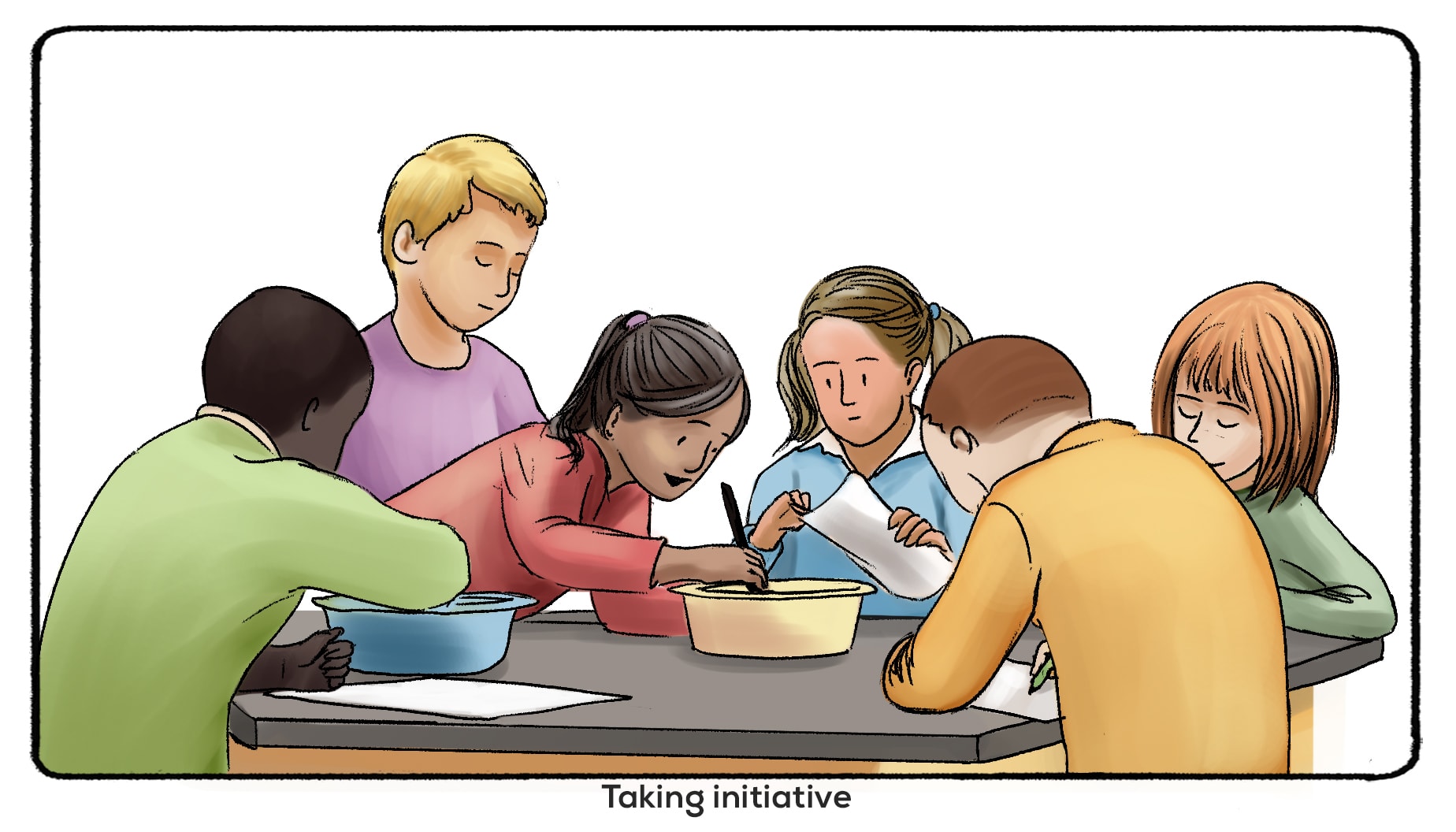
During this third stage, children are learning how to play with others. In their play groups, they understand that everyone has a role. This allows some people to take initiative and take charge.
How Do Children Learn How to Take Initiative?
By taking the initiative, a child might develop a new game. They might map out the “rules” of make-believe. The child might be the one to suggest that it is time to play or time to do something else. Members of the playgroup may follow along or push back. Different playgroup members may also fight for the “top spot.”
These conflicts and interactions are good for the child’s development - it helps them develop a sense of initiative. This is the first time in a child’s life that they can explore being a leader or how a leader operates. Children can also experience planning, executing these plans, and compromising with others. If you have ever been around a three- to five-year-old, you know that many questions are asked during these ages. But these questions only help the child understand how to take charge, make plans, and make things happen when they want them to happen.
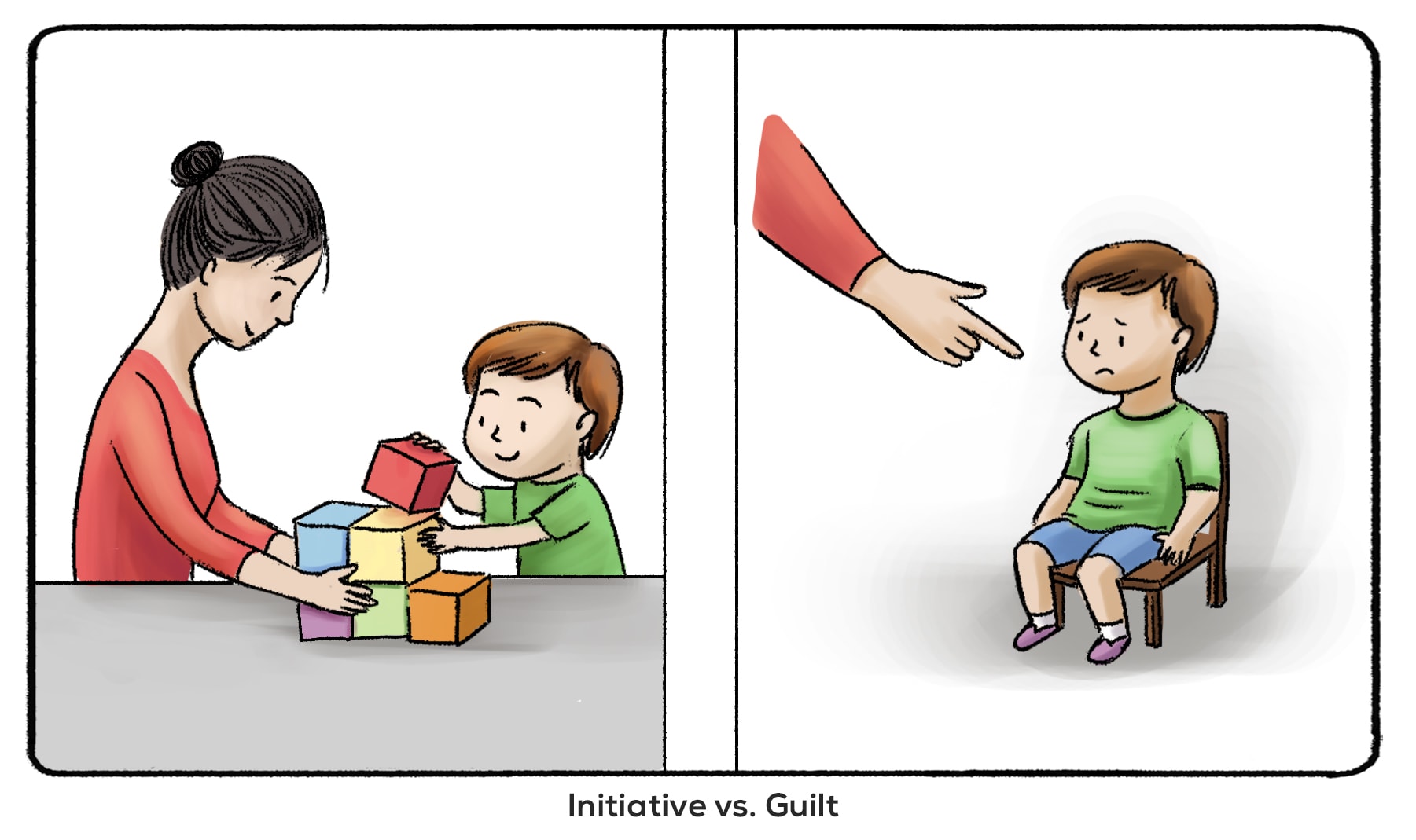
How is a Sense of Guilt Developed?
Like the second stage, initiative is developed if the child is encouraged to make plans or take charge. Exploration of role-playing only helps to further this development along. If a child is discouraged or kept away from group play, they may develop a sense of guilt. If a child’s questions are dismissed or left unanswered, they might begin to feel guilty for bringing up those questions in the first place. They may regret speaking their mind or asking for the things they want.
Like mistrust or shame and doubt, guilt can have long-lasting consequences. If a child learns that taking initiative is something to feel guilty about, they will fail to branch out, make plans for themselves, or take on leadership roles. They may instead choose to rely on parents or other authority figures when making decisions about their lives. This has consequences in later stages of psychosocial development (identity vs. role confusion), where the person must decide who they are and how they want to live.
However, navigating leadership and assertiveness often comes with its own challenges, and it’s not limited to the realm of make-believe. Take, for instance, a young girl named Mia. At the age of three, Mia is often seen directing play scenarios with her peers, instructing them on which toy to pick or what role to play in a pretend game. While this can be perceived as being “bossy,” it’s Mia’s way of understanding leadership dynamics.
Another example can be drawn from a boy named Liam, who, after watching his parents make decisions at home, decides he wants a say in what the family has for dinner or which park to visit over the weekend. While seemingly serious or assertive, these demands are his attempts to grasp the concept of decision-making and its implications.
And then there’s Aisha, who insists on wearing mismatched socks or a superhero cape to school every day. While this might come off as defiant to adults, it’s Aisha’s way of expressing her individuality and making choices that reflect her identity.
All these scenarios underline the same developmental theme: children in this stage are experimenting with autonomy, testing boundaries, and trying to understand the complex interplay of leadership, decision-making, and self-expression. While these attempts might seem brash or frustrating to adults, they’re essential milestones in a child’s journey of understanding initiative and their role in the world around them.
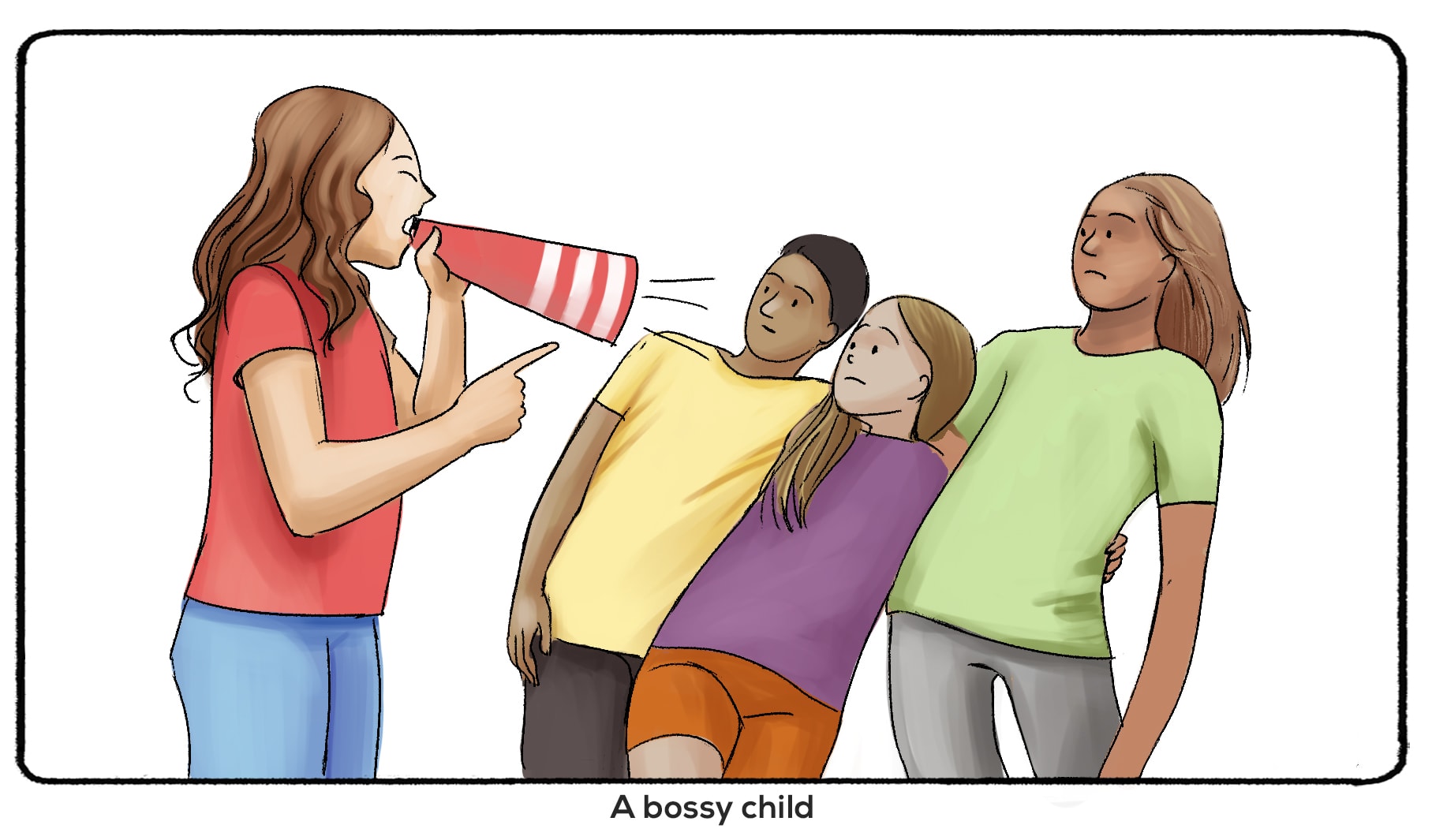
Other children or family members may also make a child feel guilty during this stage. After all, children in play groups may also be in this stage of development and learning how to be leaders. Conflict over leadership and who gets to make decisions isn’t always easy to navigate but is crucial for development.
Guilt isn’t always a bad thing during this stage. A child may feel guilt when they realize they (metaphorically) stepped on another child’s toes or made other children feel bad. At this stage, the child might start to see that their role in a group may require them to sacrifice their needs and wants for the sake of others. Guilt is not always bad, but children must be encouraged to play with others and make mistakes to develop a healthy balance of initiative and guilt.
This question was asked on the psychologystudents subreddit, and theanswersmay help you understand the distinction between these two stages.
Kindlywolf1169 had this to say:
If a child doesn’t build a strong autonomy, they won’t feel confident in their actions.
Talnethin said:
Mongosmoothie explained it this way:
I think of it as exploring autonomy (oh wow I can get this blanket myself) vs getting initiative (I’m going to get this blanket myself). If the kid is getting everything done for them, they will doubt themselves of what they’re capable of doing for themselves. If this continues, they eventually feel guilt about wanting/doing things themselves.
Erikson’s theory focuses on social development. Psychologists like Jean Piaget and Sigmund Freud focused their theories on other aspects of childhood development. You may find similarities and stark differences when you compare what is happening from ages 3-5 in Erikson’s theory versus other theories.
Jean Piaget’s Stages of Cognitive Development: A child is in the preoperational stage from the ages of 3-5. They already have object permanence but only think in concrete terms. Piaget also suggested that children at this age are largely egocentric. They have not yet developed empathy and only see the world through their perspective. Yes, children may start to take initiative and play games, buttension will arise as the children try to share, make decisions, or resolve problems among the group.
Lawrence Kohlberg’s Stages of Moral Development:Children are in the first stage of moral development until 9. They are not yet making their own decisions regarding moral vs. immoral. If their parents give them a rule, they follow it “because they said so.” Kohlberg and Piaget have similar views on egocentrism during this time of life. A child does not see beyond themselves until later in their development. (This is addressed in later stages of Erikson’s stages of psychosocial development, too.)
Initiative vs. guilt is the third stage of psychosocial development. The fourth stage is industry vs. inferiority. Before a child enters school, they may have moved through this stage of development with a sense that they can take charge or that others can take charge. But they likely haven’t grasped that they can compare themselves to others. This is the central idea in industry vs. inferiority.
Creating an environment that promotes positive growth is essential as your child ventures into the world of initiative, autonomy, and self-expression. Here are some tips to guide them through this stage while minimizing feelings of guilt:
Your child will undoubtedly experience both triumphs and setbacks in early childhood development. Creating a nurturing environment that celebrates their initiative and guides them through challenges with empathy lays a foundation for a confident, self-assured individual who approaches life with enthusiasm and resilience.
Related posts:Concrete Operational Stage (3rd Cognitive Development)The Psychology of Long Distance RelationshipsOperant Conditioning (Examples + Research)Beck’s Depression Inventory (BDI Test)Industry vs Inferiority (Psychosocial Stage 4)
Related posts:
Reference this article:Practical Psychology. (2020, March).Initiative vs Guilt (Psychosocial Stage 3).Retrieved from https://practicalpie.com/initiative-vs-guilt/.Practical Psychology. (2020, March). Initiative vs Guilt (Psychosocial Stage 3). Retrieved from https://practicalpie.com/initiative-vs-guilt/.Copy
Reference this article:
Practical Psychology. (2020, March).Initiative vs Guilt (Psychosocial Stage 3).Retrieved from https://practicalpie.com/initiative-vs-guilt/.Practical Psychology. (2020, March). Initiative vs Guilt (Psychosocial Stage 3). Retrieved from https://practicalpie.com/initiative-vs-guilt/.Copy
Copy
