In 2017,a studyshowed that girls start to doubt their abilities in math and science as early as age six. There is very little difference in the abilities between boys and girls, but certainly a difference in confidence. As early as six, stereotypes about gender begin to set in.Why? These children are going through a crisis of industry vs. inferiority.
That may be hard to believe, but this topic might show why stereotypes affect children as young as six. I will be talking about the fourth stage ofErikson’s Stages of Psychosocial Development, also known as “Industry vs. Inferiority.”
What Is The Industry vs. Inferiority Stage?What Happens During the Industry vs. Inferiority Stage?Difference Between Stages 3 and 4 of Psychosocial DevelopmentAges 5-12 In Other Stages of DevelopmentWhat Can Parents and Teachers Do to Encourage Competency?What Happens After the Industry Vs. Inferiority Stage?
What Is The Industry vs. Inferiority Stage?
What Happens During the Industry vs. Inferiority Stage?
Difference Between Stages 3 and 4 of Psychosocial Development
Ages 5-12 In Other Stages of Development
What Can Parents and Teachers Do to Encourage Competency?
What Happens After the Industry Vs. Inferiority Stage?
The industry vs inferiority stage is the 4th of Erik Erikson’s 8 stages of psychosocial development, typically occurring during ages 6-12. At this stage, children strive to develop a sense of competence and mastery in various areas, such as academics, athletics, and social skills, and if they are successful, they develop a sense of industry.
Children are focused on mastering new skills and completing tasks at this stage. They seek to gain a sense of competence and accomplishment in their activities, such as sports, academics, and hobbies. They compare their abilities to others and strive for success in their endeavors. Children who are encouraged and supported in their efforts develop a sense of industry, while those who experience little success or support may develop a sense of inferiority.
Inferiority can arise if children are not allowed to develop their skills, are not allowed to make choices or decisions, or are criticized for their efforts. Children who experience failure or lack success in their activities may doubt their abilities and feel inadequate. This can negatively affect their self-esteem and confidence, making them feel inferior.
Overall, Industry vs Inferiority is an important stage of development as it lays the foundation for future success and self-esteem. It is important for parents and educators to provide opportunities for children to develop their skills and to support their efforts to help them develop a sense of industry and confidence in their abilities.
Erikson’s Psychosocial Stages of Development?
 stages of psychosocial development
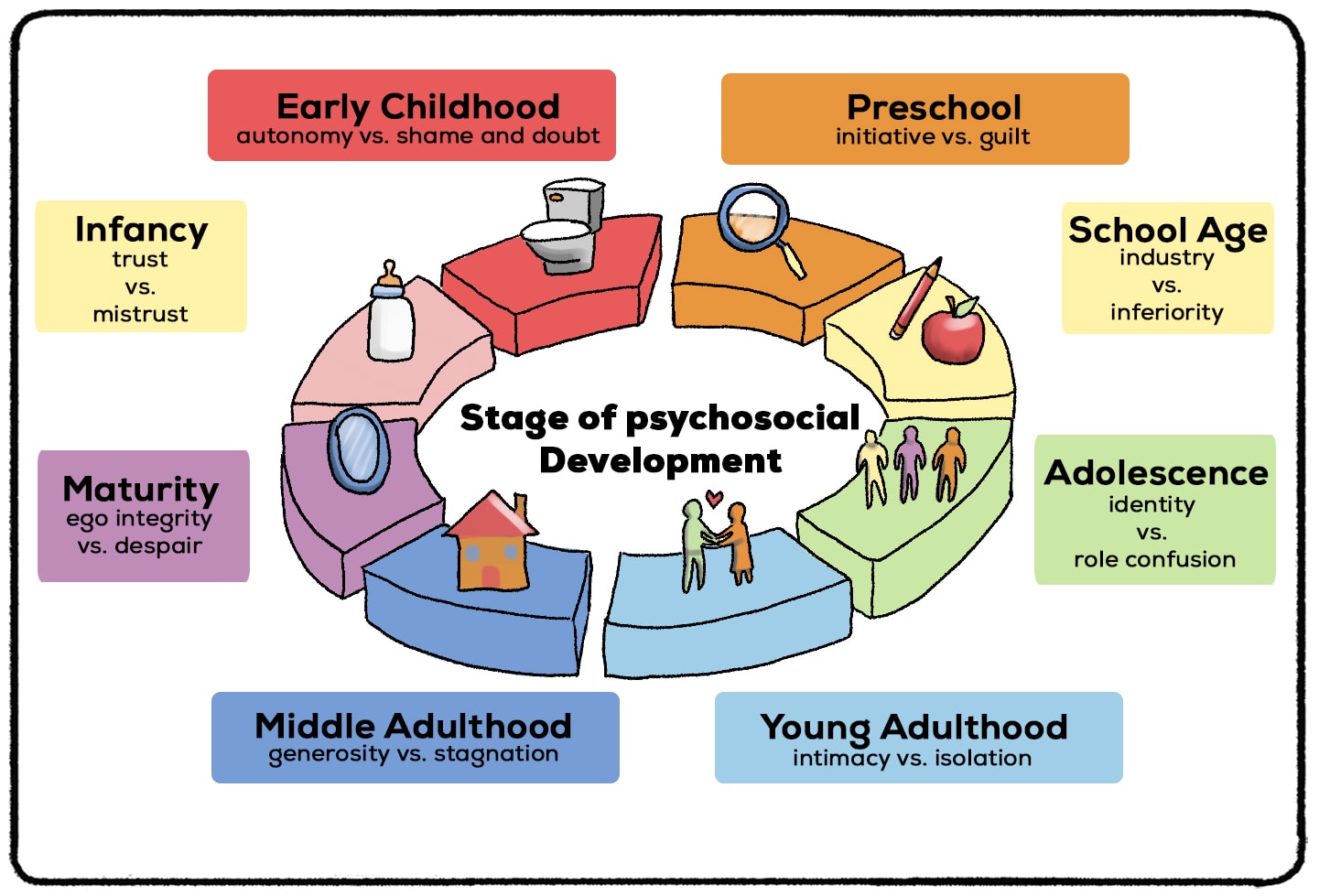
Joan and Erik Erikson created the psychosocial stages of development to show the crises a person encounters. The eight stages begin at birth and end at death. If a positive, supportive environment surrounds the person, they can move through the crisis successfully. Negativity and neglect may prevent the person from moving forward or even affect their ability to move into the next stage on time.
If this is the first time you are hearing about these stages, I recommend checking out some other pages on psychosocial development first for context:
Industry vs. Inferiority Age
Between the ages of 6-12, children enter into a new psychological crisis after completing the “Initiative vs. Guilt” stage. For many Americans, this is when a child enters grade school. They aren’t just answering to parents or family members anymore - they’re also answering to teachers.
All of a sudden, the child’s performance is measured. In previous stages, they were learning basic skills and engaging in play. While they certainly hit certain milestones (their first words, walking, etc.), measurement wasn’t involved. Through the fourth development stage, they get report cards, grades, and more feedback from teachers, and they are beginning to see their peers getting all of these things.
What does the child do with all of this information? They compare. Social Comparison Theory suggests humans have an innate drive to compare themselves to others. This makes total sense. We compare our work ethic to another person’s to ensure we keep up. We compare ourselves to someone to see if we are desirable, strong, or well-liked. Through the comparison of others, we understand our place in the world.
Of course, the results of this comparison are not always positive. A child may determine that they are inferior to their peers. That doesn’t feel very nice. And when children are subjected to standardized testing, the determination of who is “above” who is easier to make than ever.
The information that children use to make comparisons and move through this crisis may not be very helpful. How they interpret that information also makes a difference. Remember that study I mentioned at the top of this blog post? The comparisons that young children make between boys and girls result from the environment around them. Children may not have all the test scores of their classmates to see that the boy and girl classmates are scoring equally on math, science, and language tests. They are taking in the world around them. They hear parents ask the boy child if he will be an astronaut while the girl child is asked about being a princess. The world is changing, sure. However, the study shows how subtle gestures can move a child through this crisis.

Example of Industry vs. Inferiority Stage
Ash is eight years old. She attends an assembly at school where professional gymnasts perform. She is inspired to try gymnastics out herself. On the first day of gymnastic lessons, she tries to perform a cartwheel and fails. This failure makes her cry. Fortunately, her parents and coach reassure her that she can be just as great of a gymnast as the performers with practice and time.
Zach is 10 years old and has different preferences than the other boys in his class. When other boys want to wrestle in the mud, he prefers to stay clean. Other boys find humor in dumping all their food into one big pile, and Zach thinks that’s gross. He prefers to sit on the sidelines instead of playing sports. When his father observes this behavior, he scolds him. No one affirms that hecanstay clean, make his bed, and have more girl friends than guy friends. Zach doesn’t feel confident through this crisis; instead, he feels inferior to the other boys in his school.
Industry
Erikson pointed out that this stage is vital to a person’s self-confidence. If a person is consistently praised or encouraged, they will develop self-confidence. They will see that their industriousness, or diligence, pays off. The basic virtue developed during this stage is competency. When a child believe that they are competent (on top of trust, autonomy, and the confidence to take initiative), they will likely become more productive members of society. Remember the study of Learned Helplessness in theAutonomy vs. Shamestage? The test subjects only made efforts when they believed that they could and that their efforts would pay off.
Inferiority
Unfortunately, not all children exit this stage with a strong sense of self-confidence. While some children may compare themselves to others and see themselves as successful, others may look at other children and see themselves as failures. They may feel inferior. Like the girls in the study I mentioned, they may not see themselves suited for certain jobs, talents, or careers.
Industry vs. Inferiority
As I mentioned regarding theInitiative vs. Guiltstage, either extreme is unhealthy for development. Experiences that may make a child feel inferior may really humble them. Someone who has only been told they are the best at every skill can quickly develop a sense of arrogance. And being industrious isn’t just about being good at something. If someone is industrious, it means that they are diligent and hard-working. Confidence without industry may lead to some big reality checks down the road.
You may think these stages overlap, just like thisReddit user on the Mcat subreddit. But u/Coconut19 provided a great description to help you tell the two apart:
“I think the main difference between stage 3 & 4. Is that stage 4 is more about development in a school sense. Here’s what I have in my notes: hope it helps:
3.Initiative vs. Guilt
4.Industry( competence ) vs. Inferiority
Erikson’s Stages of Psychosocial Development is not the only theory within developmental psychology. Other notable names like Sigmund Freud and Jean Piaget have their own ideas on what is going on in a child’s mind between the ages of 5-12. Compare Erikson’s industry vs. inferiority stages with the following theories:
Jean Piaget’s Stages of Cognitive Development- children are moving from the preoperational stage into the concrete operational stage. They are acquiring skills like empathy and conservation.
Sigmund Freud’s Stages of Psychosexual Development -children are moving fromthe phallic stage into the latent stage. Boys and girls notice differences at this stage but are very differentin math or science skills.
Kohlberg’s Stages of Moral Development -children are moving between pre-conventional and conventional morality stages. They are learning that there is more than one point of view and using that information to form stronger interpersonal relationships.
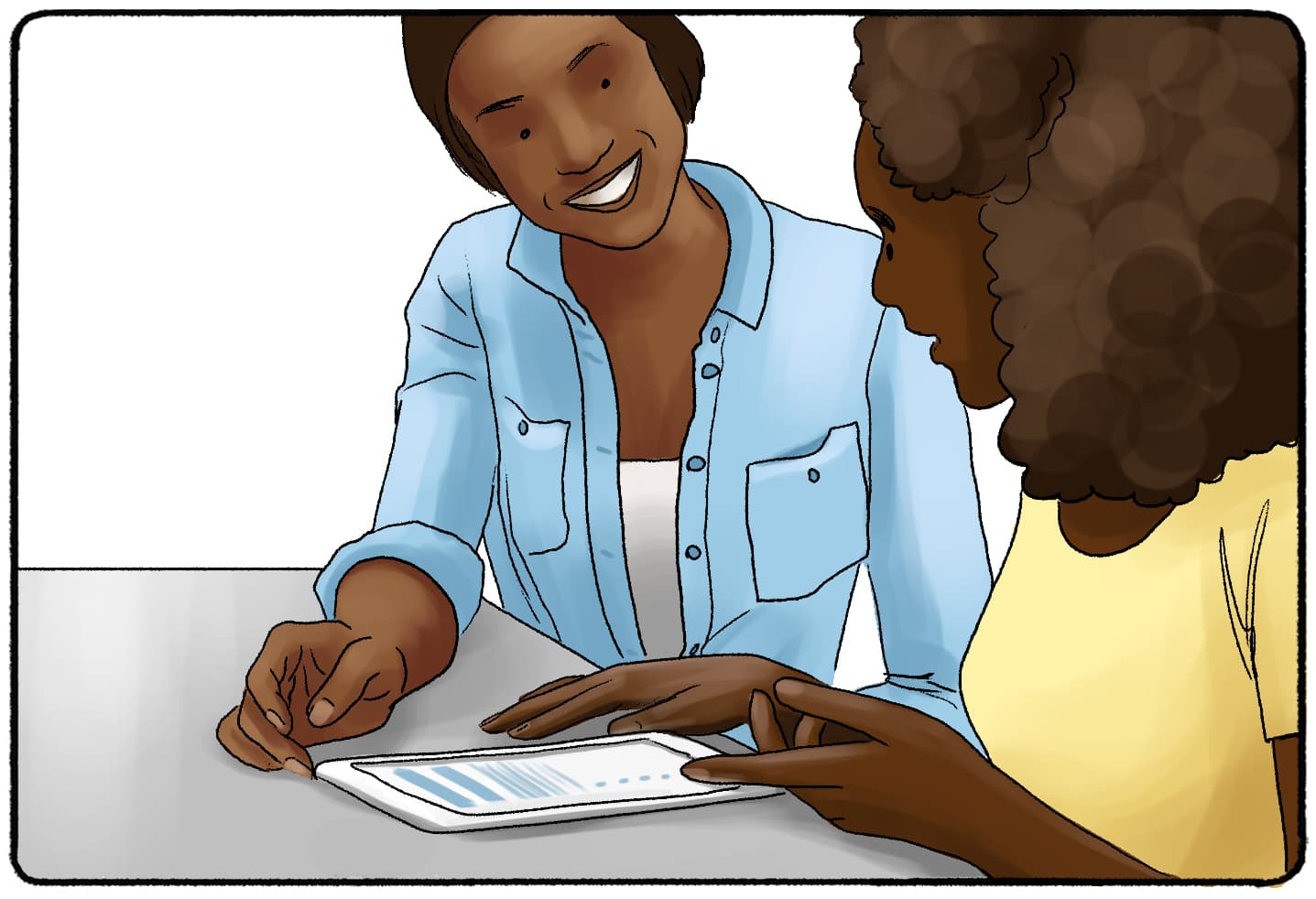
Using these specific strategies and learning from real-life examples, parents and teachers can provide the right environment for children to thrive, ensuring they develop a strong sense of industry and competency.
Things will only continue to get confusing as the child moves into adolescence. Like before, the Industry vs. Inferior stage will set a foundation for how adolescents move through their lives and develop a stronger sense of identity. If a child is self-confident and hard-working, they will have an easier time with the identity they want to explore. If they feel inferior, they might feel that their options are limited.
After the industry versus inferiority stage, according to Erik Erikson’s theory of psychosocial development, individuals enter into the stage of identity versus role confusion, which occurs during adolescence, typically between the ages of 12 and 18 years.
During the identity versus role confusion stage, individuals are focused on developing a sense of self-identity and figuring out their place in the world. They explore different roles, values, and beliefs and establish a sense of consistency and coherence in their identity. Those who successfully navigate this stage develop a strong sense of identity, while those who struggle may experience confusion or a lack of direction.
It’s worth noting that while Erikson’s theory is widely recognized and influential, it is not without its criticisms and limitations, and other developmental theories may offer different perspectives on the stages of development beyond industry versus inferiority.
Related posts:Alfred Adler Biography - Contributions To PsychologyErikson’s Stages of Psychosocial DevelopmentInitiative vs Guilt (Psychosocial Stage 3)Freud’s Psychosexual Stages of Development (Definition and Examples)Formal Operational Stage - Piaget’s 4th Stage (Examples)
Related posts:
Reference this article:Practical Psychology. (2020, March).Industry vs Inferiority (Psychosocial Stage 4).Retrieved from https://practicalpie.com/industry-vs-inferiority/.Practical Psychology. (2020, March). Industry vs Inferiority (Psychosocial Stage 4). Retrieved from https://practicalpie.com/industry-vs-inferiority/.Copy
Reference this article:
Practical Psychology. (2020, March).Industry vs Inferiority (Psychosocial Stage 4).Retrieved from https://practicalpie.com/industry-vs-inferiority/.Practical Psychology. (2020, March). Industry vs Inferiority (Psychosocial Stage 4). Retrieved from https://practicalpie.com/industry-vs-inferiority/.Copy
Copy
