Have you ever had an identity crisis?
What Is An Identity Crisis?Why Does an Identity Crisis Occur?Identity, Youth, and Crisis: Context For This TheoryTwo Stages in Erikson’s Identity CrisisJames Marcia and the Identity Status Theory
What Is An Identity Crisis?
Why Does an Identity Crisis Occur?
Identity, Youth, and Crisis: Context For This Theory
Two Stages in Erikson’s Identity Crisis
James Marcia and the Identity Status Theory
An identity crisis takes place during psychosocial development. During the crisis, an adolescent often struggles with the expectations their parents, teachers, or community has placed upon them. The “crisis” is only resolved after the person feels more confident in who they are.
How Long Does an Identity Crisis Last?
 identity crisis

Who Coined the Term “Identity Crisis?”
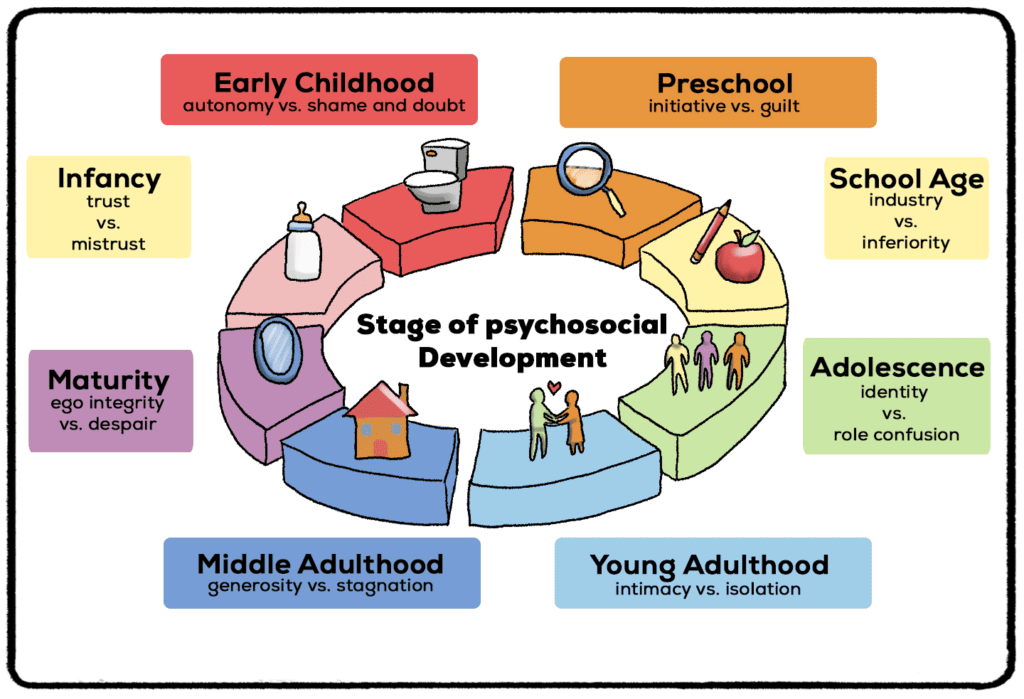
American-German psychologists Joan and Erik Erikson coined the term “identity crisis” and createdErikson’s Stages of Psychosocial Development. Erikson’s work has been an inspiration to many in the psychology field, leading others to look deeper into identity crises and the types of crises that they may experience.
Before Erikson wrote his theory on Psychosocial Development, he studied Freud. Along with his Stages of Psychosexual Development, Freud was known for his theory on the ego, superego, and the id.
Erikson redefined the role of the ego in his work. He believed that the ego did much more than mediate between a person’s inner and outside world. According to Erikson, the ego is crucial to a person’s self-awareness and perception of the world around them. People’s ego helps form their identity as they explore and understand their place in the world.
Identity Crisis in the Stages of Psychosocial Development
So when does this all happen? Erikson believed that the identity crisis occurs during adolescence (ages 12-18.) A person going through an identity crisis is in the fifth stage of psychosocial development and has experienced four “crises” already. If they have completed those stages successfully, they trust the world and have the confidence to take action and make decisions for themselves. If they haven’t completed these stages successfully…the identity crisis may hit harder.
Example of Identity Crisis
Adolescents between the ages of 12 and 18 realize they have a larger place in the world. They understand the importance of working hard and succeeding…but for what? A person’s role determines what their goals are and what they are willing to work for. If that role is not identified, it may be hard for adolescents to decide what they want to work for in adulthood and how they want to conduct themselves in middle and high school.
So they enter a crisis:identity vs. role confusion.Erikson noticed that there were two identities that adolescents seemed to struggle with during this stage: occupational identity and sexual identity.
If a person completes this stage, they will feel confident in who they are and their place in the world. However, until the stage is completed, the teenager may feel uncomfortable about who they are and act out to fill certain roles.
Erikson wrote about the identity crisis in the late 60s. He put all of his works on the identity crisis in a book called Identity, Youth, and Crisis. If you want to learn more about Erikson’s approach to the identity crisis, I suggest looking here.
There has been a lot of change since the 1960s. The way that women, minorities, LGBT people, etc., form their identity has changed. But even though society puts different expectations on these groups of people, one thing remains the same. All adolescents must explore and commit to an identity to complete this stage and move on in their psychosocial development.
Erikson believed there weretwo partsto the identity crisis: identity formation and identity integration.
Identity formation is the process in which someone becomes aware of their identity and begins to put a label on it. Maybe they question their sexuality. Maybe they look at their biological sex, and that influences what kind of occupation they want to take on. During identity formation, a person may discover themselves. (Or so they think.)
Identity integration attempts to confirm what the person has discovered. During identity integration, adolescents incorporate what they have discovered into their daily lives. Maybe they start to date people of the opposite or same sex. Or they abandon hobbies for activities that will support their future career.
Hopefully, the identity formation and integration processes go smoothly. Adolescents discover their identity, incorporate it into their lives, and feel confident about their place in the world. Other times, they feel uncomfortable and have to re-explore their identity later.
Identity Diffusion is where most people start. They have not explored their identity and are not confident in their identity. There is a lot of work to be done here.
Maybe the adolescent chooses an identity without too much exploration. They enter the Identity Foreclosure stage. After integrating the identity into their life, they may discover that their identity isn’t so secure and that more exploration is necessary.
Once adolescents have explored their identity more, they may enter the Identity Moratorium stage. They are not committed to or confident in their identity yet, but they have done some exploring and are open to other experiences.
By the end of the identity crisis, the adolescent should be in the Identity Achievement stage. They know who they are and what they want to do with their life. They are committed and confident due to high exploration levels and experiences they can reflect on. According to Erikson, this stage completes the Identity vs. Role Confusion stage, and they are ready to move on to the next stage of development.
Related posts:Erik Erikson’s Biography (Psychologist)Identity vs Confusion: Psychosocial Stage 5Erikson’s Stages of Psychosocial DevelopmentId, Ego, and Super-ego (Description + Examples)Integrity vs Despair (Psychosocial Stage 8)
Related posts:
Reference this article:Practical Psychology. (2020, April).Identity Crisis (Definition + Examples).Retrieved from https://practicalpie.com/identity-crisis/.Practical Psychology. (2020, April). Identity Crisis (Definition + Examples). Retrieved from https://practicalpie.com/identity-crisis/.Copy
Reference this article:
Practical Psychology. (2020, April).Identity Crisis (Definition + Examples).Retrieved from https://practicalpie.com/identity-crisis/.Practical Psychology. (2020, April). Identity Crisis (Definition + Examples). Retrieved from https://practicalpie.com/identity-crisis/.Copy
Copy
