Imagine standing at the crossroads of a life-changing decision, believing you’re free to choose your path. Now, picture a world where every choice you’ve made was already set in stone from the beginning of time.
The History of DeterminismUnderstanding Free Will29 Examples of Hard DeterminismMoral Responsibility and Hard DeterminismCriticisms and CounterargumentsComparison with Other Philosophical TheoriesHard Determinism and PsychologyFrequently Asked Questions (FAQ)Conclusion
The History of Determinism
Understanding Free Will
29 Examples of Hard Determinism
Moral Responsibility and Hard Determinism
Criticisms and Counterarguments
Comparison with Other Philosophical Theories
Hard Determinism and Psychology
Frequently Asked Questions (FAQ)
Conclusion
 person on a single road

Around 384-322 BCE,Aristotle, the Greek philosopher, introduced the idea of causality. He proposed that every event in existence has a cause, suggesting a logical structure to the world around us.
Later, thestoicstook this idea further, seeing the universe as a place where everything happens for a reason and that reason is part of a bigger plan that we cannot control.
Then, in the 17th century,Thomas Hobbesintroduced a mechanical interpretation of determinism. He likened life to a complex machine—once set in motion, its future is predictable and fixed.
d’Holbach was a champion of hard determinism, which he articulated forcefully in his work “System of Nature”. He claimed that if we could know all the forces acting upon us, our future actions could be predicted with scientific accuracy.
His views represented a hardline stance that left little room for free conscious will, as he believed that even human thoughts were the result of material processes. It was a time when science began to hint at the underlying rules of the cosmos, rules that even our minds couldn’t escape.
The 19th century saw a significant shift with the advent ofCharles Darwin’sevolutionary theory(1859). Suddenly, human behavior was seen in the light of natural selection and biological determinants, a perspective that greatly influenced the developing field of psychology.
Determinism gained a scientific foundation that suggested even the nuances of human behavior could, in principle, be traced back to causes like genetics and environment.
In the early 20th century, the rise ofquantum mechanicsintroduced a new twist: the universe might not be as deterministic as previously thought.
Scientists likeWerner Heisenberg(1901–1976) showed that at a subatomic level, things were unpredictable. This uncertainty principle brought a new dimension to the discussion of determinism, suggesting that not everything could be known or predicted.
Despite the quantum shake-up, determinism remains a key idea in many discussions about human behavior. Even today, it resonates through debates in neuroscience, psychology, and ethics, with modern thinkers likeSam Harrisadvocating for a version of hard determinism that considers recent findings in brain science.
Yet, when hard determinism enters the conversation, it challenges this notion. It says that the chess game of life has moves that were decided long before you ever sat at the table.
The environment you grew up in, the genes you inherited, and even the neurons firing in your brain—these are the unseen hands guiding your every decision.
In the face of hard determinism, the concept of free will gets shaky. If every action is the result of something that came before it, is anything we do truly up to us? This question has puzzled students and scholars alike for centuries.
But here’s an interesting point to consider: while hard determinism suggests that free will doesn’t exist, it doesn’t deny that we feel like it does. We plan, deliberate, and weigh our options as if we’re in control, even if determinism suggests it’s all just an intricate dance of cause and effect.
To understand free will is to look at your choices and ask, “Could I have done otherwise?” Hard determinism would say no—what you did was the only thing you could have done, given the circumstances.
Yet, the feeling of making a choice feels so real, so personal, that the debate continues, with free will being the voice that whispers, “Maybe there’s more to the story.”
1) Morning Alarm

2) Breakfast Choices
3) Daily Commute
You take the same route to work every day, believing it’s a conscious decision. Hard determinism, however, says this pattern is the result of previous conditioning, traffic patterns, and the structured layout of your city, which influences your so-called choice.
4) Falling in Love
When you fall for someone, it feels like fate. But a hard determinist would point to a complex web of social interactions, cultural norms, biological attractions, and past relationships that inexorably led you to these feelings.
5) Career Path
6) Political Views
7) Enjoying Music

Your taste in music? A determinist would say it’s less about choice and more about exposure. The music you heard growing up, the first concert you attended, and even the music your friends enjoy could all determine your playlist.
8) Exercise Habits
Whether you hit the gym or not might not be up to you, but rather the result of your genetic predisposition, the value your social circle places on fitness, and even the availability of recreational spaces in your community.
9) Shopping Preferences
10) Eating Out
Deciding where to eat out might be less choice and more result of habit, dietary restrictions, and even the influence of food trends within your social network.
11) Fear of Spiders
Is your arachnophobia a choice? Hard determinism suggests it’s a learned response, possibly stemming from an evolutionary survival mechanism or a scary encounter in early childhood.
12) Trusting Someone
Determinists argue that your tendency to trust is not a choice but the result of past interactions, societal norms, and possibly even genetic factors that influence social behavior.
13) Choosing a College
Your selection of a university may feel like a milestone decision, but it could actually be the result of academic pressures, familial expectations, and financial considerations laid out before you even filled out an application.
14) Saving Money
15) Making Friends
16) Reading a Book

Picking up a book to read may hinge on past teachers' influences, the availability of books in your upbringing, and even your brain’s neurological wiring for language processing.
17) Learning a Language
18) Artistic Appreciation
19) Handling Stress
Your coping mechanisms for stress might be seen as a personal choice, but determinists would say they’re the result of learned behaviors and biological responses ingrained over time.
20) Laughter
21) Spiritual Beliefs
22) Sleep Patterns
Whether you’re an early bird or a night owl might not be a choice but a consequence of genetic predispositions and the demands of your lifestyle and responsibilities.
23) Gift Giving
Choosing gifts comes from social expectations, previous gift-giving experiences, and the cultural significance of generosity, rather than an independent decision.
24) Creative Writing
Your writing style could be the culmination of all the literature you’ve consumed, educational influences, and even the type of feedback you’ve received in the past.
25) Punctuality
26) Seeking Adventure
Your thirst for adventure may not be a choice but a mix of genetic makeup, the influence of peer groups, and exposure to different activities during your formative years.
27) Parenting Style
The way you parent reflects the parenting you received, the norms of your culture, and the information you’ve been exposed to about child-rearing.
28) Financial Investments
29) Voting

But wait, you might think, doesn’t that make the whole idea ofright and wrong, rewards and punishments, kind of pointless? Not necessarily.
Some argue that we still need to hold people accountable to maintain order and encourage good behavior. It’s like telling a story where the characters must learn lessons, even if the plot is already written.
If hard determinists are right, then the criminal justice system definitely needs some adjustments.
And yet, this view shakes up our legal systems and our everyday judgments of each other. If a person’s choices are not really choices, the argument for punishment or reward changes. It becomes more about what will fix the problem or prevent future ones, not about giving someone what they “deserve.”
Hard determinism forces us to look at human beings and at morality in a new light. It’s not about pointing fingers; it’s about understanding the complex web that leads to a person’s actions. This perspective doesn’t erase the difference between good and bad but it does suggest that understanding and compassion might be more appropriate than blame.
Criticisms and counterarguments give spice to any theory, and hard determinism has its fair share.
One major criticism is aboutfree will. Many people can’t shake the feeling that they make real choices. They say, “When I chose chocolate over vanilla, it felt real!” Critics argue that this feeling of choice is a basic part of being human. It’s like being the author of your own story, not just a character following a script.
Another argument comes fromquantum mechanics, where things at the tiny level seem a bit random. If an atom can be unpredictable, maybe we can be too. It suggests a crack in the hard shell of determinism, a chance for free will to sneak in.Chaos theoryhas a lot to say about that.
Then there’smorality. If we’re not free to choose, how can we blame someone for doing wrong? Critics say that without free will, the whole idea of moral responsibility goes out the window. It’s like telling someone they did a good job for not flying; they never could fly in the first place, so praising or blaming doesn’t make sense.
There’s also a practical side to the criticism. If we all believed in hard determinism, would anyone try tochangefor the better? It might make people feel hopeless, like nothing they do matters. It’s the danger of a self-fulfilling prophecy: if you think you’re not in control, you might stop trying to take control.
These criticisms open the door to a middle ground, likesoft determinismor compatibilism, where free will and determinism are friends, not enemies. It’s a compromise that says, “Maybe our choices are influenced, but we can still be the boss of them in the end.”
Compatibilismis like a hybrid car. It blends free will and determinism, saying they can coexist. Compatibilists believe our actions are predetermined, but we’re still free if we act according to our desires, even if those desires are part of the causal chain.
Next up,Libertarianismin philosophy (not to be confused with the political stance) is like a pedal bike. It insists that free will is totally in our control, like pedaling wherever you want. Libertarians reject determinism and argue that we make free choices, independent of past events.
Then there’sExistentialism, which is like a custom-built vehicle. It stresses individual freedom and choice. Existentialists argue that we create our essence through these choices, defining ourselves as we go along.
Nihilismcan be likened to a car that’s out of gas. It suggests that life lacks inherent meaning, purpose, or value. From this viewpoint, whether our actions are determined or not doesn’t really matter – there’s no ultimate purpose to any of it.
Fatalismis like being on a train on fixed tracks. Fatalists believe that whatever is going to happen will happen, regardless of what we do. Unlike hard determinism, which looks at past causes, fatalism is all about the inevitable end points.
Hard Incompatibilismis a bit like having no vehicle at all. It agrees with hard determinism that free will doesn’t exist, for example, but it also throws out the idea that everything is causally determined, leaving us in a sort of philosophical limbo.
Each of these theories gives you a different lens to view the world. Hard determinism says your path is set, but other theories give you the wheel, the pedals, or even the possibility of building the road as you travel.
As you live your life, you might find one theory more convincing than the others, or you might mix and match, creating your own understanding of free will and destiny. The journey of understanding these theories is as rich and varied as the theories themselves.
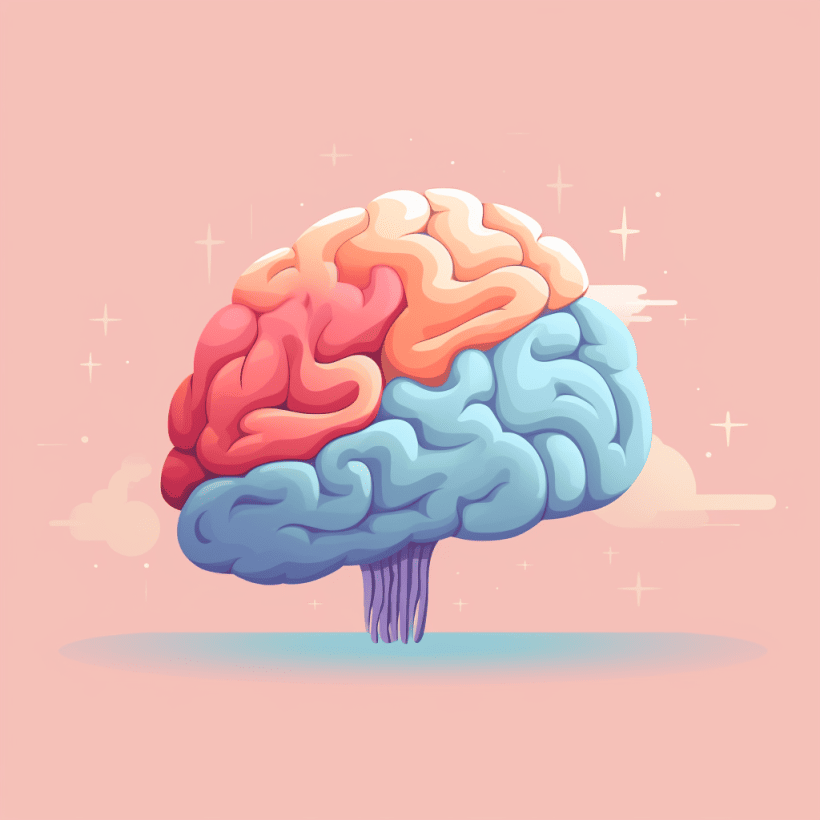
When you step into the world of psychology, hard determinism starts to mingle with how we understand the mind and behavior.
Considerbehaviorism, a school of thought in psychology. It’s like hard determinism in that it sees your actions as responses to what’s happened before.
Then, there’s the idea ofnature vs. nurture. Hard determinism nods to both. It agrees with nature, saying your genetics set the stage. But it also tips its hat to nurture, acknowledging that every person and your environment plays a part in the play that is your life.
Neuroscienceadds another layer. It looks inside the brain and finds a web of neurons, each firing and forming a network that determines how you think and act. When you make a “choice,” neuroscience can often point to a pattern in the brain that happened before you even knew what you were going to do.
But here’s where it gets really interesting. Hard determinism and psychology both ask if you can change. If everything is determined, what’s the point of therapy or trying to improve?
Well, some psychologists argue that learning about the forces that shape you is the first step in changing them. It’s not that you can break free from determinism, but you can understand it and maybe steer it in a direction you prefer.
In your everyday life, this blend of psychology and hard determinism can help you understand why you act the way you do. It can lead to a bit of self-forgiveness and empathy for others. After all, we’re all playing the cards we were dealt, but we’re also learning how to play them a little better every day.
Hard determinism challenges us to look at human behavior through a deterministic lens, but it doesn’t take away the power of understanding and working with the forces that drive us.
What is hard determinism?
Does hard determinism believe in fate?
Not exactly. Fate implies a predetermined outcome that’s often associated with a mystical or higher power. Hard determinism is more about cause and effect and natural laws than a destined end.
- Can we be held morally responsible if hard determinism is true?
This is a hot debate. If hard determinism is true, it challenges the concept of moral responsibility, since our actions are predetermined. Yet, many argue that social order and behavioral incentives still require a system of moral responsibility.
- Does hard determinism negate the effort to change or improve oneself?
No, it doesn’t. Understanding the deterministic forces in your life can be the first step toward making changes. It’s like being aware of the wind when you’re sailing; you can’t change the wind, but you can adjust your sails.
How does hard determinism differ from free will?
What’s the difference between hard determinism and soft determinism?
Soft determinism, or compatibilism, believes that free will and determinism are compatible. It says that our actions are determined, but we are still free if those actions are the result of our own desires and wishes.
Is there any scientific support for hard determinism?
Do most philosophers support hard determinism?
Philosophy is diverse, and while some philosophers support hard determinism, many do not. There are numerous schools of thought on the matter of free will and determinism, and the debate is ongoing.
In wrapping up our journey through the intricate landscape of hard determinism, it’s clear that this philosophical theory isn’t just about debating whether the future is set in stone; it’s about understanding the deeper fabric of human existence and behavior.
Hard determinism pulls at the threads of our understanding of free will, morality, and personal responsibility. It challenges us to reconsider how we define ourselves and our actions in a world that might be more interconnected and prearranged than we ever imagined.
Yet, this doesn’t diminish our desire to learn, grow, and strive for change. If anything, understanding the deterministic forces in our lives can empower us to navigate them with greater awareness and intention.
The implications of hard determinism stretch across ethics, law, psychology, and daily life. It pushes us to ask tough questions about how we hold ourselves and others accountable. It provokes a reassessment of our justice systems, our societal structures, and the way we treat each other.
Remember, the discussion around hard determinism isn’t just academic; it’s a conversation that can influence how we view the world and our place within it. Whether you align with the tenets of hard determinism or find yourself resistant to its claims, the value lies in the exploration — an exploration that can yield greater self-understanding, empathy for others, and insight into the human condition.
The debate is far from over, and as science progresses and society evolves, our interpretations and opinions may shift. For now, hard determinism serves as a potent reminder of the complex tapestry of causes and effects that weave the story of our universe, and our own individual lives, together.
Related posts:Soft Determinism (29 Examples + Definition)Free Will vs Determinism (Debate in Psychology)Bandwagon Fallacy (29 Examples + Definition)False Dilemma Fallacy (27 Examples + Definition)Skinner’s Box Experiment (Behaviorism Study)
Related posts:
Reference this article:Practical Psychology. (2023, November).Hard Determinism (29 Examples + Definition).Retrieved from https://practicalpie.com/hard-determinism/.Practical Psychology. (2023, November). Hard Determinism (29 Examples + Definition). Retrieved from https://practicalpie.com/hard-determinism/.Copy
Reference this article:
Practical Psychology. (2023, November).Hard Determinism (29 Examples + Definition).Retrieved from https://practicalpie.com/hard-determinism/.Practical Psychology. (2023, November). Hard Determinism (29 Examples + Definition). Retrieved from https://practicalpie.com/hard-determinism/.Copy
Copy
