 G. Stanley Hall
Who Is G. Stanley Hall?Stanley Hall’s Early YearsEducational BackgroundHall’s Contributions to PsychologyMaturation Theory of Child DevelopmentHall’s Views on Old AgeG Stanley Hall’s Influence TodayStanley Hall’s Books, Awards, and AccomplishmentsPersonal Life
Who Is G. Stanley Hall?
Stanley Hall’s Early Years
Educational Background
Hall’s Contributions to Psychology
Maturation Theory of Child Development
Hall’s Views on Old Age
G Stanley Hall’s Influence Today
Stanley Hall’s Books, Awards, and Accomplishments
Personal Life
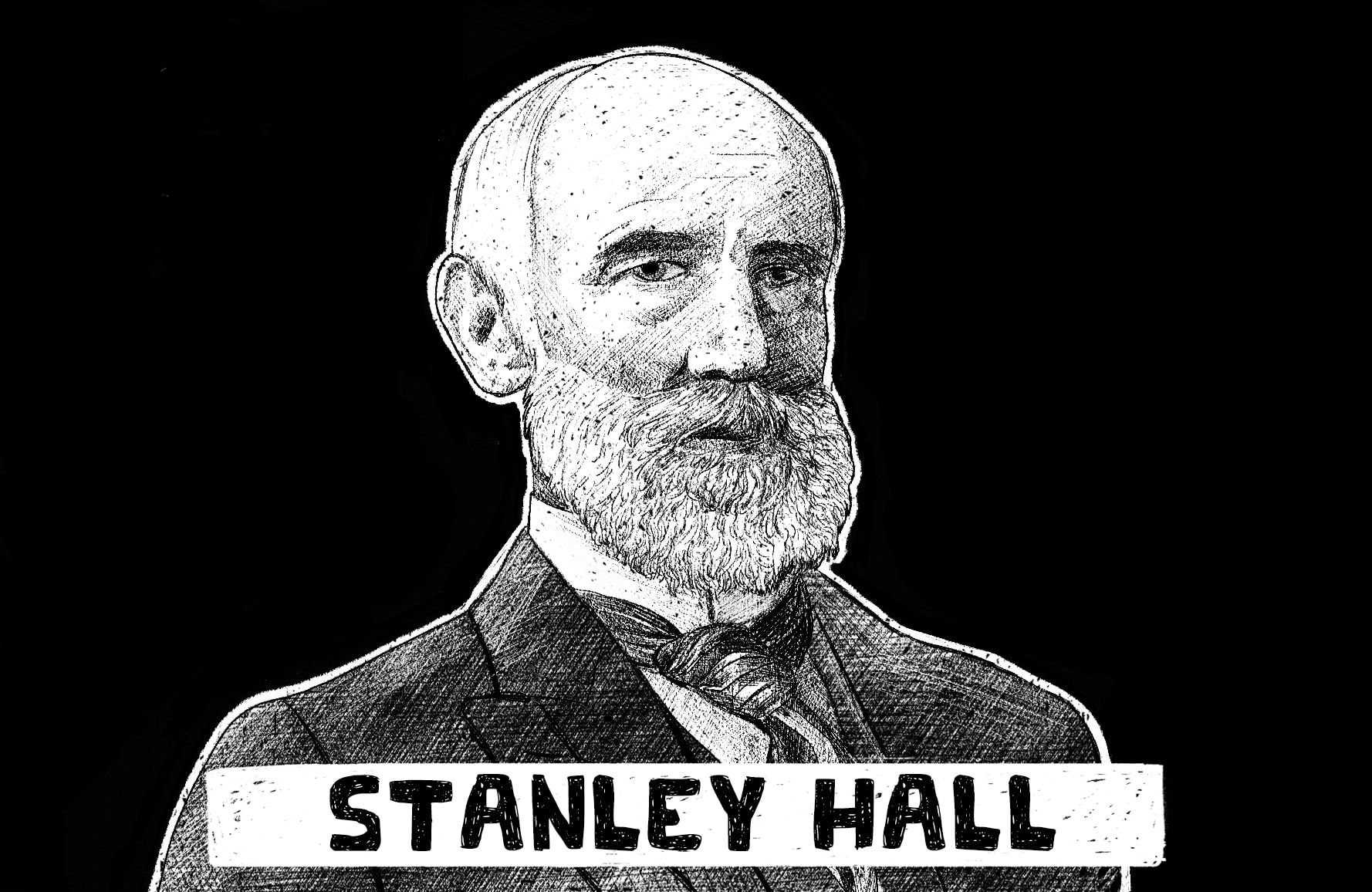
G. Stanley Hall was an American educator and psychologist who played a major role in establishing the field of psychology in the United States. He was primarily interested in evolutionary theory and child development, and is considered one of the founders of educational psychology and child psychology.
Hall was the first American to earn a PhD on a psychological topic, the first person to establish a psychology lab in the United States, and the first president of the American Psychological Association.
Granville Stanley Hall was born on February 1, 1844 in Ashfield Massachusetts. His parents were Granville Bascom Hall and Abigail Hall (nee Beals). Granville Bascom Hall was a descendant of senior elder William Brewster—an English official who came to America on theMayflowerin 1620. Abigail Hall was a descendant of John Alden, a crew member on theMayflowerduring its historic voyage to Plymouth.
Hall was the eldest of his parents’ three children. He had a younger brother named Robert and a younger sister named Julina Orpha. Hall’s upbringing was modest, conservative, and puritan. He and his siblings were raised on their grandfather’s farm.
Hall’s father, Granville Bascom, was a local politician who served in the Massachusetts Legislature. His mother, Abigail, was educated at the Albany Female Seminary and worked as a teacher. As a young boy, Hall enjoyed learning about animals and developing physical skills. He also loved to read, write, practice music, and engage in public speaking.
It is likely that Hall developed his love of learning from his parents. He made full use of his local academic resources as well as his parents’ devotion to him and his siblings. By the time he was sixteen years old, Hall was teaching a class of students, many of whom were older than him.
Hall’s time at Williams College was very eventful. He played chess, read extensively on literature and philosophy, helped to edit the college newspaper, and sang in the college music society. Hall was also invited to become a member of the Phi Beta Kappa fraternity. He seriously considered a literary career, but ultimately felt that there was nothing for him to do other than prepare for the ministry.
Union Theological Seminary
After his graduation from Williams College in 1867, Hall enrolled at Union Theological Seminary in New York City. His studies were focused on theology and he worked unenthusiastically for one year. While he was enrolled at the seminary, Hall expressed a number of unorthodox views in his trial sermon and this led some members of his audience to pray for him rather than criticize him. However, well-known clergyman Henry Ward Beecher recognized that Hall was more interested in philosophy than theology and he encouraged Hall to continue studying philosophy in Germany.
Hall left New York on a steamship bound for Rotterdam in May 1868 and from there he made his way to Germany. He studied at the University of Bonn and then at the University of Berlin until the spring of 1870. However, the outbreak of the Franco-Prussian War in July 1870 forced the university to stop classes prematurely. In the fall of 1870, Hall came back to Berlin to resume his study of philosophy, but he eventually returned to New York in 1871 as he was unable to secure a teaching position in Germany.
As soon as he returned home, Hall re-entered Union Theological Seminary and earned a BD (bachelor of divinity) degree within a few months. He briefly served as a pastor in a little church in Coudersport, Pennsylvania, before becoming a tutor for the family of Jesse Seligman—a well-known banker in New York. Hall worked for the Seligman family for one and a half years and in the fall of 1872 he accepted a position as a professor of English literature at Antioch College. In addition to English literature, he gave lectures on philosophy and modern languages.
Inspired By Wilhelm Wundt
Hall spent two years at Harvard. During that time, he taught English and conducted research at Harvard Medical School under the supervision of William James (who had just taught the first psychology class in the United States) and Henry P. Bowditch. In June 1878, Hall presented his thesis titledThe Muscular Perception of Space. Although his topic of study lay within the realms of psychology, he was awarded the degree of Doctor of Philosophy.
Return to Germany
Hall eventually returned to Germany in July 1878. He studied at the University of Berlin for one year, got married to his first wife, then relocated to the University of Leipzig in Zurich, Switzerland, to study with Wilhelm Wundt. In 1879, Wundt founded the world’s first formal laboratory for psychological research. Hall returned to the United States with his wife in September 1880.
Soon after Hall returned to Massachusetts, he was invited to give a series of lectures on education at Harvard University. People who wanted to attend the course were required to pay $5. As the lectures had good attendance, Hall offered the course again the following year.
In 1881, Hall was invited to give a similar series of lectures at Johns Hopkins University. At the time, the university was only five years old. The following year, Hall was offered a position as a full time lecturer at Johns Hopkins. One of the requirements of his appointment was that he establish a laboratory for psychological research at the university.
Hall founded the first psychology lab in the United States at Johns Hopkins University in 1883. In 1884, he was appointed as professor of psychology and pedagogics. Hall also had the distinction of teaching Joseph Jastrow, who in 1886, became the first American to receive a PhD in psychology from an American university. Some of Hall’s other notable students included Raymond Cattell, John Dewey, William H. Burnham, Lewis Terman, and Edmund Sanford.
American Journal of Psychology
In 1887, Hall founded theAmerican Journal of Psychology. This publication was the first journal ofexperimental psychologyin the United States and the first publication of its kind in the English language. However, Hall resigned from his position at Johns Hopkins in June 1888 after he received an offer to become the first president of Clark University. He left the journal in the care of his student Edmund Sanford.
Clark University
Hall assembled a talented group of men—including biologist C. O. Whitman and anthropologist Franz Boas—to serve on the faculty of Clark University. However, financial support from Jonas Clark started to wane in 1892 and continued to decline until he passed away in 1900. Ongoing financial issues contributed to many of the educators resigning in 1892, and Hall was required to serve as president, research supervisor, and professor from 1892 until his retirement in 1920. Hall operated the university on an average yearly budget of $28,000 from 1892 until 1902.
Despite the financial challenges, Hall accomplished much during his time at Clark University. In 1892 he convened the American Psychological Association and served as its first president. In 1893 he introduced the concept of “genetic psychology,” founded a quarterly journal called thePedagogical Seminary(renamed theJournal of Genetic Psychologyin 1924) and awarded eleven of the first fourteen doctoral degrees in psychology in the nation. One year later, he founded theJournal of Religious Psychologyand published his landmark bookAdolescence: Its Psychology and Its Relation to Physiology, Anthropology, Sociology, Sex, Crime, Religion, and Education. In 1909, Hall established The Children’s Institute at Clark University and famously invited Sigmund Freud to speak at the Clark University Congress. He also founded theJournal of Applied Psychologyin 1917.
Hall retired from Clark University in 1920. Two years after his retirement, he published another groundbreaking book titledSenescence: The Last Half of Life.
The theory Hall is best known for is his maturation theory of child development. He suggested that children recapitulate (or repeat) evolutionary stages of development as they grow up. Hall claimed that pushing a child ahead of his or her developmental stage may have negative effects. He believed that children develop in three distinct stages:
The child relies on his or her physical senses to experience life in a manner that is similar to animals. Physical growth during this stage is fast and the child has high levels of energy. However, the child has not yet developed his or her ability to reason. Consequently, the child is not sensitive to issues related to socialization or religion.
By this stage the brain has grown to its full physical size. Hall suggested that formal education should begin at this stage. The child is just beginning to develop his or her reasoning skills but they are not yet refined. As a result, the child may behave in a manner that seems rude or cruel. He or she is not yet ready to deal with complex situations or issues related to morality.
Hall believed that adolescence was a critical point in a person’s development. Much of his work on adolescent development was centered on the topic of aggression. Hall theorized that there were two types of aggression: physical and relational. He suggested that males are more likely to exhibit physical aggression (for example, engaging in fistfights) and females are more likely to display relational aggression (for example, engaging in gossip or social exclusion).
In his bookSenescence: The Last Half of Life(1922), Hall expressed anger at what he thought was a form of discrimination against older people. He believed that the stigma associated with aging led some older people to indulge in more youthful activities such as sexual gratification, which sapped vital energy from the body and sped up physical deterioration. Hall called for a better understanding of the aging process among the general public. According to Hall, “The future welfare of the race depends upon the development of an old age . . . [resulting from] a better knowledge and control of the conditions of this state of life.”
Criticisms of Hall’s Theories
Besides his theories on development, Hall has also been strongly criticized for his views on eugenics. He was a member of several organizations that supported the eugenics movement and often expressed his views in his writing. While Hall did not endorse the complete separation of races, he did view the white race as superior to all others. As a result, some of his critics have labeled his social views on race as prejudiced.
Although Hall’s theories are generally viewed as unscientific or outdated, most people agree that he made a significant positive impact on the field of psychology. His work on child development directly contributed to the study of child psychology and educational psychology in the United States. Hall’s emphasis on assisting the elderly ignited interest in the field of gerontology. Many of the views he expressed regarding older adults and the issues they face are still relevant today.
It has been suggested that Hall’s greatest contributions were the time, energy, and passion he brought to the field of psychology while it was still in its infancy.
G. Stanley Hall is credited for many “firsts," including establishing the first lab devoted to psychological research and founding the first journal on experimental psychology in the nation. Hall’s emphasis on empirical research helped to establish psychology as a respected science. He also influenced a number of researchers who would later make major positive contributions to the field.
Hall was an avid writer throughout his professional career. A few of his most impactful works are:
Some of Hall’s other awards and notable accomplishments include:
Granville Stanley Hall married Cornelia Fisher in September, 1879. The couple were married in Germany during Hall’s second visit to the country, and they lived briefly in Switzerland before moving to the United States. They had a son in 1881 and a daughter in 1882. The names of their children were Robert Granville Hall and Julia Fisher Hall.
In 1890, Hall’s wife and daughter died of accidental asphyxiation. This personal tragedy meant that Hall had to raise his young son alone. In July 1899, Hall married Florence Smith. However, Florence experienced severe mental health issues and was institutionalized years later due to her erratic behavior.
When Did G. Stanley Hall Die?
Cole, T. R. (1984). The prophecy of senescence: G. Stanley Hall and the reconstruction of old age in America.The Gerontologist, 24(4),360-366. Retrieved from http://citeseerx.ist.psu.edu/viewdoc/download?doi=10.1.1.902.9641&rep=rep1&type=pdf
G. Stanley Hall. (n.d.). InEncyclopedia Britannica. Retrieved from https://www.britannica.com/biography/G-Stanley-Hall
Parry, M. (2006). G. Stanley Hall: Psychologist and early gerontologist.American Journal of Public Health. 96(7). doi: 10.2105/AJPH.2006.090647. Retrieved from https://www.ncbi.nlm.nih.gov/pmc/articles/PMC1483855/
Pruette, L. (1926).G. Stanley Hall: A biography of a mind.D. Appleton and Company.
Thorndike. E. L. (1925).Biographical memoir of Granville Stanley Hall.National Academy of Sciences, Biographical Memoirs, XII. Retrieved from http://www.nasonline.org/publications/biographical-memoirs/memoir-pdfs/hall-g-stanley.pdf
Related posts:40+ Famous Psychologists (Images + Biographies)Stanley Milgram (Psychologist Biography)Genie - The Feral Child47+ Subculture Examples (Definition + Theories)Urie Bronfenbrenner Biography - Contributions To Psychology
Related posts:
Reference this article:Practical Psychology. (2021, March).G. Stanley Hall Biography - Contributions To Psychology.Retrieved from https://practicalpie.com/g-stanley-hall/.Practical Psychology. (2021, March). G. Stanley Hall Biography - Contributions To Psychology. Retrieved from https://practicalpie.com/g-stanley-hall/.Copy
Reference this article:
Practical Psychology. (2021, March).G. Stanley Hall Biography - Contributions To Psychology.Retrieved from https://practicalpie.com/g-stanley-hall/.Practical Psychology. (2021, March). G. Stanley Hall Biography - Contributions To Psychology. Retrieved from https://practicalpie.com/g-stanley-hall/.Copy
Copy
