Start The Test
Perhaps you’ve encountered an IQ test online, like the free one mentioned earlier, or you underwent one during school. IQ tests are a staple in many educational environments, with over a million schoolchildren being evaluated using these tools annually. However, their application is not restricted to academic settings.
Does the wide application of IQ tests imply that they are the definitive measure of one’s potential for success? Not necessarily. While they provide valuable insights into certain cognitive abilities, it’s essential to remember that success is multifaceted, and various parameters and skills are involved. Before diving into the intricacies of test results, let’s delve deeper into the origins of IQ tests, what they truly measure, and factors that can influence IQ scores. It’s worth noting that, contrary to some beliefs, IQ can change over time!
What is an IQ Test?
An IQ Test, or Intelligence test, is a series of questions and problems that seek to find the general intelligence of the participant. In general, the score depends on the test-taker’s age. The quiz has many formats, from identifying similar images to predicting sequences.
Log In
History of the IQ Test
The genesis of the IQ test can be traced back to the early 20th century, thanks to the groundbreaking work of Alfred Binet, a renowned French psychologist. At that time, France had recently passed laws requiring compulsory education for all children. Given children’s diverse range of academic abilities, educators faced the challenge of identifying those who might struggle in a standard classroom setting and those who might excel.
To address this pressing need, in 1904, Binet, along with his collaborator Théodore Simon, developed the Binet-Simon scale. Unlike traditional academic exams, this pioneering test did not primarily focus on reading or writing skills. Instead, it featured a series of tasks that assessed various cognitive abilities, such as problem-solving, attention, and memory. The underlying principle was to gauge a child’s innate learning potential rather than the knowledge they had already acquired.
However, the original Binet-Simon scale underwent several modifications and adaptations, especially when introduced to the United States. Lewis Terman, a psychologist from Stanford University, was instrumental in refining and standardizing this test, resulting in the Stanford-Binet Intelligence Scales. Terman introduced the “Intelligence Quotient” or IQ, calculated as (Mental Age/Chronological Age) x 100. This became the new standard measure.
Over the decades, various versions of IQ tests emerged. Some, like the Wechsler Adult Intelligence Scale (WAIS) and the Wechsler Intelligence Scale for Children (WISC), expanded on the original concepts and introduced more comprehensive assessments of diverse cognitive domains.
In modern times, while the core objective of IQ tests—to evaluate cognitive potential—remains consistent, they have evolved in methodology, scope, and application. Today, they are used not only in educational settings but also in clinical evaluations, job recruitments, and various research contexts.
There has been significant controversy over the use of IQ tests.
Most of this controversy stems from how the tests are constructed and their historical and modern implications in determining someone’sintelligence.
Consider the example of Ellis Island in the early 20th century. The U.S. Public Health Service gave IQ tests to immigrants. Those deemed “mentally unfit” faced potential deportation. However, this system of assessment was deeply flawed. Many IQ tests contained questions steeped in cultural and linguistic biases, particularly emphasizing English language proficiency and cultural knowledge specific to the United States. Immigrants, who might have been intellectually capable but unfamiliar with certain cultural references or nuances of the English language, were unjustly labeled as “imbeciles.”
Given the inadequacy of these IQ tests, they were eventually replaced with a different measure to ascertain the “mental fitness” of immigrants.
The concerns about cultural bias in IQ testing persisted well beyond the Ellis Island era. They faced scrutiny even after multiple revisions intended to make IQ tests more universally applicable. A prominent example from the late 20th century is the case of Larry P. v. Riles. Here, a judge concluded that the IQ tests used in California schools were culturally biased, leading to a disproportionate number of African American students being erroneously classified as having learning disabilities.
Although new versions of famous IQ tests have been developed in light of these biases, challenges remain. Worldwide, the debate over cultural neutrality in IQ testing is pronounced. The standard Western IQ tests often fail to account for local cultural, linguistic, and educational contexts in diverse regions outside the U.S., such as Africa, Asia, and parts of Europe. This has led to the developing of region-specific tests or adaptive versions of established tests to minimize cultural bias.
Modern IQ tests in schools and large organizations now strive to be more cognizant of cultural biases and family background. Nonetheless, it’s essential to remember that an IQ score, while insightful, isn’t an absolute measure of one’s intelligence. It’s a comparative metric based on one’s age and the performance of other test-takers of the same age.
How is an IQ score measured?
There isn’t just one form of the IQ test. In general, however, all IQ tests similarly measure IQ. The test contains a series of subtests that may ask someone to define a word, complete an analogy, or answer an open-ended question.
It’s important to note here that IQ scores are not fixed. If you got the same number of questions right at age 6 and 7, your IQ score would decrease yearly. This is possible, and it’s also possible to increase your IQ score over time.
What does an IQ test measure?
In 1983, long after IQ tests were developed, American psychologist Howard Gardener describednine different types of intelligence:
You wouldn’t expect to see a school administrator asking students how well they socialize or know themselves as part of an IQ test. There’s not a lot of existentialism on these tests, either. So it’s safe to say that not all types of intelligence appear on IQ tests.
However, some tests also measure cognitive skills and working memory. These can demonstrate some types of intelligence.
For example, good problem-solving skills can help you solve a math equation but also help you figure out the definition of a word you don’t know.
In general, IQ tests assess the following types of intelligence:
Of course, there isn’t justonetype of IQ test. Different tests have been created to include other types of intelligence that could predict a child’s success in school or an adult’s success in a particular job.
The G Factor
Regarding intelligence, psychologists classify IQ into 2 categories: fluid and crystallized. Fluid intelligence is the ability to solve multiple unrelated problems. Crystallized intelligence is the ability to solve similar problems quickly.
For example, you may be able to solve a puzzle quickly but very slow at predicting a sequence of numbers. This means you have a high crystallized intelligence. You would have a high fluid intelligence if you were quicker than an average person at both. Put these together, and you have “The g Factor.” Note that the g is lowercase when written.
Types of IQ tests (and most popular)
While numerous IQ tests are available, several stand out due to their widespread use and recognition in educational settings and larger organizations. Here’s a more comprehensive overview of some major IQ tests:
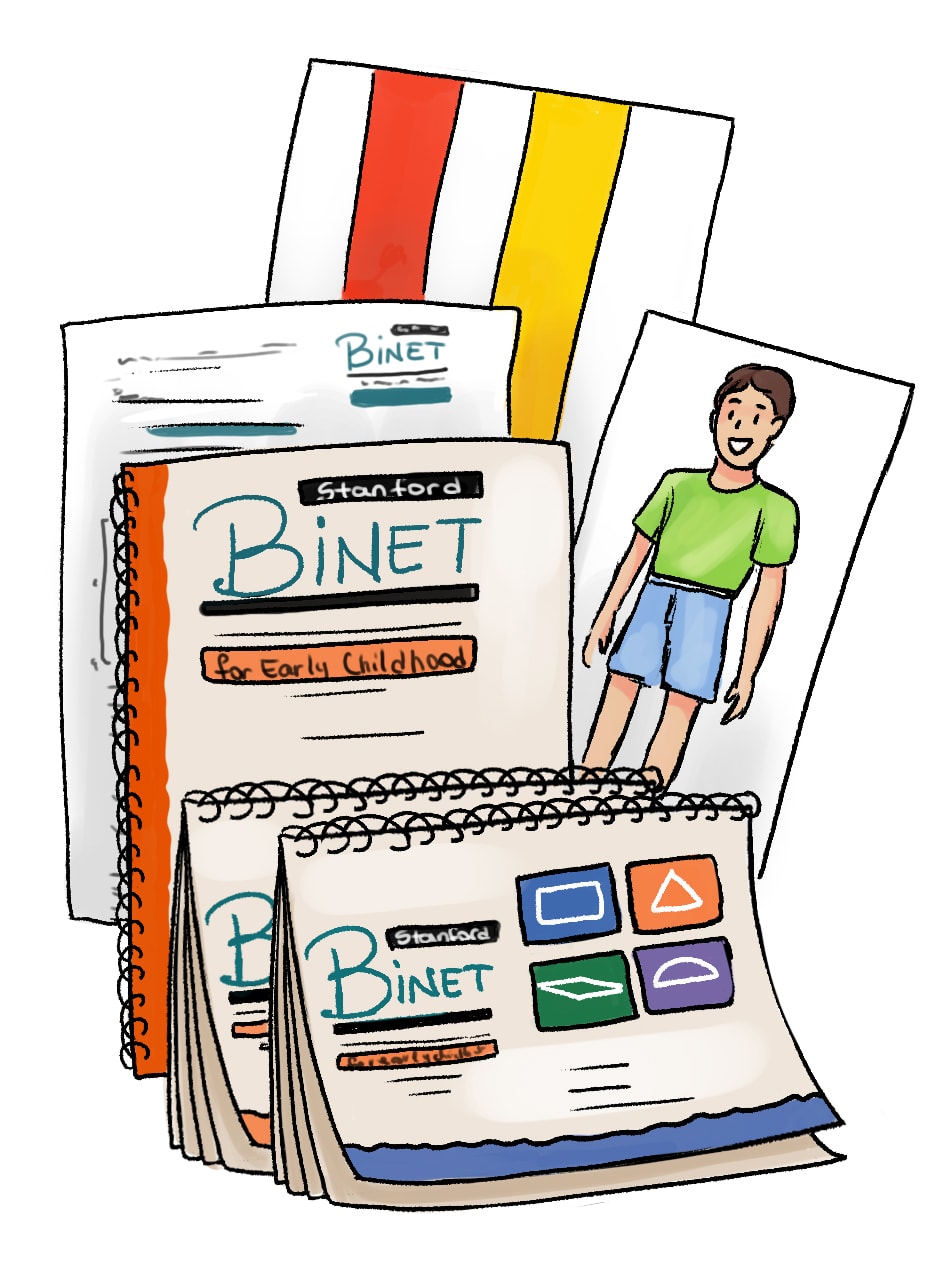 stanford-binet intelligence scale
This test, rooted inAlfred Binet’s original IQ test from 1905, has seen several iterations. As you mentioned, it evaluates:
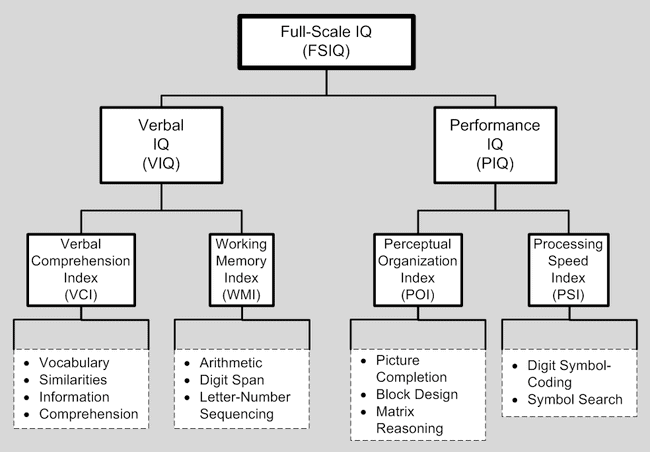 Wechsler IQ Test
That is the question that led David Wechsler to start developing his tests. His first intelligence test, the Wechsler–Bellevue Intelligence Scale, was released in 1939. He revised the test and renamed it the Wechsler Adult Intelligence Scale. This test, now on its fourth version (WAIS-IV,) is the most popular intelligence test in the world.
The WAIS is meant for adults (although the recommended age starts at 16.)It consists of 10 core subtests and 5 supplemental subtests that put together a series of different scores. The scores include “index scores” representing different components of intelligence or more “general scores.”
The four index scores measure:
Scores from the verbal comprehension and perceptual reasoning subtests make up the General Ability Index. All 10 core subtests' scores make up the Full Scale IQ score.
For the Wechsler Tests and the Stanford-Binet scale, scores between 90 and 109 are considered “average.”
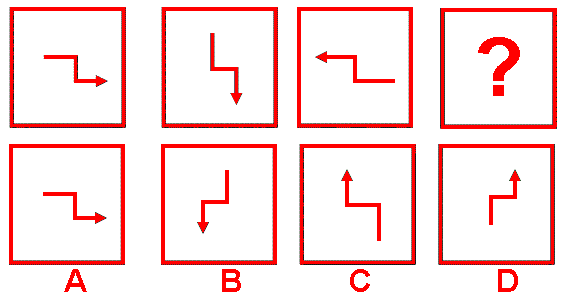 Nonverbal Intelligence Question
Another critique of the IQ test is that it doesn’t consider cultural background or English proficiency.
If a child enters an English-speaking school but speaks predominantly Spanish at home, English verbal tests may not accurately reflect the child’s intelligence or potential to succeed.
That’s why the Universal Nonverbal Intelligence (UNIT) test was created. It aims to offer a more unbiased version of the IQ test that can be used to measure a child’s intelligence.
The six subtests of the UNIT test include:
This is another alternative form of the IQ test administered to children to predict their academic success. The Differential Ability Scales test doesn’t aim to discover a child’s IQ.
Instead, they use 20 subset tests to determine their cognitive abilities and potential weaknesses.
These subtests include:
Like the more standard IQ tests, the DAS tests working memory, verbal and logical comprehension, and the ability to reason.
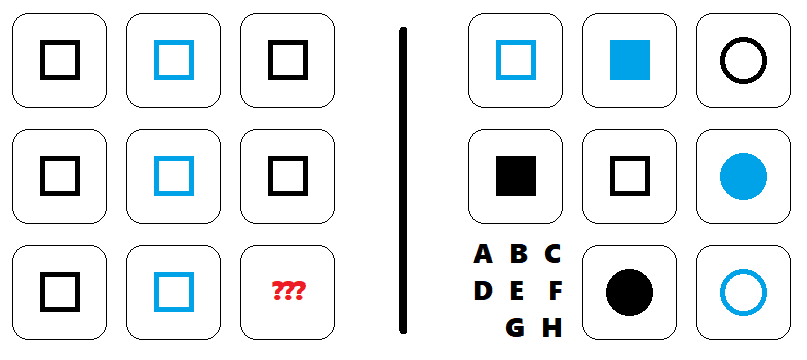 Culture Fair IQ Test
I mentioned earlier that cultural bias is the center of most critiques of the IQ test. In 1930, Raymond B. Cattell developed an intelligence test to be free of cultural bias. The Cattell Culture Fair Test has undergone multiple revisions but is still used to determine whether a person qualifies for Mensa.
Cattell based his test on two types of intelligence: “crystallized intelligence” and “fluid intelligence. ”Crystallized intelligence is gained throughout a child’s education. The definition of words you learn in school may fall under crystallized intelligence. Fluid intelligence, however, is more abstract. It’s the ability to solve problems and process knowledge. Inductive reasoning skills fall under the category of fluid intelligence.
Are IQ Tests Accurate?
With so many approaches to IQ tests, you may find that your answer varies slightly from test to test. Different test creators and their perspectives may also affect the questions (and, therefore, your results.) Take this test for fun; remember, a number does not determine your success!
How Important is IQ?
IQ tests measure cognitive abilities, but they don’t measure all abilities. No IQ test tells you how creative or curious you are to understand the world around you. Remember, Alfred Binet did not believe his test was a final number for measuring intelligence.
IQ tests also don’t predict how your intelligence may change. Changing schools or putting yourself in a less stressful home environment could change IQ test scores. Just because you get a “lower” score on an IQ test does not mean you will fail in life.
Perseverance, discipline, and social connections are just as important as the ability to add, subtract, and multiply.
This doesn’t mean that IQ tests are a wash. They test cognitive abilities and can be a fun insight into your working memory. If you’re out of school, you might use skills you put away years ago. (There are calculators allowed for multiplication and long division questions!)IQ tests can help you study for tests like the SAT or ACT if you’re still in school. These tests study similar skills, including verbal comprehension and the ability to solve mathematical equations.
So why not give an IQ test a try? Most online tests don’t take more than half an hour to complete. Getting your results can be a fun way of seeing where you stand compared to others who take the test. But don’t mull over your results for too long. They can always change, and one number you get online doesn’t mean you won’t be able to achieve your goals this year. And who knows? Maybe you’ll score higher on the next version of the IQ test that comes out!
Related posts:Free Memory Test (5 Mins + Instant Results)Cultural Diffusion (Definition + 30 Examples)Ethnocentric Bias In Psychology (Examples + Solutions)Perceptual Reasoning (Definition + Examples)What is Intelligence? (9 Types Controversy + Examples)
Related posts:
Reference this article:Practical Psychology. (2019, December).Free Online IQ Test (No Email + 5 Mins + Instant Results).Retrieved from https://practicalpie.com/free-iq-test/.Practical Psychology. (2019, December). Free Online IQ Test (No Email + 5 Mins + Instant Results). Retrieved from https://practicalpie.com/free-iq-test/.Copy
Reference this article:
Practical Psychology. (2019, December).Free Online IQ Test (No Email + 5 Mins + Instant Results).Retrieved from https://practicalpie.com/free-iq-test/.Practical Psychology. (2019, December). Free Online IQ Test (No Email + 5 Mins + Instant Results). Retrieved from https://practicalpie.com/free-iq-test/.Copy
Copy
