Think of a time when you were completely engrossed in an activity, where hours felt like minutes and every challenge felt surmountable. This heightened state, known as flow in psychology, isn’t just about superior performance or creativity. At its core, the most profound benefit of flow is an unparalleled sense of contentment, well-being, and accomplishment.
What is Flow?Benefits of Flow
What is Flow?
Benefits of Flow
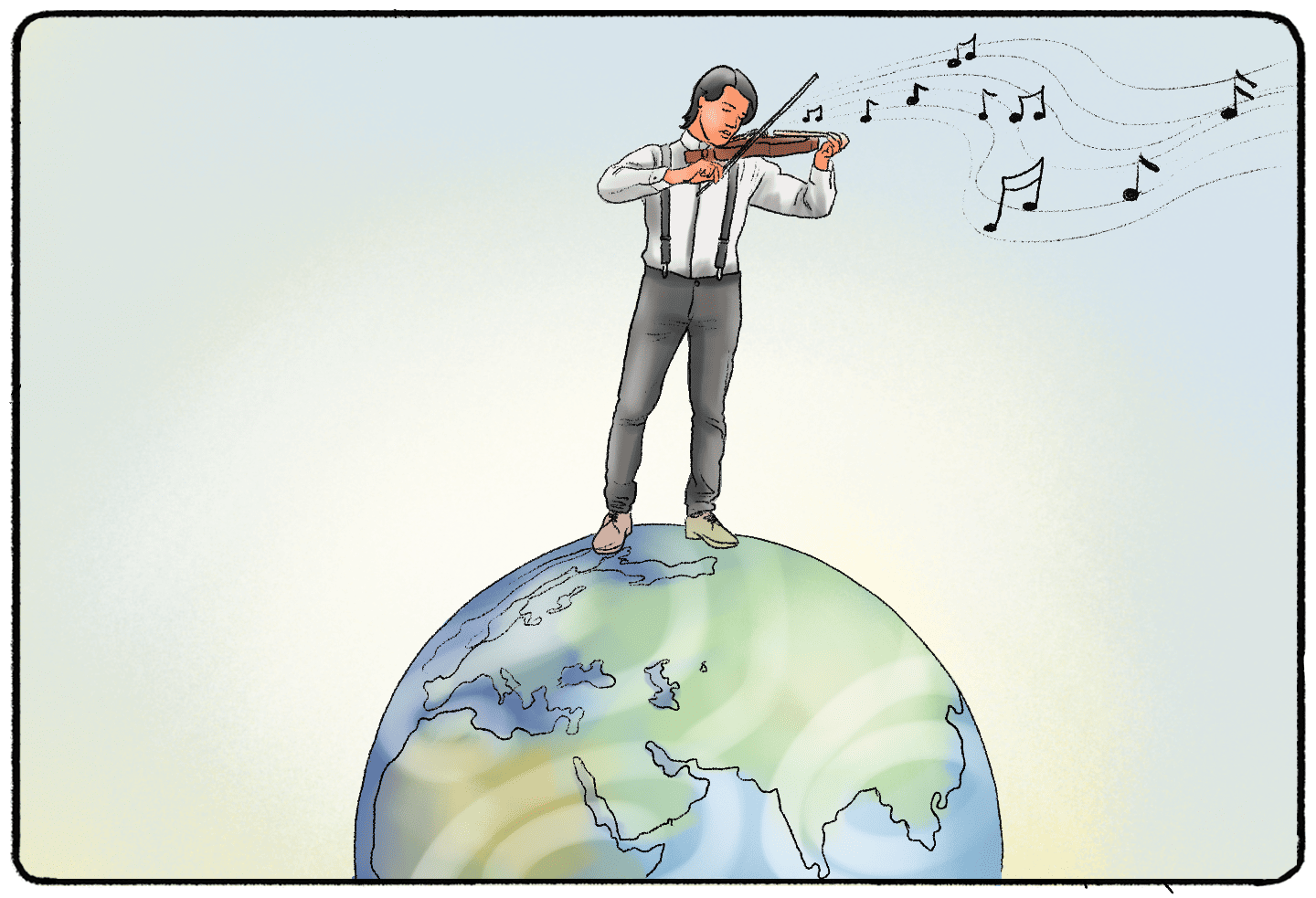
Flow represents those rare moments where our skills perfectly align with the challenge, creating a harmonious dance between the mind and the task. It’s not merely about being productive or efficient; it’s about feeling wholly content and accomplished in that moment. This is a state where we are not only at our most creative and productive but also at our most content.
 how to achieve flow
The sensation of being in flow transcends mere happiness. Here’s a closer look at why flow is so coveted:
How to Achieve Flow?
Achieving flow, then, is more than just about maximizing productivity or creativity. It’s about tapping into a state where our well-being is heightened, where every challenge met brings contentment, and where the journey is as rewarding as the destination. It’s in this state that we truly understand and experience what it means to be both accomplished and content.
Characteristics of individuals with autotelic personalities include a strong sense of curiosity and a persistent drive to explore and master new challenges. Furthermore, they often exhibit a low degree of self-centeredness, suggesting that they are more focused on the activity and less on how it might benefit or reflect upon them.
A defining feature of those with an autotelic personality is that they tend to engage in activities purely for their own sake. This intrinsic motivation means they are not as reliant on external factors or rewards to feel engaged or fulfilled. As a result, when faced with a task, they naturally immerse themselves in it, often requiring less conscious effort to maintain focus and drive. This predisposition aligns well with the conditions required to achieve flow, making it more accessible and frequent for them.
But what about everyone else?
The good news is we are all capable of achieving flow with a bit of exercise. And since the process is so rewarding, the more we practice, the more we seek to replicate the experience. Over time, it becomes easier to reach this frame of mind.
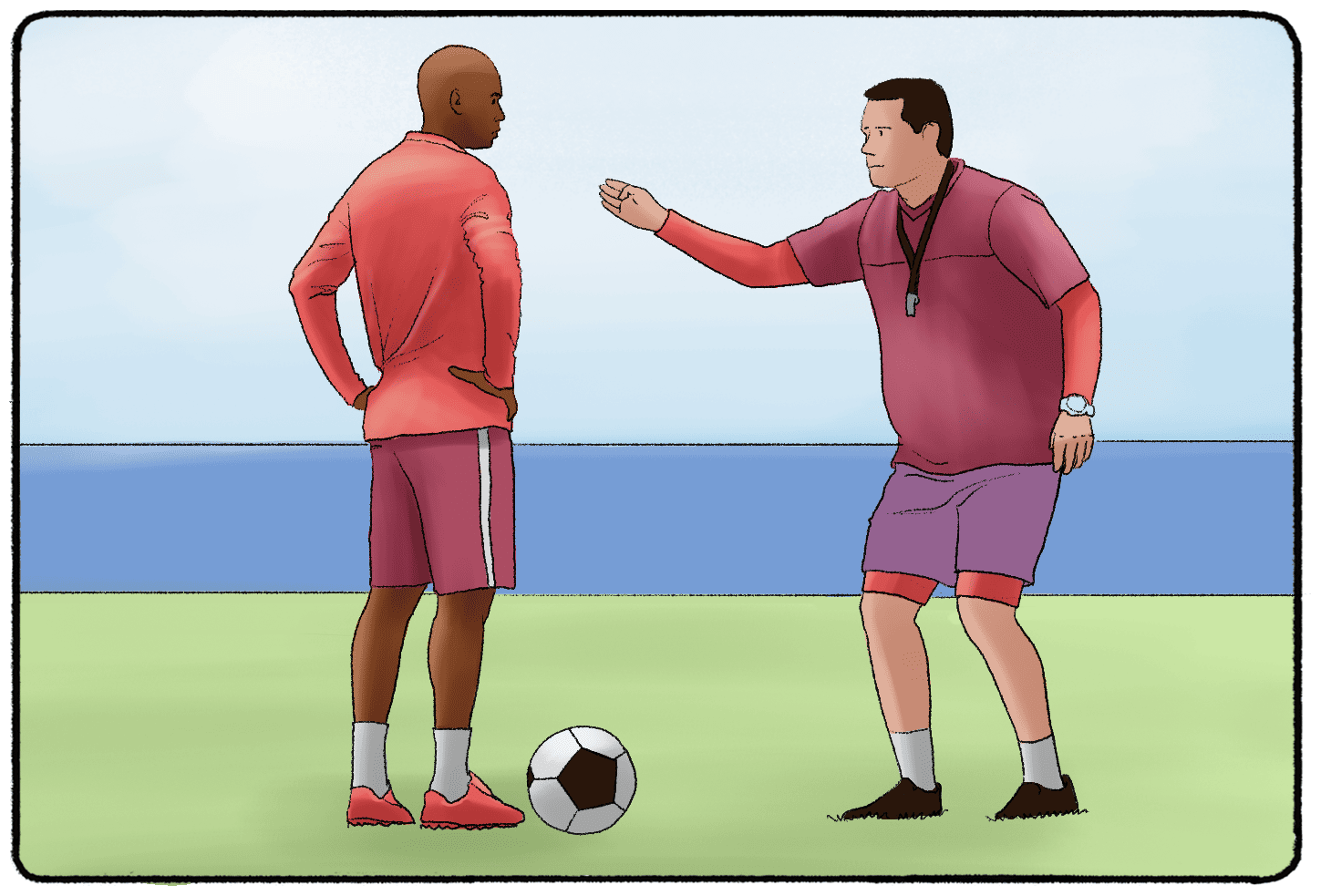
Social flow, also known as group cohesion, is among the factors that can intensify the level of deep engagement. Take a sports team or an orchestra, for example. When athletes and musicians coordinate their pursuits, they become even more engaged in the task than in a solitary flow.
Regardless of the personality and flow type, for this kind of mental state to occur, the activity needs to meet the following criteria:
Have a clear short-term goal
The activity we’re working on must have clear goals and subgoals. When the rules and expectations are clear, we can immediately recognize success and failure and adjust our performance accordingly.
Allow feedback on the progress
Receiving clear feedback on the progress confirms that we are improving. The feedback, either in the form of internal awareness or an observation from others, motivates us to continue doing our tasks.
Offer a balance between challenge and skills
Flow occurs when we are engaged in an activity that we enjoy. But for this experience to be immersive and fulfilling, it is crucial to have the necessary skills and confidence to complete it. The journey through the flow is not a static one; as we grow and refine our skills, it is essential to continually adjust the challenges and complexity of the activity to maintain this state.
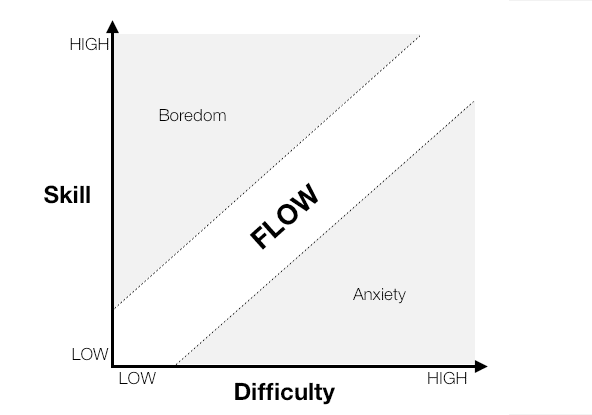
Csíkszentmihályi’s eight-channel flow model offers a nuanced understanding of this dynamic. This model breaks down the relationship between challenge and skill into eight distinct states:
As the model illustrates, our emotional response varies depending on the balance (or imbalance) between the challenge of the activity and our skill level. When the challenge exceeds our skill significantly, as in the “anxiety” state, negative emotions like stress and anxiety can arise. Conversely, when our skill level far surpasses the challenge, as in the “boredom” state, we feel underutilized and unstimulated. The “flow” state, the optimal experience, is achieved when challenge and skill are at their peak. This equilibrium ensures that we are neither overwhelmed nor underwhelmed, allowing us to immerse fully in the activity and reap the intrinsic rewards of the experience.
Achieving flow in everyday life is an essential component of creativity, productivity, and well-being. The flow state is seen as the optimal experience because it provides a high level of gratification. When experiencing a state of creative flow, we are at our happiest.
Practicing the flow frame of mind enables personal development and growth that lead to happiness.
Let’s take a closer look.
Emotion regulation
Experiencing the state of flow can serve as a tool for better emotion regulation. When we engage in flow, we feel success, pride, and accomplishment. We feel efficient and competent in what we are doing. There is no place for doubts about ourselves or the outside world. This sense of autonomy and power helps lower anxiety and raise self-esteem.
People who experience a flow state feel enthusiastic and motivated. They know that they are capable of overcoming challenges and meeting goals. As a result, they have an increased sense of overall life satisfaction.
Learning and skill development
The flow state always implies growth. When we find ourselves in this powerful state, we are gaining mastery of our task. We are working to achieve our goals and get better at the activity. That’s why flow is more likely to occur when our project is slightly challenging, and we have suitable skills. And if we wish to maintain this state, we must look for increasingly greater challenges. Attempting these new, more difficult tasks makes us stretch and improve our skills.
Due to its role in personal development and enhancing performance, inducing flow has a range of practical applications in everything from spirituality, artistic creativity, and sports to business and education.
Related posts:
Reference this article:Practical Psychology. (2020, March).Flow (Optimal Experience in Psychology).Retrieved from https://practicalpie.com/flow-optimal-experience-in-psychology/.Practical Psychology. (2020, March). Flow (Optimal Experience in Psychology). Retrieved from https://practicalpie.com/flow-optimal-experience-in-psychology/.Copy
Reference this article:
Practical Psychology. (2020, March).Flow (Optimal Experience in Psychology).Retrieved from https://practicalpie.com/flow-optimal-experience-in-psychology/.Practical Psychology. (2020, March). Flow (Optimal Experience in Psychology). Retrieved from https://practicalpie.com/flow-optimal-experience-in-psychology/.Copy
Copy
