Humans possess an innate ability to connect ideas in abstract ways, bridging the gap between the known and the unknown. This capability allows us to interpret and understand our complex world through patterns and comparisons. However, as powerful as this skill is, it’s not infallible. Sometimes, our eagerness to find connections leads us astray, causing us to see relationships that don’t exist. These misinterpretations are what we refer to as logical fallacies. One prominent example of such a fallacy is the false analogy.
False analogies involve drawing comparisons between two entities that might appear similar on the surface but,upon closer examination, differ significantly.These deceptive comparisons can cloud our judgment and steer us toward incorrect conclusions. While accurate analogies serve as valuable tools in understanding and explaining concepts, false ones rely on misleading connections that don’t withstand scrutiny.
Despite their inherent flaws, false analogies find frequent use in our daily lives. They often manifest as intuitive mental shortcuts, aiming to relate unfamiliar, intricate concepts to those we already understand. Throughout this article, we will delve deeper into the nuances of false analogies, equipping readers with the knowledge to recognize and sidestep them.
What are False Analogies?Why do we make the False Analogy Fallacy?33 Examples of False AnalogiesDangers of Relying on False AnalogiesHow to Identify False AnalogiesWhen Are Analogies Useful?Frequently Asked Questions (FAQ)Conclusion
What are False Analogies?
Why do we make the False Analogy Fallacy?
33 Examples of False Analogies
Dangers of Relying on False Analogies
How to Identify False Analogies
When Are Analogies Useful?
Frequently Asked Questions (FAQ)
Conclusion
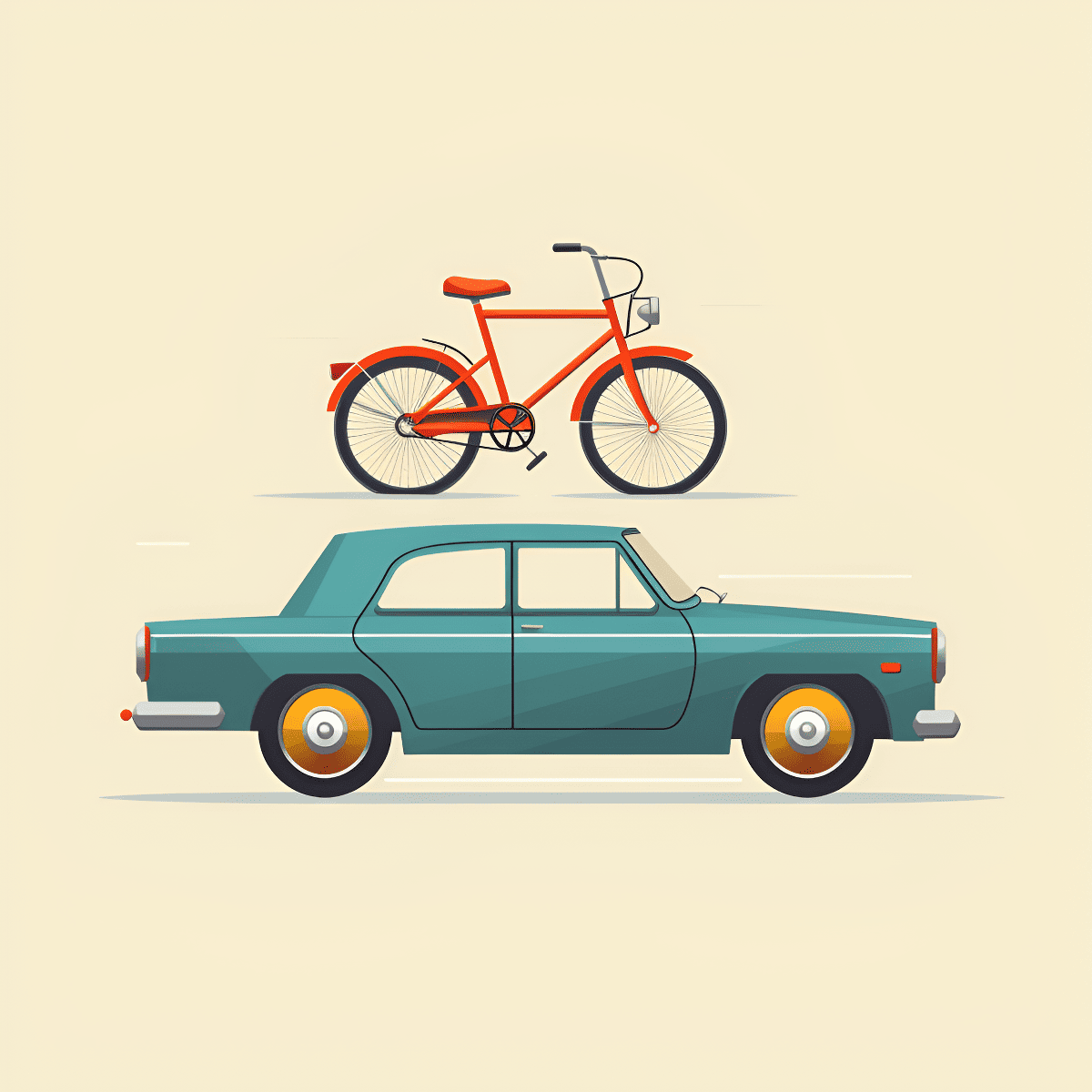
 car and bicycle
Generally speaking, a false analogy involves a person who concludes with two or more analogous claims. To understand false analogies more precisely, let’s break down the terminology.
Ananalogyis a comparison made between two things for explanation or clarification. Analogies share significant similarities and can be used to represent or illustrate each other.
For example, comparing the solar system to an atom is an analogy. The sun represents the nucleus, while the planets represent electrons orbiting it. This analogy works because the solar system and an atom share structural properties.
Analogies are a type ofinductive reasoning. Inductive reasoning is the term we use to describe using past experiences to conclude new things.
Inductive reasoning helps us process information faster and can be a valuable way to learn new things. The problem is, it’s often wrong.
There are many names for the types of inductive reasoning, and analogies are one of them. Any inductive reasoning that is incorrect is called alogical fallacyorfaulty reasoning. It’s also known as aninformal fallacy.
So, we have inductive reasoning that leads us to the false analogy fallacy. We already learned that false analogies are when we compare two things that shouldn’t be compared.
Other terms that describe this same fallacy include false metaphor, bad analogy, faulty comparison, questionable analogy, faulty analogy, and weak analogy.
False analogies pop up everywhere. You’ve probably heard them used in conversations, debates, and advertising slogans.
Any time someone says “X is like Y” to compare one thing with something else that isn’t the same but does share similarities, they’re making a false analogy.
These incorrect comparisons happen so often because the human brain loves metaphors.
Using analogies helps us relate new, complex concepts to more familiar ones. This allows us to process information quickly. Our minds naturally look for connections and patterns.
The problem arises when we rely on oversimplified or superficial similarities. Just because two objects share some minor attributes does not mean they are alike fundamentally. Assuming so is flawed reasoning.
False analogies focus on the existence of surface-level similarities while ignoring important differences.
For example, saying anation’s economyis like a household budget might sound reasonable initially. But this analogy breaks down when you consider the major differences between personal finances and the complex forces that drive an entire country’s economic system.
False analogies can seem convincing, which makes them so dangerous. When crafted carefully, they trigger emotional responses that override our ability to reach reasonable conclusions. Before you know it, you’ve drawn a conclusion based on a misleading argument or metaphor.
Key reasons why our brains default to false analogies:
The Interplay of Confirmation Bias, Gambler’s Fallacy, and False Analogy
Understanding the inner workings of our thought processes can be a fascinating journey. Within this realm, confirmation bias, gambler’s fallacy, and false analogy stand out as notable phenomena. Though each has distinct characteristics, they all intersect in shaping our beliefs, decisions, and interpretations of the world around us.
In essence, these cognitive biases and fallacies often work in tandem. Confirmation bias can be the foundation, leading us to interpret events or information to reinforce our beliefs. Gambler’s fallacy and false analogy, then, can act as mechanisms that further solidify or justify these beliefs, even when they’re not based on sound reasoning. By being aware of how these processes intersect, we can strive to make more informed, rational decisions and avoid the pitfalls of flawed logic.

Imagine you’re trying to compare apples to oranges – literally. While they’re both fruits, they differ in taste, texture, and nutritional benefits. It’s important to spot these false analogies because they can lead to misunderstandings or incorrect conclusions.
Let’s dive into 33 false analogy examples to help you grasp this. Remember, the goal is to understand why these analogies don’t work.
Cars and Bicycles: Saying cars and bicycles are the same because they both have wheels is an oversimplification. It’s like asserting that motorboats and kayaks are identical just because they can both float on water. While they both serve the purpose of transportation, cars are motorized, can achieve faster speeds, and have the capacity to carry more passengers and cargo. Bicycles, on the other hand, are human-powered, promote physical fitness, and have a different set of traffic rules.
Cats and Dogs: Claiming that cats and dogs should be treated identically since they’re both pets is like asserting that birds and hamsters should be housed equally because they’re both popular pets. Cats and dogs have evolved differently and have distinct dietary needs, behavioral patterns, and social structures.
Fish and Monkeys: Believing that a fish can climb a tree because a monkey can is akin to expecting a penguin to fly long distances like an eagle. Every species has evolved with a unique set of skills and abilities tailored to their environment and survival needs.
Tech Gadgets: Suggesting that all tech gadgets are the same since they use electricity is like saying all appliances in a house are identical because they plug into outlets. A toaster serves the specific function of browning bread, while a smartphone can connect you to the internet, make calls, take photos, have music programs, and more.
Snow and Rain: Assuming that snow and rain are identical because they’re both precipitation is like equating fog and clouds just because they’re both made of water vapor. Snow and rain can have vastly different impacts on transportation, agriculture, and local ecosystems.
Marathon and Sprint: Comparing a marathon to a sprint just because both are races is similar to comparing a crossword puzzle to a jigsaw puzzle because they’re both puzzles. Marathons require endurance and long-term energy conservation, while sprints focus on explosive speed over a short distance.
Sunbathing and Tanning Booths: Equating sunbathing with getting a tan in a tanning booth is like comparing natural fruit juice to its artificially flavored counterpart. Natural sunlight provides Vitamin D and has a range of UV radiation, while tanning booths might expose the skin to a more concentrated form of UVA rays.
Song and Lyrics: Thinking that listening to a song is the same as reading its lyrics is like suggesting that viewing a painting is the same as hearing someone describe it. Songs combine lyrics with melody, rhythm, and instrumentation, creating a holistic auditory experience.
Pond and Ocean: Comparing a pond to an ocean because both have water is like equating a sandbox to a desert because both have sand. Oceans cover vast expanses, have deep ecosystems, and influence global weather patterns, while ponds are localized, shallow, and have a limited range of aquatic life.
Apples and Oranges: Asserting that apples and oranges are the same because both fruits are missing the mark. It’s like saying cats and dogs are identical because they’re common pets. While they’re both nutritious and grow on trees, apples have a smoother texture and can be tart or sweet, while oranges are citrusy and have peelable skin. Not to mention they are not the same color!
Knives and Scissors: Stating that knives and scissors serve the same purpose because they both cut things is a superficial observation. It’s similar to saying that pens and typewriters are the same because they produce text. While knives and scissors have sharp edges designed to slice, knives are typically single-bladed and can be used for various tasks, from cooking to woodworking. Scissors, on the other hand, have two pivoted blades and are commonly used for cutting paper or fabric.
Computers and Calculators: Assuming that computers and calculators are identical because they both compute overlooks key differences. It’s like suggesting that radios and televisions are the same because they both broadcast programs. While computers and calculators process data, computers are multifunctional devices capable of internet browsing, graphic design, computer games, and more. Calculators, however, are specialized for mathematical operations.
Stars and Streetlights: Saying that stars and streetlights are the same because they both give off light during the night is an over-generalization. It’s like claiming that rivers and hoses are the same because they produce water. While stars are massive celestial bodies that emit light through nuclear reactions, streetlights are human-made structures that illuminate areas using electricity.
Houses and Tents: Arguing that houses and tents serve the same function because they both provide shelter is missing finer details. It’s akin to saying that jackets and umbrellas are identical because they protect from the rain. While houses are permanent structures made of materials like brick or wood with utilities, tents are temporary, portable shelters mainly used for camping or events.
Lakes and Pools: Suggesting that lakes and pools are the same because people swim in both is a shallow comparison. It’s like asserting that playgrounds and gyms are identical because both are places to exercise. While lakes are natural bodies of water with ecosystems, pools are man-made and often treated with chemicals to keep the water clean.
Brushes and Pencils: Stating that brushes and pencils are alike because they both create art is a narrow viewpoint. It’s similar to saying guitars and pianos sound the same because they both make music. While brushes are used with paint to create broad strokes and blends, pencils are used for drawing, shading, and detailed work.
Shoes and Gloves: Claiming that shoes and gloves are identical because they protect parts of our body is a cursory observation. It’s like suggesting that hats and sunglasses are the same since they both shield from the sun. Shoes are designed to protect our feet and often endure more wear and tear, while gloves cover our hands, keeping them warm or safe from specific tasks.
Watches and Clocks: Assuming that watches and clocks are the same because they tell time is overlooking their distinct features. It’s like saying that notebooks and billboards both convey messages because they display information. Watches are wearable and portable, often tailored to individual style, while clocks can be wall-mounted or placed on surfaces, providing time for everyone in the vicinity.
Mountains and Hills: Saying that mountains and hills are the same because they both rise above the land is an incomplete view. It’s like suggesting that ponds and oceans are identical because they both contain water. While mountains are vast and majestic, often with snow-capped peaks, hills are smaller and gentler in their slopes.
Phones and Radios: Arguing that phones and radios function simultaneously because they transmit sounds is a surface-level comparison. It’s akin to saying that letters and billboards are the same because they convey messages. Phones facilitate direct two-way communication, while radios broadcast signals to multiple listeners simultaneously.
Chairs and Benches: Stating that chairs and benches serve the same purpose because people sit on them is an over-simplification. It’s like claiming that beds and hammocks are identical since they’re both for resting. Chairs typically accommodate one person and can have a variety of designs, while benches are longer and can seat multiple people.
Snow and Sand: Suggesting that snow and sand are identical because they cover the ground and can be shaped is missing the bigger picture. It’s like asserting that wood and metal are the same because they’re both materials we build with. Snow is frozen precipitation, cold to the touch, and melts, while sand is a collection of tiny rocks and mineral particles, often found in deserts and beaches.
Trees and Flowers: Believing that trees and flowers are identical because they grow from the ground and have leaves is a cursory observation. It’s like suggesting that dogs and fish are the same because they’re both animals. Trees are tall, woody plants that can live for many years, while flowers are delicate, often colorful, and have a shorter lifespan.

Frogs and Fish: Asserting that frogs and fish are the same because they both live in water is a shallow view. It’s like claiming that bats and birds are identical because they fly. While frogs are amphibians, living both on land and in water, fish are strictly aquatic creatures with gills to breathe underwater.
Swords and Pens: Saying that swords and pens function identically because they both have a pointed end misses the broader perspective. It’s like suggesting that hammers and bells are the same because they both can be struck. Swords are weapons for combat, while pens are instruments for writing and expression.
Candles and Light Bulbs: Believing that candles and light bulbs serve the same purpose because they give off light doesn’t consider their distinct attributes. It’s like comparing drums and alarms because they both make noise. Candles use flame and wax to produce light, while light bulbs utilize electricity and can have varying brightness levels.
Buses and Elevators: Arguing that buses and elevators are the same because they transport people is a basic comparison. It’s like asserting that escalators and slides are identical because you travel down on both. Buses move people across distances horizontally, while elevators carry people vertically between building floors.
Butterflies and Bees: Suggesting that butterflies and bees are the same because they both fly and visit flowers is a surface-level observation. It’s similar to saying spiders and ants are identical because they have many legs. Butterflies primarily feed on nectar, while bees collect pollen and nectar and play a pivotal role in pollination.
Cakes and Sandwiches: Saying that cakes and sandwiches are alike because they can be eaten in slices is missing deeper distinctions. It’s like claiming that soup and tea are the same because they’re both hot liquids. Cakes are typically sweet, made of layers of batter, and enjoyed as a dessert. In contrast, sandwiches consist of fillings between slices of bread and can be a main meal.
While false analogies may seem harmless, relying on them can have serious consequences:
To catch a faulty analogy, we need to practice andthink critically. Here are some tips to help you:
By staying alert and understanding how wrong comparisons work, we can avoid getting tricked. Always dig deeper and think carefully before believing any comparison.

While false analogies should be avoided, when used carefully, good analogies can serve helpful purposes:
Good comparisons can teach and inspire. But wrong ones can confuse and mislead. Always think and be sure before trusting any comparison!
What are false analogies?
False analogies are incorrect comparisons between two things that seem alike on the surface but are very different in fundamental ways. They rely on weak or exaggerated similarities while ignoring key differences.
Why do we make false analogies?
We often use false analogies as shortcuts to relate complex new ideas to simpler, familiar concepts. They also exploit emotions and biases. Some people intentionally craft false analogies to persuade or mislead.
What’s an example of a false analogy?
Saying sunlight is like a warm blanket because both keep you comfortable. This ignores how sunlight and blankets provide warmth through very different mechanisms.
How are false analogies different from false equivalencies?
False equivalencies say two unequal things are the same. False analogies highlight superficial similarities between things that are fundamentally different overall.
What are the dangers of false analogies?
Relying on false analogies can lead to poor decisions, reinforce stereotypes, spread misinformation, justify questionable policies, and distort science.
How can I identify false analogies?
Look past surface similarities to see if core attributes truly match. Fact check details. Consider the context and emotional triggers. Break down the logic.
Can analogies ever be helpful?
Carefully crafted analogies can help explain complex ideas, spur creativity, inspire empathy, and more. But their limits must be clarified to avoid misapplying them.
How can I avoid false analogies?
Analyze thoroughly instead of accepting reflexively. Seek expert input. Demand evidence of substantive parallels. Watch for counterexamples. Use original analogies sparingly.
False analogies may seem harmless, but these incorrect comparisons twist thinking in sneaky ways. By playing on emotions, biases, and mental shortcuts, false analogies plant misleading ideas that override rational thinking.
Learning to spot weak metaphors takes practice in really questioning if alleged similarities truly hold up. But with effort, we can catch faulty logic and dig into specifics instead of relying on weak surface parallels.
While false analogies should be avoided, thoughtful metaphors can be helpful for understanding, creativity, and empathy when used carefully. We have to clarify their limits and context continually.
Related posts:
Reference this article:Practical Psychology. (2023, October).False Analogy (Definition and 33+ Examples).Retrieved from https://practicalpie.com/false-analogy-examples/.Practical Psychology. (2023, October). False Analogy (Definition and 33+ Examples). Retrieved from https://practicalpie.com/false-analogy-examples/.Copy
Reference this article:
Practical Psychology. (2023, October).False Analogy (Definition and 33+ Examples).Retrieved from https://practicalpie.com/false-analogy-examples/.Practical Psychology. (2023, October). False Analogy (Definition and 33+ Examples). Retrieved from https://practicalpie.com/false-analogy-examples/.Copy
Copy
