Are you introverted or extraverted? This question comes up all the time when discussing personality types. People describe themselves as ENTJs, extroverted introverts, ambiverts - there’s a lot of ways that extraversion appears in memes, personality tests, and personality psychology.
Extraversion, (also spelled extroversion,) notably appears as a trait in two different approaches to personality type: theMyers-Briggs Type Indicatorand the Big Five Personality Theory. We will be focusing on extraversion as it relates to the Big Five Personality Theory.
What is Extraversion?About the Big FiveExamples of ExtraversionAre These Personality Traits Fixed?How to Become More Extroverted
What is Extraversion?
About the Big Five
Examples of Extraversion
Are These Personality Traits Fixed?
How to Become More Extroverted
Extraversion looks at how social and talkative a person is. The way a person gathers energy, appreciates attention, and asserts themselves in social situations determines whether or not they are an extrovert. On the other side of the spectrum is an introvert.
Let’s take a look at this specific theory, how extraversion fits into it, and whether or not you can become “more” extraverted.

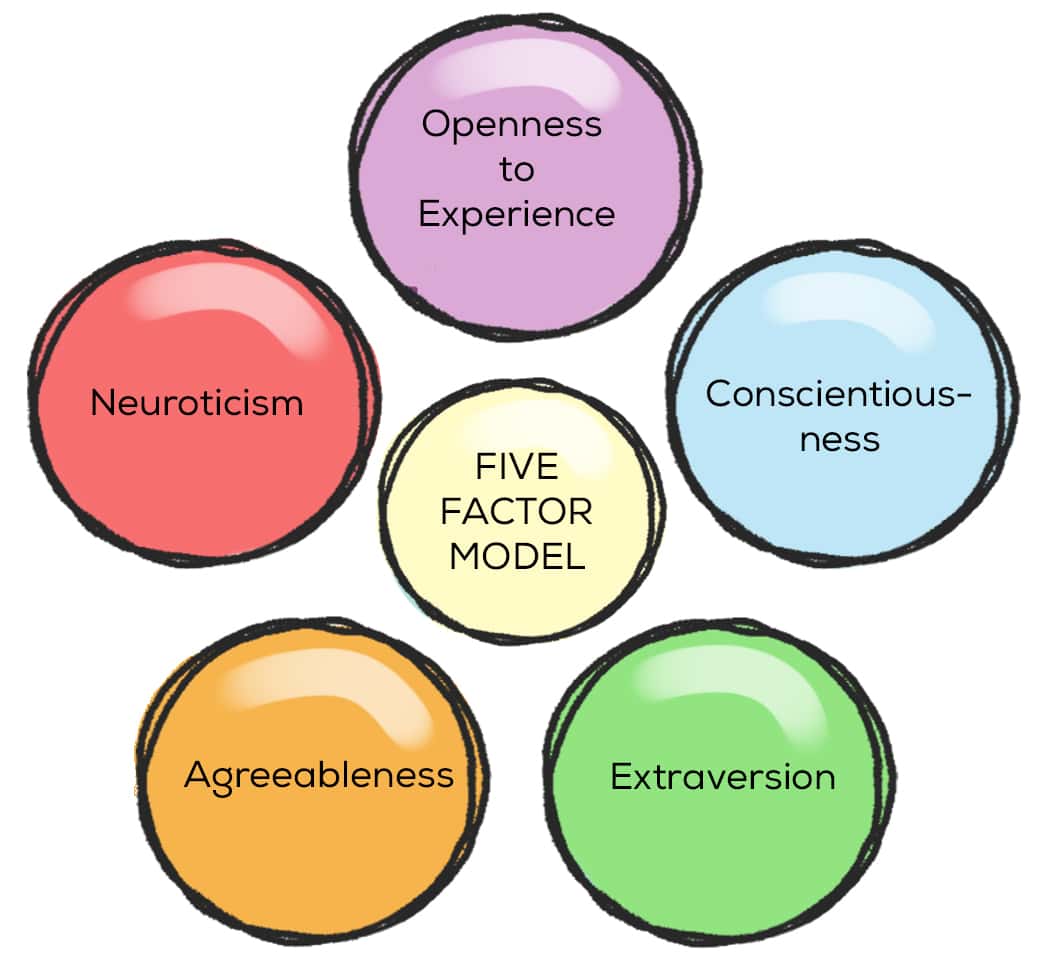
These traits exist on a spectrum between two extremes. You may someone who is incredibly neurotic and someone who is the exact opposite. They still have a personality, but just exist on different sides of said spectrum.
Personality psychologistsdescribe someone as having a “high level” of each trait or a “low level” of each trait. Based on where the person sits on that spectrum, they are more likely to display certain behaviors or approach the world in different ways.
High Extraversion
In group settings, people with high extraversion like the attention to be on them. They don’t mind taking charge and leading the way. They enjoy putting on events, being the person speaking for a group project, or facilitating conversations in a group chat. Tour guides, hosts, and salespeople usually display high levels of extraversion.
People with high extraversion are also likely described as cheerful, enthusiastic, or excited about life. These people seek out social gatherings and are the most eager person to participate. If you have a friend who is always looking for a new festival to attend or putting together weekends at the beach, they are likely the most extroverted person in your friend group.
One last common behavior among people with high extraversion is that they don’t always think before they speak. They are so talkative that they might talk just for the sake of talking! There is so much that they want to say that they don’t always have time to choose their words too carefully.
Low Extraversion
People with low extraversion aren’t very talkative. Small talk isn’t fun for them, and they don’t always know what to say when they’re in social situations. They’d rather wait for someone else to lead the group or lead the conversation. When attention is on them, they begin to feel uncomfortable or even anxious.
This means that unlike a person with high extraversion, introverts are more likely to think before they speak. They plan out their words carefully and don’t just say the first thing that comes to mind.
You might already call yourself an extravert or an introvert. If you’re not sure, take a look at the following statements and see if you agree:
If you agree with most of these, then you probably have a high level of extraversion.
Remember that this is a spectrum and there is a lot of room for variation. A person may consider themselves an extrovert because they feel energized around a large group of people, but they may not be the most talkative person in the room or prefer to surround themselves with a large group of people that they already know. A person with low extraversion may still speak without thinking. Many people identify themselves as an “ambivert,” or someone who has a mix of qualities that we associate with high and low extraversion.
Maybe you do want to become more of an extrovert. You have friends that love big social gatherings and you want to get as much out of these gatherings as other people. But are you doomed to be an introvert? Are you doomed to need to be around people all the time, not able to sit still at home?
The answer isn’t exactly yes and it isn’t exactly no. Psychologists have debated for centuries about the role that genetics and the environment (also known as nature and nurture) play in our personalities, behaviors, and decisions. Studies have given us a glimpse into the “right” answer, but it appears that the “right” answer is that a combination of genetics and external factors mold our personality.
Is Extraversion Inherited?
Trauma also influences extraversion. A person who lost their parents in a crowd at a music festival as a young child is less likely to enjoy big crowds than a person who never went through that type of trauma. People who have generally had positive experiences leading groups or meeting strangers may lean toward extraversion. The answer isn’t cut and dry.
If you have experienced any type of trauma, you may find yourself more introverted because of it. Reddit user Alpha9302 wrote,“Healing from trauma makes me more extraverted then I was before I started healing. I always felt I was a mix of introversion and extraversion but now I actually think that my introverted side was actually a trauma response and not my authentic self. I feel much happier being around lots of people.“This user wasn’t alone! If you are interested in increasing extraversion, you may want to assess the trauma you have been through and reach out to a professional.
If you are looking to become more comfortable around strangers or large groups, it may be worth continuing this self-study into your personality and the experiences that have shaped you. The discomfort you may feel at parties or as the center of attention may not just be a preference - it could be a form of social or generalized anxiety. It may also just be a preference that you may need to explore.
Assess how you feel when thinking about large groups. Are you exhausted or anxious? Not excited or very uncomfortable? The answer may lead you to try new things one step at a time or reaching out to a mental health professional for a deeper look into what experiences may have shaped your feelings.
Related posts:Beck’s Depression Inventory (BDI Test)The Psychology of Long Distance RelationshipsOperant Conditioning (Examples + Research)Variable Interval Reinforcement Schedule (Examples)Concrete Operational Stage (3rd Cognitive Development)
Related posts:
Reference this article:Practical Psychology. (2021, April).Extraversion (Meaning + Examples).Retrieved from https://practicalpie.com/extraversion/.Practical Psychology. (2021, April). Extraversion (Meaning + Examples). Retrieved from https://practicalpie.com/extraversion/.Copy
Reference this article:
Practical Psychology. (2021, April).Extraversion (Meaning + Examples).Retrieved from https://practicalpie.com/extraversion/.Practical Psychology. (2021, April). Extraversion (Meaning + Examples). Retrieved from https://practicalpie.com/extraversion/.Copy
Copy
