“Go to your room and think about what you’ve done!”
You’ve heard parents say this to their kids before. The child has done something bad, and the parents want to teach them a lesson.
In reality, the child will probably go to their room and pout. But if they were to reflect on their experience, they would probably think about the connection between their behavior and the consequences. When they doA,Bhappens. If they were to doC,Bprobably wouldn’t happen.
Whether you are a child who has been scolded for disobeying their parents or a person learning a new skill, this reflection process is vital toexperiential learning.In this video, I will explain experiential learning, the processes in which we use experiential learning, and how this helps us grow and develop throughout our lives.
What is Experiential Learning?David Kolb’s Learning ModelExperiential Learning ExamplesRetention of Learning PyramidRelated posts:
What is Experiential Learning?
David Kolb’s Learning Model
Experiential Learning Examples
Retention of Learning Pyramid
Related posts:
It’s pretty easy to guess the definition of experiential learning. It’s learning through experience. But to understand how this happens, we must understand how reflection plays a role in this process.
We are meaning-making creatures. When something happens to us, particularly something negative, our brain wants to make sense of it. Yes, we got an F on a test - but why? Our invention didn’t work - but why?
After we experience something, we can learn from that experience through reflection. Sometimes, this reflection is done consciously. We ask ourselves, “What actions led to me missing the basket?” or “What contributed to my success in budgeting this year?” However, this reflection does not have to be conscious or purposeful for experiential learning to happen.
David Kolbis renowned for his model of experiential learning. According to Kolb, experiential learning involves four steps. Each step can be divided into two processes individuals use to grasp and transform their experiences.
 the experiential learning model
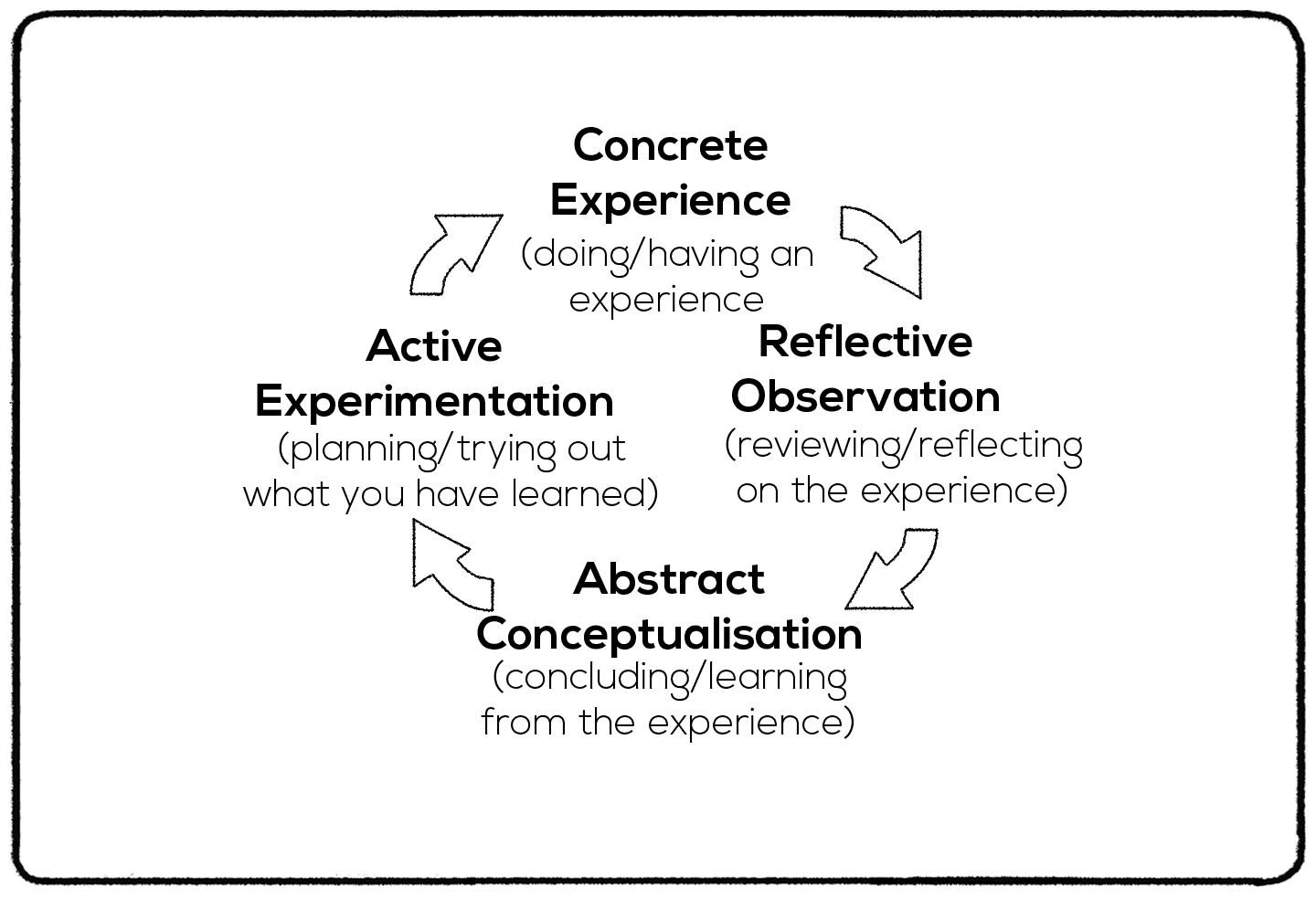
Beginning with the process of grasping an experience, individuals can rely on the following:
For those familiar with theMyers-Briggs Type Indicator(MBTI), these processes resonate with the third letter of the MBTI types: ‘F’ for Feeling and ‘T’ for Thinking. Specifically, Feeling parallels Concrete Experience, where individuals absorb information based on emotions and direct experiences. On the other hand, Thinking mirrors Abstract Conceptualization, where individuals lean more toward logical analysis and systematic planning. Numerous studies have shown consistency in these MBTI categorizations, further strengthening the analogy.
Once an experience is grasped, individuals then transform it through:
Each MBTI type has a descriptive title, like ENTJs being termed “The Commanders” or INFPs as “The Empath.” Similarly, Kolb provides titles based on individuals' predominant learning styles:
The intersection of MBTI and Kolb’s model suggests that our personality traits might influence our preferred learning styles, offering educators and learners valuable insights into personalized education.
Of course, this is not an end-all, be-all theory to how people learn. Kolb’s theory of experiential learning does have limitations. It doesn’t address how group work and collaboration affect reflection, nor does it address ways that we learn without reflection.
Experiential learning does happen in the classroom, although not as a traditional lecture. Our experience lies in how we absorb, process, and study information. How do your experiences studying affect your grades? How do your attention and class participation affect how you remember the information later?
Experiential learning is more likely to happen as we build skills. Learning to pitch a fastball requires experiential learning. Interacting appropriately in a business meeting requires experiential learning. Experiential learning is crucial to developing (and building) everyday skills, whether you are actively experimenting or watching others in action.
Music is an excellent example of experiential learning. Did you know that playing an instrument uses more of your brain than any other activity? You are seeing the notes on the page, playing those notes with your hands and feet, and you are experiential learning in real-time. As soon as you hear a note that is out of tune, your brain makes meaning of the experience, and you adjust your breath, the instrument, or whatever is causing the note to sound sour.
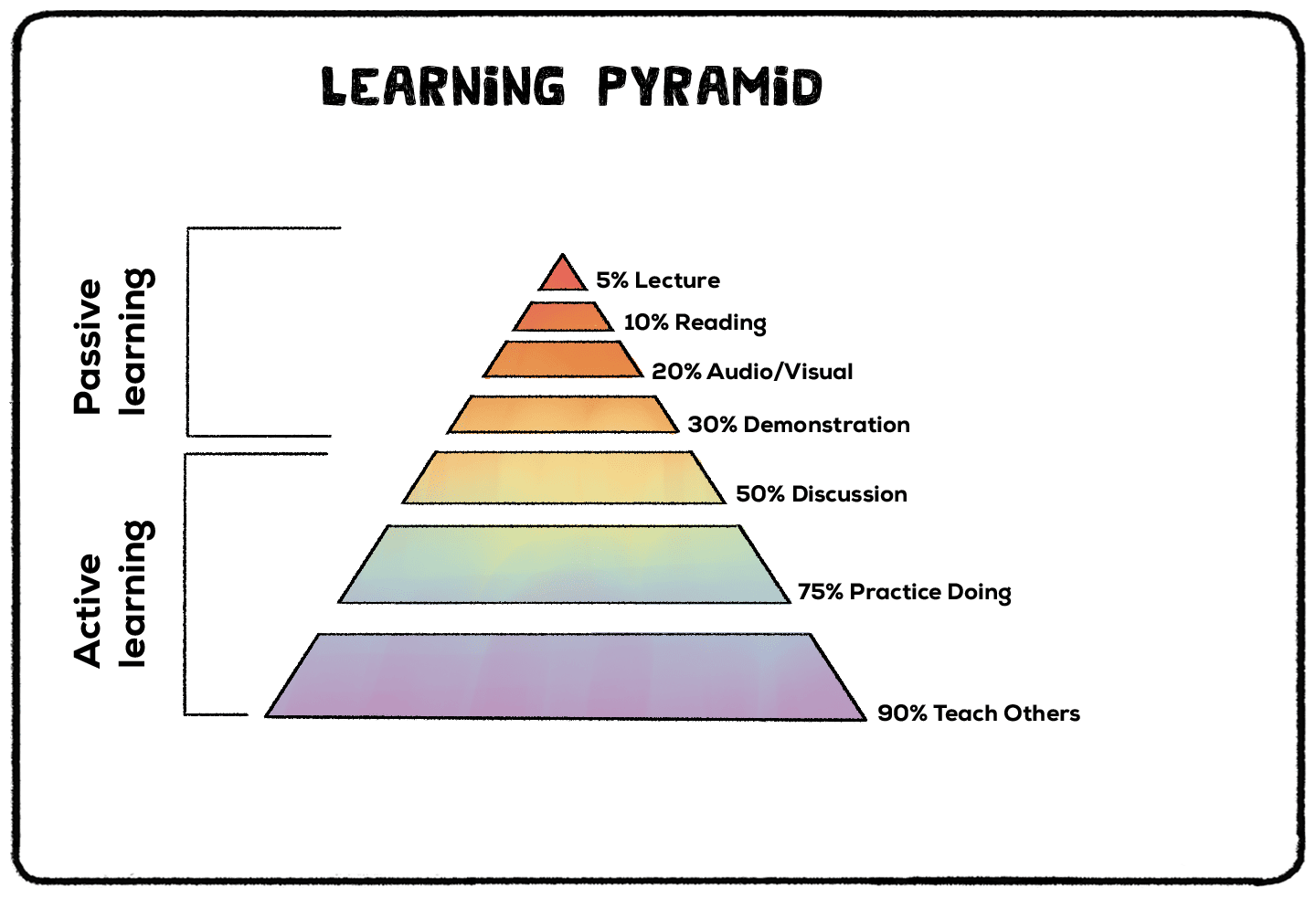
Another form of experiential learning is teaching others. Talk about a hands-on experience with the material. Teaching others a skill or information is arguably one of the best ways to learn and retain the material.
This idea goes back decades to when David Kolb was still a child. In 1946, educator Edgar Dale created a “Cone of Experience.” The cone displays various educational methods, from concrete to abstract experiences. At the top of the cone are “verbal symbols,” and at the bottom are “direct, purposeful experiences.”
At the bottom of the pyramid is teaching others. When we teach others, we engage in experiential learning that applies not only toourexperience but also to the experience of others. We have to transform our experience to transform the student’s experience.
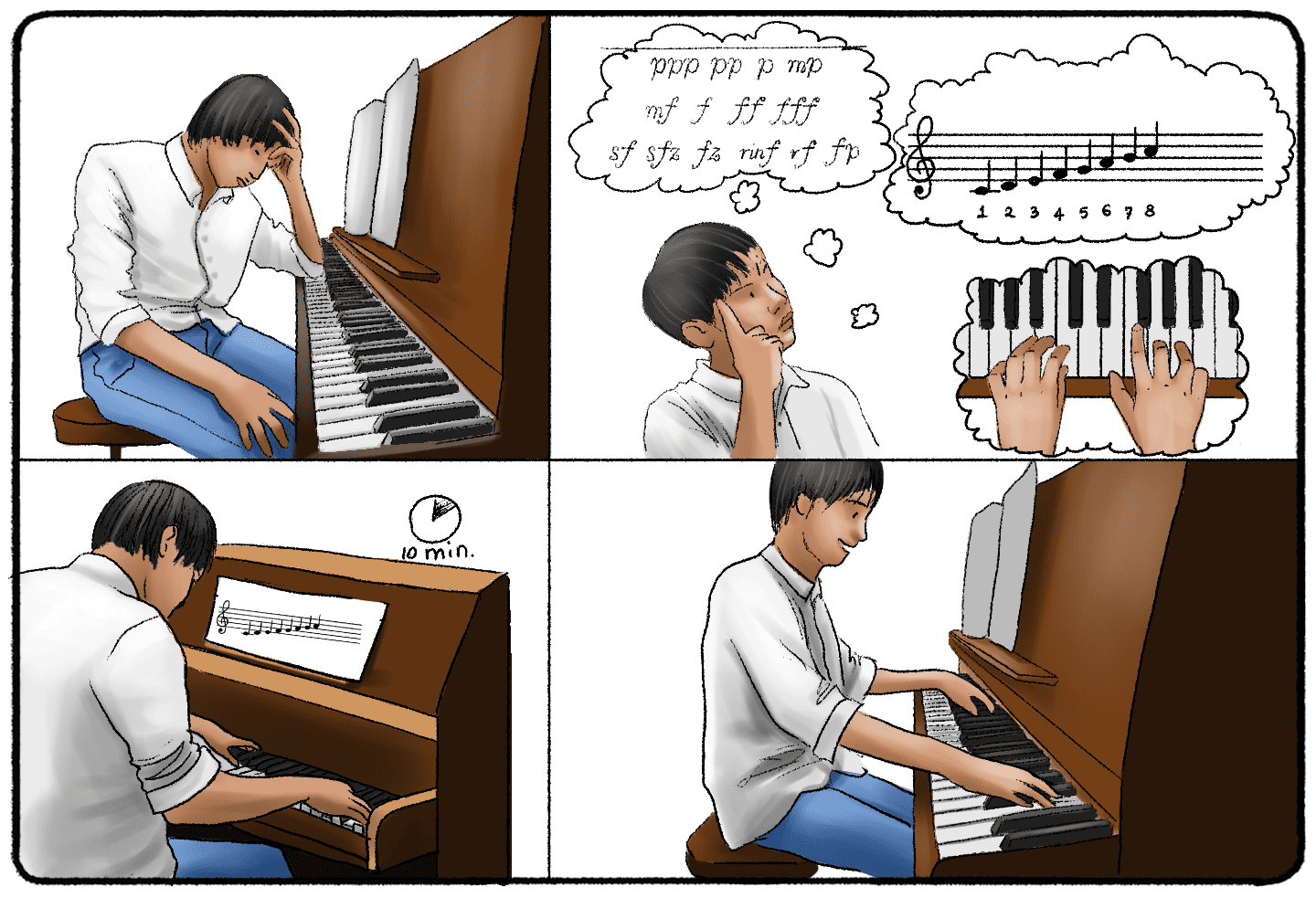
The more consciously you grasp and transform your experience, the more you learn. If you hope to build on your skills or learn something new, it’s time to get out there and do it!
Related posts:David Kolb (Psychologist Biography)The Psychology of Long Distance RelationshipsBeck’s Depression Inventory (BDI Test)Operant Conditioning (Examples + Research)40+ Famous Psychologists (Images + Biographies)
Reference this article:Practical Psychology. (2019, October).Experiential Learning (Definition + Examples).Retrieved from https://practicalpie.com/experiential-learning-definition-examples/.Practical Psychology. (2019, October). Experiential Learning (Definition + Examples). Retrieved from https://practicalpie.com/experiential-learning-definition-examples/.Copy
Reference this article:
Practical Psychology. (2019, October).Experiential Learning (Definition + Examples).Retrieved from https://practicalpie.com/experiential-learning-definition-examples/.Practical Psychology. (2019, October). Experiential Learning (Definition + Examples). Retrieved from https://practicalpie.com/experiential-learning-definition-examples/.Copy
Copy
