Who do you go to for advice? A parent? Your best friend? A therapist? Not everyone is great at giving advice. It really takes a certain type of personality to be able to listen to another person’s struggles and give thoughtful, ethical advice.
Have you ever met someone and just knew they would give great advice? You don’t have to know them that well - one conversation is all you need to know that this person has a good sense of judgment and can share their thoughts kindly and carefully with someone who needs advice. I can bet that this person was an ESFJ.
Not sure if you’re an ESFJ? Learn more about theMyers Briggs Testto find out!
What Does ESFJ Stand For?Functions of ESFJReal-Life Examples of Famous ESFJsStrengths and Weaknesses of ESFJsWorking and Living with ESFJsBasic Stats About ESFJsAssertive vs. Turbulent ESFJs
What Does ESFJ Stand For?
Functions of ESFJ
Real-Life Examples of Famous ESFJs
Strengths and Weaknesses of ESFJs
Working and Living with ESFJs
Basic Stats About ESFJs
Assertive vs. Turbulent ESFJs
ESFJ stands for extraversion, sensing, feeling, and judgment. In the early 20th century, Katharine Briggs and Isabel Briggs Myers created the 16 personality types, based on the work of Carl Jung. These personality types describe how people take in information and make decisions about the world around them.

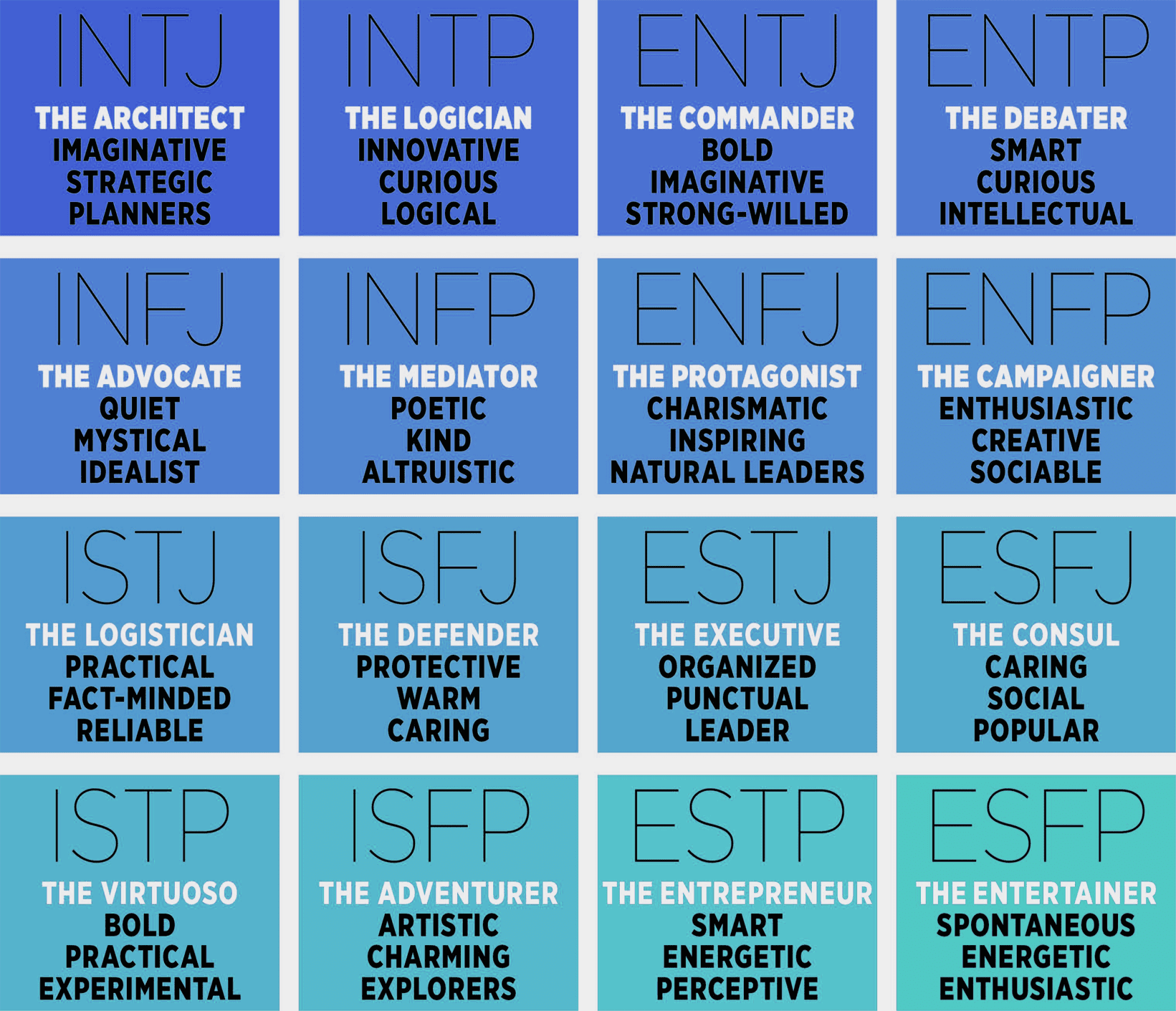
All of these types also have a name: ESFJ’s name is “The Consul.” And if you’re an ESFJ, even if you don’t see yourself as a great counselor, I bet your strength is giving other people advice!
Extrovert
Sensing
S is for sensing (as opposed to intuition.) This is also identified as “observant.” Rather than relying on intuition, ESFJs use real-time facts and observations to interpret what is happening around them. They look for the most obvious solutions and use straightforward, logical methods of thinking to help them get there. They don’t get caught up in someone else’s emotions when they are hearing their stories, although they do empathize with people around them.
Feeling
F is for feeling (as opposed to thinking.) Of course, people with both “feeling” and “thinking” in their personality type can do the other. ESFJs can really tap into someone else’s emotions. They just bring in their senses, rather than intuition, when helping to guide someone to the right decision. Similarly, they will ask others for advice to consider all sides of a story. This often means ESFJs can feel the weight of the world.
Judgment
Finally, J is for judgment (as opposed to perception.) People with a J in their personality type prefer structure. They take control of the structure of their day and make judgments about how tasks are approached. Instead of letting these decisions come to them, they want to be in control over their feelings and how they come to conclusions. They are a great help to friends and family members who have a P in their personality types. Their tendency to make judgment calls also helps wishy-washy people who need advice on what to do.
No wonder an ESFJ is considered “The Consul!” They have the perfect blend of traits and talents to make them the person to make an empathetic, but firm judgment call. Go to your ESFJ friends for advice! If you are an ESFJ, don’t be afraid of sharing your opinions and perspective with others.
ESFJs perform four different functions in order to help their friends and family make decisions.
The auxiliary function of ESFJ types is Introverted Sensing (Si.) ESFJs use their introverted sensing to gather details and information that is available to them in the present moment. When using their dominant function, their Si will remind them of this information to give them a better sense of reasoning.
Third is the tertiary function of ESFJ types: Extraverted Intuition (Ne.) This function helps ESFJs explore other possibilities in unfamiliar situations rather than relying solely on their gut instinct. Because ESFJs are very quick to judge, this function helps to remind them that there can be more to the picture and stop them from isolating people too quickly.
Finally, the inferior function of ESFJ types is Introverted Thinking (Ti.) ESFJs feel more in control when organized, but introverted thinking is their weakest function and can cause conflict in certain situations. While this function helps them process and organize information, it isn’t strong enough to analyze complex or abstract theories, such as complicated math equations.
Who would you rather go to for advice: Terry Bradshaw or J-Lo? What about Elton John? These are some of the world’s most famous ESFJs. You’ll notice that some of the world’s best interviewers are on this list. Check out some of your favorite “consuls:”
Yes, you can be a comedian, ice skater, or even a prince using your talents as an ESFJ! But these aren’t the only careers for The Consul. The most obvious career path is in counseling. ESFJs also make great healthcare workers, teachers, and wedding planners! In addition to “The Consul,” ESFJs are also known as “The Provider.” Any job where an ESFJ can elevate others is a job that an ESFJ can shine in!
Maybe you’re not an ESFJ, but your partner or classmate is! Working to an ESFJ’s strengths is the best way to cultivate a strong, productive relationship.
Working With an ESFJ
Working with others isn’t easy. Conflicts are bound to arise, especially if you have a lot of strong personalities together. ESFJs aren’t the people who will start the fight, but they are the ones to settle it. Don’t be surprised if the group lets the ESFJ has the final say. They aren’t likely to take sides, and most people in the group will trust them the most to be objective and kind.
As long as an ESFJ feels that they areinvitedto share their opinion, they will give it and settle the conflict. But an ESFJ is hyper-aware of the relationships and the perceptions of everyone in the office, the friend group, or wherever they are! Any sense that their decision will make waves and they will hold back the “counsel” that they are so renowned for.
Being Friends with an ESFJ
In their personal relationships, ESFJs can be very warm and comforting people. People love them! They find joy in providing services to those they care for, which makes them very nurturing in relationships. However, if there is a conflict, they will like to be in charge or attempt to manipulate the situation. They are used to this role and have a hard time letting go of it when other people want to step up and be the provider.
ESFJs value their relationships and expect others to as well. If their friends don’t show their “loyalty” to them, it may shake the foundation of their friendship due to the ESFJ’s desire to be liked.
ESFJ
For ESFJs, romantic relationships provide a feeling of warmth and security that other relationships cannot. ESFJs are used to providing warmth and support in their platonic and professional relationships. Their romantic relationships give them a space to ask for advice when they need it and receive support.
ESFJs can be very goal-oriented in romantic relationships, typically looking for a lifelong partner rather than something more casual. They expect their romantic relationships to meet standards for social validation, which is very important to them.
What does this mean for other Myers Briggs types?ESFJs are very compatible withISFP, or “The Adventurer.” An ISFP can support an ESFJ and provide a steady rock for them to fall back on if the ESFJ finds themselves stressed or needing to break out of their routine. Also, ESFJs are very compatible withISTPs.
Compatibility and Romantic Relationships
ESFJs are very compatible withISFP, or “The Adventurer.” An ISFP can support an ESFJ and provide a steady rock for them to fall back on if the ESFJ finds themselves stressed or needing to break out of their routine. ESFJs are also very compatible withISTPs.
Want to learn more about ESFJs, either as an ESFJ or another personality type? TheESFJ subreddithas tons of posts, polls, and discussions about what it’s like to be The Consul.
ESFJs make up about 12% of the general population. They are way more likely to be women - 17% of women are ESFJs! Meanwhile, 8% of men fit this personality type.
You’ve learned a lot about ESFJs, but guess what? There are actually two types of ESFJs. The 16 personality types have evolved over time. Recently, another set of traits was added to the mix. ESFJs either fall into the category of ESFJ-A or ESFJ-T. Here’s the difference.
Assertive ESFJs (ESFJ-A) are self-disciplined and have a more positive reaction to conflict. If they encounter regrets, they use them as motivation. And if they feel negative emotions, they want to move past them as quickly as possible.
Related posts:Beck’s Depression Inventory (BDI Test)The Psychology of Long Distance RelationshipsOperant Conditioning (Examples + Research)Variable Interval Reinforcement Schedule (Examples)Concrete Operational Stage (3rd Cognitive Development)
Related posts:
Reference this article:Practical Psychology. (2021, April).ESFJ: Consul (Description + Functions + Examples).Retrieved from https://practicalpie.com/esfj/.Practical Psychology. (2021, April). ESFJ: Consul (Description + Functions + Examples). Retrieved from https://practicalpie.com/esfj/.Copy
Reference this article:
Practical Psychology. (2021, April).ESFJ: Consul (Description + Functions + Examples).Retrieved from https://practicalpie.com/esfj/.Practical Psychology. (2021, April). ESFJ: Consul (Description + Functions + Examples). Retrieved from https://practicalpie.com/esfj/.Copy
Copy
