When we relive episodic memories, we are the main character. We can place ourselves in our memories as if we were the narrator and the audience was watching from our perspective.
What Are Episodic Memories?What Type of Memory is Episodic Memory?Where Are Episodic Memories Stored?
What Are Episodic Memories?
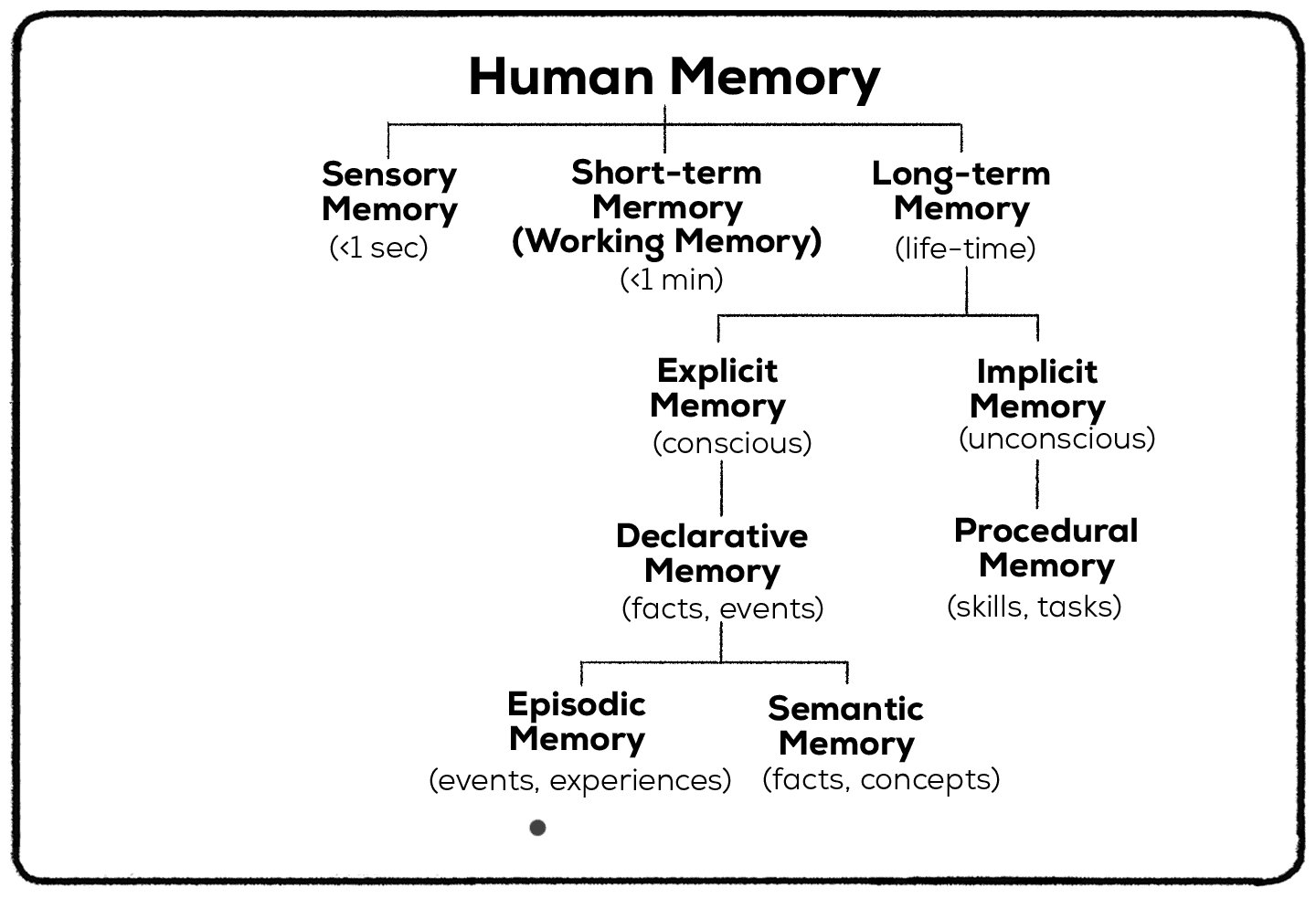
What Type of Memory is Episodic Memory?
Where Are Episodic Memories Stored?
Episodic memory falls under the larger umbrella of declarative, or explicit memories. Explicit memories are memories that contain factual information. The memory that 2+2=4, for example, is an example of explicit memory. The name of your dog or the birthdate of your grandfather are both explicit memories.
Implicit memories, on the other hand, are memories of how to perform certain tasks. The knowledge of how to ride a bike or drive a car are both types of implicit memories. The name of your car, or the last place you drove your car, are both explicit memories.
Other Types of Explicit Memories
Also under the umbrella of explicit memories is semantic memories. These provide context and information that helps us understand what is happening in each “episode.” So the name of your car is semantic memory, while the memory of driving it to the grocery store is an episodic memory.
Why is this important? If psychologists can look at the ways we store and recall different categories of memories, they can better understand how memory works. Psychologists still have a lot of questions regarding memory. The more information we can use to organize and observe memories, the better!
Examples of Episodic Memory
Here’s an example of all the episodic memories you might have surrounding your dog.
If you find yourself replaying these events in your head like a movie, you are recalling episodic memories.
 a woman thinking about a puppy
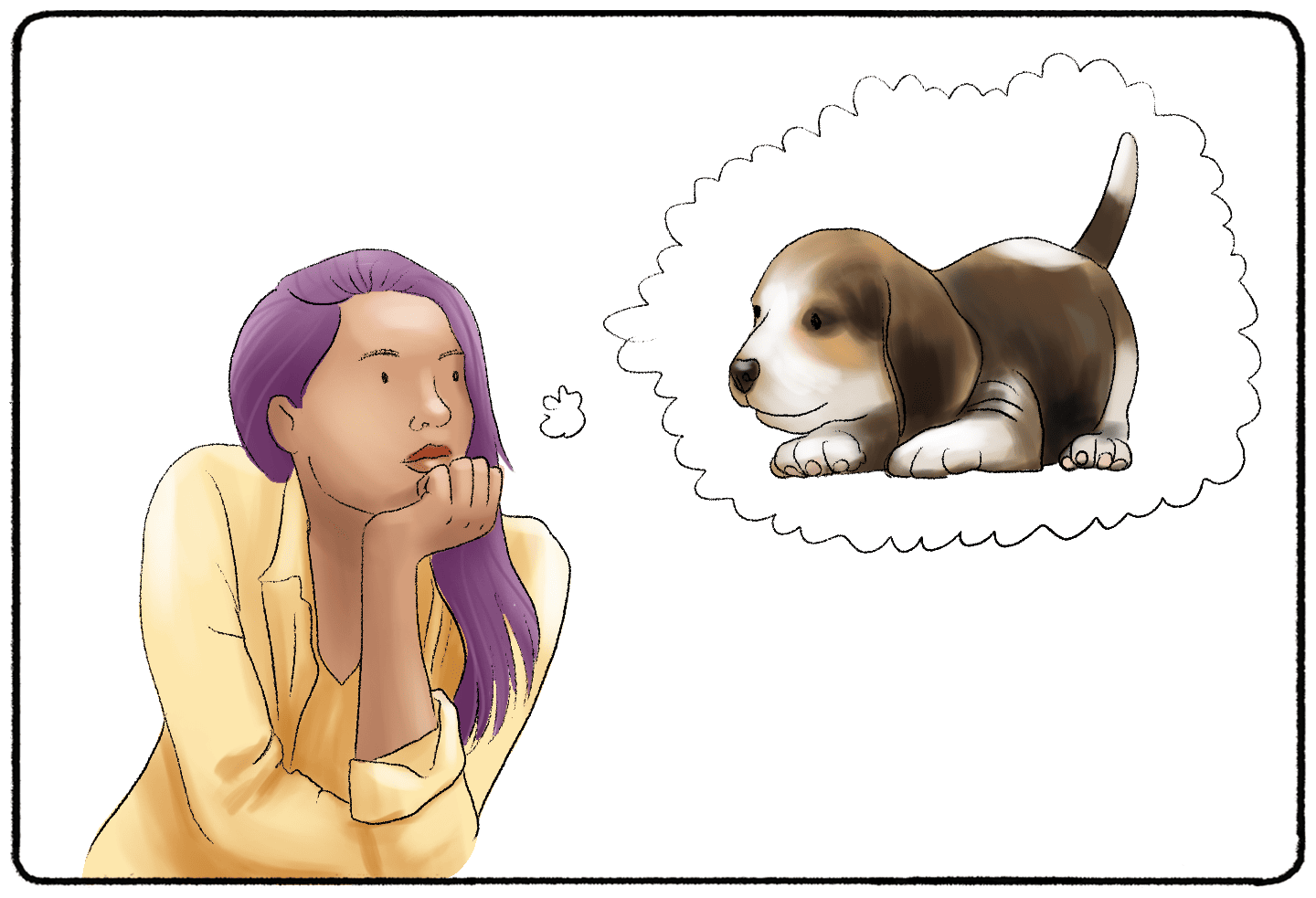
All of these events are ones that you personally experienced in the past. You can place where you were, what you saw in front of you, the emotions you felt when you played fetch with (or couldn’t find) your dog, etc. As those scenes play out in your head, you are recalling episodic memories.
Understanding your own episodic memories can be fascinating and insightful. How well do you remember the details of your life’s episodes? Are your memories vivid and accurate? To explore this further, we’ve developed a free memory test.This interactive testwill help you gauge the strength and clarity of your episodic memories. Give it a try and see how your episodic memory stacks up.
Episodic memories go through many parts of the brain before they end up in long-term memory storage. Sensory memory about experiences is always being collected. The eyes, ears, skin, nose, and mouth are constantly feeding information to the brain.
From there, short-term memories are stored in the hippocampus. Experts believe that the hippocampus works as a “shipping center.” Sensory informationandemotional memory are packaged together in a way that could form episodic memories as we know them. When you recall the “episodes” of your life, you likely remember how you felt to live them. You remember the relief of finding your dog after he had been lost for many days, or the sadness of realizing your partner was breaking up with you. The hippocampus plays a big role in recognizing, storing, and recalling our emotions.
However, the hippocampus is just a place for “shipping” short-term memories out to other areas of the brain. Experts believe episodic memories are shipped out to theneocortex.
Nine Properties of Episodic Memory
The man behind the term episodic memory is Canadian psychologist Endel Tulving. Tulving has been researching episodic memory for quite some time. Hedescribes it, quite simply, as “mental time travel." He also has this to say about episodic memory:
“Episodic memory is a recently evolved, late-developing, and early-deteriorating past-oriented memory system, more vulnerable than other memory systems to neuronal dysfunction, and probably unique to humans.”
Since Tulving first started discussing episodic memory in the 1970s, researchers have created nine different “properties” of these memories:
Sense of Self, Sense of Time, Autonoetic Consciousness
Episodic memory is similar to time travel. And like the ability to time travel, the ability to recall and store episodic memories requires certain skills.
In order to “mentally time travel,” Tulving said that a person needs to have:
Autonoetic awareness is the ability to see ourselves as we were in the past, the present, the future, and in imaginary scenarios. Think about you as a third-grader. Think about you now. You’re still you in both cases, but you know that you had different thoughts, maybe patterns of behavior, and different experiences. Knowing that you are still the same person you were in third grade, just with different abilities and memories, means that you have autonoetic consciousness.
Do Animals Experience Episodic Memory?
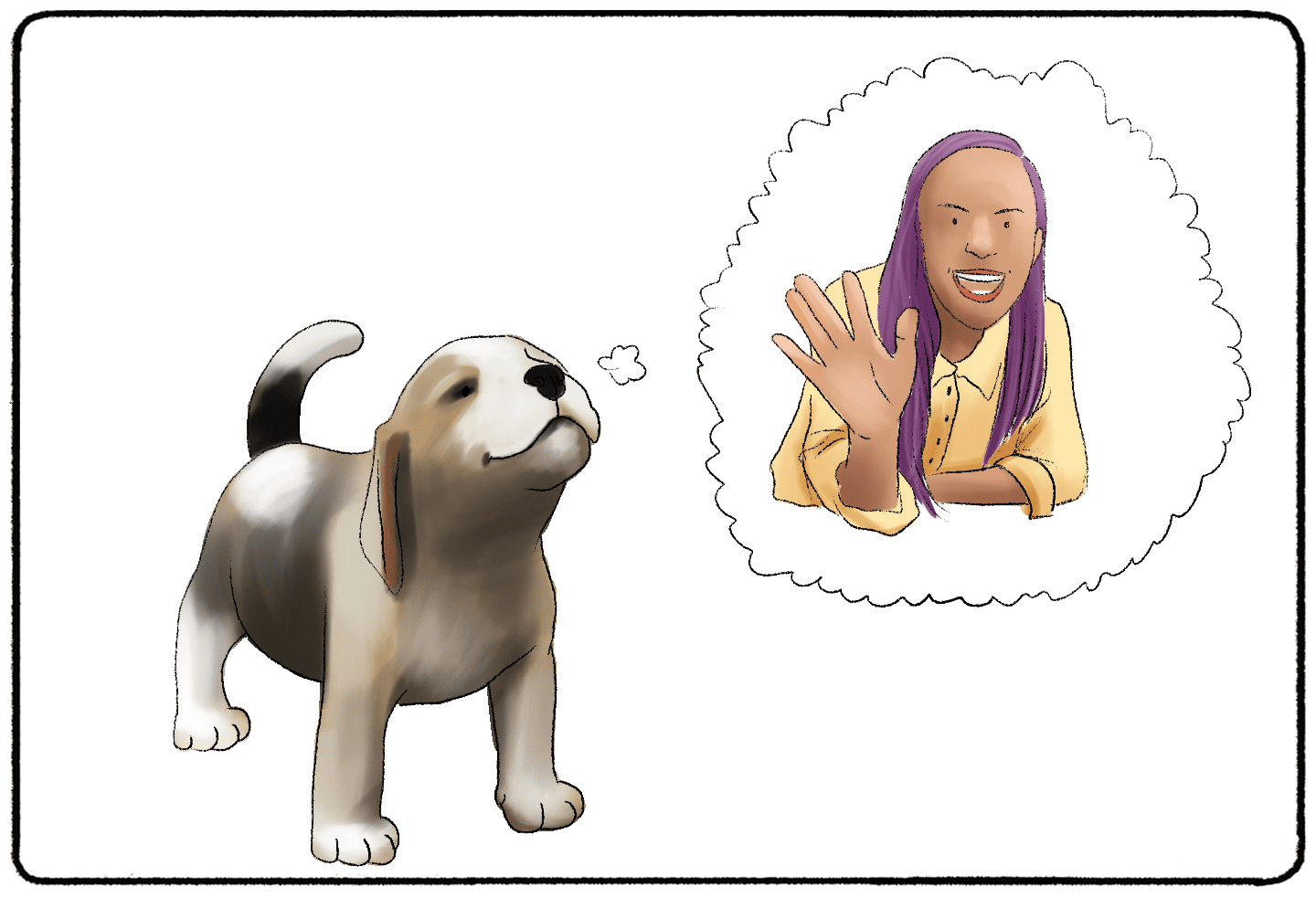
As you think about your life, you can recall and relive episodic memories pretty easily. All humans can. But what about animals?
That’s what Reddit user ScrollWithTheTimes wanted to know when they posted in theAskScience subreddit.
They said,“I was driving past an equestrian place the other day while there was a show happening. I drove past again the next day and all the horses were back in their fields quietly munching grass, and it got me wondering whether they had any memory of the previous day’s events…Do animals possess the intelligence to distinguish memories from live experiences, or is this a reason why they can’t possess episodic memory, because it would mess with their heads too much?”
One response was particularly interesting. If you’ve ever seen TikToks of Bunny the Dog, you’ll relate to how this user formed their opinion.
“I follow Bunny the (talking) dog on YouTube. Bunny can press buttons that generate the sounds of recorded words - she knows several hundred words now, and uses them intelligently. She is not the only dog capable of this, she is just the one I watch.
Bunny is capable of fairly high level and even abstract reasoning, she has recently begun questioning just what she is in relation to humans.
Bunny clearly can remember previous events, from days earlier, and she can clearly imagine - and demand - events to happen in the future. I have not seen her able to imagine a future longer than a few days ahead, though - not over a week. Her memory of the past is better, but still seems biased towards immediate events - things that happened yesterday, or a couple of days in the past. Her memory of further back seems more vague.
If a dog can do this, then surely horses can. Perhaps somebody should build a (far more substantial and less breakable) soundboard and try teaching a horse from birth to use words. It would be interesting to get an actual horse’s opinion on the subject of memory.”
So do animals have episodic memory? Possibly! But their memories certainly aren’t as complex as ours.
Flashbulb Memory
Emotion plays a huge role in episodic memory. Let’s go back to the example of seeing your puppy for the first time. Do you remember the moment that your parentstoldyou that you were getting a puppy? What a happy occasion! You might not remember anything else from that day (or even that afternoon, or that hour,) but you remember where you were when your parents said you were getting a puppy.
There seem to be a handful of flashbulb memories for each generation. You might be able to recall where you were when you first heard about the 9/11 attacks. Your parents, on the other hand, may also be able to recall where they were when they heard about the Challenger explosion or JFK being assassinated.
Autobiographical memory
When you put these episodic memories of your experience together, along with the semantic memories that provide context to each episode, you get a type of memory calledautobiographical memory.These are simply memories that tell the story of your life. Flashbulb memories fall under the umbrella of autobiographical memories.
Related posts:Long Term MemoryDeclarative Memory (Definition + Examples)Semantic Memory (Definition + Examples + Pics)Free Memory Test (5 Mins + Instant Results)Memory (Types + Models + Overview)
Related posts:
Reference this article:Practical Psychology. (2019, October).Episodic Memory (Definition + Examples + Pics).Retrieved from https://practicalpie.com/episodic-memory-definition-examples/.Practical Psychology. (2019, October). Episodic Memory (Definition + Examples + Pics). Retrieved from https://practicalpie.com/episodic-memory-definition-examples/.Copy
Reference this article:
Practical Psychology. (2019, October).Episodic Memory (Definition + Examples + Pics).Retrieved from https://practicalpie.com/episodic-memory-definition-examples/.Practical Psychology. (2019, October). Episodic Memory (Definition + Examples + Pics). Retrieved from https://practicalpie.com/episodic-memory-definition-examples/.Copy
Copy
