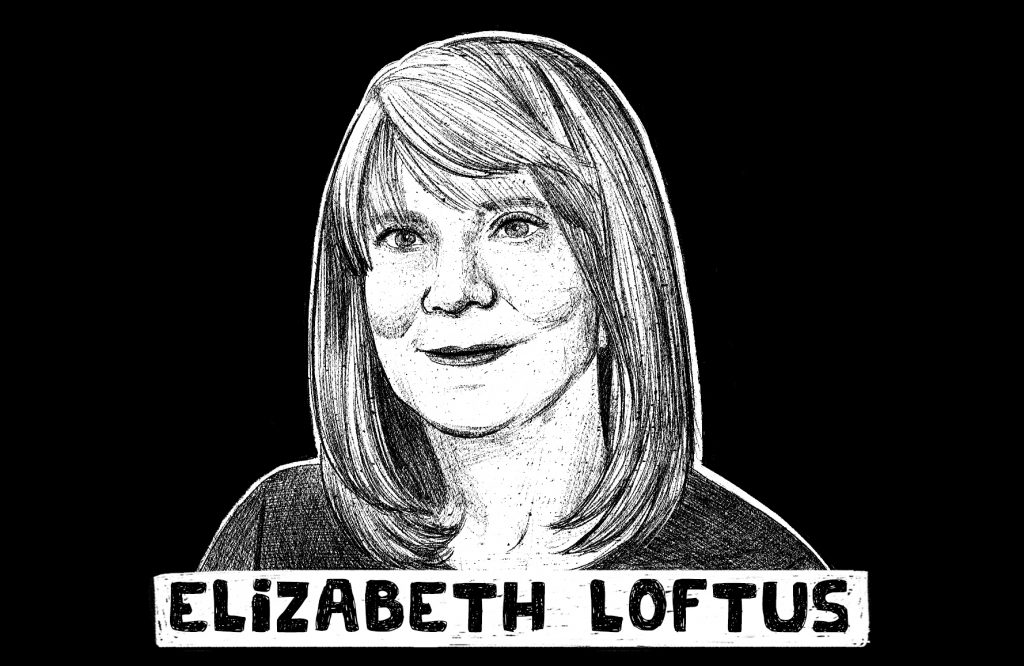
Elizabeth Loftus is an American psychologist and author who specializes in the fields of human cognition and memory. She is best known for her research on the misinformation effect and its impact on eyewitness testimony. Loftus’ work has led to her serving as a trial consultant for many high profile legal cases in the United States. In 2002, theReview of General Psychologyrecognized Loftus as the 58th most eminent psychologist of the 20th century.

Elizabeth Loftus ChildhoodEducational BackgroundWhat is the Misinformation Effect?False Memories: The Lost-in-the-Mall StudyApplications of Loftus’ TheoryElizabeth Loftus Books, Awards, and AccomplishmentsPersonal Life
Elizabeth Loftus Childhood
Educational Background
What is the Misinformation Effect?
False Memories: The Lost-in-the-Mall Study
Applications of Loftus’ Theory
Elizabeth Loftus Books, Awards, and Accomplishments
Personal Life
Elizabeth Loftus, formerly known as Elizabeth Fishman, was born on October 16, 1944 in Bel Air, California. Her parents were Sidney and Rebecca Fishman, both of whom were of Jewish descent. Loftus’ father was a United States Army doctor. Her mother worked as a librarian.
As a young girl, Loftus enjoyed reading books and watching television shows about true and fictionalized crime. She also had a passion for mathematics, perhaps because her father was also proficient at solving math problems. Loftus had a difficult time communicating with her father and noted that math was “the one thing we had in common to talk about.” Most of their interactions were centered around Loftus’ math homework.
Loftus did not have a very close relationship with her mother either. When her mother became sick and wanted to spend time with her, Loftus would often respond that she was too busy. When her mother came into her room, they would eventually start arguing because her mother didn’t seem as if she ever wanted to leave.
Loftus kept a diary during her teenage years. However, she was afraid that someone else might get their hands on it and read it. To address this, Loftus wrote her most private thoughts on separate pieces of paper and clipped them to her diary. If her boyfriend asked to read her diary, she was able to unclip her “removable truths” before handing the diary to him.
When Loftus was fourteen years old, her mother drowned in a swimming pool. Although reports claimed her mother’s death was an accident, Loftus’ father suspected that it was suicide. In her grief, Loftus determined that God was not real as he did not intervene to save her mother. She later wrote in her diary that her biggest regret in life was not spending more time with her mother when she had the chance.
Two years after her mother died, Loftus’ home burned down. She lost many of her possessions, but was most anxious about not finding her diaries right away. She was relieved when she finally got them back. Loftus was not concerned that her diaries may have burned up in the fire. Rather, she was afraid someone else would find and read them.
Despite the trauma she experienced during her youth, Loftus continued to press on with her life. She became a workaholic in high school and devoted herself to her studies.
After graduating from high school, Loftus enrolled at the University of California Los Angeles (UCLA) to study mathematics. Her goal at the time was to pursue a career as a math teacher. However, Loftus soon developed an interest in psychology during her time at UCLA. She says, “At some point I took a psychology class as an elective, and I just enjoyed the material so much that I kept taking more psych classes.” She graduated from UCLA in 1966 with a bachelor’s degree in mathematics and psychology.
During her second year at Stanford, Loftus was assigned to mentor a new student named Geoffrey Loftus. They got married on June 30, 1968. In the final year of her PhD program, Loftus began studying the retrieval of information from long term semantic memory. She earned her PhD in mathematical psychology from Stanford in 1970.
Loftus accepted her first job offer in 1970 from the New School for Social Research in New York City. Her work there was centered on the study of semantic memory. However, Loftus began to lose the excitement she once had for this type of research and yearned to work on a project with more social relevance. The turning point came when she shared some of her findings with a colleague who proceeded to question the value of the work she was currently doing.
Loftus moved to the University of Washington in 1973 after she accepted a position as an assistant professor. In 1974, the U.S. Department of Transportation gave her a grant to study memory distortion. Loftus believed this new line of memory research could benefit society as it involved eyewitness testimony. Her research eventually led to the development of the misinformation effect paradigm.
After Loftus published her research findings, many legal experts took notice and began contacting her. Before long, Loftus was speaking at groups and seminars for civil attorneys, defense attorneys, and law enforcement. In June 1975 she was allowed to give the first ever expert testimony on eyewitness identification in Washington state. Loftus has since consulted and testified in hundreds of cases in the United States.
In the 1990s, Loftus began new research on false memories. In 2001, She moved to the University of California, Irvine to continue her work.

One week later, participants in that study were asked if there was any broken glass at the scene of the crash. Although there was no broken glass in the original video clip, thirty-two percent of those in the “smash” condition reported seeing broken glass; only 14% of those in the “hit” condition did so. These results show that even non-existent details can be implanted into people’s memories of events.
Why Does It Occur?
According to Loftus, the misinformation effect occurs because misleading PEI permanently replaces, or interferes with, the original memories that are formed when an event is witnessed.
Other researchers, however, have proposed different explanations. For example, some contend that original details may not have been properly stored or encoded in memory at the time the event was witnessed. According to this view, misleading information does not replace or impair previously stored information; it simply fills a gap in the person’s memory. If participants in Loftus’ study did not encode the “stop” sign in their memory, exposure to the misinformation would not contradict any existing belief, and would therefore be easily accepted.
A third explanation is that of faulty source monitoring. Proponents of this view suggest that both the original information and the misinformation coexist in memory but during recall, individuals have difficulty remembering the origin (or source) of each memory trace. They may therefore wrongly conclude that the misleading information was part of the witnessed event.
Factors That Influence the Misinformation Effect
Loftus and others have identified several factors that influence people’s susceptibility to the misinformation effect. These include:
Loftus was also interested in finding out whether it is possible to implant false memories forentireexperiences into a person’s mind. To investigate this possibility, Loftus and Jacquie Pickrell (1995) asked participants about several childhood events, three of which were true, along with a false event of having been lost in a mall. Participants were told that according to their parents, they had gotten lost in a mall when they were five years old.
You canlearn more about false memorieson my page specifically about it where I talk about the mandala effect and other issues in memory consolidation.
Given the serious implications of eyewitness testimony, it is important that law enforcement officials and others involved in the justice system remember the malleability of eyewitness memories and the fact that such memories are not always reliable.
Loftus and Pickrell’s study also shows how it is possible for highly suggestive interrogation techniques to lead innocent, but vulnerable people to confess to a crime they did not commit. In order to reduce the risk of false confessions, police officers and lawyers should give careful thought to their manner of questioning and choice of words during legal proceedings.
Since there is a possibility, however small, of implanting false memories, therapists should ensure that they choose their techniques and words carefully to minimize the risk of this occurring. Lawyers, judges, and jurors should also exercise caution when evaluating allegations based on recovered memories in order to avoid false convictions.
Although the researchers were not very successful in implanting false memories for all the foods studied, the results suggest that people’s eating and drinking behavior can be shaped through the power of false suggestion. False pleasant memories resulted in more positive attitudes and behaviors toward the food or drink being studied; false unpleasant memories resulted in more negative attitudes and behavior. However, the researchers were keen to note that further research is needed in this area.
Criticisms of Loftus’ Theory
Loftus’s critics have often questioned the generalizability of her findings to real world settings. According to some, the participants involved in Loftus’ studies differ in significant ways from the people who are most likely to experience memory issues in real life, such as those seeking therapy for emotional disturbances. Participants in Loftus’ studies are typically exposed to less traumatic events and usually have no personal investment in the events to be recalled. Participants are also given the opportunity to witness an entire event from the sidelines, which rarely happens in real life. Eyewitnesses are often directly involved in the event or happen to witness just a small part of it.
As it relates to Loftus’ lost-in-the-mall study, critics argue that participants were susceptible to developing false memories because the experience of getting lost is fairly common in childhood and therefore highly plausible. Studies suggest that people are much less susceptible to efforts to implant a more complex and less common false experience, such as the type of traumatic experiences typically recovered in therapy.
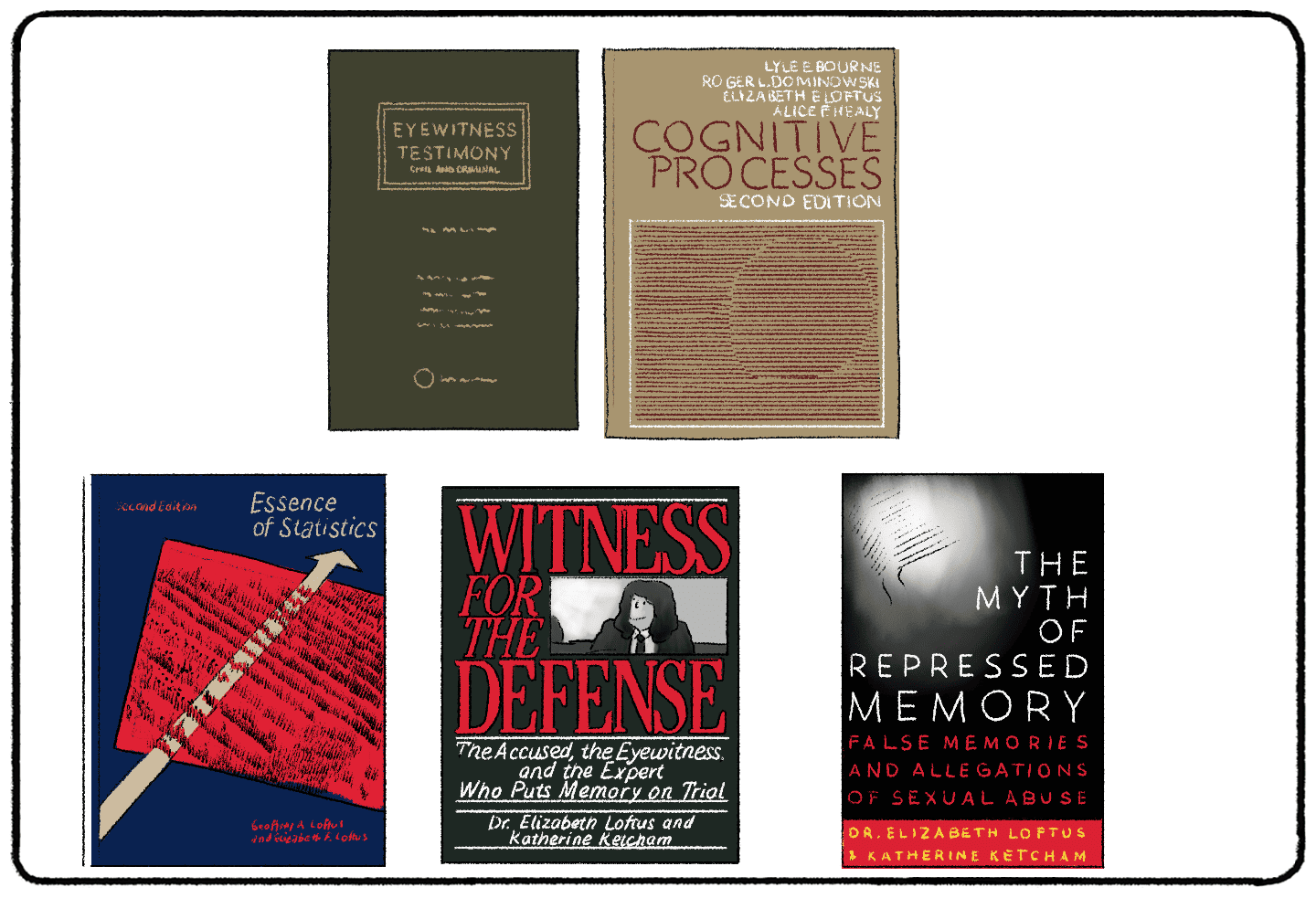
Loftus is a prolific researcher and writer. Some of the most well-known works that she authored or co-authored include:
Some of her other awards and accomplishments include:
Loftus’ work in eyewitness testimony had led to her attracting much media attention throughout her career. Over the years, her expertise has been sought for a number of high profile legal cases involving Bosnian war criminals, Timothy McVeigh (the Oklahoma City bomber), the Menendez brothers, Michael Jackson, Martha Stewart, George Franklin, serial killer Ted Bundy, and many others. Loftus has also appeared on a number of television shows such as Oprah and 60 minutes. While she has received much praise for her research, she has also been subjected to increased scrutiny and anger from the general public.
George and Elizabeth Loftus divorced in 1991. They had no children together. Although George and Elizabeth are no longer married they still remain friends to this day.
American Psychological Association. (2002). Eminent psychologists of the 20th century.Monitor on Psychology,33(7) 29. Retrieved from https://www.apa.org/monitor/julaug02/eminent
Association for Psychological Science. (2011, August 25).From lab to court: Memory and the law. Retrieved from https://www.psychologicalscience.org/news/full-frontal-psychology/from-lab-to-court-memory-and-the-law.html
Bernstein, D. M., Pernat, N. L. M., & Loftus, E. F. (2011).The false memory diet: False memories alter food preferences. Retrieved from
Draucker, C. B., & Martsolf, D. (2006).Counselling survivors of childhood sexual abuse(3rd ed.). London: Sage Publications.
False memories. (2008). In B. L. Cutler’s (Ed.),Encyclopedia of psychology and law(Vol. 1). Thousand Oaks, CA: Sage Publications.
Gerrie, M. P., Garry, M., & Loftus, E. F. (2005). False memories. In N. Brewer & K. D. Williams (Eds.),Psychology and law: An empirical perspective(pp. 222-253). New York: The Guilford Press.
Goldstein, E. B. (2008).Cognitive psychology: Connecting mind, research, and everyday experience(2nd ed.). Belmont, CA: Thomson Higher Education
Kellogg, R. T. (2007).Fundamentals of cognitive psychology. Thousand Oaks, CA: Sage Publications.
Saletan, W. (2010, June 4). The memory doctor.Slate Magazine. Retrieved from http://www.slate.com/articles/health_and_science/the_memory_doctor/2010/06/the_memory_doctor.single.html
Zagorski, N. (2005, September 27). Profile of Elizabeth F. Loftus.Proceedings of the National Academy of Sciences. Retrieved from https://www.pnas.org/content/102/39/13721
Related posts:False Memories and Memory Errors40+ Famous Psychologists (Images + Biographies)Albert Bandura (Biography + Experiments)B.F. Skinner (Psychologist Biography)Declarative Memory (Definition + Examples)
Related posts:
Reference this article:Practical Psychology. (2020, April).Elizabeth Loftus (Psychologist Biography).Retrieved from https://practicalpie.com/elizabeth-loftus/.Practical Psychology. (2020, April). Elizabeth Loftus (Psychologist Biography). Retrieved from https://practicalpie.com/elizabeth-loftus/.Copy
Reference this article:
Practical Psychology. (2020, April).Elizabeth Loftus (Psychologist Biography).Retrieved from https://practicalpie.com/elizabeth-loftus/.Practical Psychology. (2020, April). Elizabeth Loftus (Psychologist Biography). Retrieved from https://practicalpie.com/elizabeth-loftus/.Copy
Copy
