Find an Online Psychology Program for You
Featured Online Psychology & Counseling Programs
For some people, the ability to think clearly and the ability to move freely are intertwined. Sitting for hours at a desk, with no sound to distract you and no reason to get up and move around is helpful for some learners, but absolutely sabotaging to the success of others. The fact that every person is wired slightly differently, and that everyone thrives in different environments is what makes the world an interesting place to live.

Dance movement therapy uses physical activity to improve mental and physical health through strategic movements that are designed to improve intellectual, emotional and motor functions of the body. This is a form of expressive therapy, which means that similarly to writing and painting, dance movement therapy provides the individual with the ability to convey emotion in a non-verbal means. In fact, the core purpose of dance movement therapy is to improve an individual’s ability to understand their emotional process and connect movements with emotions in a way that will improving coping skills during periods of emotional distress.
Dance movement therapy is a form of movementpsychotherapy, and is very different from just a traditional dance class. While any sort of exercise class can stimulate endorphin production and may help you to feel more clear headed due to the physical exertion that you exhibited during the workout, dance movement therapy utilizes elements of psychotherapy during the exercise routine to provide benefits for mental health alongside the physical benefits of the aerobic activity.
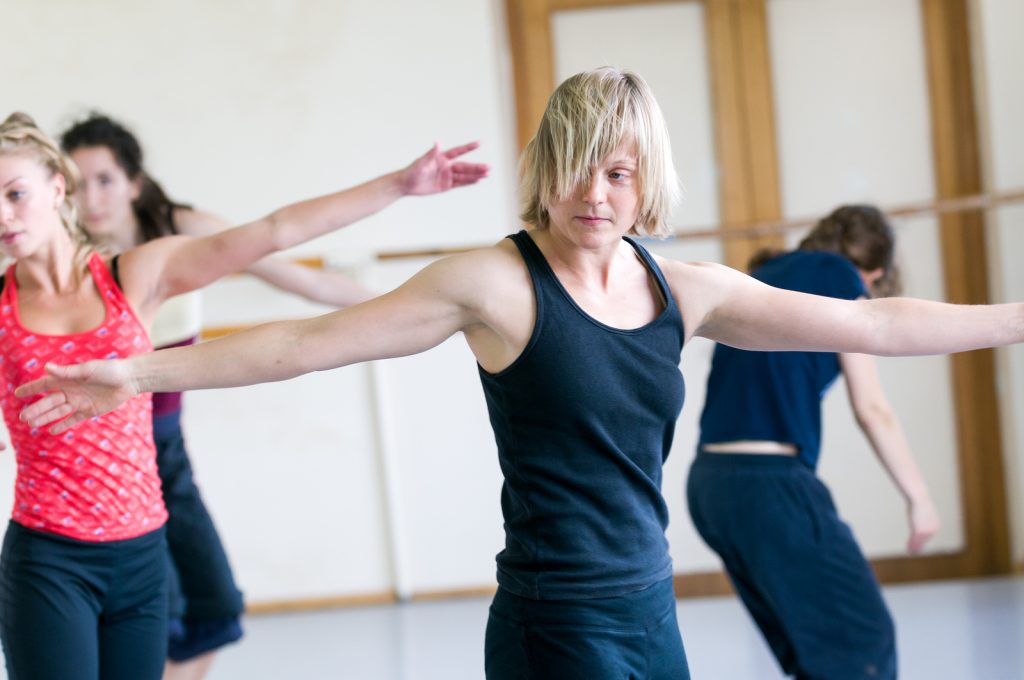
During a dance movement therapy session, the therapist is in the room with the dancer and both individuals are dancing to communicate and express emotion. The poses, movements and fluidity of the dance is designed with the client in mind, and are designed to particularly support the individual. During the session, the therapist will respond to movements, assess body language, interpret nonverbal behavior and emotional expressions, and then use all of this information to respond to the client. Throughout all of this, movement is a key component of the process.
Common interventions utilized during dance movement therapy include:
Dance movement therapy is considered a useful therapeutic option in the building of a variety of emotional skills. These skills include learning how to develop and trust in yourself, encouraging you to be more empathetically present in any given moment. The ability to respond authentically and truthfully as you interact with friends, family, and colleagues is also typically improved through dance movement therapy, as is learning how to translate nonverbal movements into emotional insights.
Dance movement therapy is especially helpful in situations in which verbal communication creates a barrier in helping an individual gain emotional insights or reach a place of mental and emotional peace.
Common mental health concerns that can be supported with dance movement therapy include:
Dance movement therapy is considered an ideal form of mental health counseling for children, especially young children who are not yet comfortable with verbal communication, and who may be unable to share verbally true indication of their mental, physical, or emotional health.
Dance movement therapy is a career that requires constant development of new skills. There is no standard office environment involved in this type of psychotherapy. There is no couch, no desk, often no chairs of any sort. There is no office building, no quiet nook in a busy metro-center. This form of psychotherapy breaks apart from many of the norms of other forms of mental health counseling and their traditional environments. Instead, dance movement therapy requires a studio.
It is possible to engage in dance movement therapy in any environment that allows space for movement, including a school gym, a community center, or a private dance studio. The counseling process does require privacy, so working in a public space is not encouraged. It is important that the individual feels safe and secure in the therapy setting, and public and oversized venues do not allow for this. It is best practice for the therapist to have their own venue where the client can visit them.
Most dance movement therapists create a schedule that works to their needs. Appointments will depend upon client availability, and the length of a session will depend on the issues being addressed during that time, and your agreed upon appointment. Dance movement therapy is physically taxing, so long appointments are often not ideal as fatigue may prevent greater breakthrough, but in some circumstances longer exchanges are warranted.
Dance movement therapy requires many of the same credentials as a traditional mental health counselor. This is because the core of the profession is the same as any other psychotherapist. The objective of the dance movement therapist is to emotionally connect with the client, and to provide emotional support and guidance through mental issues and concerns.
However, in addition to traditional mental health counseling training, dance movement therapists go through additional credentialing steps so to be able to practice this specific form of psychotherapy. This credential is only awarded at the graduate level. This means that practitioners must have completed their bachelor’s degree and completed at minimum a Master Level’s degree in psychotherapy or mental health counseling in order to practice dance movement therapy. In addition, independent states typically have their own credentialing requirements that must be met to offer any sort of mental health counseling.
There are two primary paths to becoming credentialed in dance movement therapy. These include:
The ADTA only approves graduate programs that fully comply with their credentialing requirements, which includes all of the components required in the alternate certification route. This includes in-depth training in dance-specific therapy methods, fieldwork and internship.
In addition to the above credentials, dance movement therapists who are going to work with children or adolescents have additional requirements that they must meet. The Board of Directors of the American Dance Therapy Association have set the following guidelines in place for individuals who wish to offer dance and movement therapy to those under 18.
Additional requirements include shown aptitude and transcript of completed coursework in the following areas:
Dance and movement therapy programs at the graduate level are designed to educate students in the subjects of psychological theory and history, human growth and development, multicultural perspectives, group process, psychopathology, behavioral research, and also psycho-diagnosis and assessment skills. Specific education in dance movement therapy theoretical practices, as well as expressive and communicative aspects of dance, verbal and non-verbal behavior are also essential.
In addition, successful dance and movement therapy programs will focus on human anatomy, kinesiology, basic neuroscience, observation and analysis, and clinical applications of dance therapy with individuals, groups and families.
Related ArticlesEmployment Outlook & Career Guidance for Transpersonal TherapistsEmployment Outlook & Career Guidance for Marriage Family TherapistsTina Gilbertson, Expert Therapist Discusses Her Book & SpecialtyEmployment Outlook & Career Guidance for Life CoachesEmployment Outlook & Career Guidance for Existential TherapistsMode of Therapy - Sex Therapy12 Things I Wish I Knew Before I Became a TherapistExpert Therapist Saba Harouni Discusses Art Therapy9 Common Elements of Good TherapyEmployment Outlook & Career Guidance for Musical TherapistsMode of Therapy - Group TherapyHow Therapists Keep From “Therapizing” Their Family & FriendsType of Therapy - PsychoanalysisType of Therapy - Cognitive Behavioral TherapyMode of Therapy - Home Based TherapyWhat Is Psychotherapy and How Exactly Does It Help?Develop Important Skills on the Way to Being a Children’s TherapistWhat is Non-Violent Communication (NVC) Therapy?MFT Comparison: Students Loans vs. Potential Salary after GraduationExpert Therapist Megan Bearce, LMFT Discusses Her Super Commuter Life and Her BookWhere People with MFT Degrees WorkType of Therapy - Exposure TherapyExpert Therapist Megan Bearce, LMFT, Discusses Career BurnoutHow Much Do MFT’s Really Make?Coping Strategies & Tips for People with ADHDType of Therapy - Anger Management TherapyMaking Sure the MFT Specialty is Right for YouA Life Coach Discusses Education, Mistakes & Timing
Related Articles
Related CareersGetting Started with a Music Therapist CareerSpeech Pathology CareersCognitive Behavioral Therapy CareersSex Therapy CareersExploring a Transpersonal Therapist CareerPsychiatric Nursing CareersEarn the MFT Degree You Need to Learn How to Become a Marriage and Family TherapistCatch Your Stride With An Exercise Therapist CareerEverything You Need to Know About Becoming a Life CoachOccupational Therapy CareersHow to Become a Physical TherapistHow to Become an Art Therapist: Your Complete Guide to Degrees & Career PathsStart an Existential Therapy CareerPsychotherapy Careers
Related Careers