How can you make this situation more productive? The first step is to learn about different types of thinking. By understanding the difference between convergent and divergent thinking, you can more effectively plan out your brainstorming session and come to the best solution without frustration.
Definition of Convergent and Divergent ThinkingHow to Effectively Use Convergent and Divergent ThinkingOther Ideas for Brainstorming
Definition of Convergent and Divergent Thinking
How to Effectively Use Convergent and Divergent Thinking
Other Ideas for Brainstorming
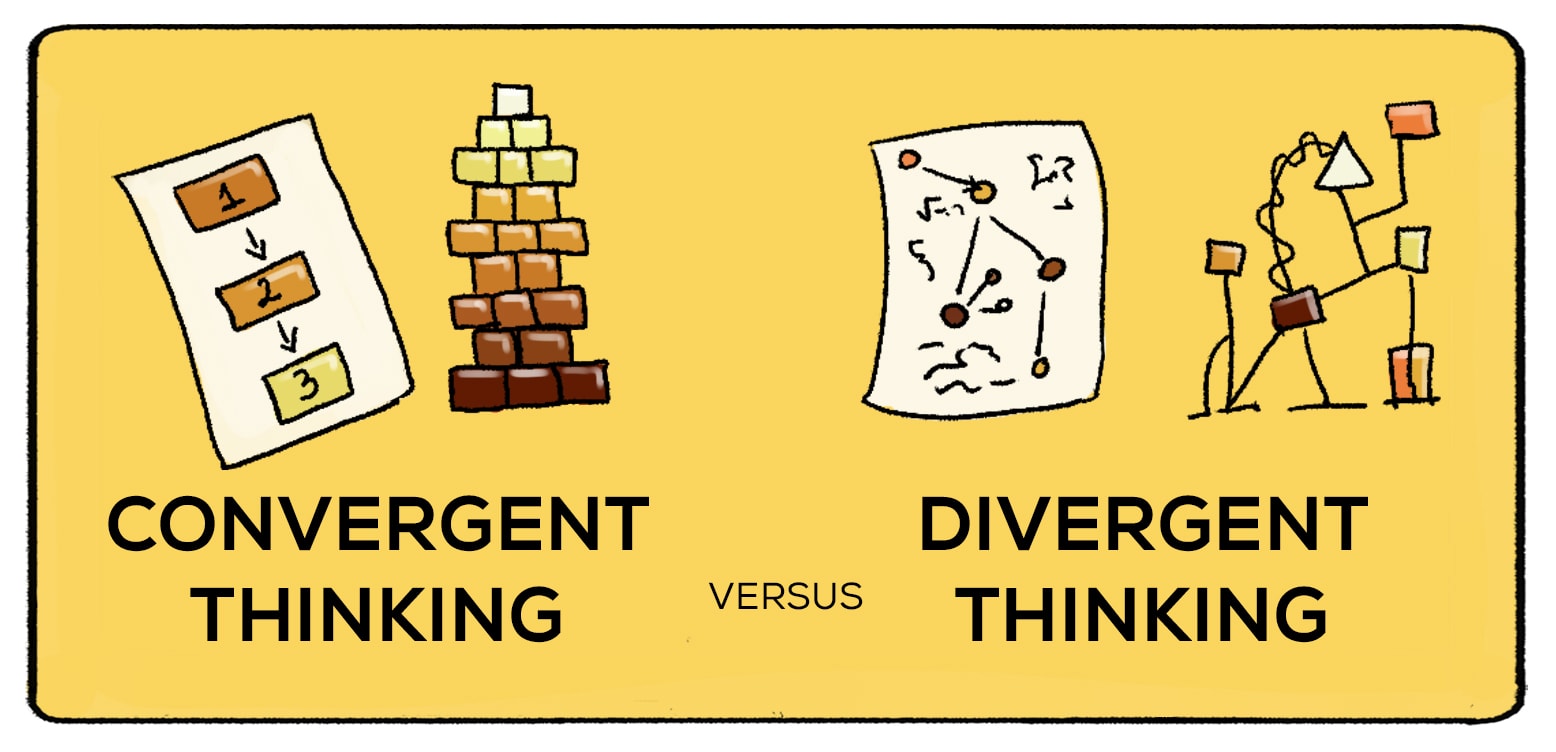
 convergent vs divergent thinking
Divergent Thinking
Mind maps are the best way to put the results of divergent thinking on paper. Mind maps contain ideas that branch off from each other in different directions. There doesn’t have to be a lot of logic used when you are in “divergent thinking” mode. Remember, you are expanding what is possible, not limiting it.
Convergent Thinking
Now, let’s go back to the first example. There was divergent thinking happening - each person was coming up with an “out of the box” idea. But they were quickly getting shot down. The person that was critiquing their argument was in “convergent thinking” mode.
Convergent thinking isn’t bad or unproductive. It’s necessary! This process is more analytical and “realistic.” It uses logic to narrow down ideas.This part of the thinking process requires looking for fallacies and potential problems. By narrowing down ideas that would not possibly work, you can find one or two ideas that will work without a hitch.
Examples of Convergent and Divergent Thinking
Let’s say you’re planning an event, and trying to figure out where to have the event. By putting on your “divergent thinking cap,” you start to brainstorm. How fun would it be to have the event at Disney World? Or at the new hotel that is opening down the street? What about a big outdoor party with tents? All of these venues could attract potential guests and make the event really stand out!
Wow, these are a lot of great ideas!
But let’s approach this same problem with our “convergent thinking cap.” Disney World? Way out of budget, and most of the guests won’t want to travel that far. The new hotel down the street? That’s closer to the budget and guests can easily travel there. A big outdoor party? This is an option too, but only if the cost for lights, heating, and the tents actually did fit in the budget. Would you need a permit to hold the party outside? Would you have to worry about noise complaints?
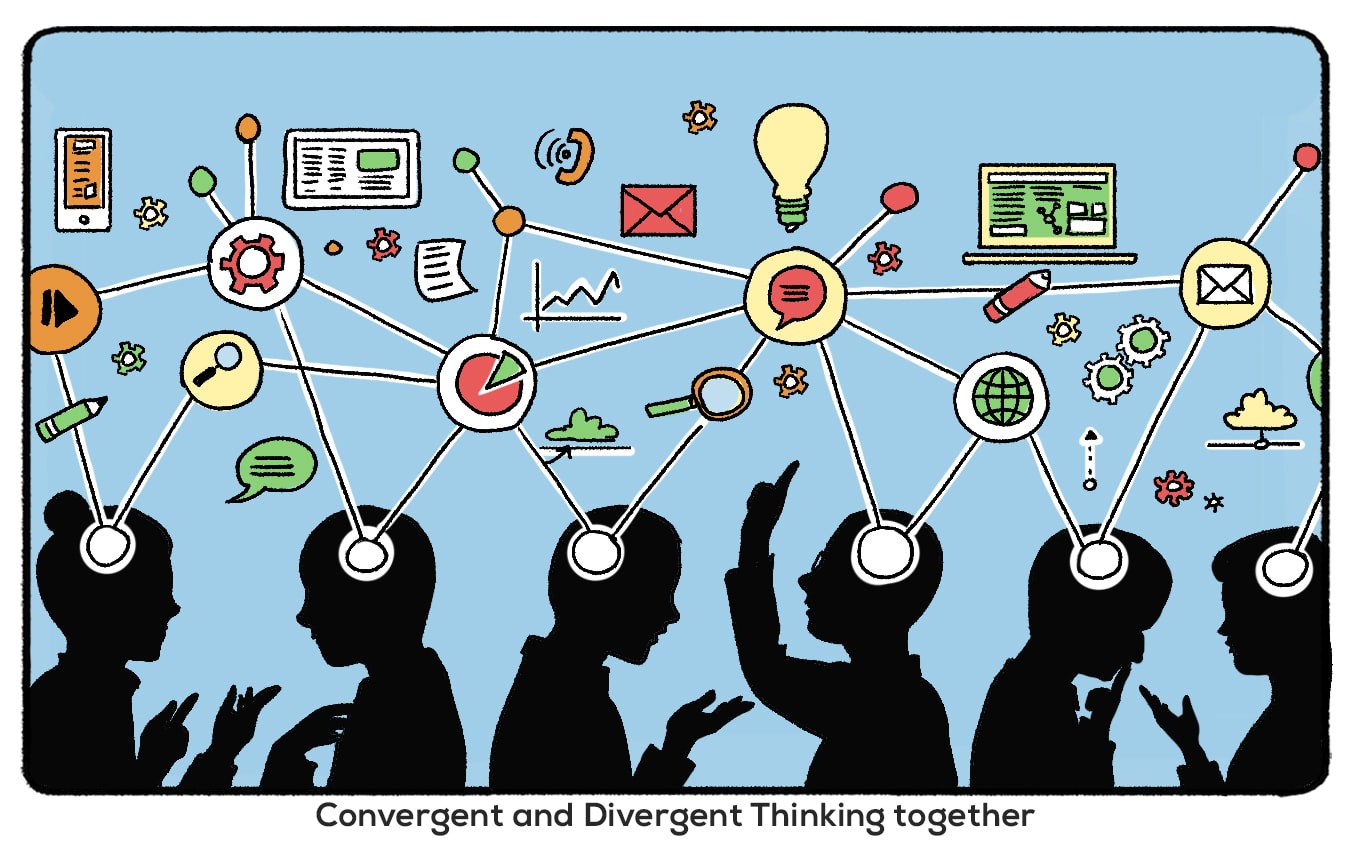
As you can see, both of these processes are necessary to come to a solution. You can’t just set your heart on Disney World without considering practical factors, like budget or location. But when you do come up with an “out of the box” solution that does fit into your constraints, you’ve got a great solution on your hands.
Convergent and divergent thinking require two different parts of the brain. While convergent thinking relies more on logic, divergent thinking relies more on creativity. Switching back and forth between the two may not seem like multitasking, but it is a form of multitasking. Andmultitaskingis not as effective as you may think.
In the meeting mentioned at the beginning of this article, your team was constantly switching back and forth between convergent and divergent thinking. Their brain had to switch back and forth, too. No wonder the group became worn out so fast!
“Batching”
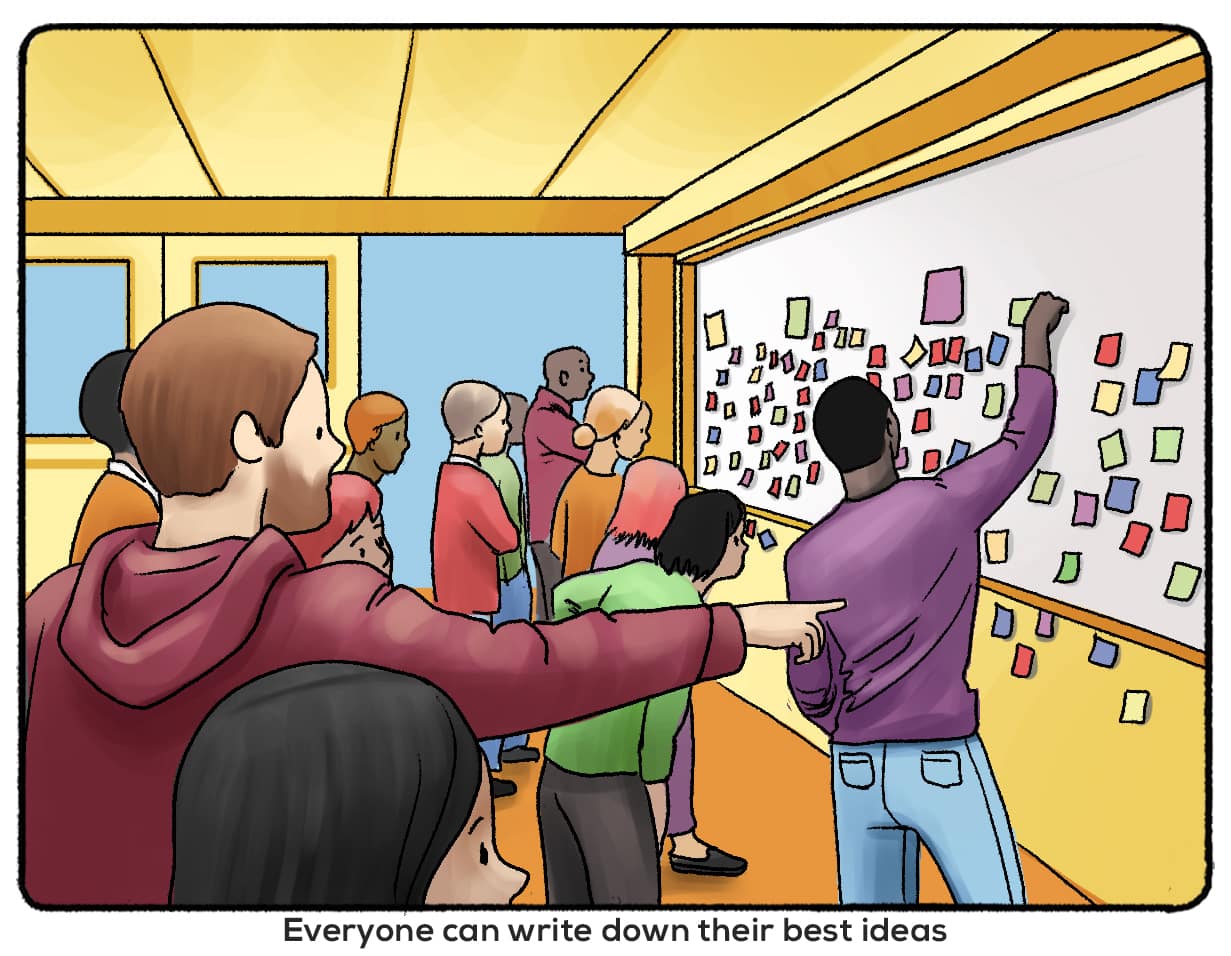
Harvard instructorslike Anne Manning suggest another approach to convergent and divergent thinking. Rather than doing them in the same meeting, try “batching” your divergent and convergent thinking tasks. Take an hour of the meeting for your team simply to brainstorm ideas. No critiques, no logic, no convergent thinking. Just keep expanding the ideas of where you should hold the event, for a solid block of time.
Give your team a break. This break could be an overnight break - many people have their best creative ideas when they are sleeping, showering, or thinking about other things. Tell your team to write down any more creative ideas that they might have, and bring them to you before the next meeting.
Then, hold a meeting that is focused solely on convergent thinking. Think about the budget. Location. The number of people that you expect to attend the event. You’ll be able to cross some ideas off of your list pretty quickly. That’s okay. Crossing off items on your list quickly means that you’re coming to a solution quickly.
And voila! You’ve found your solution. Now it’s time to focus on other elements of the event. Using inspiration from your previous brainstorms, you can truly make your event the greatest it can be, or solve any problem efficiently. You may decide to make the event Disney-themed, for example, to have a fun event without shelling out the costs of actually going to Florida.
The next time you’re faced with a problem, try this batching technique. You might find yourself coming up with a great solution without frustrations!
Narrowing Down The Ideas
Don’t have two days to come up with an idea? Split your team into two groups and let the debate begin! Well, sort of.
Here’s how this brainstorming session works. Give two teams a set amount of time (maybe 30-60 minutes) to brainstorm all ideas without any sort of dissent or questioning. Write them all down on the left side of a piece of paper. At the end of the time period, switch the sheets of paper between the two teams. (You may find overlap. That’s good!) Set another time period for the groups to engage in divergent thinking. Instruct them to eliminate most of the ideas, leaving a handful for the first group to choose from. At the end of the second time period, switch the papers back to the original groups.
If both groups still have not come to a consensus about the idea for moving forward, instruct each group to chooseoneof their remaining ideas to bring to the table. Once that is chosen, both groups will present that idea and the decision will be put to a vote amongst both groups.
Choose Your Best Team Members for Each Job
How do you know which team members are more skilled at convergent vs. divergent thinking? There are a few ways to find out.
Give your team members the opportunity to choose which type of thinking they would like to engage in (if they have to pick.) Get to know their preferred forms of brainstorming. You may find that your team naturally prefers one type of thinking over the other. You may also find that they like to brainstorm in different ways! Keep an open mind.
If everyone is shrugging their shoulders, go through a few trial runs. Split the teams randomly or bring everyone together to brainstorm ideas. Clearly split your time between convergent vs. divergent thinking. You will find that some team members have a hard time with convergent thinking, or others fail to speak up once the convergent thinking is over! As you notice these patterns, you will get a better sense of which “group” prefers one style over the other.
Does your team all know their Myers Briggs type? Use this to indicate which members are likely more inclined to participate in convergent vs. divergent thinking. Team members best suited for convergent thinking include:
These aren’t the only team members who should participate in convergent thinking, but it gives you a good idea of who you might want in the room during this brainstorming portion.
The best divergent thinkers include:
This isn’t set in stone. Trust your team members. If they prefer one style over the other, give them the chance to shine!
Knowing the differences between convergent vs. divergent thinking can help you brainstorm. However, this approach may not be the best process for every team. Below are some other ways to brainstorm new ideas and find solutions to your most pressing problems.
Storyboarding
Get your team together and treat your problem like a conflict in a book. Create a “storyboard” that explains what led to the problem and the conflict at hand. (Post-its and erasable markers are great tools for this type of brainstorming!) This method gives your team a new way to look at your problem.
SCAMPER
SCAMPERoffers a great set of prompts for a conversation about solutions. This is a great form of brainstorming for teams that are generally not convergent thinkers.
SCAMPER stands for:
Six Thinking Hats
In 1985, psychologist Edward de Bono wrote “Six Thinking Hats” about a problem-solving exercise that involved roleplay. He described six different “hats” a person could wear as they brainstormed new ideas:
What would happen if you chose six people on your team to wear these “hats?” Would they think about a solution in a new way? Would they come up with great, new ideas? There is only one way to find out!
There are so many great ways to brainstorm new ideas. Try out a few different methods, be aware of convergent vs. divergent thinking, and enjoy solving your team’s biggest problems!
Related posts:Functional Fixedness (Definition + Examples)Social Loafing (Definition + Examples)Lewin’s Change Theory (Definition + Examples)Kurt Lewin Biography - Contributions To PsychologySocial Groups in Psychology
Related posts:
Reference this article:Practical Psychology. (2020, June).Convergent vs Divergent Thinking (Definitions + Examples).Retrieved from https://practicalpie.com/convergent-vs-divergent-thinking/.Practical Psychology. (2020, June). Convergent vs Divergent Thinking (Definitions + Examples). Retrieved from https://practicalpie.com/convergent-vs-divergent-thinking/.Copy
Reference this article:
Practical Psychology. (2020, June).Convergent vs Divergent Thinking (Definitions + Examples).Retrieved from https://practicalpie.com/convergent-vs-divergent-thinking/.Practical Psychology. (2020, June). Convergent vs Divergent Thinking (Definitions + Examples). Retrieved from https://practicalpie.com/convergent-vs-divergent-thinking/.Copy
Copy
