When we look at Big Five Personality Theory, we see that some people are planners. Other people are more spontaneous. These traits describe a level of conscientiousness that someone has in their personality.
Obviously, these traits don’t encompass an entire person’s personality, but they do offer a lot of insight into what you can expect from yourself or someone else. Let’s break down how conscientiousness fits into the larger Big Five theory, what it looks like, and whether a person can achieve a higher (or lower) level of conscientiousness based on their goals or aspirations.
What is Conscientiousness?About the Big FiveExamples of ConscientiousnessAre Personality Traits Fixed?How to Improve Conscientiousness
What is Conscientiousness?
About the Big Five
Examples of Conscientiousness
Are Personality Traits Fixed?
How to Improve Conscientiousness
Conscientiousness is defined as having self-discipline and being able (and willing) to direct impulses. A person who displays a high level of conscientiousness is likely to be organized, but they are also mindful and aware of how their actions impact themselves and others.
 Five Factor Model
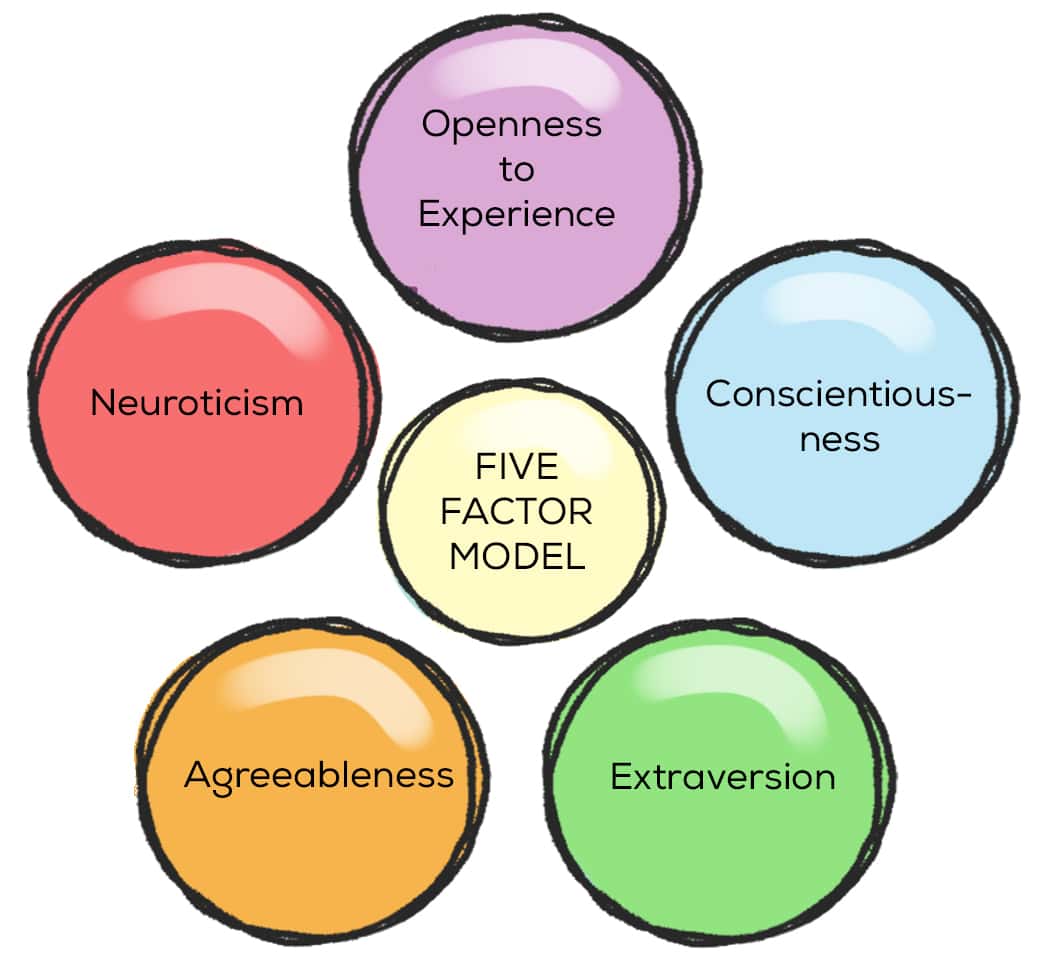
This theory lays out five dimensions of personality: conscientiousness, openness to experience, extraversion, agreeableness, and neuroticism. Now, you probably know many people who are not agreeable, not open to experience, or not extroverted. That’s okay - they still have a personality! These traits all lie on a spectrum. On one end of the spectrum, for example, is conscientiousness. On the other end is extravagance or carelessness. One may describe you or me as being on either end of this spectrum - the important thing to know is that this is one of the five dimensions of someone’s personality.
These traits aren’t exactly set in stone, but before we get into all that, let’s zoom into what it means to be conscientious and what that looks like.
High Conscientiousness
Someone with a high level of conscientiousness probably knows what they are doing every hour of the day, maybe even every half-hour. They love to plan and are always thinking ten steps ahead. Deadlines aren’t just important to them - they are something to be respected and regarded (although most people with high conscientiousness aim to complete a task well before the deadline!)
People with high conscientiousness don’t not do well in chaos - they often find ways to make order or structure within the chaos. If you give them little direction on a task, they will seek out direction from other sources and build a plan to complete the task in stages themselves.
Low Conscientiousness
The opposite of conscientiousness is extravagance or carelessness. This isn’t necessarily a bad thing - it just reveals how much planning, thought, and care goes into each decision that a person makes. For some, planning sounds wonderful; but for others, it sounds awful. A person with a low level of conscientiousness is more likely to lean toward spontaneity. In the same way that a person with high conscientiousness feels more control when they make plans, a person with low conscientiousness may feel more control when they leave their schedule open.
A person with low conscientiousness doesn’t like structure. They don’t like a lot of direction and would prefer to step outside the rule book to approach a task. They do not mind a messy room and often forget to put things back in their proper place. Procrastination isn’t a big deal to them, but mindful tasks and set deadlines can be a struggle. People with low conscientiousness are more likely to forget about a task, not see it through, or forget about it altogether.
You might already have a hint at whether you are a person with a high or low level of conscientiousness. But take a look at the following phrases. Would you agree with them?
If these phrases sound like you, you probably have a high level of conscientiousness. Remember, all of these traits exist on a spectrum!
It’s likely that you experienced a change in conscientiousness throughout your life. As a child, rules and order aren’t so fun. When you get older, you may realize that you prefer to have a plan and avoid chaotic and impulsive decisions. That is totally normal. Studies show that levels of conscientiousness tend to rise among young adults, and then decline later in life.
Does this mean that all personality traits change over time? Not exactly. Psychologists are still trying to determine what influences our personality?Is it nature? Nurture?Most likely, it’s a combination of both. A person who grew up in a chaotic household, for example, might be accustomed to living without rules or plans and continue those behaviors as an adult. On the other hand, growing up in a chaotic and traumatic household may lead a person to create order for themselves once they are living on their own and have more control over their life.
Can Conscientiousness Be Learned?
Some studies suggest that genetics influence about 49% of your conscientiousness level. If your parents, siblings, or grandparents tend to be highly conscientious, you might be, too. Women also tend to be more conscientious than men, but psychologists are not sure how much of that is genetic and how much of that comes from expectations placed on people based on their gender.
This means that, if you find yourself wanting to have more self-discipline and be more conscientious, you can. You’re not stuck being impulsive or procrastinating forever! If you want to become more impulsive, you can do that, too! Small practices can make a big difference in how conscientious you are. Behavior doesn’t change instantly, but small behaviors can influence how you make decisions and the person that you become.
How to Let Go of Conscientiousness
Related posts:209+ Personal Values A-Z (Definition + Examples)Big 5 Factor Model of Personality (Free Test + OCEAN)Personality and PoliticsBody Language Basics - How to Read Someone47+ Social Injustice Examples (History + Solutions)
Related posts:
Reference this article:Practical Psychology. (2021, April).Conscientiousness (Meaning + Examples).Retrieved from https://practicalpie.com/conscientiousness/.Practical Psychology. (2021, April). Conscientiousness (Meaning + Examples). Retrieved from https://practicalpie.com/conscientiousness/.Copy
Reference this article:
Practical Psychology. (2021, April).Conscientiousness (Meaning + Examples).Retrieved from https://practicalpie.com/conscientiousness/.Practical Psychology. (2021, April). Conscientiousness (Meaning + Examples). Retrieved from https://practicalpie.com/conscientiousness/.Copy
Copy
