Have you ever considered therapy?
In this video, I’m going to explain the basic ideas behind Cognitive Behavioral Therapy, a popular form of talk therapy that is used throughout the world. It’s not always aneasyprocess, but it can help you identify what is causing anxious feelings or problems within your relationships. By identifying negativity, you can begin to move forward and live a happier, more productive life.
What’s weak about that?

History of CBTHow CBT WorksWho Can Benefit From CBT?Can This Be Used Along With Medication?Want to Try CBT?
History of CBT
How CBT Works
Who Can Benefit From CBT?
Can This Be Used Along With Medication?
Want to Try CBT?
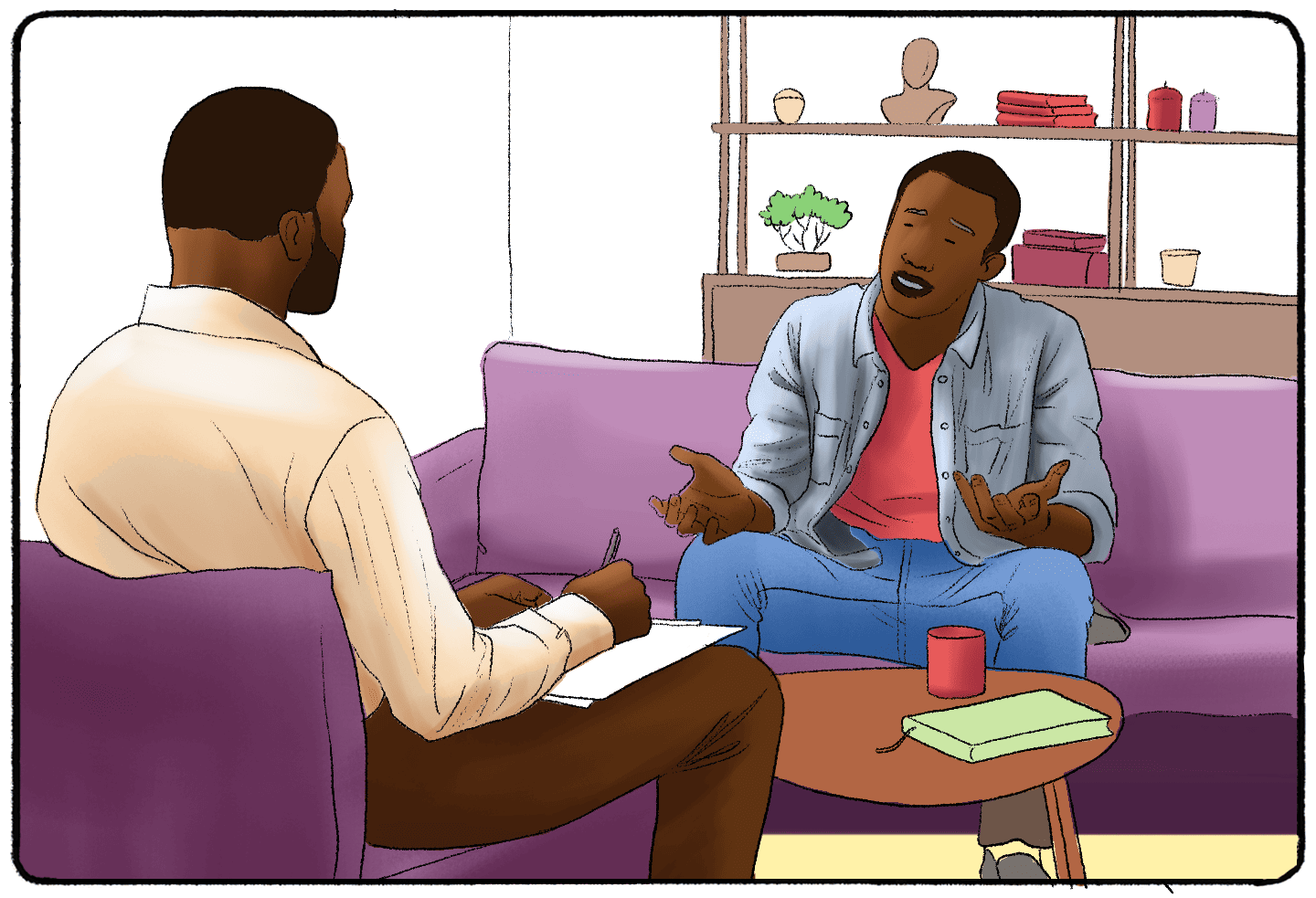
Some of the stereotypes of “therapy” come from Freud’s psychoanalysis process. The patient lies down on the couch, talks about their problems, and eventually learns that they have issues with their private parts and their childhood. These embarrassing and often phallic-related revelations were all the rage in the 1950s and 60s. Not surprisingly, not all psychologists loved this approach.
He noticed that thethoughtsthat popped up during this dialogue had a huge impact on how his patients felt about themselves and the world around them. More notably, these thoughts were oftenautomatic.Patients didn’t notice that these thoughts were something that they could control. They didn’t notice that many of these thoughts weren’t even based inreality.
How Thoughts Affect Our Feelings and Beliefs
I talk about this a lot in my Psychology of Beliefs course. Our beliefs and thoughts really do shape our reality!
Let’s say, for example, that you are upset about being single. You get anxious when you think about going on dates or even striking up a conversation with someone who you think is attractive. Every time you see an opportunity to meet someone new, you tell yourself that you’ll just get shut down or laughed at. This anxiety is keeping you from meeting the love of your lifeorjust enjoying a night out with friends.
The more you tell yourself that you’re setting yourself up for rejection, the more you will believe it. The more you tell yourself that you are not worth anyone’s time, the more you will believe it. Even if these thoughts are completely made up, they will start to overrun your life.
CBT can help you recognize and put a stop to these thoughts.
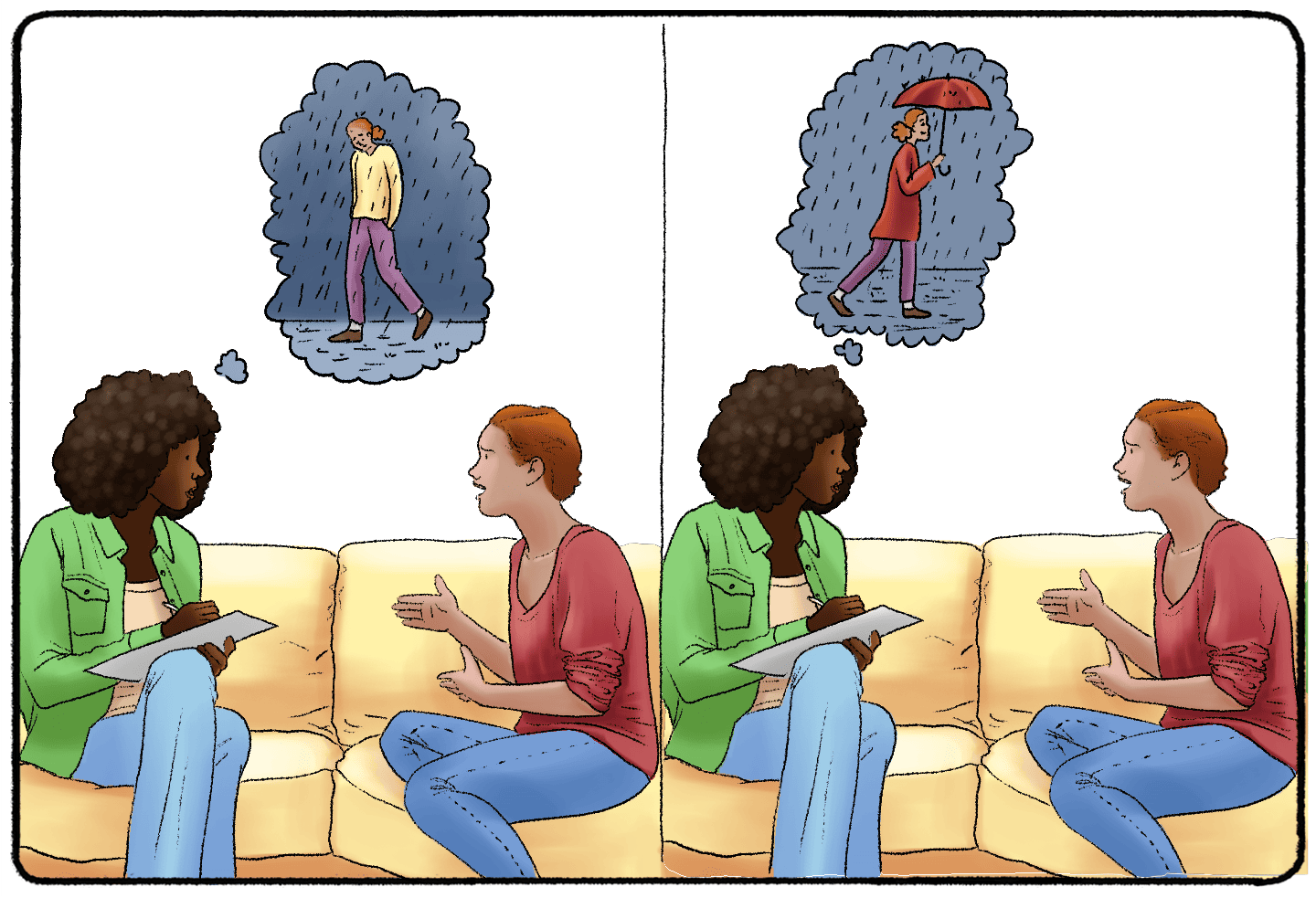
The stereotypical picture of talk therapy involves someone sitting down and spilling their heart out to a therapist for an hour. That’s not exactly how CBT works. Instead, the therapist typically uses an action-based approach.
At first, this involves gathering information and context. The therapist may ask about the patient’s family, but only to understand where negative thoughts may be coming from. CBT practitioners may be more focused on the goals that the patient has and how their thoughts are preventing them from reaching these goals.
Once the therapist understands the patient’s goals, they try to uncover the thoughts that are inhibiting the patient. In the example I used above, the patient may complain about the anxiety involving their love life. The therapist will ask questions to uncover the thoughts that contribute to anxiety. They might learn that the patient thinks that they are setting themselves up for rejection. Or that everyone is laughing at them.
These actions arecrucialto the CBT approach. Therapists may give patients homework or action items to do in between sessions. The actions could be as simple as the patient tracking their mood or meditating on certain thoughts.

Studies have shown that cognitive behavioral therapy can help to treat more serious conditions, including:
Depression
Anxiety
Posttraumatic stress disorder (PTSD)
Tics disorders
Substance abuse and addictions
Eating disorders
Borderline personality disorder (BPD)
Schizophrenia
If you make an appointment with a therapist, does that mean you’ll get a prescription alongside your “homework?”
It’s not for me to say. Not all mental health professionals can write prescriptions. Only trained psychiatrists are able to diagnose and prescribe medication to patients. They may not offer counseling or CBT.
In some states, a clinical psychologist can provide CBT and prescribe medication. But not all psychologists practice in this way. The mental health professional that you see may also feel that medication is not necessary in your situation. You may also have reasons not to be on medication, and that is okay. For non-psychotic disorders, CBT may be able to provide the same results as medication without the risk of side effects.
If you are interested in counseling, reach out to a professional in your area. Ask them about CBT and the way that they approach talk therapy. Look for a few different options before making a decision - some therapists even offer a 15-minute free consultation to help you make a decision.
Therapy isn’t weak. Seeing a psychiatrist doesn’t make you a wimp. By using CBT and other forms of talk therapy, you may become stronger than ever.
Related posts:CBT vs. DBT (Differences + Memorization Techniques)Beck’s Depression Inventory (BDI Test)The Psychology of Long Distance RelationshipsFlooding Therapy (Psychology Definition + Explanation)Therapy Question List (190+ Examples and 10 Types)
Related posts:
Reference this article:Practical Psychology. (2020, March).Cognitive Behavioral Therapy (CBT).Retrieved from https://practicalpie.com/cognitive-behavioral-therapy/.Practical Psychology. (2020, March). Cognitive Behavioral Therapy (CBT). Retrieved from https://practicalpie.com/cognitive-behavioral-therapy/.Copy
Reference this article:
Practical Psychology. (2020, March).Cognitive Behavioral Therapy (CBT).Retrieved from https://practicalpie.com/cognitive-behavioral-therapy/.Practical Psychology. (2020, March). Cognitive Behavioral Therapy (CBT). Retrieved from https://practicalpie.com/cognitive-behavioral-therapy/.Copy
Copy
