Have you ever been at a cocktail party - or any situation with many people talking in the background - and wondered how you could still hear the person you’re talking to?
How, with all of these other people talking in the background, can you decipher what I am saying to you right now? A big jumble of varying words and sounds is entering your ears all at once, and yet you are still able to understand me.
What is the Cocktail Party Effect?How Does the Cocktail Party Effect Work?
What is the Cocktail Party Effect?
How Does the Cocktail Party Effect Work?
This human ability to understand a conversation, even with many distracting sounds and side conversations happening in the background, is known as the “Cocktail Party Effect,” it has baffled psychologists for years. It’s also called “selective auditory attention” or “selective hearing.”

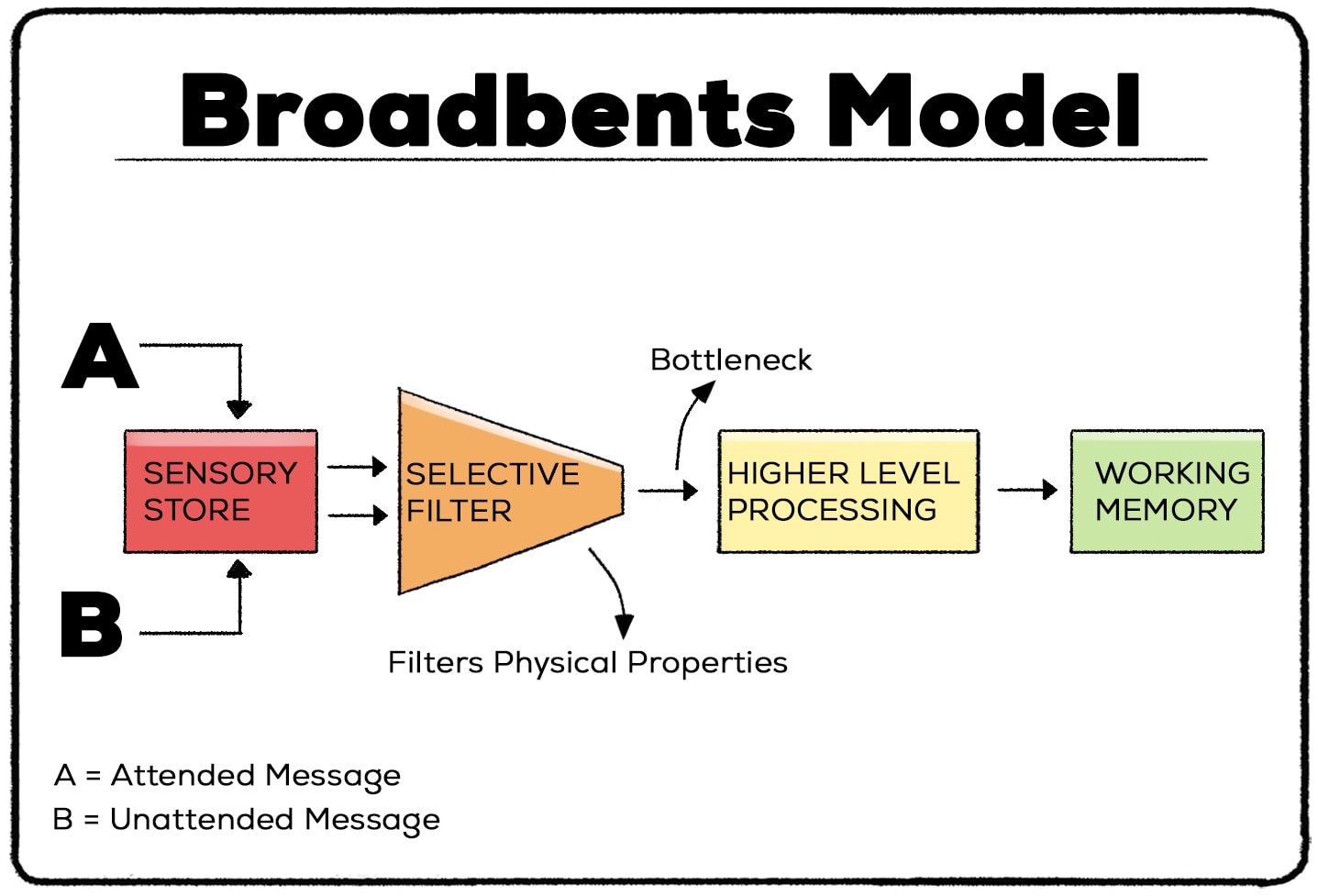
Psychologist Donald Broadbent created a model that shows how our brain filters out the stimuli that it will not payattentionto. Broadbent believed that if the brain decided that the stimuli were not important, it was filtered out. Tone, volume, and other physical characteristics provided the criteria for what our brain thought was worthy of our attention.
Bradbent’s Attention Model seems to break down regarding the Cocktail Party Effect.
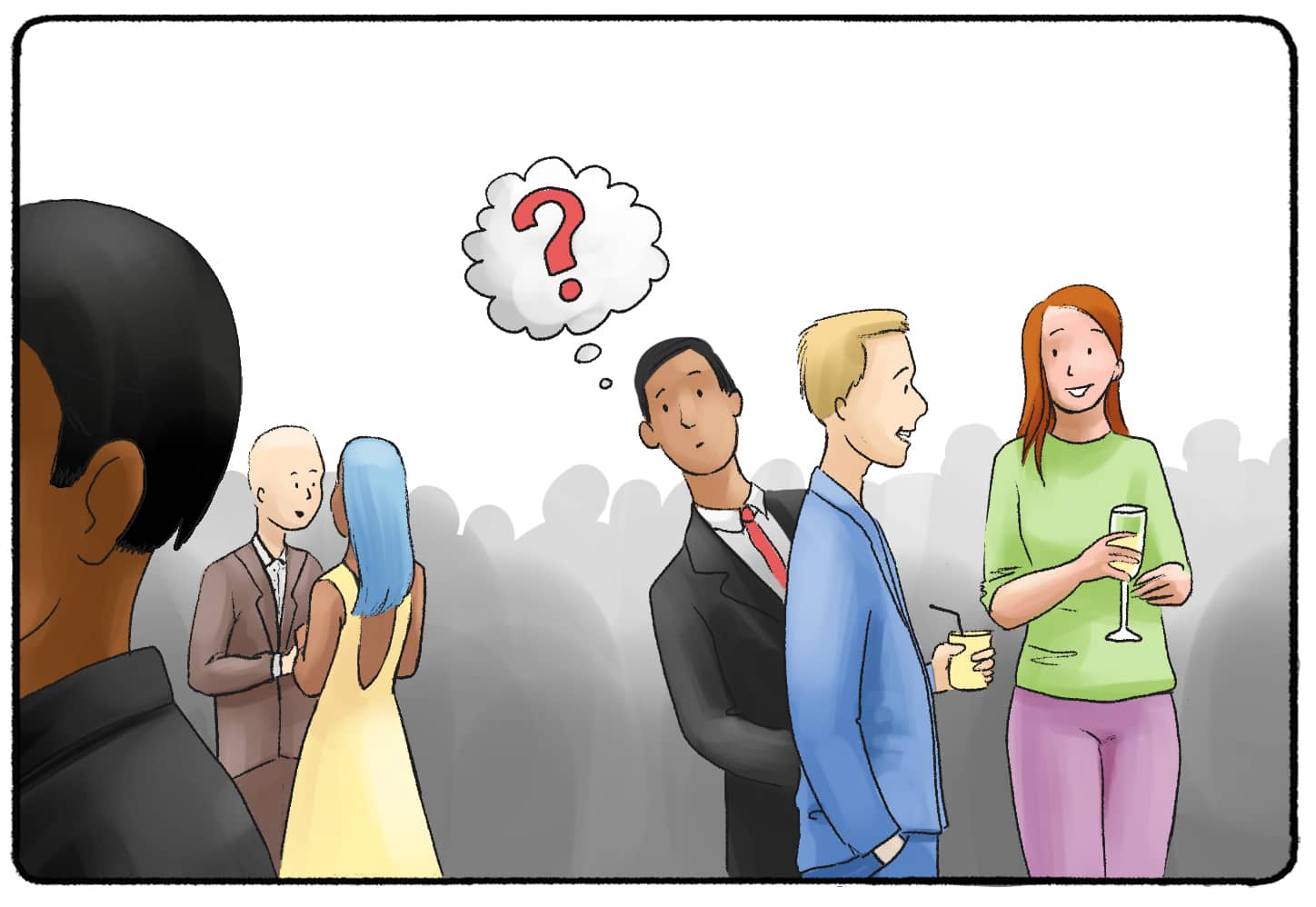
In that MIT paper of 1953, it was theorized that there were five potential ways that a human could separate the voice of the person they were talking to from the voices of surrounding conversations:
Scientists like to focus on just one variable at a time when doing experiments, so the researchers at MIT decided to focus on just that last aspect for their first study. To do this, they recorded two messages from the same talker on magnetic tape and played them back to their subjects wearing headphones.
Experimenting this way effectively nullified those first four variables. The end product of doing that sounded like an incomprehensible babel, but subjects could still hear the two different messages when they focused on one of them. Psychologists considering this study suggested that humans are very good at memorizing the transition properties of words in sentences, which makes it easy for us to predict word sequences.
In short, this study gives us some evidence to answer the cocktail party problem -perhaps we can focus in on one message among many because we are good at using context and our knowledge of language to predict the words we didn’t hear.
So what about those other four potential reasons that we listed earlier? Well, let’s go through them, one at a time:
The direction the voice is coming from
In follow-up experiments considering the cocktail party effect, researchers had their subjects listen to two different messages in a new way. They had their subjects wear special headphones that sent one message into the right ear and the other into the left ear. This created differences in the directions the voices were coming from.
Most subjects struggled to ignore voices from one ear when told to focus on the voice coming into another.
This result implies thatthe direction a voice is coming from isnota factorthat we consider very significantly.
The subjects wouldnothave struggled to separate the audio so much if the direction of the audio had been a significant factor.
Body language (gestures, lip-reading, etc.)
Body languagegoes along with transition probabilities. We saw earlier that predicting words via contextual clues in our language is a good method for us to gain an understanding of a sentence, and body language is a good indicator of context. Therefore, it’s not much of a leap to say that the context we gain from viewing body language helps us to piece together our predictions for sentences, even when we don’t hear every word that was spoken.
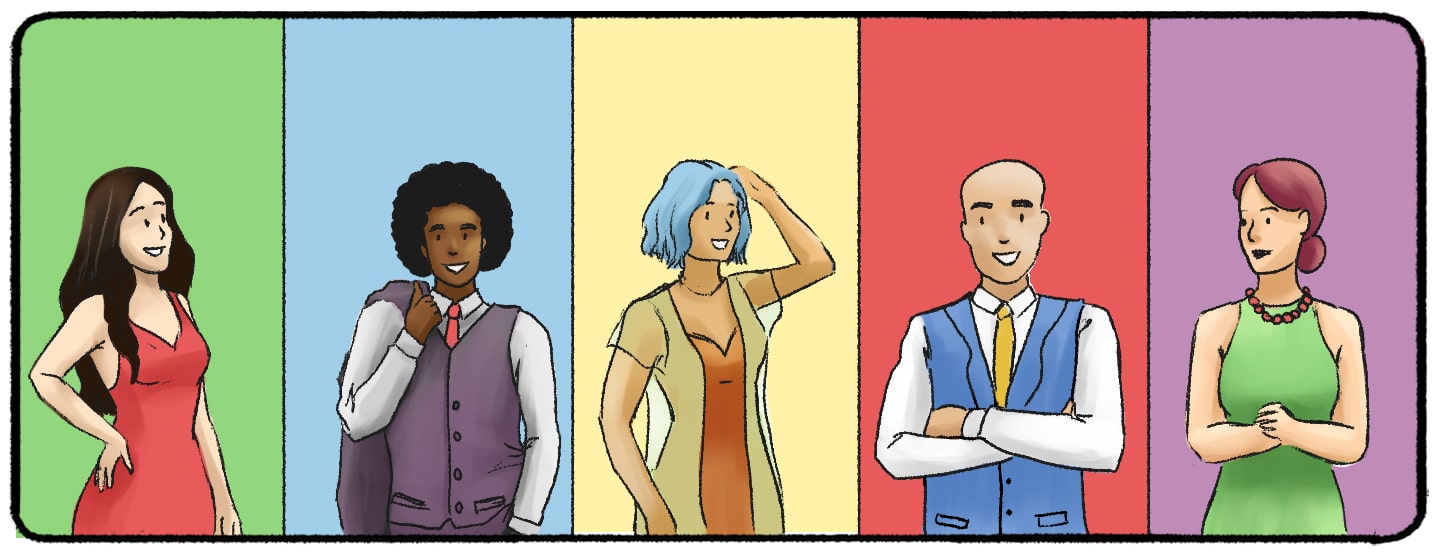
Reading the body language of a speaker is an important factor when predicting words.
Differences in speaking voices (pitch, speed, male vs. female, etc.)
In another follow-up experiment,it was found that subjects typicallydidnotice whenever the pitch, speed, or gender of a speaker was changedwhile they were listening to simultaneous messages. This implies that listeners can pick out a message from a person based on differences in their voice.
Differences in accents
Differences in accents, however, werenotnoticed.
In fact, in an experiment with bilingual English/German speakers as the subjects, those subjectsdid not noticewhen the language of one of the two conflicting messages they were listening to suddenly changed to German! In another experiment, most subjects did not notice when the message they weren’t focusing on was suddenly reversed, and those who did notice said it sounded “a little quirky.” So changes in dialect, accent, language, etc., do not appear to be the most noticeable to our brains when listening to a voice.
Further research went on to find that the human brain uses many factors to listen to a speaker, including:
These reasons and many others have been found to all combine in our brains so that we can focus on the person speaking - and thus overcome distracting noise in the background that we are also hearing. This amazing skill of various techniques going on in our brains is the essence of how we overcome the cocktail party problem.
Sources
“A Review of The Cocktail Party Effect Barry Arons … - MIT Media Lab.“https://www.media.mit.edu/speech/old/papers/1992/arons_AVIOSJ92_cocktail_party_effect.pdf. Accessed 16 May. 2019.
Related posts:The Psychology of Long Distance RelationshipsOperant Conditioning (Examples + Research)Beck’s Depression Inventory (BDI Test)Variable Interval Reinforcement Schedule (Examples)Abandonment Issues (Examples, Causes, and Treatment)
Related posts:
Reference this article:Practical Psychology. (2019, May).Cocktail Party Effect + Examples.Retrieved from https://practicalpie.com/cocktail-party-effect-examples/.Practical Psychology. (2019, May). Cocktail Party Effect + Examples. Retrieved from https://practicalpie.com/cocktail-party-effect-examples/.Copy
Reference this article:
Practical Psychology. (2019, May).Cocktail Party Effect + Examples.Retrieved from https://practicalpie.com/cocktail-party-effect-examples/.Practical Psychology. (2019, May). Cocktail Party Effect + Examples. Retrieved from https://practicalpie.com/cocktail-party-effect-examples/.Copy
Copy
