Have you ever felt you were going in circles trying to make a good argument? You’re not the only one.
Circular reasoning is the formal logical fallacy mistake of using a claim to support itself. It happens when the person starts with what they want to end up with. This faulty circle goes round and round but gets nowhere.
You might not notice it, but circular thinking underlies many common beliefs. It sneaks unnoticed into political debates and advertising slogans. Noticing circular reasoning is the first step in spotting flaws in your thinking. It also helps reveal weaknesses in other people’s arguments.
What is Circular Reasoning?The Origins of Circular ArgumentsExamples of Circular ReasoningFamous Examples of Circular LogicWhy We Use Circular ReasoningDistinguishing from Valid ReasoningSimilar Logical FallaciesHow to Avoid a Logical FallacyConsequences of Circular ReasoningFrequently Asked Questions (FAQ)Conclusion
What is Circular Reasoning?
The Origins of Circular Arguments
Examples of Circular Reasoning
Famous Examples of Circular Logic
Why We Use Circular Reasoning
Distinguishing from Valid Reasoning
Similar Logical Fallacies
How to Avoid a Logical Fallacy
Consequences of Circular Reasoning
Frequently Asked Questions (FAQ)
Conclusion
 ouroboros
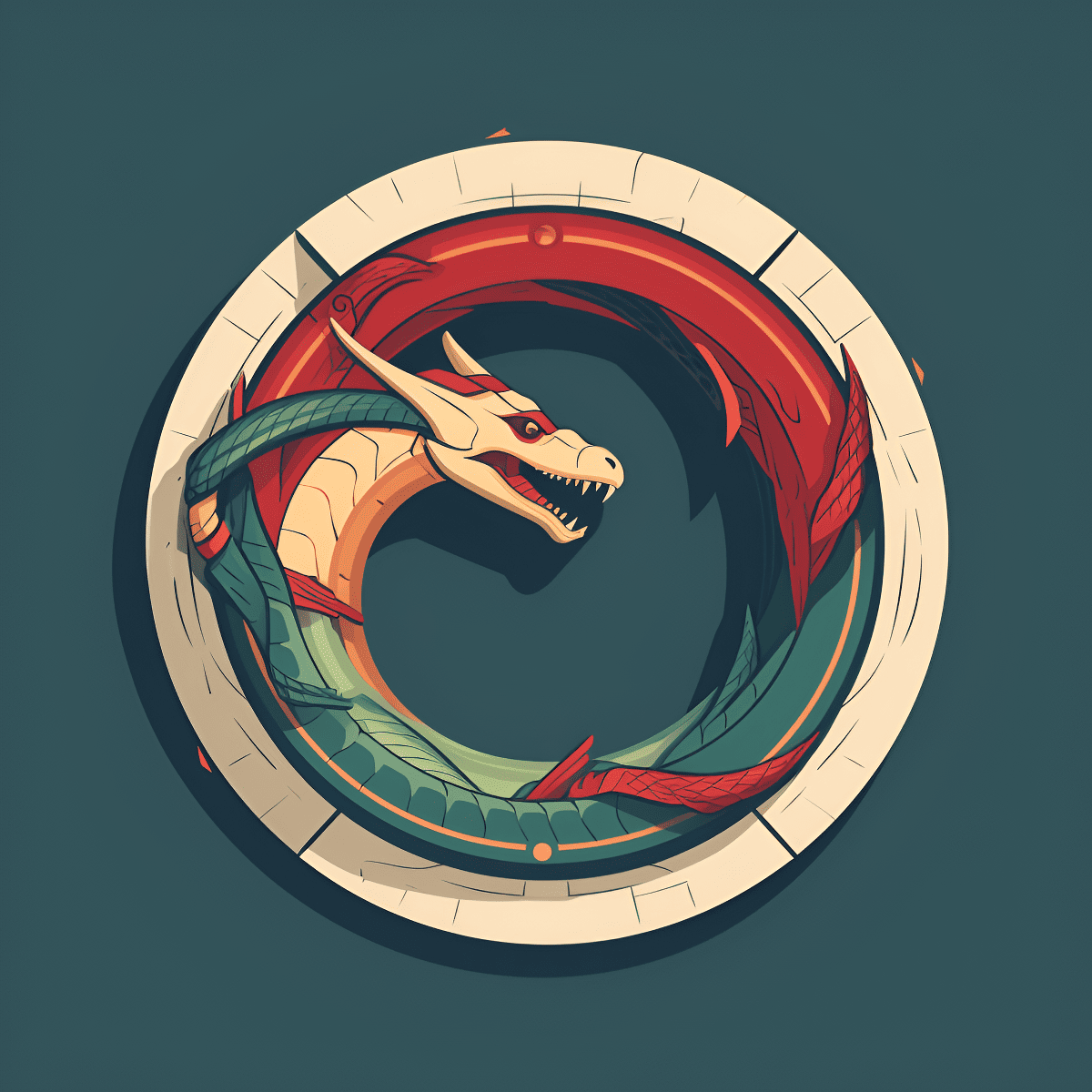
Circular reasoning pops up in everyday situations more often than you may think. You’ve likely used circular logic yourself without even realizing it. Or heard others argue in circles without picking up on the flaw.
Circular reasoning iscalled"begging the question", petitio principii, circular argument, paradoxical thinking, and circularity.
A is true because B is true.
While illogical, the two seem to justify each other’s truthfulness. Perhaps it seems self-evident or a good point, but the question occurs when we look closely at the explanation.
For example, say your friend tells you their horoscope reading is always right because astrology is actual. When you ask how they know astrology is actual, they say because horoscope readings are so accurate.
Their reasoning goes in a loop with no evidence outside the circle offered to support the initial premise.
Apremiseis an assumption or idea that provides support or evidence for a conclusion. Premises are the foundation of logical arguments. They are statements offered as being true or factual. The conclusion then depends on the premises.
Acircular reasoning fallacyhappens when the premise and conclusion are the same. So the premise can’t logically support the conclusion.
Afallacyis an error in reasoning that leads to an invalid argument. Fallacies are flaws or mistakes in logic. Often, these flaws are used to appeal to an audience.
So, circular reasoning is the definition of one common logical fallacy.
As another example, perhaps you’ve seen a commercial claiming a product is the best because so many people buy it. But when pressed on how they know so many buy it, they respond because the product is the best.
The reasoning loops back on itself in a circular argument.
These are overly obvious examples, but circular arguments can be more subtle. The person stating them often doesn’t notice the flaw in their logic. That’s why consciously watching for circular reasoning is key.
Fallacies like circular reasoning are common when people argue about controversial topics. Debates about politics, religion, or social issues often involve circular logic.
Each side starts with their assumptions that support their beliefs. They use these assumptions as premises to make conclusions that align with their thoughts.
The concept of circular reasoning hasn’t popped up out of the blue in recent times. No, this method of thinking has been with us for centuries, weaving its way through discussions and debates.
So where did it all begin?
Well, the ancient Greeks, always the philosophers, were among the first to chat about the pitfalls of circular reasoning.
Thinkers likeAristotlepointed out the flaws in argumentsthat supported themselves. In his works, Aristotle specifically talked about how genuine proofs and logical reasoning should be structured.
Fast forward to the Medieval era. Philosophers, particularly in religious debates, would sometimes unknowingly fall into the trap of circular reasoning.
For instance, one might argue that a religious text is the absolute truth because it claims to be so. See the loop?
In more modern times, the study of logic and reasoning, especially in the academic and scientific worlds, has given us clearer tools and vocabulary to identify and counteract these arguments.
Universities and colleges began offering courses incritical thinking, writing, andlogic. It’s in these settings that students learn to navigate the maze of arguments and come out on the other side with clear, solid reasoning.
But history isn’t just about dates and names. It’s also about understanding patterns. Circular reasoning, despite being identified and criticized repeatedly over the years, continues to find its way into our conversations.
Circular reasoning isn’t something new. It has popped up many times throughout history. Sometimes, it even made big headlines.
Let’s look at some famous moments wherecircular reasoningwas at play.
These are just a few times when circular reasoning entered big historical moments. It shows how important clear thinking is.

Now that you can spot circular reasoning, you may wonder - why do people rely on this logical mistake if it provides no actual proof? Our brains are prone to certain thinking traps that lead to circular logic.
First,confirmation biasmakes us favor information that matches our existing beliefs. We start with assumptions like “My political party is always right.” Then we interpret new events in a way that confirms our assumption, strengthening our conviction.
Cognitive dissonance, having two conflicting beliefs, also leads to circular reasoning. When faced with new information that challenges our views, we might gravitate towards arguments that confirm our beliefs, even if they’re circular. Think of it as your brain’s way of keeping the peace within itself.
The human tendency formotivated reasoningcontributes too. We have an emotional attachment to our deeply held beliefs. So we often use flawed logic on purpose to reach the conclusions we want.
Sometimes, we don’t know enough about a topic to realize an argument is circling back on itself. In other words, we lack knowledge or are ignorant about the topic. It’s tempting to take the path of least resistance. In essence, learning is difficult, and just accepting things at face value without doing the work is easy.
Even the smartest people default to circular reasoning at times. It often happens unconsciously when our brains takemental shortcuts. The key is learning to watch for it in yourself and others.
Okay, now that we’ve delved into the why behind our susceptibility to circular arguments, it’s time to sharpen your skills further.
It’s one thing to spot circular reasoning but another to differentiate it from valid, robust reasoning. Sometimes, the line can be a bit blurry. Let’s see what valid reasoning looks like.

Circular reasoninghas some closely related concepts in the world of logical fallacies. Distinguishing between these similar concepts can sometimes feel like identifying different shades of the same color. But with a careful eye, you can master the art of differentiation.
Let’s untangle these similar concepts.
Alright! You’ve learned a lot aboutcircular reasoning. Now, let’s ensure you can spot and avoid it in real life. Here’s a straightforward guide to help you:
By following these steps, you’ll be better at spotting and avoiding circular reasoning. Remember, it’s important to think clearly and ask questions.
Understanding circular reasoning isn’t just about spotting mistakes in what people say. It’s also about understanding the effects it can have. Let’s examine why circular reasoning is a big deal and what can happen if we don’t catch it.
In short, circular reasoning can lead to a lot of problems. It can confuse us, lead us down the wrong path, and even hurt our relationships. So, it’s really important to understand it and avoid it. Always aim for clear thinking and strong reasons in everything you do.
What is circular reasoning?
Circular reasoning is when the reason given for something is just a repeat of the original statement. It’s like saying, “I’m right because I’m right.”
Why is circular reasoning a problem?
It’s a problem because it gives no real evidence or reasons. It can lead to bad decisions and misunderstandings.
How can I spot circular reasoning?
Look for statements that repeat themselves without giving new information or reasons. Always ask, “Why?” to dig deeper.
Is circular reasoning always flawed?
Most of the time, yes. Good decisions are based on strong reasons. But sometimes, people might use it without realizing it.
How is circular reasoning different from a regular argument?
A regular argument gives reasons and evidence. Circular reasoning goes in a loop without adding anything new.
Can circular reasoning be persuasive?
It can be, especially if someone doesn’t notice it. That’s why it’s important always to think critically and ask questions.
Are there famous examples of circular reasoning?
Yes, from the Salem witch trials to certain advertising claims, this example of circular reasoning has made headlines many times in history.
How can I avoid using circular reasoning?
Always think before you speak, ask for feedback, and be curious. Question your thoughts and the statements of others.
Is circular reasoning the same as repeating oneself?
Not always. Repeating can just be saying the same thing over. Circular reasoning is when the reason given is just a repeat of the statement.
Why should I care about circular reasoning?
Understanding and avoiding circular reasoning helps you make better decisions, have clearer conversations, and think more logically.
Circular reasoning might seem like a simple concept, but as you’ve seen, its effects can ripple out in significant ways. From history to everyday conversations, these circular logic loops can mislead and confuse. But armed with the knowledge you now possess, you’re well-equipped to navigate these circles.
By questioning, reflecting, and always seeking clarity, you can avoid these logical pitfalls and help others do the same. After all, in the realm of reasoning, it’s always better to forge a straight path than to go around in circles.
Related posts:The Psychology of Long Distance RelationshipsLogical Fallacies (Common List + 21 Examples)Operant Conditioning (Examples + Research)Beck’s Depression Inventory (BDI Test)Slippery Slope Fallacy (29 Examples + Definition)
Related posts:
Reference this article:Practical Psychology. (2023, October).Circular Reasoning (29 Examples + How to Avoid).Retrieved from https://practicalpie.com/circular-reasoning/.Practical Psychology. (2023, October). Circular Reasoning (29 Examples + How to Avoid). Retrieved from https://practicalpie.com/circular-reasoning/.Copy
Reference this article:
Practical Psychology. (2023, October).Circular Reasoning (29 Examples + How to Avoid).Retrieved from https://practicalpie.com/circular-reasoning/.Practical Psychology. (2023, October). Circular Reasoning (29 Examples + How to Avoid). Retrieved from https://practicalpie.com/circular-reasoning/.Copy
Copy
