Have you ever seen a movie with continuity errors? It’s astounding how many we fail to notice. Interestingly, about 58% of people don’t spot these errors due to a phenomenon known as change blindness. This intriguing facet of perception reveals how much our brains can sometimes miss, even when the information is right before our eyes!
What Is Change Blindness?
Inattentional Blindness vs. Change Blindness
What Causes Change Blindness?
A Brief History of Discovering Change Blindness
Who Discovered Change Blindness?
Change Blindness Is Normal.
Change Blindness is a cognitive glitch wherein people fail to detect visual environmental changes. They might seem unmistakably evident if you’re actively looking for these changes. Yet, if you’re preoccupied, or something else distracts you, these changes might completely elude your observation, no matter how glaring.
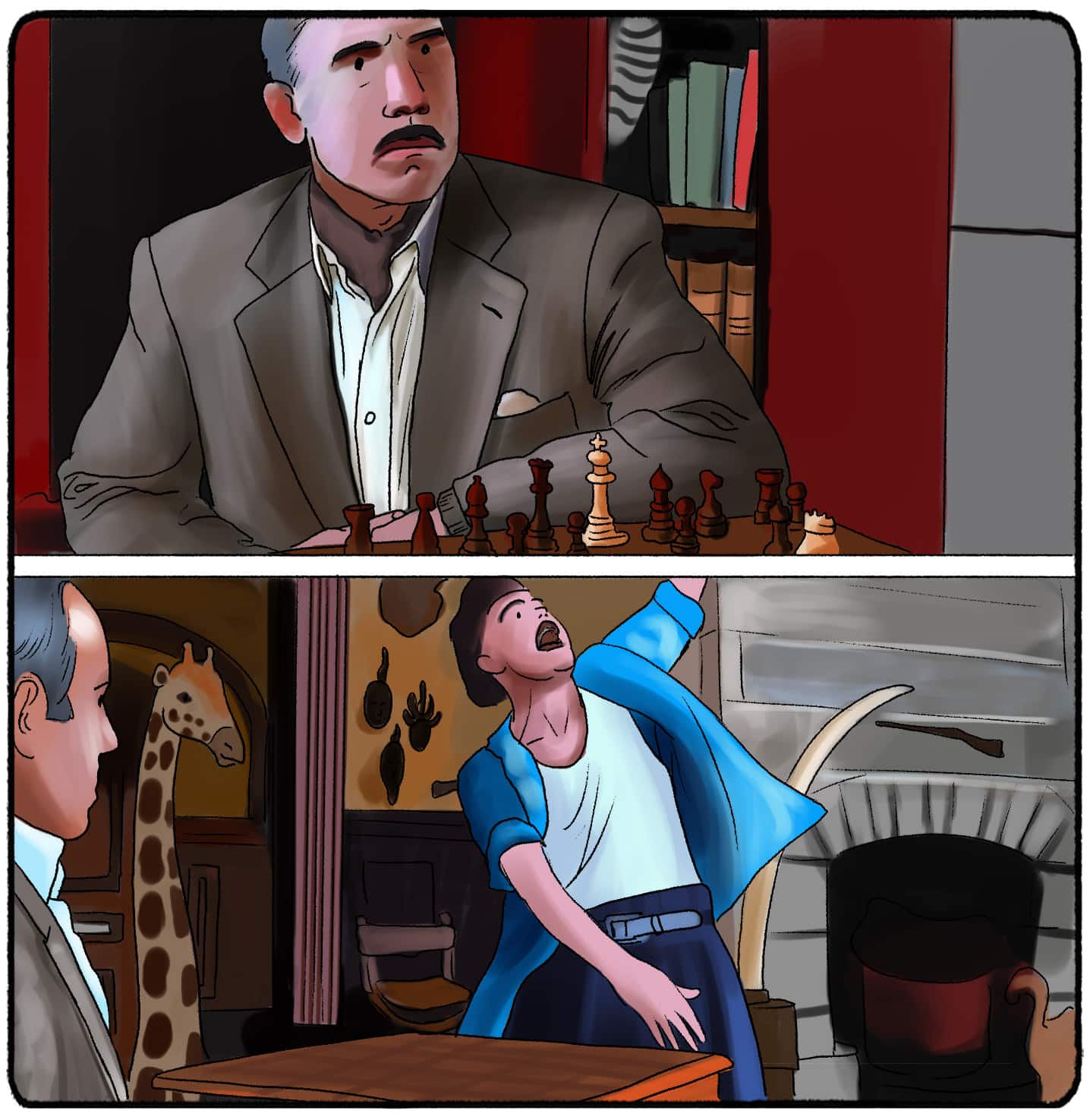
Creating a movie is meticulous, but continuity errors occasionally make it to the final cut. In fact, according to a schema that details common cinematic mistakes, about 32% of all movie errors are related to change blindness.
For instance:
 movie scenes with continuity errors
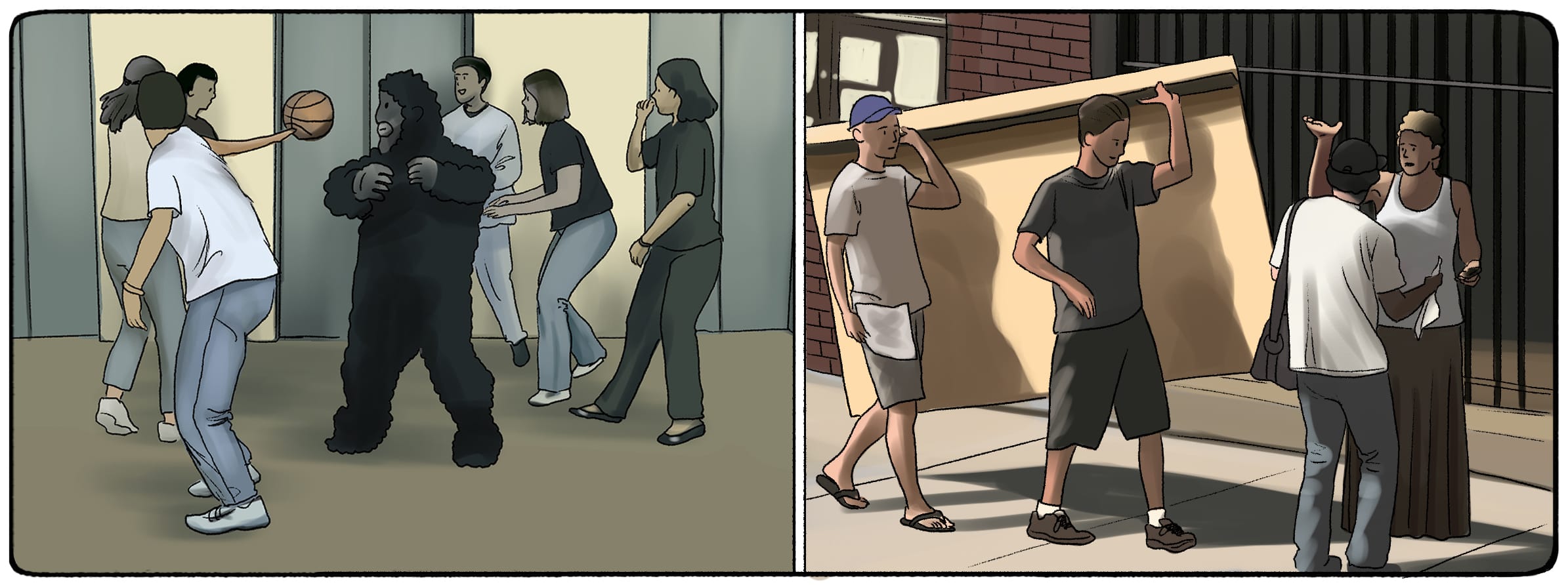
In 1999, psychologists Chris Chabris and Dan Simons conducted what is now known as “The Invisible Gorilla Experiment.” Participants watched a video of people passing basketballs back and forth in the experiment. They were instructed to count how many times the basketballs were passed.
During the video, a person in a gorilla suit walked through the circle. But a shocking number of participants didn’t notice the gorilla’s presence.
This experiment led to the creation of the term “inattentional blindness.” This term is often confused with change blindness. Let’s go over the difference between these two phenomena.
Inattentional blindnessis failing to recognize visual objects when focused on something else. The participants were so focused on the people passing the basketballs that they failed to see the gorilla.
If the gorilla had always been in the environment, but participants failed to see the gorilla change fur colors or put on a shirt, thenchange blindnesswould have occurred.
Change blindnessis the failure to notice changes to visual objects as they happen. During the change, you have recognized all the visual objects in your environment. You don’t see when those objects have shifted, transformed, or changed entirely.
A sharp focus on something in your environment causes inattentional blindness. A lack of focus or other factors may cause change blindness.
There are a few reasons why we might experience change blindness, including:
Distraction
Would the change blindness experiment have also worked if the door hadn’t passed before the pedestrian and the actor? No! Without the door, the pedestrian would have remained focused on the actor, and it would have been easy to notice the change. But a distraction takes ourattentionawayfrom the visual object that changes; therefore, we don’t see the change happening.
Expectations
A lotgoes on as the camera cuts back and forth, but we’re in the same room. When we get to the scene without the chess pieces, our minds have already started to “fill in the blanks.” We don’t have tovisually processevery piece of the set the cameras are showing - that would be exhausting. Weexpectthere to be chess pieces on the board. Why wouldn’t there be? Plus, we have to hear how Ace will solve the case!
So our mind takes “shortcuts” and fills in the blanks. Unfortunately, this often means filling in the blanks where changes have occurred.
Manipulation
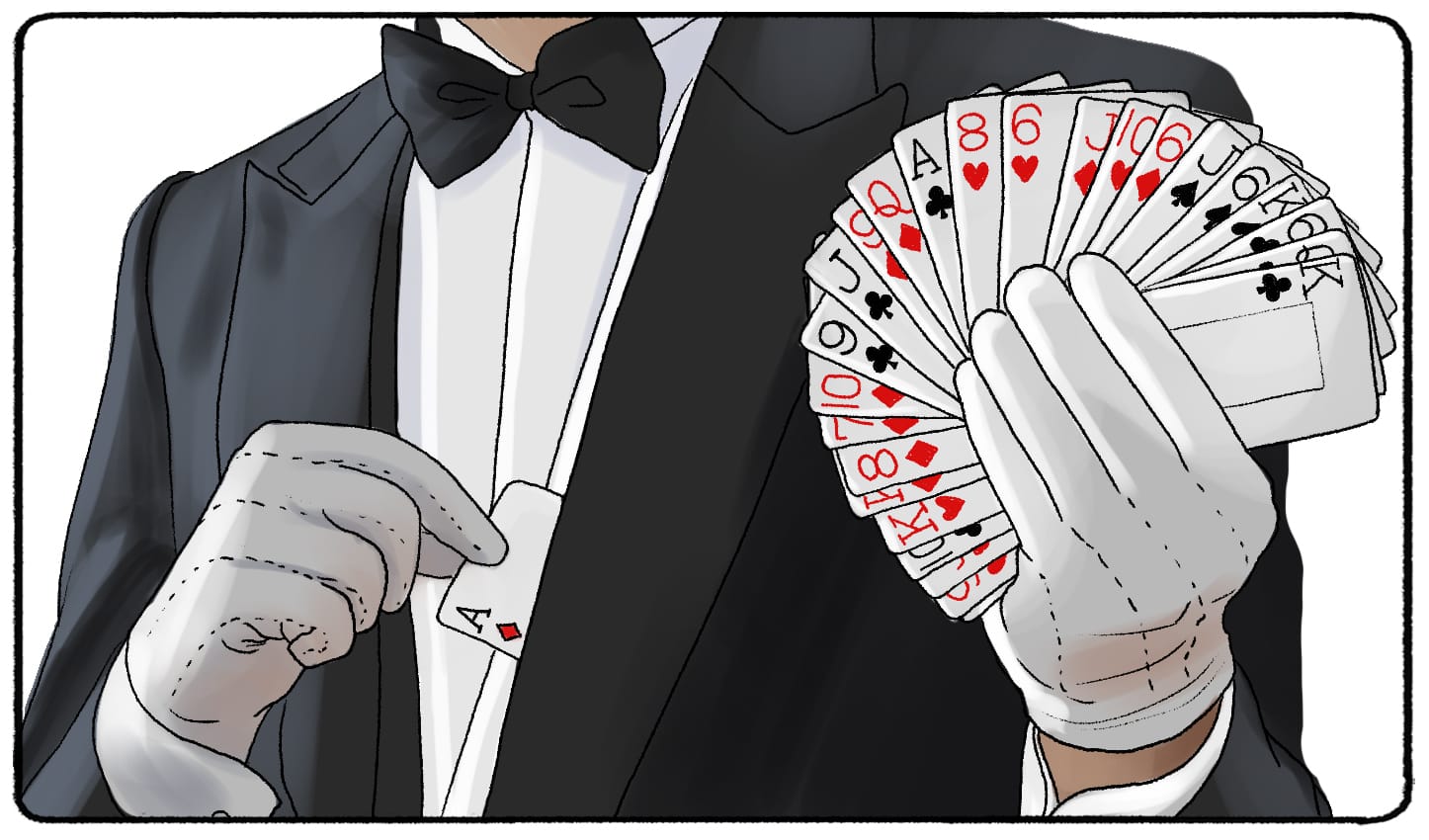
Furthermore, a 1998 study titled “Failure to detect changes to people during a real-world interaction” showcased that change blindness isn’t just restricted to screens. Remarkably, 50% of the participants didn’t detect the actor switch during an in-person interaction!
Changes in Pedestrians
One of the most famous studies on change blindness took place shortly after the study on continuity errors. DJ Simons and Daniel Levin published this study in 1998 called“Failure to Detect Changes to People During a Real-World Interaction.”
This study became famous because it showed that change blindness doesn’t just occur in a 2D space. We experience change blindness “out in the real world,” too.
In the study, an actor initiated a conversation with a pedestrian on the street. They began to ask for directions. As the pedestrian gave the directions, two more actors walked in between the pedestrian and the first actor. During this time, the first actor was switched out with another actor but pretended to be the first actor.
Half of the pedestrians didn’t notice the change!
Related posts:Inattentional Blindness (Definition + Examples)The Invisible Gorilla (Inattentional Blindness)The Psychology of Long Distance RelationshipsAttention (Psychology Theories)Operant Conditioning (Examples + Research)
Related posts:
Reference this article:Practical Psychology. (2020, March).Change Blindness (Definition + Examples).Retrieved from https://practicalpie.com/change-blindness-definition-examples/.Practical Psychology. (2020, March). Change Blindness (Definition + Examples). Retrieved from https://practicalpie.com/change-blindness-definition-examples/.Copy
Reference this article:
Practical Psychology. (2020, March).Change Blindness (Definition + Examples).Retrieved from https://practicalpie.com/change-blindness-definition-examples/.Practical Psychology. (2020, March). Change Blindness (Definition + Examples). Retrieved from https://practicalpie.com/change-blindness-definition-examples/.Copy
Copy
