What makes someone want to be a doctor? What drives someone to commit crimes? Why would someone choose to wear a dress instead of pants? Bronfenbrenner’s Ecological Theory may just have the answer for you.
Social psychology attempts to answer all of these questions and more, in one way or another. Some psychologists believe thatnatureinfluences a person’s personality more than nurture, or the way they were raised. Studies may point to traumatic events as a sign of criminal behavior later in life. Where does culture fit in? Where do the lessons that their parents fit in?
Many theories in psychology attempt to explain how a person develops and where things can go awry. These theories may involve different stages, likeFreud’s stages of psychosexual developmentor Kohlberg’s stages of moral development. In this article, I’m going to talk about a different type of theory - Bronfenbrenner’s Ecological Systems Theory.
What Is Bronfenbrenner’s Ecological Theory?History of Ecological Systems TheoryLayers of the Ecological System TheoryThese Layers Interact With Each OtherUrie Bronfenbrenner Quotes
What Is Bronfenbrenner’s Ecological Theory?
History of Ecological Systems Theory
Layers of the Ecological System Theory
These Layers Interact With Each Other
Urie Bronfenbrenner Quotes
Bronfenbrenner’s Ecological Systems Theory of Development is unlike many theories of development in that doesn’t look at a person’s life in different stages. Instead, it looks at the layers of community that may influence a person’s personality, behavior, and decisions.
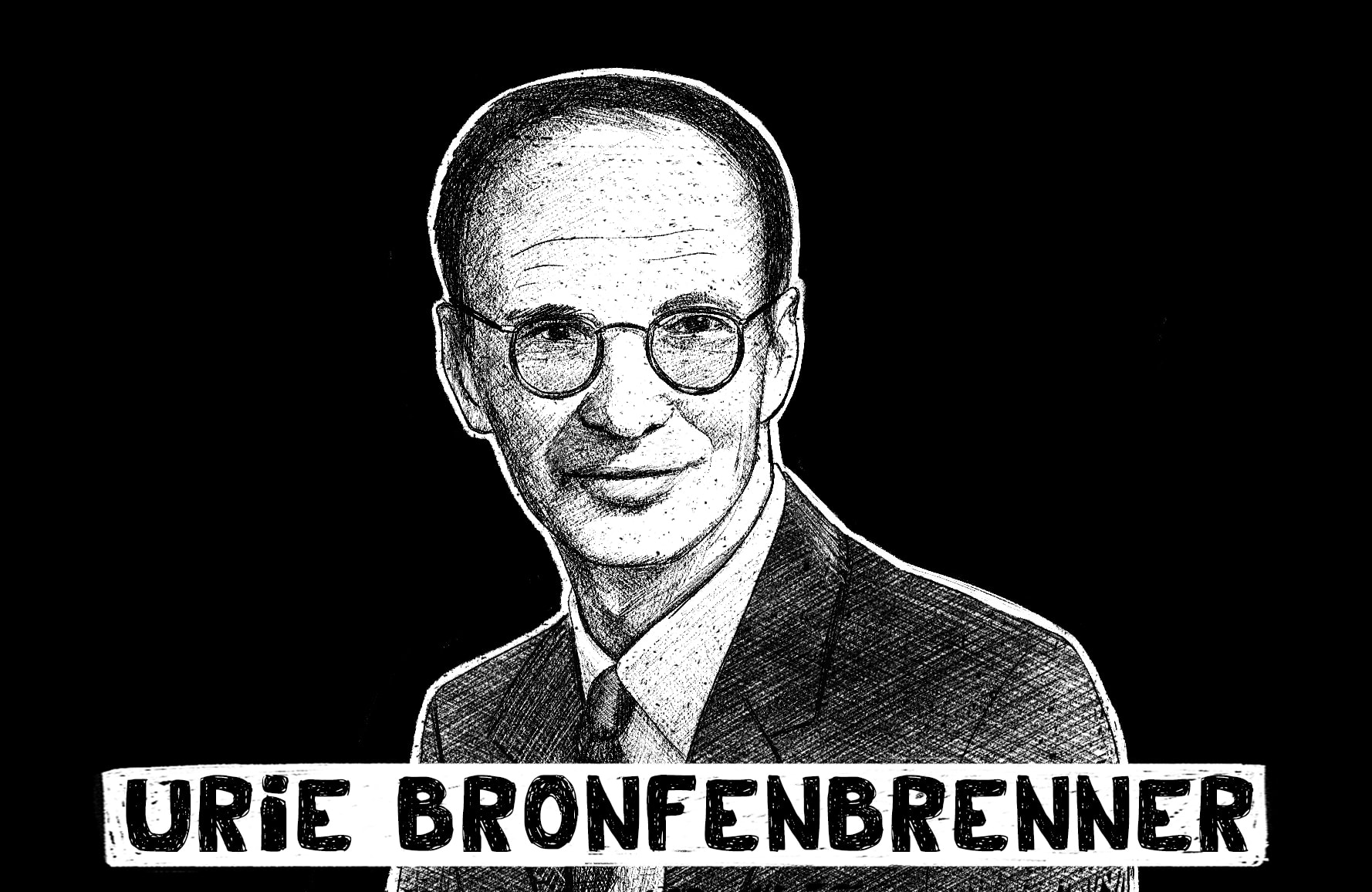
Urie Bronfenbrennerwas an American psychologist whose work helped to influence and start government programs. Before developing Ecological Systems Theory, he co-founded the Head Start program. Head Start is a program that aims to provide education and health services to low-income families around the country. It is still in place today.
 Urie Bronfenbrenner
Bronfenbrenner is most known for Ecological Systems Theory. This theory gives a framework that shows how an individual interacts with different systems in their community and society. It shows just how much can go into a person’s personality and development.
Let’s look at the layers of this theory. It starts with a small circle in the center and continues to expand with each layer or system.
At the center of this framework is the individual. Here, we look at the age of the person, their sex and gender identity, any disabilities that they might face, etc.
Microsystems
But an individual does not just interact with themselves. The next layer of the framework is microsystems. These are communities that the individual interacts with every day, including:
Remember, these are the communities that the individual interacts with. How might they influence an individual’s behavior?
Mesosystems
Outside of the microsystems, we have the mesosystems. This layer represents the relationships between different microsystems.
Say the individual is a child at a public school. They interact with two different communities: their family and their school. Within the mesosystem, psychologists may look at whether the child is comfortable coming to their teacher with a problem at home. Or maybe, they may look at how the parent’s income level influences their status in a school that serves children of a different income level. A child who is considered “poor” in a school filled with “wealthy” kids may have a different experience from a child who fits in with their peers, income-wise.
Exosystem
An individual may not directly interact with groups that influence them. Outside of the mesosystems are exosystems. These are groups that affect a person’s immediate environment.
Maybe the child’s parents have a demanding job that prevents them from attending school fundraisers or showing up to their ballet recital. Even though the child has never gone into their parent’s place of work, it is still influencing the child’s life. Local government is also an example of an exosystem.
Macrosystem
There are larger systems at play. The next layer in Bronfenbrenner’s Theory is macrosystems. These systems include the attitudes and ideology of the culture surrounding the individual.
The larger political climate, for example, may fall into macrosystems, where local governments might fall into exosystems. Society’s view of gender roles may be considered a macrosystem, although the family structure and gender identities of the individual may fall into other layers.
Chronosystem
Although macrosystems may seem like the broadest category in this framework, it is not the last. Bronfenbrenner also suggests that there is a chronosystem that influences the other systems. The chronosystem is the time in which the individual is born and raised and enters different milestones. This puts the individual’s behavior into a larger sociohistorical context.
A child born in the 1950s will have different experiences than a child born in the 1990s, and the macrosystems and exosystems in which they interact with will be different because of the times they are living in. Similarly, an adult entering the workforce at 22 will have a different experience than a teenager entering the workforce at 15.
Graphs displaying Bronfenbrenner’s Ecological Theory show each layer is separate from the rest. But this isn’t always the case. The layers frequently interact with and influence each other. Of course, this makes things more complicated, but it contributes to the overall idea that the motivations behind our behavior are complex.
Example of Bronfenbrenner’s Ecological Theory
Here’s an example of how these layers may interact. Let’s say a man is picking out what he wants to wear. We start with his individual preferences. Does he feel more comfortable wearing a polka-dot tie or basketball shorts? Does he believe that “clothes make the man?” When it comes to the choices he has made in his life, does he believe that he did so with intention or from a lack of free will?
A Reddit user broke down another great example of Bronfenbrenner’s systems:
“Let’s take Bob, Bob is born to a family and for the first few years of life exists almost entirely within that family system. This familymicrosystemdirectly shapes and influences Bob’s behavior and development. As Bob ages, other microsystems begin influencing Bob’s behavior, like schools, church, friend groups, etc.
Now traditional research has measured the influence of each of these microsystems on human behavior quite well, but Bronfenbrenner argues that these things do not occur in isolation. There is amesosystem, which is the interaction between microsystems. Do the parents agree with the teachers? Do they attend conferences? Do they care if homework gets done?
Furthermore, there is anexosystemor a system that does not contain Bob, but still influences his behavior. For example, the architects of his school have indirectly influenced his class size. If dad gets drunk at the bar (Which does not contain Bob), maybe he comes home and beats Bob.
There is also amacrosystem, which is a cultural construct. If Bob is a white, protestant, male, does he benefit from an inherent system of privilege in his day-to-day life? Does he act in accordance with our culture’s moral values?”
You can read the full discussion on Bronfenbrenner’s Ecological Systems Theoryhere!
Why is Bronfenbrenner’s Ecological Theory Important?
Bronfenbrenner’s work goes beyond his Ecological Systems Theory. Below is some wisdom attributed to the late psychologist.
“Development, it turns out, occurs through this process of progressively more complex exchange between a child and somebody else- especially somebody who’s crazy about that child.”
“In order to develop normally, a child requires progressively more complex joint activity with one or more adults who have an irrational emotional relationship with the child. Somebody’s got to be crazy about that kid. That’s number one. First, last and always.”
“In the planning and designing of new communities, housing projects, and urban renewal, the planners both private and public, need to give explicit consideration to the kind of world that is being created for the children who will be growing up in these settings. Particular attention should be given to the opportunities which the environment presents or precludes for involvement of children both older and younger than themselves.”
“One of the most significant effects of age-segregation in our society has been the isolation of children from the world of work. Whereas in the past children not only saw what their parents did for a living but even shared substantially in the task, many children nowadays have only a vague notion of the nature of the parent’s job, and have had little or no opportunity to observe the parent, or for that matter any other adult, when he is fully engaged in his work.”
“Like the sorcerer of old, the television set casts its magic spell, freezing speech and action and turning the living into silent statues so long as the enchantment lasts. The primary danger of the television screen lies not so much in the behavior it produces as the behavior it prevents — the talks, the games, the family festivities and arguments.”
“Witness the American ideal: the Self-Made Man. But there is no such person. If we can stand on our own two feet, it is because others have raised us up. If, as adults, we can lay claim to competence and compassion, it only means that other human beings have been willing and enabled to commit their competence and compassion to us–through infancy, childhood, and adolescence, right up to this very moment.”
Related posts:Urie Bronfenbrenner Biography - Contributions To PsychologyThe Psychology of Long Distance RelationshipsBeck’s Depression Inventory (BDI Test)Concrete Operational Stage (3rd Cognitive Development)Operant Conditioning (Examples + Research)
Related posts:
Reference this article:Practical Psychology. (2020, May).Bronfenbrenner Ecological Theory.Retrieved from https://practicalpie.com/bronfenbrenner-ecological-theory/.Practical Psychology. (2020, May). Bronfenbrenner Ecological Theory. Retrieved from https://practicalpie.com/bronfenbrenner-ecological-theory/.Copy
Reference this article:
Practical Psychology. (2020, May).Bronfenbrenner Ecological Theory.Retrieved from https://practicalpie.com/bronfenbrenner-ecological-theory/.Practical Psychology. (2020, May). Bronfenbrenner Ecological Theory. Retrieved from https://practicalpie.com/bronfenbrenner-ecological-theory/.Copy
Copy
