You can still access this documentary on YouTube, but I should warn you, it’s hard to swallow.
Child of Rage gave an insight into seriously disturbed children before true crime became trendy. As psychologists look at Beth’s case then and now, we can see just how dangerous abuse and neglect can be when experienced as a young child. But we can also see that it is possible to develop a conscience and overcome even the most horrific of struggles.
Child of RageWhere is Beth Thomas Today?What Happened to Beth Thomas?Reactive Attachment DisorderHow Did Beth Receive Treatment?Beth Is Just One Case of RADAdditional RAD Case StudyIf RAD Is Left Untreated
Child of Rage
Where is Beth Thomas Today?
What Happened to Beth Thomas?
Reactive Attachment Disorder
How Did Beth Receive Treatment?
Beth Is Just One Case of RAD
Additional RAD Case Study
If RAD Is Left Untreated
 Beth Thomas Then and now
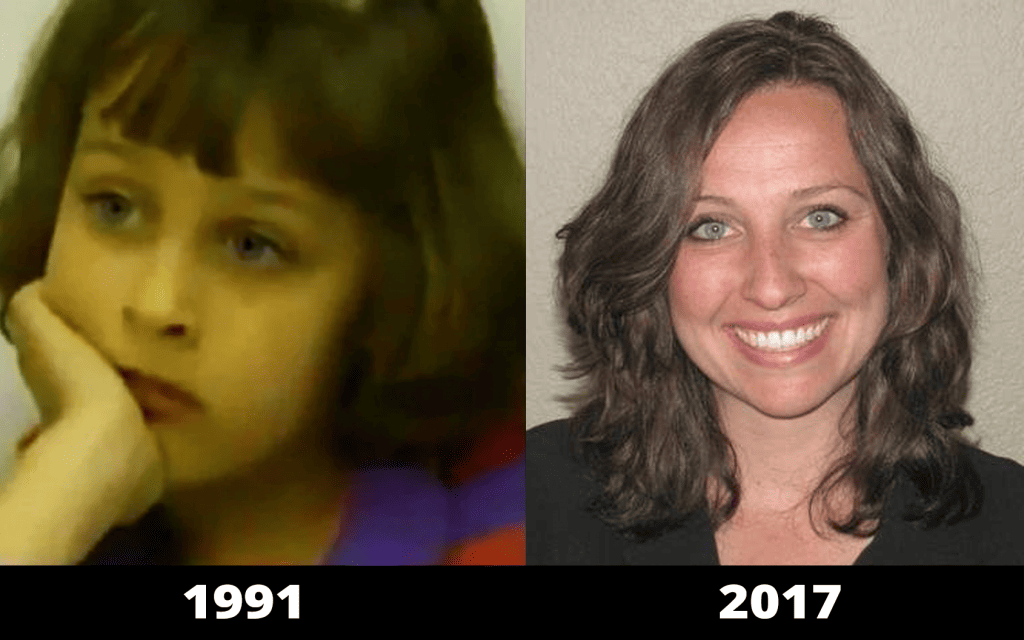
As a quick point of reference, you can see Beth Thomas now above, she is currently a nurse and has written a book about her experiences. After going through therapy, this “Child of Rage” is a success story of someone who has recovered from Reactive Attachment Disorder.
Thomas experienced severe trauma in the first two years of her life. At the age of 1, her birth mother passed away. She and her younger brother were left with her birth father. The birth father neglected the children’s well-being, leaving them with little food. He also routinely physically and sexually abused Beth.
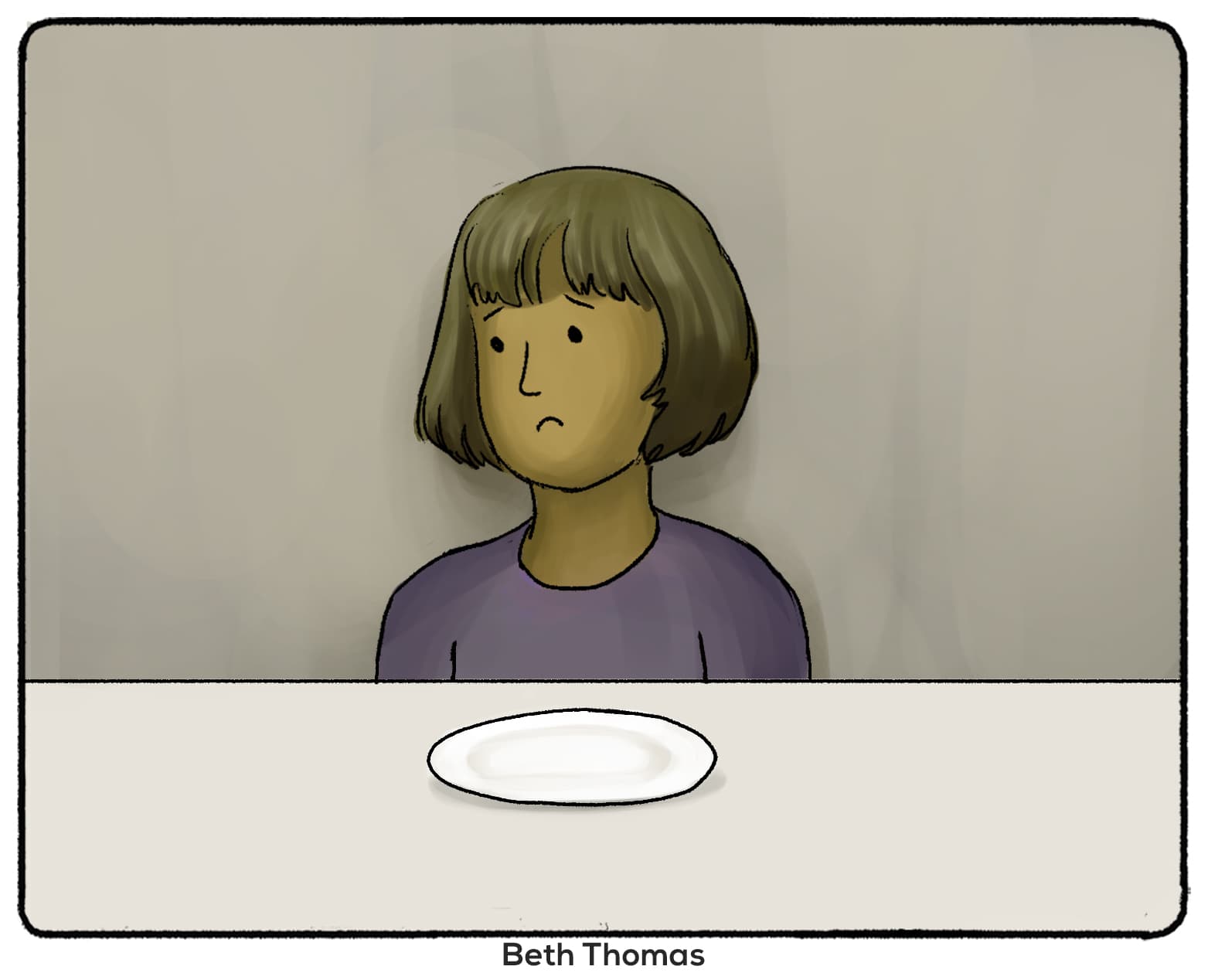
The first two years of a child’s life are crucial for developing a sense of attachment and a conscience. Beth and her brother did not get that opportunity and developed Reactive Attachment Disorder (RAD.) A RAD diagnosis is given only to children with the most severe attachment issues.
Severe attachment issues may develop when:
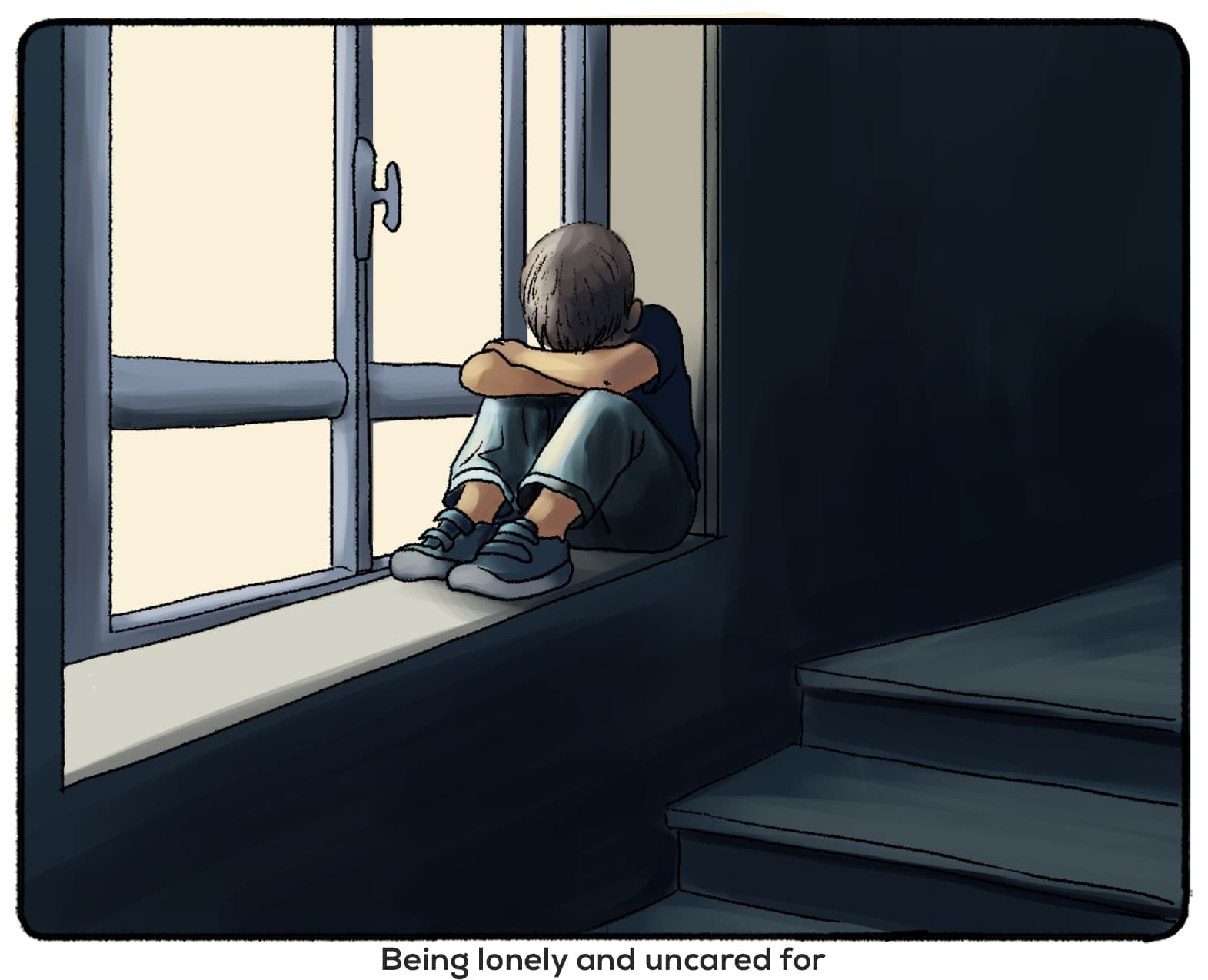
A child with RAD may not perceive touch as a good sensation - they may resist hugs or other types of touch meant to nurture or show affection. They may also display more affection toward complete strangers than to their parents or primary caregivers.
How Many Children Are Affected By RAD?
Experts believe that between 1-2% of children may experience RAD in their earliest years. Unfortunately, that number is almost twice as high for children in the foster care system. As many as5%of children placed in this system may experience RAD. (That study also reported that a year of treatment reduced that number to 2%.)
Abuse and neglect may increase a child’s risk of developing RAD, but it’s not a guarantee. Children who have been abused may not end up developing RAD. Only children are diagnosed with RAD. Diagnosis typically takes place between the age ofnine months and five years.
In Child of Rage, we see Beth Thomas receiving two types of treatment. The documentary opens with her talking to Dr. Ken Magid, a clinical psychologist. Magid specialized in children who have been through severe abuse and trauma in the first few years of their lives.
At one point, the danger of having Beth in the house was too much of a risk for her adoptive family. She was sent to intensive therapy under the care of Connell Watkins. In the documentary, Watkins described the control and care that helped Beth develop a conscience. At first, Beth had to ask for everything. She had to ask to eat, use the bathroom, etc. As Beth earned the trust of Watkins and other facilitators, she was given more privileges. Slowly, Beth began to feel loved, trusted, and accepted.
If you’re wondering how Beth Thomas is doing in 2021, you can actually listen to a full hour interview with her!
Beth Thomas Interview
Beth was able to attend public school and eventually studied to become a nurse. According to Nancy, Beth now works in a Neonatal Intensive Care Unit. This unit contains some of the most fragile and smallest humans. Beth’s ability to work in this unit is a true testament to her recovery and treatment.
Nancy started Families By Design, a program committed to helping families with adopted or fostered children. While she is not a psychologist or doctor herself, she is an accomplished speaker and author. She even co-authored two books with Beth herself, who contributes to some of the webinars and educational materials that Nancy distributes through her business. Beth has turned her her life’s story into a program where she can help other individuals who were abused like her.
Do all children with RAD physically abuse their siblings and have intentions to kill their parents? No. Will all children with RAD go on to become neonatal nurses? No. Beth Thomas is just one child who has gone through child abuse and received treatment for reactive attachment disorder. Her story just happened to be brought to light through an HBO documentary, connections with controversial therapy, and an ultimate story of hope.
We may see another case like Beth Thomas as the subject of an HBO documentary in the future. Until then, the best place to learn about RAD is through other cases of reactive attachment disorder. Case studies illuminate just how tragic and complicated RAD can be.
Take thiscase from 2019. A four-year-old adopted child had been displaying symptoms of RAD for over 18 months. These symptoms included:
Alongside RAD, the child was given a diagnosis of ADHD. Additional psychiatrists diagnosed the child with DMDD, PTSD, anxiety, and a mood disorder. These professionals believed medication would relieve the child’s symptoms. The child began to take guanfacine, fluoxetine, methylphenidate, amphetamine salts, quetiapine, aripiprazole, and thioridazine. (Medications were not all taken simultaneously.) They did not alleviate the child’s symptoms. Risperidone appeared to work, but only after increasing the dosage multiple times. After the child stabbed another child at school, they were taken to impatient care and another course of treatment was considered. The study ends with the child’s admittance to the inpatient child psychiatric unit.
Psychiatrists typically diagnose children under the age of five with RAD. That doesn’t mean RAD goes away when the child turns six years old. If left untreated, RAD symptoms can become dangerous activities.Adolescents and adults with undiagnosed RADmay be mistaken as psychopaths, sociopaths, or simply reckless people.
Children do not develop a sense of empathy until the age of seven or eight. Children with RAD may not develop a sense of empathy at all. Their delayed development may result in the inability to trust, feel compassion, or experience remorse for bad behavior. And that bad behavior may become more and more dangerous if no intervention is taken.
It’s not uncommon for adults with undiagnosed RAD to engage in many reckless behaviors or fall into substance abuse. This is likely the result of extreme anger, anxiety, or other feelings that confuse or motivate the adult with RAD. People with RAD may have a hard time forming relationships. They may isolate themselves and fail to connect with their neighbors or coworkers. Depending on the adult’s experiences, they may fall into the category of moreavoidantRAD orambivalentRAD. (If you have studied attachment styles, you probably already know what these types of RAD look like in relationships!)
What does this mean for an adult with RAD? Well, there is still hope for them. Counseling and psychiatry can still help an adult overcome the trauma they experienced in their early life and allow them to be a productive, happy adult.
Have You Experienced Trauma and Neglect in Your Early Life?
RAD and Other Attachment Disorders
Related posts:
Reference this article:Practical Psychology. (2020, May).Beth Thomas - Child Of Rage.Retrieved from https://practicalpie.com/beth-thomas/.Practical Psychology. (2020, May). Beth Thomas - Child Of Rage. Retrieved from https://practicalpie.com/beth-thomas/.Copy
Reference this article:
Practical Psychology. (2020, May).Beth Thomas - Child Of Rage.Retrieved from https://practicalpie.com/beth-thomas/.Practical Psychology. (2020, May). Beth Thomas - Child Of Rage. Retrieved from https://practicalpie.com/beth-thomas/.Copy
Copy
