Hello and welcome to this deep dive into something really special called “Backward Design.” Have you ever wondered why some lessons at school or workshops at work seem to really stick in your mind?
You walk away reallygettingit, able to use what you learned in real life. Well, there’s a good chance the person teaching you used Backward Design to plan that awesome learning experience.
Why should you care? Because understanding how Backward Design works can make anyone a better learner and even a better teacher, whether you’re helping your kid with homework or leading a team at work. Plus, it’s alearning toolthat schools and companies are using more and more, so it’s good to know what it’s all about.
In this article, we’re going to explore every nook and cranny of Backward Design. We’ll look at its history, why it’s important, and even discuss some theories that support it. We’ll also go over some criticisms and limitations because, let’s face it, nothing is perfect. Finally, we’ll show you real-life examples of how it’s been successfully implemented in different settings.
What is Backward Design?Where did Backward Design Come From?How is Backward Design Important?Theories Supporting Backward DesignHow Can We Use Backward Design?Challenges of Backward DesignBenefits of Backward DesignComparing Backward Design to Other Educational FrameworksPractical Tips for Implementing Backward DesignConclusion
What is Backward Design?
Where did Backward Design Come From?
How is Backward Design Important?
Theories Supporting Backward Design
How Can We Use Backward Design?
Challenges of Backward Design
Benefits of Backward Design
Comparing Backward Design to Other Educational Frameworks
Practical Tips for Implementing Backward Design
Conclusion
 treasure map
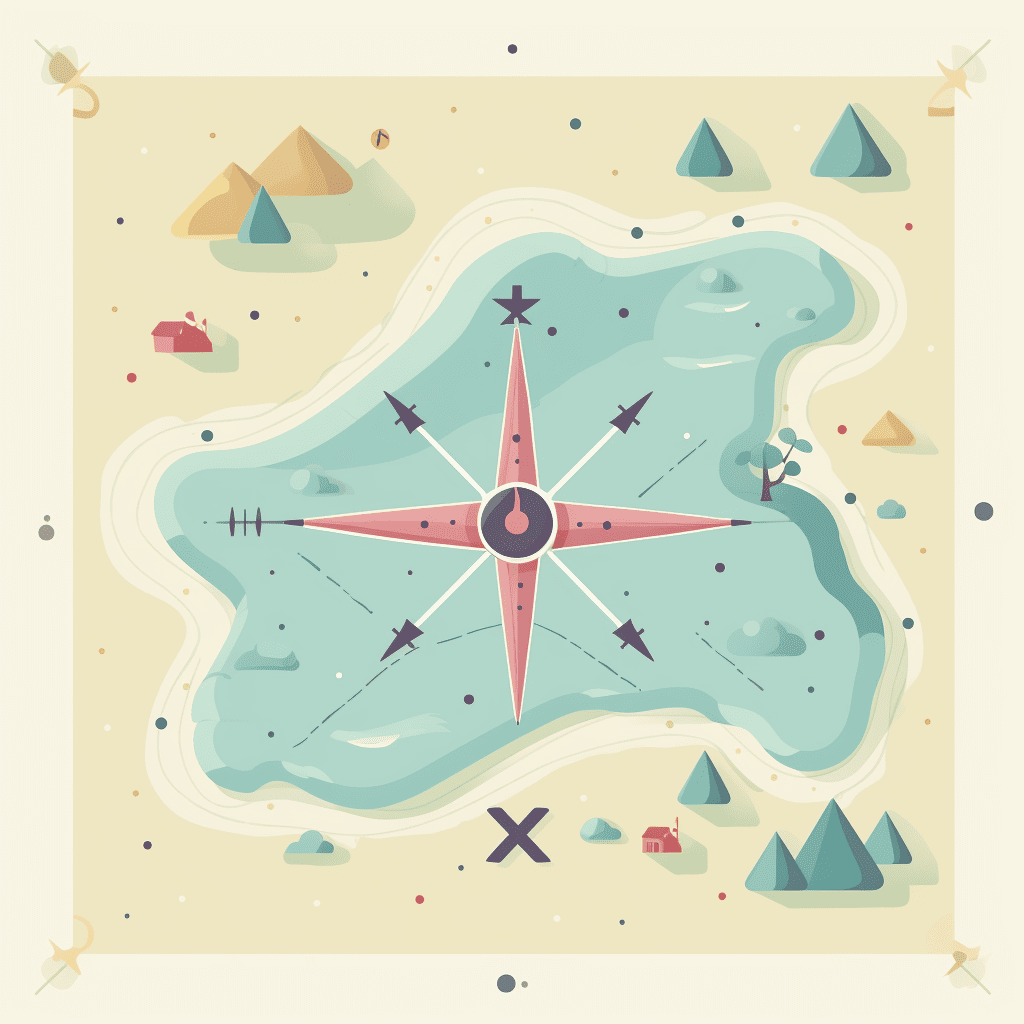
Once the treasure is in place, you then work backward to create the clues (learning activities and assessments) that lead to it.
These parts help you as a teacher, trainer, or even as a learner to keep your eyes on the prize: effective and meaningful learning.
Components of Backward Design
Here’s how those three parts work in a little more detail:
Contrast with Traditional Forward Design
Now you might be wondering, “Isn’t this how all teaching is done?” Not exactly. The old-school way of designing lessons—let’s call it “Forward Design”—starts with the teaching materials and activities, sort of like making up the clues for your treasure hunt before you even know where the treasure is hidden.
Here’s a quick look at how they differ:
AspectBackward DesignForward DesignStarting PointDesired OutcomeLearning ActivitiesFocusGoals and ObjectivesContent and TopicsAssessmentIntegrated from StartOften Added Later
As you can see, Backward Design is more like a planned journey, while Forward Design is more like wandering around and hoping you’ll stumble upon something good. Not that wandering is always bad, but when it comes to effective learning, having a map is usually better!
Before we dive into what makes Backward Design so impactful today, it’s important to go back in time and see where it all started.
Why did they feel the need to come up with Backward Design? Simple: they realized that traditional ways of teaching were often missing the mark. Kids would cram for tests and forget everything a week later. Adults in job training would sit through lectures but couldn’t apply what they’d learned.
Wiggins and McTighe wanted to fix that. They asked a straightforward question: “How can we make learning stick and make it useful?”
Evolution Over Time
Like any good idea, Backward Design didn’t just stay put; it evolved. After its introduction, other scholars and educators picked up the concept and ran with it. Some people expanded on it, and others tried to apply it in various settings—schools, colleges, and even corporate training programs.
In 2005, Wiggins and McTighe published a second edition of their book to include new insights and updates. Around the same time, the approach started getting attention from policymakers. Some states in the U.S., like Massachusetts and North Carolina, even began incorporating elements of Backward Design into their educational standards.
Integration into Curriculum Planning
Today, Backward Design is not just a trendy term but a key part of curriculum planning in many educational settings. You’ll find its principles being applied in lesson plans, educational software, and teacher training programs.
It’s even become a part of the lingo in education circles. You might hear teachers asking, “What are the desired outcomes?” or “What evidence of learning will we accept?” These questions show that the influence of Backward Design is widespread and still growing.
That’s a quick tour of how Backward Design came to be and how it’s changed the world of education and training. Like any journey, knowing where you’ve come from can help you understand where you’re going. And in the world of Backward Design, it’s always about reaching meaningful destinations.
1. For Educators
So why is Backward Design such a big deal, especially for teachers? First of all, it makes teaching way more focused. Instead of juggling a bunch of topics and hoping students will get something out of it, teachers can zero in on what truly matters.
They can ask, “What’s the most important thing my students should learn from this lesson?” By concentrating on the key stuff, they make sure that the class time is well-spent and effective.
Another perk for educators is that it makes grading easier and fairer. When you know what you’re looking for from the start, assessing a student’s work becomes more straightforward. You’re not grading them on how well they remember random facts, but on how well they’ve met the learning goals you set.
2. For Learners
Okay, teachers love it, but what about students? Well, Backward Design is also a winner for them. Ever felt lost in a class, not knowing why you’re learning something? That’s less likely to happen with Backward Design. Students know right from the start what they’re aiming for, which helps keep them motivated and on track.
Plus, because Backward Design focuses on real-world skills and applications, students can easily see the value in what they’re learning. No more asking, “When will I ever use this?” They know they’re learning things that will help them in the future, whether it’s acing a job interview or understanding how to budget their money.
3. In Corporate Training and Adult Education
But let’s not stop at schools. The power of Backward Design stretches far beyond the classroom. Companies are catching on to how effective this approach can be for training employees. Think about it: a well-planned training program can save a company lots of time and money.
By focusing on the end goals—say, improving customer service or increasing sales—trainers can build a program that really works. No more slogging through boring PowerPoint slides that nobody remembers the next day. Instead, employees get active, engaging training that equips them to do their jobs better.
There you have it—the importance of Backward Design isn’t just academic; it’s practical and far-reaching. Whether you’re in a school, a training room, or even self-learning at home, this approach can make the experience more meaningful and effective. And isn’t that what learning should be all about?
By acknowledging these theories and the scholars who contributed to them, we not only appreciate the intellectual roots of Backward Design but also understand its strong academic underpinnings. These theories collectively validate why Backward Design is more than a passing trend; it’s a research-based, effective approach to education.
Constructivism
Bloom’s Taxonomy
When teachers use Backward Design, they can consult Bloom’s Taxonomy to identify the level of cognitive skills they wish students to attain. Whether the goal is simply to remember dates or analyze historical events, Backward Design helps educators map out a targeted learning path to achieve the desired complexity level.
Self-Determination Theory
When students are aware of the learning objectives from the start, as they are in a Backward Design framework, they are likely to be more motivated to achieve those objectives. Knowing what the end goal is, just like knowing what the treasure is at the end of a hunt, can make the educational journey more motivating and fulfilling.
Zone of Proximal Development
Backward Design aids educators in targeting this zone. Knowing the end goals allows teachers to craft learning experiences that offer just the right level of challenge and support, enabling students to work in their Zone of Proximal Development and thus optimize their learning.

In K-12 Education
Step 2: Determine Assessment CriteriaOnce the outcomes are clear, educators figure out how they’ll measure success. Will it be a written test, an oral presentation, or perhaps a group project?
Step 3: Plan Learning ExperiencesFinally, the fun part—planning the activities, lectures, and discussions that will guide students toward the desired outcomes. Teachers can incorporate videos, interactive exercises, and even field trips to make the learning experience rich and engaging.
In Higher Education
In colleges and universities, Backward Design is equally applicable. Here, instructors often have more flexibility, but the principles remain the same.
Step 2: Develop Grading CriteriaAssessment in higher education might include essays, exams, research papers, or even practical work for courses in the sciences or arts.
Step 3: Organize Course MaterialFinally, the course material is organized in a logical way to guide students towards meeting the objectives. This could involve a combination of lectures, readings, labs, or discussions.
Corporate Training
Even outside the traditional educational environment, Backward Design has its place. In corporate training programs, the approach is highly effective.
Step 1: Identify Skill GapsCompanies first identify the skills they need their employees to develop. This could range from mastering a new software tool to improving customer service skills.
Step 2: Set Performance MetricsNext, companies establish how they will measure success, such as through performance reviews or KPIs (Key Performance Indicators).
Step 3: Design Training ProgramFinally, trainers create an engaging and effective training program aimed at bridging the identified skill gaps. This might include workshops, webinars, or on-the-job training.
So whether you’re in a classroom filled with children, a university lecture hall, or a corporate training room, Backward Design offers a structured and effective way to reach your learning goals. And the best part? This approach is flexible enough to be customized for any educational context.
While these challenges and criticisms provide a more nuanced view of Backward Design, they don’t necessarily invalidate its effectiveness. Many educators find ways to adapt the approach to suit different learning environments and needs.
By being aware of these potential pitfalls, teachers, trainers, and curriculum designers can take steps to mitigate them.
Time-Consuming Planning Phase
One of the most frequently cited challenges of Backward Design is the time commitment required for planning. Educators likeLinda Darling-Hammondhave noted that preparing comprehensive plans and aligning them with assessments and activities can take substantial time.
This is particularly burdensome for educators who may already be grappling with other responsibilities like grading, classroom management, and ongoing professional development.
However, proponents argue that the time investment upfront often leads to more effective and efficient teaching down the line.
Potential for Overemphasis on Assessment
Educational scholars likeAlfie Kohnhave raised concerns that an approach like Backward Design, which starts with outcomes and assessments, might place too much emphasis on testing and grading.
This focus could overshadow other crucial aspects of education, such as fostering a love for learning, encouraging creativity, and developing social skills. The concern here is the potential for “teaching to the test” at the expense of a more holistic education.
Complexity in Applying to Broad Subjects
Researchers likeHoward Gardner, known for his theory of multiple intelligences, point out the challenges of applying Backward Design to broader subject areas.
For instance, it’s difficult to set specific, narrow learning goals for interdisciplinary courses like “Environmental Science” that integrate biology, chemistry, and social science. The challenge lies in encapsulating the breadth of these disciplines into a set of focused objectives without diluting the complexity and richness of the subject matter.
Rigid Framework
Is It Suitable for All Learners?
Scholars in the field of special education, such as Thomas Hehir, question whether the Backward Design framework is flexible enough to accommodate learners with diverse needs. Issues around accessibility, differentiated instruction, and cultural responsiveness come to the fore.
The key question is whether a one-size-fits-all approach can adequately cater to a classroom that is increasingly diverse in terms of learning styles, physical abilities, and cultural backgrounds.
Clear Learning Objectives
Renowned educatorGrant Wiggins, one of the creators of Backward Design, emphasized the value of well-defined learning goals in providing direction to both teaching and learning.
Improved Assessment Accuracy
Backward Design allows for a more accurate and meaningful assessment of student learning. Experts likeDylan Wiliamhave pointed out that because assessments are aligned with learning objectives from the get-go, they are more likely to be valid measures of student understanding and skill. This stands in contrast to traditional methods where assessment can sometimes feel disconnected from the teaching.
Flexibility
Despite its structured nature, Backward Design is highly flexible. Curriculum theoristJay McTighe, another co-creator of Backward Design, highlights how the approach can be adapted for different subjects, age groups, and educational settings. This adaptability makes it a popular choice for a wide range of educational contexts, from K-12 to higher education and corporate training.
Encourages Higher-Order Thinking
Educators likeLorin Anderson, who revised Bloom’s Taxonomy, appreciate that Backward Design encourages higher-order thinking skills. Because educators start with the end in mind, they can plan activities that go beyond rote memorization, facilitating skills like analysis, evaluation, and creation. This helps students become not just passive receivers of information, but active constructors of knowledge.
Greater Student Engagement
Teachers likeCarol Ann Tomlinson, known for her work on differentiated instruction, have noted that when students understand what they’re working towards, they are often more engaged and motivated. Backward Design’s focus on clear objectives and transparent assessments lets students know what’s expected of them, which can enhance their motivation to succeed.

Each of these educational frameworks has its merits, but Backward Design stands out for its focus on alignment between learning objectives, assessments, and instructional strategies. Understanding how it compares to other frameworks helps educators make more informed choices about which approach to use in different teaching and learning contexts.
Traditional Forward Design
The traditional approach to education planning, sometimes called “Forward Design,” usually starts with content and activities. Teachers first decide what to teach (content), then how to teach it (methods and activities), and finally, how to evaluate learning (assessment).
Dr. Benjamin Bloom, who created Bloom’s Taxonomy of learning objectives, often adhered to this method. While it is still widely used, Forward Design can sometimes lead to misalignment between learning objectives and assessments, something that Backward Design explicitly seeks to avoid.
Montessori Method
Project-Based Learning (PBL)
Inquiry-Based Learning
Flipped Classroom
In this model, traditional classroom activities and homework assignments are reversed. Teachers like Aaron Sams andJonathan Bergmannhave popularized this approach, which often involves students watching lectures at home and engaging in activities during class. While the Flipped Classroom also aims for active learning and engagement, it doesn’t necessarily start with specific outcomes in mind, making it different from Backward Design in its initial focus.

By following these practical tips, educators can take meaningful steps towards successfully implementing Backward Design. The transition may come with its challenges, but the potential benefits for both teachers and students are substantial.
1. Start Small
For those new to Backward Design, diving in with an entire curriculum may feel overwhelming. Educational consultant and author Heidi Hayes Jacobs recommends starting with a single unit or even just one lesson. Once you’re comfortable with the approach, you can expand to more complex planning projects.
2. Collaborate with Peers
Collaboration can provide invaluable insights and make the planning process less burdensome. Teams of teachers often find it easier to brainstorm learning goals, assessment methods, and instructional strategies. Renowned educator Carol Ann Tomlinson, who we mentioned earlier, supports the idea of collaborative teaching and planning.
3. Use Existing Resources
You don’t have to reinvent the wheel. There are many resources, including templates and examples, available to help guide the Backward Design process. Curriculum theorists like Jay McTighe have developed specific materials to assist educators in applying this method effectively.
4. Be Prepared to Revise
Just like any plan, your initial Backward Design framework may require adjustments. Formative assessment expert Paul Black advocates for continuous improvement through the feedback loop, which involves tweaking the lesson plans based on student performance and other data.
5. Prioritize Student Understanding
As you create assessments and instructional strategies, keep student understanding at the forefront. Educators like Grant Wiggins emphasize that the ultimate goal of Backward Design is not just to teach content but to facilitate true understanding and application of knowledge.
6. Consult Administration
Before implementing a new curriculum design strategy like Backward Design, it’s often beneficial to consult with school or organizational administrators. Doing so can ensure alignment with broader educational goals and compliance with any applicable standards or regulations.
7. Consider Technology Integration
Educational technology experts like Dr. Ruben Puentedura, known for the SAMR model, suggest that technology can play a powerful role in implementing Backward Design. Whether it’s digital assessments or interactive activities, technology can offer innovative ways to achieve your learning objectives.
Let’s quickly recap what we’ve learned about Backward Design:
Backward Design serves as more than just a tool for curriculum planning; it represents a shift in how we think about education. Instead of starting with what educators want to do, it starts with what students need to learn. This learner-centered focus makes it a powerful approach for modern education, where student engagement and outcomes are increasingly emphasized.
As educational paradigms continue to evolve, frameworks like Backward Design will likely undergo revisions and adaptations. Current trends in educational technology, personalized learning, and inclusive education all offer exciting avenues for integrating and evolving the principles of Backward Design.
For educators looking to align their teaching methods with desired learning outcomes, Backward Design offers a robust, flexible framework. Whether you’re teaching in a traditional classroom, a corporate setting, or an online platform, taking the time to plan backward can lead to more effective, engaging, and meaningful learning experiences.
And there we have it—a comprehensive look at Backward Design, from its origins and methodology to its benefits, challenges, comparisons with other frameworks, and practical tips for implementation. We hope this guide serves as a valuable resource for educators and curriculum designers alike, offering insights and strategies to enhance teaching and learning for all.
Related posts:19+ Experimental Design Examples (Methods + Types)37+ Instructional Strategies (Examples + Quizzes)47+ Blue Collar Job Examples (Salary + Path)25 Reasons Homework Should Be Banned (Busywork Arguments)Educational Psychologist Career (Salary + Duties + Interviews)
Related posts:
Reference this article:Practical Psychology. (2023, September).Backward Design (Lesson Planning + Examples).Retrieved from https://practicalpie.com/backward-design/.Practical Psychology. (2023, September). Backward Design (Lesson Planning + Examples). Retrieved from https://practicalpie.com/backward-design/.Copy
Reference this article:
Practical Psychology. (2023, September).Backward Design (Lesson Planning + Examples).Retrieved from https://practicalpie.com/backward-design/.Practical Psychology. (2023, September). Backward Design (Lesson Planning + Examples). Retrieved from https://practicalpie.com/backward-design/.Copy
Copy
