Looking for the definition and some examples of autobiographical memory? No worries, here you will find all the information psychologists have found so far.
If you ever want to fall in love with someone, just check outThe 36 Questions That Lead to Love.These questions dive deep into each partner’s values, accomplishments, and shortcomings. And I meandeep.
Question #11 ofThe 36 Questions That Lead to Loveisn’t exactly a question. It states: “Take four minutes and tell your partner your life story in as much detail as possible.”
It’s common to need a minute or two to prepare this story. Very few people areaskedto tell their life stories. Where do you begin? What is most important to include?
To tell the story of your life, you’ll need to pull from a specific collection of memories: autobiographical memories. This page will explain what autobiographical memories are, what they consist of, and the differentlevelsof autobiographical memory. These memories can have a big impact on the decisions you make and how you view yourself, so it’s important to check in with them here and there.


What Are Autobiographical Memories?What Type of Memories Make Up Autobiographical Memories?Three Levels of Autobiographical MemoryYou Control the Story of Your LifeChange the Story Of Your Life To Influence More Positive BehaviorsInspirational Quotes About Writing Your Own Story
What Are Autobiographical Memories?
What Type of Memories Make Up Autobiographical Memories?
Three Levels of Autobiographical Memory
You Control the Story of Your Life
Change the Story Of Your Life To Influence More Positive Behaviors
Inspirational Quotes About Writing Your Own Story
Autobiographical memories are a form of memory that we store in first-person because they happened to us. We are much more likely to remember autobiographical memories and can recall them in much more detail.
Characteristics:
This last characteristic is very important, but I’ll dive intowhylater.
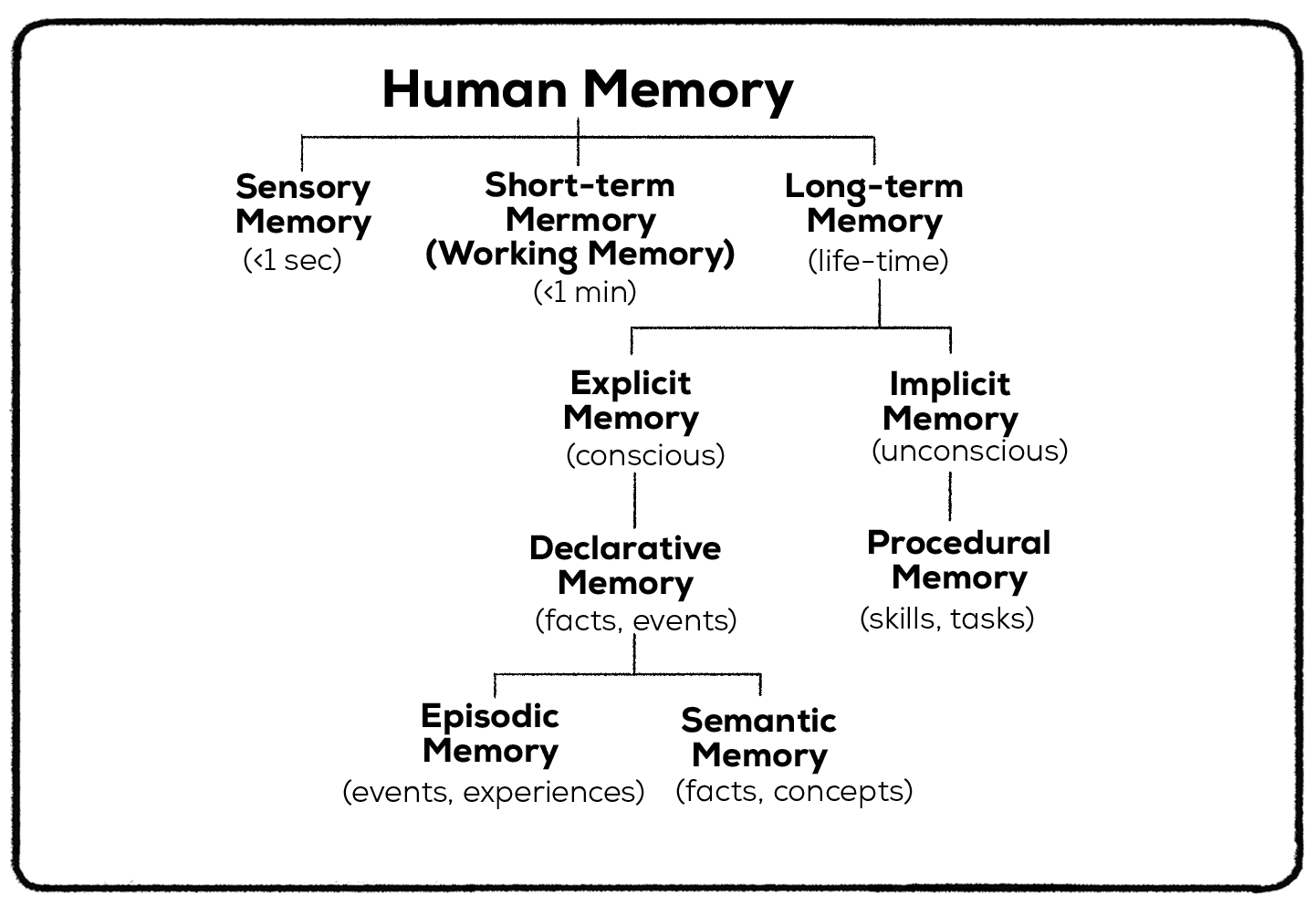
If you’ve been watching my videos on memory, you know that memories are either in one of two types: declarative or procedural memories. Declarative memories, or explicit memories, are those that contain facts and events. These are the type of memories that you candeclare.
(The other type of memory isimplicit,or procedural, memory. These are memories ofhowto do things like ride a bike or pick up a spoon.)
What type of memory is autobiographical memory? It’s both.
In order to tell the story of your life, you will need both a collection of episodic memoriesandthe context to put them all together. Remember, these memories are up to personal interpretation. You cannot place meaning or significance on your graduation until you know how much of a struggle it is to graduate and how many kids don’t get there.
So it’s a blend of episodic and semantic memories that help you build the story of your life. But you can break down these memories evenfurtherinto multiple categories.

Your autobiographical memories sit on one of three levels:
Knowing these different levels, you can begin to “outline” your autobiography and tell the story of your life.
“Lifetime periods” is the broadest level of autobiographical memories. You may remember that there was a period of your life when you were in middle school. Or a period of your life when you lived in Oklahoma. Or a period of your life when you were dating your high school sweetheart. These periods may overlap, but they help to build a structure from which you can pull autobiographical memories.
Think of these periods of your life like chapters in a book. What “memories” would fit in the chapter about middle school? High school? College?
Within these periods are moregeneral events. These events may be big accomplishments, turning points, or failures. Your graduation, a car crash, or starting a relationship may all fall under the “general events” category. Less significant events may also fall under this category if they provide context or help to move your story along.
Add these events below the “chapters” of your life. How did these events shape your time in middle school, high school, etc.? Did these events teach you anything new that you apply to your life today?
As you continue to reflect, consider yourknowledgeaboutthe event. This is where context and your interpretations really come into play. These are the details that supportwhyan event is significant or how it contributes to the overall story of your life. Let’s say you remember that your parents weren’t at graduation. Or that when you graduated, you were first in your class. This event-specific knowledge tells more about the eventandmore about yourself.
Let’s talk about that graduation example further. We have at least two pieces of event-specific knowledge to play with: your parents weren’t present, and you graduated first in your class. Which one is more significant? Which one would you tellfirstor place more emphasis on? These answers shape how you view yourself and color the rest of your autobiographical memories.
Let’s say you tend to focus on your absent parents, disregarding your accomplishments. Repeating that disappointmentover and overagain doesn’t exactly make you feel good. Downplaying the work that you did throughout high school downplays your ability to work hard, your intelligence, or your determination.
What would happen if you started to emphasize your accomplishments and not one disappointing fact?
I said that our autobiographical memories are up to interpretation. I also said that they are unique to every person who has experienced them. No one else has been in your shoes during the most significant moments of your life. No one can tell you how to see those events or how to place them in the overall story of your life.
Psychologists studying autobiographical memory at KU Leuven in Belgium make a very important point about autobiographical memories: “memories about past personal experiences guide our current and future behavior.”
If your autobiographical memories paint the picture of a failure, you will act and feel like a failure. If you change your interpretation of failure and paint the picture of someone who is determined to succeed, you will act and feel like someone who can pick themselves back up after a failure.
It’s certainly worth answering the question that I mentioned at the beginning of this page. It’s also worth analyzing the story that you tell yourself and others. How is the story of your life dictating your attitude toward yourself and your current behavior? How can you interpret significant events differently to create a more positive image and encourage more positive behavior? You don’t have to answer these questions immediately. Writing your life story can take…a lifetime!
How Narrative Therapy Can Help You Rewrite Your Story
Going through your autobiographical memories can be very therapeutic! As you reflect on the story of your life, you may recognize your strengths, all that you have accomplished, and the positive direction in which you are heading. Seeing your life as a story can also help you move through traumatic experiences. This is why some therapists usenarrative therapytechniques on their clients.
Narrative therapyputs the patient at the center of their own story. Therapists go through a specific process in which the patient steps out of their story (externalizing), deconstructs the events of their life, and create unique outcomes. Through this process, the patient realizes that their “hero’s journey” may not be completed or that they haven’t reached the climax of their story yet. By putting events into story form, they may also identify when certain “chapters” have ended, and they can move on to other chapters.
If you are interested in narrative therapy, reach out to therapists in your area who specialize in this technique. Not all therapists know how to lead patients through narrative therapy. Consult with therapists before joining their practice to ensure that you are getting the treatment you expect.
Even the world’s greatest writers struggle with the telling of their own stories. If you are working on an autobiography or have been reflecting on your life, think of these great words. Writing your own story is a great way to take charge of your life.
Related posts:Episodic Memory (Definition + Examples + Pics)Declarative Memory (Definition + Examples)Free Memory Test (5 Mins + Instant Results)Skinner’s Box Experiment (Behaviorism Study)Semantic Memory (Definition + Examples + Pics)
Related posts:
Reference this article:Practical Psychology. (2020, March).Autobiographical Memory (Definition + Examples).Retrieved from https://practicalpie.com/autobiographical-memory-definition-examples/.Practical Psychology. (2020, March). Autobiographical Memory (Definition + Examples). Retrieved from https://practicalpie.com/autobiographical-memory-definition-examples/.Copy
Reference this article:
Practical Psychology. (2020, March).Autobiographical Memory (Definition + Examples).Retrieved from https://practicalpie.com/autobiographical-memory-definition-examples/.Practical Psychology. (2020, March). Autobiographical Memory (Definition + Examples). Retrieved from https://practicalpie.com/autobiographical-memory-definition-examples/.Copy
Copy
